Top

Korea’s Virtual Asset User Protection Act to Take Effect in July Next Year

Policy & Regulation·July 06, 2023, 3:24 AM

The Virtual Asset User Protection Bill was passed during the South Korean National Assembly’s plenary session last Friday, according to a report by news agency Newsis. The legislation aims to safeguard customer assets, establish regulations against unfair trading practices, and enforce penalties. The act is scheduled to take effect one year after its passage.
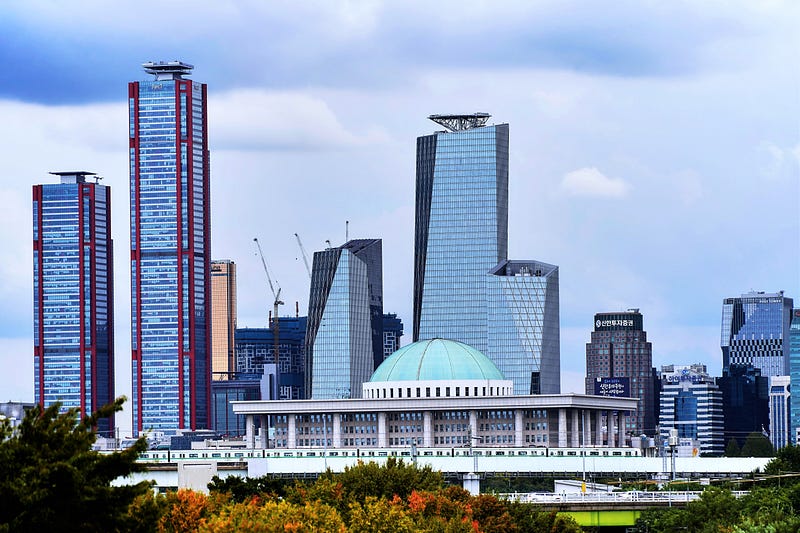
Photo by KS KYUNG on Unsplash


Definition of virtual assets

Under the act, a virtual asset is defined as a digital representation of economic value that can be digitally traded or transferred. It’s important to note that central bank digital currencies (CBDCs) are not considered virtual assets. Virtual assets with characteristics of securities will initially fall under the jurisdiction of the Capital Market Act.


Roles of Korea’s central bank

The act grants the Bank of Korea (BOK) the authority to request data and information from virtual asset service providers (VASPs). This provision is deemed necessary for the Korean central bank to formulate monetary and financial policies, despite virtual assets not being equivalent to traditional currencies.


Responsibilities of VASPs

Moreover, VASPs are obligated to segregate users’ virtual assets from their own holdings. VASPs are also required to reserve the same type and quantity of virtual assets entrusted by users and maintain a certain proportion of these assets in a cold wallet, which is an offline storage solution.

Unfair trading practices will be regulated in a similar manner as outlined in the Capital Market Act. The act specifically prohibits the use of undisclosed information, price manipulation, fraudulent transactions, and trading of self-issued virtual assets. VASPs are barred from suspending deposits and withdrawals without legitimate reasons. They are also mandated to monitor suspicious transactions and take appropriate measures to safeguard users. Any suspected unfair trading practices must be promptly reported to financial authorities. Violators of these rules may face criminal penalties, liability for damages, and potential class action lawsuits.


Powers of financial authorities

The act also clarifies the powers of financial authorities in supervising, inspecting, and taking action against virtual asset operators. Unfair trade practices can result in imprisonment for more than one year (up to 10 years for violations related to self-issued virtual assets) or fines ranging from three to five times the illicit gains. Assets acquired through unfair trade practices will be confiscated, or an equivalent value will be charged if confiscation is not feasible.


Impact on crypto investigations

The absence of legislation directly addressing unfair trading practices in the virtual asset market has posed challenges for prosecutors. They had to rely on existing statutes related to fraud, the capital market, and financial investments. Once the new act takes effect, prosecutors will no longer need to determine whether a virtual asset qualifies as a security or not.

Regarding this development, a prosecutor told local legal news outlet Law Times that the implementation of the new act will escalate prosecutorial investigations into cryptocurrency incidents.

Meanwhile, the individuals behind the crash of Terraform Labs’ stablecoin TerraUSD and its sister coin Luna will not be subject to this act due to the legal principle of nulla poena sine lege, which prevents the retrospective enforcement of criminal laws. Do Kwon, co-founder of Terraform Labs, was recently sentenced to four months in prison by a Montenegrin court for passport forgery after being arrested in March. The other co-founder, Daniel Shin, has been indicted by prosecutors in Korea.

More to Read
View All
Web3 & Enterprise·

Jun 20, 2025

Lion Group secures $600M facility to fund HYPE token treasury

Lion Group Holding Ltd (LGHL), a Nasdaq-listed financial services firm that provides an all-in-one platform for traders, has announced that it has secured $600 million to fund a Hyperliquid (HYPE) treasury. In a press release published by PR Newswire on behalf of the firm on June 18, the company outlined that a $600 million funding facility has been put in place by ATW Partners, a New York-headquartered investment firm that manages a number of private equity funds. Global investment bank Chardan Capital acted as the placement agent in facilitating the funding, with the first closing of $10.6 million, as per the subscription agreement.Photo by Towfiqu barbhuiya on UnsplashCorporate treasury strategyLion Group will use that money to launch a new corporate treasury strategy built around Hyperliquid’s HYPE token. Hyperliquid is a decentralized exchange (DEX) which was created by Hyperliquid Labs, a startup founded by Jeff Yan.  The HYPE token is the native token of the Hyperliquid platform. It’s used to secure the network through staking and for project governance. The token is also used to provide transaction incentives, while the Hyperliquid platform buys back HYPE tokens using trading fee revenues. Lion Group’s platform offers its users access to contract-for-difference (CFD) trading, total return swap (TRS) trading, over-the-counter (OTC) stock options trading, while also acting as a futures and securities brokerage. Up until 2022, the firm was based in Hong Kong, opting to relocate to Singapore at that point. Primarily, the company serves corporate clients, individual professional investors and retail investors located in China and throughout the Southeast Asian region. Future of trading is on-chainIn explaining its rationale for pursuing a HYPE treasury strategy, the company’s CEO, Wilson Wang, stated: “Hyperliquid represents a natural extension of LGHL's existing derivatives business into decentralized markets, and reflects our conviction that decentralized on-chain execution is the future of trading." Going forward, the company will pursue a strategic accumulation of HYPE, with the token serving as the firm’s primary reserve asset. In addition to HYPE, Lion Group outlined that it may also allocate funds to purchase Solana (SOL) and Sui (SUI), with these tokens to be staked and custodied with institutional-grade digital asset custodian, BitGo. Lion Group asserted that both of these assets would form “key pillars” of a treasury strategy “focused on execution-first protocols.” Wang added that the company views “protocols like HYPE, with decentralized sequencing, as foundational to building scalable DeFi systems.” The company is not the first mover in terms of launching a HYPE-based corporate treasury. On June 17, Eyenovia, Inc. (EYEN), a Nasdaq-listed ophthalmic technology firm, announced that it had entered into a securities purchase agreement with a view towards financing a $50 million HYPE treasury. Additionally, the firm plans to change its name to Hyperion DeFi and its stock ticker to HYPD later this week to reflect its new HYPE-based reserve strategy. Shares in Eyenovia closed at $4.83 on June 18, down 30.7% over the course of 24 hours. Lion Group shares closed at $3.33, up 19.78%.

news
Policy & Regulation·

Dec 10, 2025

New Kyrgyzstan, Malaysia initiatives reflect Asia’s shift to asset-backed stablecoins

Kyrgyzstan and Malaysia are advancing separate stablecoin initiatives, signaling a regional shift toward digital assets backed by tangible state reserves. While the projects differ in their underlying assets, gold in Kyrgyzstan and sovereign debt in Malaysia, both employ a hybrid model that combines public-sector oversight with private operational management.Photo by Zlaťáky.cz on UnsplashKyrgyzstan introduces gold-backed stablecoinOn Dec. 9, the Kyrgyz Republic’s state-owned OJSC Virtual Asset Issuer launched USDKG, a stablecoin pegged 1:1 to the U.S. dollar, according to a press release. The initial issuance comprises 50 million tokens, which the issuer says are fully backed by physical gold reserves. The project structure separates regulatory authority from asset management. While the issuer operates under the Ministry of Finance, management of the gold reserves has been contracted to a private company registered in the Central Asian nation. Officials say this arrangement distinguishes USDKG from a central bank digital currency (CBDC) and that the stablecoin is intended to operate alongside the national monetary system rather than compete with it. According to the statement, the token is currently issued on the Tron blockchain, with future support planned for Ethereum. The project cites an audit by ConsenSys Diligence and says it complies with Financial Action Task Force (FATF) standards, including identity verification for redemptions. The private operator aims to raise the reserves to $500 million in the next phase and later to $2 billion. Malaysia develops bond-backed tokenIn a parallel development, a Malaysian infrastructure firm with ties to the monarchy is preparing a ringgit-pegged stablecoin. According to Bloomberg, Bullish Aim is introducing the RMJDT token, which will be backed by Malaysian ringgit deposits and short-term government bonds. The company is owned by Ismail Ibrahim, son of Malaysia’s king. The token is designed to operate on Zetrix, a layer-1 blockchain developed by Malaysian firm Zetrix AI Bhd. The network currently supports the Malaysian Blockchain Infrastructure, a government-endorsed platform for digital public services and part of the country’s National Blockchain Roadmap. This places the stablecoin on the same technical foundation used for state-level digital identification and trade facilitation. Bullish Aim also intends to establish a digital-asset treasury (DAT), beginning with an investment of 500 million ringgit ($121 million) in Zetrix tokens. A DAT is a type of company that purchases and holds cryptocurrencies on its balance sheet. The initiatives in Kyrgyzstan and Malaysia suggest that stablecoin development in Asia may continue to evolve through state-anchored, asset-backed models. As each country tests its own approach to reserve management, issuance, and compliance, the next phases of both projects will offer early indications of how such frameworks perform in practice. 

news
Web3 & Enterprise·

Nov 08, 2023

OKX announces delisting of 26 trading pairs

OKX announces delisting of 26 trading pairsCryptocurrency exchange OKX has made a significant announcement regarding the delisting of more than 20 trading pairs, with a view towards its ongoing maintenance of strict listing criteria and performance monitoring. This decision will impact a considerable number of trading pairs across various cryptocurrencies, with the process scheduled to commence later this week.OKX outlined details of this recent trading pair purge in a statement published to its website on Monday. Among the trading pairs set for removal are CELO-USDC, AXS-USDC, APE-BTC and the HNT-USDT trading pair, which will be delisted on Nov. 10. Notably, Bytom (BTM), a Chinese crypto project, which has experienced a substantial 46% drop in value since Monday, is also among the tokens to be delisted.The exchange is advising users to manage their assets accordingly in preparation for the changes. Withdrawals for these tokens will cease on Jan. 10, 2024. During this transitional period, OKX recommends that users cancel any open orders linked to the impacted trading pairs to avoid automatic cancellations, which could result in processing delays.Photo by Maxim Hopman on UnsplashSAITAMA delistingDeposits for the affected tokens, including HNT, BTM, and SAITAMA, were halted by OKX on Nov. 3. SAITAMA, an Ethereum-centric ERC20 token, is the primary payment medium on the Saitama platform. There were mixed reactions to the delisting of the coin. One community member took to X, stating:“I will say I do think it isn’t cool for OKX to delist #Saitama considering we didn’t get on there for the reasons specified of delisting. The listing was won through hours of Spaces and helping people get VPNs to win a contest. Regardless of what the market is doing we won fairly.”Another Saitama project supporter took a more pragmatic view, stating:“Delisting Is a tragedy? I don’t think so. What did the OKX listing for the token price? What is the difference between holding or selling with or without okx? Volume was too low, and this isn’t a news, so they will delist. They will relist again….#SAITAMA”OKX has embarked upon several initiatives over the course of 2023 in an effort to further the user proposition offered by the platform. From a marketing perspective, the company took the decision in October to retire the Okcoin brand, rebranding its various sub-platforms instead to OKX.The Seychelles-incorporated company indicated in September that it expects to have secured a virtual asset service provider (VASP) license in Hong Kong by June of next year.Delisting banksTokens are not the only items to be delisted by the exchange recently. Alongside competitor Bybit, the company decided to delist sanctioned Russian banks Tinkoff Bank and Sberbank from its peer-to-peer exchange platform.This move by OKX reflects the exchange’s efforts towards maintaining a high level of integrity and performance. Listing coins that fall below a minimum acceptable level of liquidity and trading volume can leave them much more exposed to the risk of manipulation. By adhering to stringent listing criteria and promptly addressing issues, the company is making a greater effort towards maintaining a position as a trusted and secure trading platform for cryptocurrency enthusiasts and investors.

news
Loading