Top

Sony Network Invests $3.5M in Startale Labs to Drive Global Web3 Adoption

Web3 & Enterprise·June 29, 2023, 2:21 AM

Sony Network Communications, a prominent Japanese internet service provider, has made an investment of $3.5 million in Startale Labs, an innovative Web3 company based in Singapore. The primary objective of this collaboration is to establish an infrastructure that will promote the global adoption of Web3 technologies.

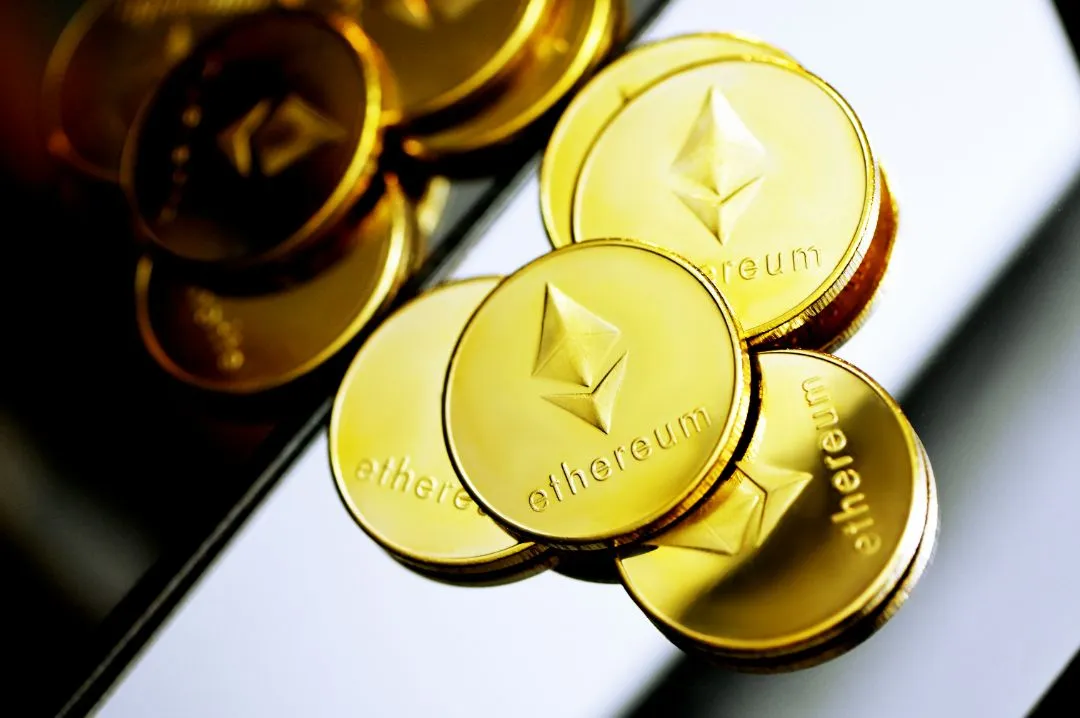
Photo by Bastian Riccardi on Unsplash


Telecom meets Web3

Sony Network Communications, founded in 1995, offers high-speed fiber-optic broadband services and operates in various sectors of the telecommunications industry. The company is actively involved in advanced technology ventures such as the Internet of Things (IoT) and artificial intelligence (AI). Meanwhile, Startale Labs specializes in the Web3 domain, providing advisory services related to Web3, supporting the creation of layer 1 blockchains and applications, and collaborating with other entities to develop core Web3 functionalities.

As part of this partnership, Jun Watanabe, the President and Representative Director of Sony Network Communications, will join Startale Labs as a director. He expressed his gratitude for the collaboration, emphasizing the deepening ties between Sony and Startale Labs. He highlighted the fruitful joint efforts already underway to advance Web3 technologies. Both companies share the objective of fostering an infrastructure that facilitates global Web3 adoption. Jun Watanabe said this initiative will lead to the emergence of revolutionary Web3 applications.

Sota Watanabe, the CEO of Startale Labs, acknowledged Sony Group’s remarkable achievements across diverse industries such as gaming, entertainment, and financial services. He believes that Sony holds great potential in the Web3 sector, and Startale Labs is well-positioned to contribute its expertise and knowledge to this domain. With this partnership, Sota Watanabe envisions a collaborative effort that will not only foster the global Web3 infrastructure but also drive the creation of valuable and impactful Web3 applications.


Sony’s Web3 expansion

Sony Group has been actively exploring opportunities in the Web3 field. Earlier this month, Sony Bank, another affiliate of Sony Group, partnered with Mitsui & Co. Digital Asset Management (MDM) to introduce MDM’s security token service, Alterna, to the Tokyo-based online bank’s customers. Through this collaboration, Sony Bank customers can invest in real-world assets, such as large-scale real estate properties, using security tokens provided by Alterna. This platform opens up investment avenues that were previously inaccessible to retail investors due to high capital requirements. Notably, the minimum investment requirement through Alterna is 100,000 yen.


Government support

There’s also been a positive move from the Japanese government for the Web3 and cryptocurrency industry. The Japanese National Tax Agency recently announced the revised corporate taxation rules pertaining to crypto assets. Under the new amendment, companies are exempt from taxes on unrealized gains from cryptocurrencies if the virtual assets were issued by the company and have been continuously held since issuance, or if they have remained subject to certain transfer restrictions since issuance.

Startale Labs CEO Sota Watanabe welcomed this development on his Twitter account, stating that Web3 projects like Astar Network can now conduct business in Japan without moving their operations overseas. Meanwhile, he highlighted the importance of addressing the issue of corporate taxes on tokens issued by third parties in the future. He hoped for continuous engagement in constructive discussions with politicians and government agencies.

More to Read
View All
Markets·

Sep 19, 2025

New K-drama ‘To the Moon’ debuts amid Ethereum price gains

As cryptocurrencies continue to captivate South Korea, the world of ordinary digital asset investors is set for its primetime debut. Today, major broadcaster MBC is scheduled to premiere “To the Moon,” a new television drama that explores the risks and rewards of crypto investing. In crypto slang, “to the moon” refers to expectations of a sharp price surge, a phrase often used by traders to signal bullish sentiment. The series, airing Fridays and Saturdays, is an adaptation of Jang Ryujin’s 2021 novel of the same name, with an English edition released on June 19 of this year. It chronicles the lives of three young women who, despite landing what most would consider solid positions at a confectionery company, find their ambitions stifled by economic realities. Confined to small studio apartments and seeing little room for advancement, they turn to the volatile world of cryptocurrency as their pathway to upward mobility. The publisher describes these burnt-out protagonists’ journey as one that oscillates between humor and despair.Photo by Kanchanara on UnsplashEthereum’s rally and rising optimismIn the original novel, the plot is ignited when one of the women achieves a significant windfall by investing in Ethereum (ETH), inspiring her colleagues to join the fray. What follows is a familiar tale for many investors. They experience a period of wild price swings and respectable profits, only to see their winning streak abruptly halted by a severe market downturn. At the time the book was published in April 2021, ETH traded at roughly $2,100. Today, by contrast, CoinMarketCap data shows the asset trading at $4,543.14, more than doubling since the book’s release. Support for this bullish outlook comes from well-known market voices. Tom Lee, Fundstrat founder and chairman of ETH treasury firm Bitmine, told CNBC that Ethereum (ETH), Bitcoin (BTC), and the Nasdaq 100 would benefit most if the Federal Reserve cut rates, predicting a strong rally in the next three months. He made these comments before the Fed’s actual move, a quarter-point rate cut announced at its Sept. 17 Federal Open Market Committee (FOMC) conference. In a separate Fox Business interview, VanEck’s CEO echoed this view, saying ETH will emerge as the leading asset as banks adopt blockchain for stablecoin transactions. Data also points to growing strength. According to Token Terminal, the supply of Ethereum-based stablecoins has recently reached an all-time high of $168 billion. This milestone is largely attributable to the fact that over half of the entire stablecoin supply now operates on the Ethereum network, underscoring its foundational role in the digital economy. Talent drain and security risksStill, there are headwinds that could slow Ethereum’s ascent. A recent survey by Protocol Guild, an independent funding group for Ethereum core developers, revealed a compensation gap that threatens the network's long-term health. The survey found that Ethereum core developers are receiving external job offers with a median salary of $300,000—more than double the $140,000 median they currently earn for maintaining and upgrading the network. Protocol Guild has noted that this disparity could precipitate a talent exodus, potentially slowing future development. Security has been an ongoing concern, with ETH often targeted by hackers. In a reminder of the sector's vulnerabilities, the crypto exchange Bybit reported a theft of 401,000 ETH in February, an amount valued at roughly $1.5 billion at the time. The U.S. Federal Bureau of Investigation later identified the exploit, one of the largest in crypto history, as the work of the North Korean hacker known as “TraderTraitor.” "To the Moon" is set to air at a time when its themes of innovation and risk are playing out in the real world of crypto. The industry is riding a wave of institutional adoption and high valuations, but it's also facing a talent crunch and security concerns. These dynamics continue to keep digital assets on investors’ radar in South Korea and beyond. 

news
Policy & Regulation·

Jan 02, 2024

Chinese authorities provide insight into conviction of RenrenBit founder

China has provided insights into the conviction of Zhao Dong, the influential crypto over-the-counter (OTC) trader and widely known founder of the RenrenBit crypto trading desk. The ‘OTC King’Last Wednesday, China’s Supreme Procuratorate disclosed that Zhao, known as the "OTC King," was handed down a substantial prison sentence for engaging in illegal foreign exchange and crypto business operations. The case is emblematic of China's persistent efforts to clamp down on cryptocurrency trading, even when conducted through less transparent channels like OTC desks, private chat groups and stablecoins.Photo by Hanson Lu on UnsplashTracing fundsIn their comprehensive disclosure, the Chinese authorities outlined the meticulous investigation that led to Zhao Dong's conviction. The focus was on tracing fund movements across Chinese bank accounts, overseas cash pools and the circulation of Tether and Bitcoin. Investigators honed in on accounts associated with Zhao Dong and the chat groups used for trading activities. Their arsenal included detailed bank records, WeChat conversations, testimonies from Zhao's OTC agents and other documentary evidence. The report highlighted that all defendants, including Zhao Dong, confessed to the process of collecting dirhams in cash in Dubai, paying RMB to the other party's designated account, buying Tether with dirhams, and allowing the domestic gang to illegally sell it back for RMB. Seven year sentenceIn one of the alleged schemes, Zhao Dong purportedly orchestrated crypto-fiat trades between Dubai-based entities holding cash piles in United Arab Emirates (UAE) dirhams and Chinese contacts within the country. With numerous related recipients confirming that the funds Zhao received were payments from foreigners, the prosecution's case was made so much stronger. Zhao unsuccessfully argued during three public court hearings that his actions constituted digital currency transactions and not a breach of foreign exchange laws. The prosecution countered with evidence from the group's chat records, emphasizing the nature of foreign exchange in their dealings. The court ultimately rendered a verdict, sentencing Zhao Dong to seven years in prison and imposing a 2.3 million Chinese yuan ($325,000) fine. This conviction serves as a stark reminder of the stringent regulatory stance that China has adopted towards cryptocurrency trading. Zhao Dong was considered one of China's most influential OTC crypto traders. He was a Bitfinex shareholder and founder of the D Fund venture capital fund. He established RenrenBit in August 2018, incorporating the company in Singapore. The influential crypto trader is also believed to have been involved in assisting stablecoin-issuer Tether to launch its Tether Yuan product. However, once the authorities moved against him, RenrenBit was taken offline while Tether scrapped its pursuit of Tether Yuan. Despite his influence, Zhao has ultimately become a symbol of the government's commitment to curbing such crypto trading activities within mainland China. The outcome underscores the severity of China's regulatory crackdown on cryptocurrency trading and sends a strong message to other players in the crypto space within the country.

news
Web3 & Enterprise·

Feb 29, 2024

DeSpread partners with Arbitrum to build ecosystem for Korean developers

DeSpread, a Korea-based consulting firm specializing in Web3 and blockchain, announced today its partnership with Arbiturm, a Layer 2 network built on the Ethereum blockchain. This news was reported by local media outlet Etoday. Through the partnership, DeSpread aims to create an ecosystem for Arbitrum developers, seek collaboration with Korean enterprises and attract more onchain users. Photo by Sigmund on UnsplashArbitrum is one of the largest Layer-2 blockchains operating on the Layer-1 Ethereum network, designed to address the scalability issue of the ETH network. DefiLlama, a DeFi total value locked (TVL) aggregator, shows that Arbitrum has the fourth largest TVL among all chain networks, and the largest TVL among ETH-based Layer 2 networks. To foster Arbitrum-based services, DeSpread plans to distribute research content and development guides to Korean developers in an effort to bring down the language and cultural barriers when working with Arbitrum. Regular events featuring Arbitrum experts are also in store, set to be held both online and in-person formats. These efforts are intended to help companies seeking to adopt blockchain technologies collaborate with Arbitrum.   Forging an ecosystem within the Korean ETH communityJeff Kim, Head of operation at DeSpread, expressed his excitement about the partnership with Arbitrum, saying that Arbitrum is the network showing the strongest performance among all Layer 2 solutions on the ETH network. He added that Despread plans to support Arbitrum so that it can create its ecosystem within the Korean Ethereum community and raise its brand awareness. Nina Rong, Head of Ecosystem Development at Arbitrum, stated that Arbitrum has long been keeping an eye on Korea’s blockchain ecosystem. The partnership will help Arbitrum strengthen its position in the Korean market and shape a developer-friendly environment for individuals and businesses, she said.

news
Loading
