Top

Non-Fiat Crypto Exchanges in Korea Urge Banks for Real-Name Accounts

Policy & Regulation·June 20, 2023, 5:39 AM

The Virtual Asset Exchange Association (VXA) made an announcement today regarding its recent due diligence request sent to 12 South Korean banks, as reported by local news outlet Digital Today. These banks have not yet entered into contracts to provide real-name deposit and withdrawal accounts to cryptocurrency exchanges.

VXA is a group comprised of representatives from ten non-fiat crypto trading platforms in the country. Among its members, eight exchanges–Aprobit, Probit, BTX, Foblgate, GDAC, Flata Exchange, Flybit, and High Block (previously known as Huobi Korea)–participated in the request.
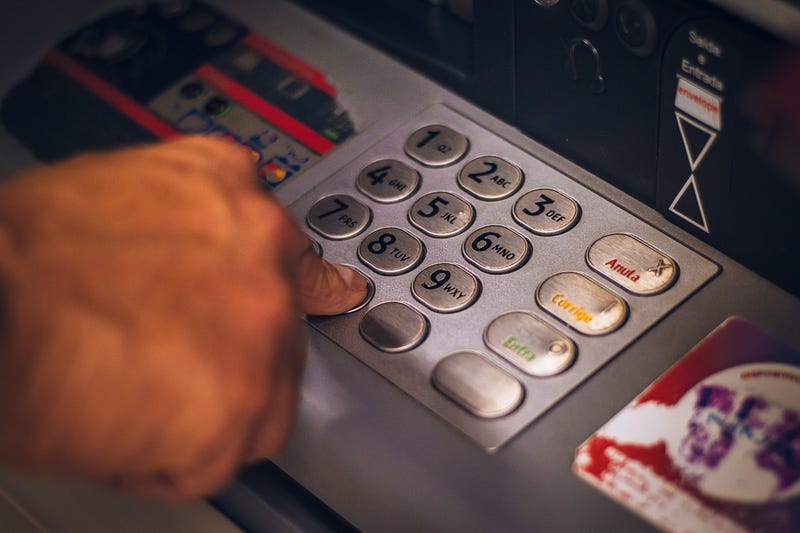
Photo by Eduardo Soares on Unsplash


Partnerships with banks

The objective of the request is to urge the banks to consider establishing partnerships with competent non-fiat exchanges. The requesters argued that such collaborations would promote fair trading in the market and provide customers with more options. They highlighted the growing presence of the virtual asset trading sector in the capital market.


Uneven crypto market

An official from VXA emphasized the key role played by real-name bank account issuers in creating a healthy environment that addresses the existing monopoly in the Korean crypto market. According to a March report published by the Financial Services Commission, non-fiat crypto trading platforms accounted for only 3 percent of the total Korean crypto market capitalization during the second half of 2022. The remaining 97 percent was attributed to fiat-supporting crypto exchanges.

The official further explained that allowing more exchanges to support the trading of the Korean won currency would contribute to shaping a free market while bolstering transparency and investor protection.


Legal requirements

Earlier this month, VXA also sought fair due diligence from five Korean banks that have already formed partnerships with fiat-supporting crypto exchanges. In Korea, crypto trading platforms are required by law to obtain real-name accounts from banks in order to provide cash deposit and withdrawal services.

More to Read
View All
Web3 & Enterprise·

Dec 14, 2023

Crypto exchange Foblgate unites with HKVAC to expand global reach

Crypto exchange Foblgate unites with HKVAC to expand global reachSouth Korean cryptocurrency exchange Foblgate has taken a step onto the global stage by signing a business agreement with the Hong Kong Virtual Asset Consortium (HKVAC), a private institution committed to building and sustaining Hong Kong’s cryptocurrency market, according to an article by local news outlet ZDNET Korea.“We look forward to strengthening our leadership in the global blockchain market with Hong Kong,” said Ahn Hyun-jun, CEO of Foblgate. “Korea has one of the most competitive markets in the world, and this partnership will further strengthen our presence in the global market.”Photo by Erika Fletcher on UnsplashInternational cooperationThrough this agreement, the two companies will provide opportunities for their respective business partners to expand their projects into Hong Kong and South Korea. They also plan to work together within the crypto and real asset markets and explore new business opportunities with companies in the security token sector.Pioneering the future of the crypto industryEstablished in May, the HKVAC is a private consortium consisting of a professional credit rating agency as well as big data firms, institutional investors and cryptocurrency exchanges like HTX (formerly Huobi) and KuCoin. It offers services like exchange and crypto asset ratings as well as data and research geared towards investors.In particular, its credit ratings — issued by licensed rating agency FrancXav Asia Ratings — are aimed at reducing information asymmetry and promoting fair competition. They also serve to guide regulatory authorities in their own assessment of potential risks in the crypto industry.

news
Policy & Regulation·

Feb 29, 2024

Korea’s ruling party retracts its pledges to approve spot bitcoin ETFs

With the general election just over a month away, South Korea’s ruling People Power Party (PPP) has retracted its campaign pledges to allow trading of spot bitcoin ETFs, local media outlet Chosun Biz reported. The PPP has previously drawn substantial attention from the crypto industry, as the party showed its intention to ease a range of crypto regulations in hopes of gaining more votes in the general election.  A political insider familiar with the issue said yesterday that the PPP has recently removed crypto-related agendas from its priority list. The crypto pledges, initially planned to be announced last week, have been permanently suspended, the person said. “The leaders of the PPP are currently focusing on nomination for local constituencies and its satellite People’s Future Party, rather than coming up with additional crypto agendas. As the PPP appears to be embarking on the election campaign starting in March, the likelihood of the ruling party releasing crypto pledges is very slim,” another political circle insider mentioned.Photo by Traxer on UnsplashTalks between PPP and FSC go in vainThe PPP’s decision to retract crypto-related pledges comes after its attempt to approve the introduction and trading of spot bitcoin ETFs met with opposition from the Financial Services Commission (FSC).  Unlike the PPP or its opposition Democratic Party of Korea (DPK) that scrambled to ease crypto regulations ahead of the general election, the FSC’s stance on viewing crypto assets as risky hasn’t changed much. Despite last month’s approval of spot bitcoin ETFs by the U.S. Securities and Exchange Commission (SEC), the FSC continues to ban the issuance of crypto-based financial products or investments in them, stating that crypto assets are not defined as underlying assets under the current Capital Markets Act. This has gotten in the way of the PPP’s plan to delay taxation on crypto gains for as long as two years and allow institutional investments in virtual assets.  The PPP also had to verify all the party members to see if any of them had a record of wrongdoings related to crypto transactions, which further delayed the pledges. This shows politicians’ heightened awareness of crypto-related issues. Last year, the DPK lawmaker Kim Nam-guk made headlines for a scandal, as he was accused of failing to report a considerable amount of crypto assets transactions to the financial authority. PPP lags a step behind its opposition DPKThe DPK has also strived to come up with crypto pledges alongside the PPP. The crypto-related pledges released by the DPK so far largely overlap with those of the PPP, meaning there’s no particular merit to the PPP’s campaign vows leading up to the general election. Many see this as another reason for the PPP’s decision to withdraw crypto pledges. The DPK unveiled its plan on Feb. 21 to legalize spot bitcoin ETFs, and pledged to deduct taxes on crypto gains worth less than KRW 50 million ($37,400). Under the current law, only crypto gains that are worth less than KRW 2.5 million qualify for the tax deduction. Most of these pledges largely align with those of the PPP.  With the PPP’s withdrawal of its plan to ease crypto regulations, the excitement among crypto industry insiders for the upcoming general election appears to have subsided. “Despite the DPK’s promise to allow spot bitcoin ETFs, it is unlikely that we’ll see crypto assets being incorporated into the conventional financial system without the ruling party’s approval, let alone fostering the blockchain industry,” said one crypto insider. 

news
Web3 & Enterprise·

Mar 05, 2025

RWA tokenization gaining momentum in UAE

Real-world asset (RWA) tokenization, the conversion of tangible assets into digital tokens on a blockchain, is gaining momentum in the United Arab Emirates (UAE), according to a number of industry professionals working in the sector.Photo by ZQ Lee on Unsplash‘No lack of demand’Scott Thiel, founder and CEO of Dubai-based RWA token marketplace Tokinvest, recently outlined to Cointelegraph that the company is experiencing “no lack of demand” for tokenized RWAs. Thiel believes that demand is coming from real estate developers and large property owners who “want to explore how they can use this as an alternate means of financing or selling their property.” The Tokinvest CEO explained that a booming property market in the UAE,  particularly in Dubai, is contributing towards RWA tokenization demand in the country. He stated: “What’s the hottest real estate market in the world? Well, I think today it’s probably Dubai, and so, everyone would like to own a piece of this or to get access to the economic benefits of being a participant in that marketplace.” RWA tokenization dealsLast year, Liv Digital Bank, a subsidiary of Emirates NBD, the second largest bank in the UAE, signed a deal with RWA tokenization firm Ctrl Alt. At the time, Ctrl Alt CEO Matt Ong pointed to a Boston Consulting Group report that forecast a $16 trillion business opportunity with regard to the tokenization of global illiquid assets by 2030. In January, MANTRA, a layer-1 blockchain project that focuses on RWA tokenization, inked a $1 billion deal with Damac Group, an Emirati property development company. The objective of the partnership is to bring transparency, security and access to Damac’s assets using blockchain. Last month, MANTRA was awarded a Virtual Asset Service Provider (VASP) license by Dubai regulator, the Virtual Assets Regulatory Authority (VARA). MANTRA Co-founder and CEO John Patrick Mullin described the license award as “a validation of our purpose, which is to provide developers and institutions with a purpose-built RWA Layer 1 Blockchain, that’s capable of adhering to real world regulatory requirements.” Proactive regulationIt is with regard to regulation that many in the industry feel that the UAE is gaining the upper hand where RWA tokenization is concerned. Tokeninvest’s Thiel provided input into the formulation of VARA’s regulatory framework back in 2022. He said that the authorities there have taken a proactive approach to digital asset regulation, with a genuine desire to provide regulatory clarity. The Tokinvest CEO was sufficiently impressed by the regulatory approach in the UAE to relocate the company there. Back in January, VARA awarded the company a trading license for its tokenized RWA marketplace. Commenting following the announcement of the Damac deal, MANTRA’s Mullin complimented the UAE authorities on their business-friendly approach: “The UAE has shown time and again that they can lead the crypto industry in innovation.”  In a series of posts on X recently, Julian Kwan, CEO and founder of IXS, a Singapore-based institutional bridge for tokenized RWAs, cited the Damac tokenized real estate deal while asserting that tokenized “RWAs are no longer a concept — they are an unstoppable financial movement.”

news
Loading