Top

Qatar Criticized for Regulatory Inaction Against Crypto Companies

Policy & Regulation·June 03, 2023, 6:09 AM

The Qatari Central Bank (QCB) has come under fire from the Financial Action Task Force (FATF) for its lack of efforts in enforcing regulations that prohibit virtual asset service providers.

In a report released earlier this week, the global watchdog for money laundering and terrorist financing highlighted the need for Qatar to enhance its capabilities in effectively combating evolving forms of criminal activity, including taking action against virtual asset service providers.
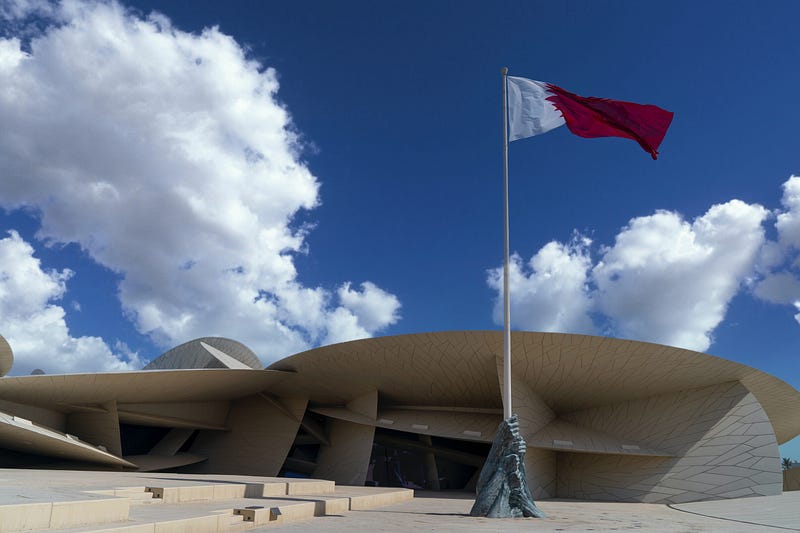
Photo by Akbar Nemati on Pexels


Continuous improvement needed

Although acknowledging “substantive improvements” applied to its control system, the FATF report emphasized that Qatar must further improve its understanding of more complex forms of money laundering and terrorist financing.

While Qatar has shown positive progress in gathering beneficial ownership information through its unified register, which consolidates data on its citizens, the FATF report emphasized the need for stronger controls to ensure the accuracy and currency of the collected information. The report also criticized Qatar’s authorities for underutilizing their sophisticated analysis capabilities in identifying instances of money laundering.


Lack of control despite VASP ban

Despite the Qatar Financial Centre Regulatory Authority’s (QFCRA) announcement in December 2019 that virtual asset service providers (VASPs) are not allowed within or from the Qatar Financial Centre, the country’s regulatory authority has made little progress in penalizing firms that facilitate or provide crypto asset services.

Interestingly, while Qatar has banned virtual asset service providers, it has expressed interest in exploring the potential use cases of a central bank digital currency (CBDC). In June 2022, it was reported that the QCB is in the early stages of developing a CBDC.

Sheikh Bandar bin Mohammed bin Saoud Al Thani, the governor of Qatar’s central bank, revealed that the QCB is evaluating the advantages and disadvantages of CBDCs and determining the appropriate technology and platform.

As the country explores the potential of a CBDC, it must ensure that its regulatory framework aligns with international standards and best practices. By doing so, Qatar can strike a balance between fostering innovation in the digital currency space and safeguarding its financial system from illicit activities.


Global coordination

Through the Paris-based money-laundering watchdog, and calls from the G7, the European Central Bank, and others to regulate on a global basis, the official response to controlling digital assets and VASPs is becoming more globally coordinated. Central bankers and government officials have learned that decentralized finance has the ability to be borderless.

FATF has been active in getting more countries on board. Effective from Thursday, Japan now implements FATF’s “travel rule” with respect to digital assets. That action was taken following a FATF finding that Japan wasn’t following best practice relative to anti-money laundering (AML) measures. Pakistan recently banned cryptocurrencies in an effort that appears to have been motivated by wanting to stay off the FATF’s gray list of non-compliant countries.

While Pakistan managed to get itself off that list, the United Arab Emirates found itself on the gray list. The UAE’s Central Bank issued guidance on AML relative to virtual asset companies, in an effort to come back into FATF compliance.

It remains to be seen how Qatar will respond to the FATF’s critique and whether it will take concrete actions to address the concerns raised. The international community will be closely monitoring Qatar’s efforts to combat financial crimes in the virtual asset sector and to establish a robust regulatory framework for its future CBDC endeavors.


More to Read
View All
Policy & Regulation·

Jan 17, 2025

PM encourages focus on crypto so Malaysia doesn’t get left behind

Malaysian Prime Minister Datuk Seri Anwar Ibrahim has said that Malaysian government agencies and the country’s central bank need to study blockchain and cryptocurrency from a policy perspective so as not to get left behind.Photo by Esmonde Yong on UnsplashConsidering major changesHis comments emerged alongside the news that Anwar had discussed digital finance policy matters with Abu Dhabi government officials and with Changpeng Zhao (CZ), the founder and former CEO of Binance. According to the New Straits Times, an English-language newspaper published in Malaysia, the Malaysian government is homing in on the establishment and adoption of a formal policy relative to digital assets and blockchain.  Anwar confirmed that discussions also related to “digital transformation, data centers and artificial intelligence (AI),” and that the demands that Malaysia now faces require the government to consider major changes. In discussion with local media, Anwar stated: "I proposed several months ago how our agencies, including security, treasury and Bank Negara study how Malaysia can explore this so we aren't left behind. Ensuring that is regulated could safeguard the people's interests and prevent leakages.” Crypto-friendly regulationsAnwar added that a “radical departure from the old ways” would be needed for Malaysia to remain competitive, emphasizing the need for the Southeast Asian country to keep up to speed through the application of crypto-friendly regulations. Addressing the pace of technological change, he stated: “This is an evolution which happens quickly and requires us to be equally fast. We feel that Malaysia should not be left behind while mired in an old financial system.” In moving towards setting out a clear policy relative to digital assets, the Malaysian prime minister is encouraged by his recent dialogue with United Arab Emirates (UAE) government officials. He said that they confirmed that they feel they can forge close cooperation with Malaysia on the matter. Anwar added:“We need to discuss this in detail, leave behind the old business model and give meaning to this digital finance policy.” Taking to the X social media platform, Binance’s CZ described the nature of his discussion with the Malaysian prime minister, stating: “The discussions were not about Binance but about the crypto industry and Malaysia, including regulations, policies, risks, and collaborations between industries and across national borders. Forward!” A pseudonymous crypto investor and programmer, @darren_com_my, responded to CZ’s tweet to explain that the Malaysian government provides support to the digital assets industry via government agencies, but that, on the other hand, it has blacklisted a number of exchanges such as HTX (formerly Huobi) and Binance.  The local regulator has issued licenses to six virtual asset service providers. In recent weeks, Malaysia’s Securities Commission has taken action against global exchange Bybit and crypto app Atomic Wallet, prohibiting them from trading within the jurisdiction due to both companies not having obtained the required licensing.

news
Web3 & Enterprise·

May 30, 2023

Dunamu’s Q1 Revenue Drops 28.6% Amid Global Liquidity Contraction

Dunamu’s Q1 Revenue Drops 28.6% Amid Global Liquidity ContractionDunamu, the operator of Upbit, a major cryptocurrency exchange in South Korea, announced today the release of its Q1 2023 report.Photo by Tiger Lily on PexelsDeclining revenueAccording to the Data Analysis, Retrieval and Transfer System (DART) of the Financial Supervisory Service (FSS), Dunamu’s consolidated sales revenue for the first quarter of 2023 was 304.8 billion KRW ($231.3 million). This figure represents a 28.6% decrease from 426.8 billion KRW ($323.9 million) recorded during the same period last year. Additionally, its operating income declined by 26.3% to 211.9 billion KRW ($160.8 million) from 287.8 billion KRW ($218.4 million). However, its net income showed an increase of 54.9%, reaching 326.3 billion KRW ($247.6 million).Global liquidity contractionDunamu attributed the decline in revenue to several factors, including the ongoing global liquidity contraction, economic downturn, and reduced investor confidence. These factors collectively impacted the company’s financial performance during the first quarter of 2023. On a positive note, Dunamu linked the net income increase to the recovery and upward movement of digital asset prices in comparison to the previous quarter.Established in April 2012, Dunamu has enjoyed noticeable growth by offering a range of services related to digital assets, securities, and asset management. In recent years, it has been tapping into new technology trends like non-fungible tokens (NFTs) and metaverses to adapt to the era of Web3 and enhancing transaction security and convenience for valuable assets.As a company with a shareholder base exceeding 500, Dunamu has been disclosing its business reports as well as quarterly and semiannual reports since 2022 in line with the Korean Capital Markets Act’s requirements.

news
Policy & Regulation·

Apr 10, 2023

Korean Financial Watchdog to Penalize Bankers Involved in Illegal Foreign Remittances

Korean Financial Watchdog to Penalize Bankers Involved in Illegal Foreign RemittancesThe Korean Financial Supervisory Service (FSS) recently completed an investigation into illegal foreign remittances of approximately 16 trillion KRW (~$12,137,718,400) that involved numerous bankers.©Unsplash/Paul FiedlerExploiting the kimchi premiumThe investigation, launched by the Korean financial watchdog last June, found that these lawbreakers sent funds to China, Hong Kong, and other overseas destinations through Korean crypto exchanges, trading firms, and bank branches with an aim of making money through arbitrage by taking the advantage of the kimchi premium, a term used to describe that the higher prices of crypto assets in Korean exchanges compared to their foreign counterparts.Bankers neglecting the KYC ruleSome of these bankers participated in the crime by raising the remittance cap and applying favorable exchange rates to trading companies that had no previous transaction records with banks. By law, bankers in Korea are obligated to follow the “know your customer” rule. It was found that 12 domestic banks and one futures firm were involved in this incident.The FSS has decided to impose strict penalties on these financial institutions, considering they were exploited for money laundering purposes. These entities are likely to have some of their services suspended, with the employees involved being fired.Accountability of top bankersOne key point to watch out for is whether the FSS would be able to hold executives accountable. Some say penalizing top bankers is not easy, given that it has to be proven that the employees’ criminal activities were due to a lack of executives’ internal control.The financial regulator recently announced plans to revise the law governing banks’ governance, but it is expected that such a bill would take some time to pass through the National Assembly.Through a revision of the law, the financial authority aims to hold top executives at financial institutions more responsible for serious financial accidents. It looks forward to bestowing top bankers with the obligation of comprehensive internal control management and making them accountable as an overall manager only in case of critical financial accidents. The term “top executives” in the bill will encompass not only bank presidents but also chairpersons of financial holding companies. More specific revision plans are expected to be revealed by the end of this month.

news
Loading