Top

RBI Official Encourages Indian Banks to Adopt Blockchain

Policy & Regulation·June 01, 2023, 12:00 AM

In a recent conference organized by the Reserve Bank of India (RBI), Deputy Governor Mahesh Kumar Jain highlighted the importance of adopting innovative technologies like artificial intelligence (AI) and blockchain to ensure sustainable growth and stability in the country’s banking sector.

Speaking at the RBI-hosted event for directors of Indian banks last week, Jain emphasized the need for effective corporate governance, governance structure, and risk management strategies to tackle future challenges arising from technological disruptions, evolving customer expectations, and cybersecurity threats.
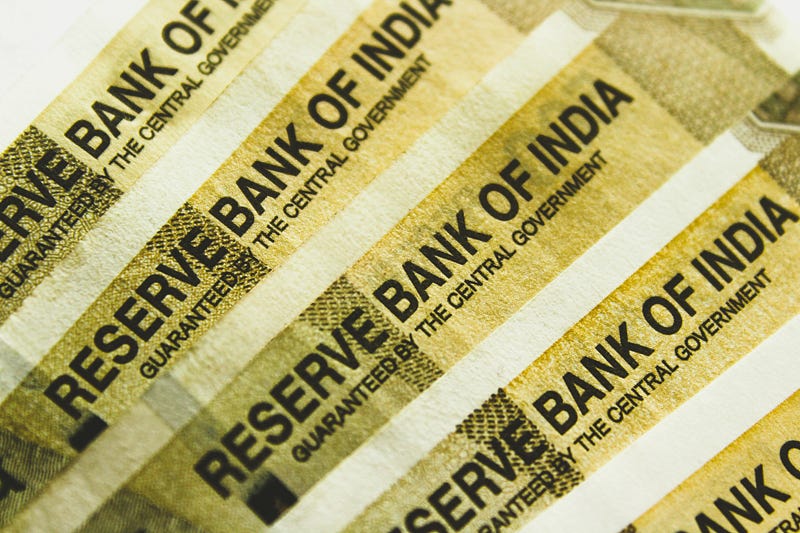
Photo by rupixen.com on Unsplash


Leveraging AI and blockchain

The recommendation to leverage AI and blockchain technologies aligns with India’s digital transformation goals and the desire to enhance customer experiences while investing in cybersecurity measures. Jain advised Indian banks to prepare for the future by focusing on digital transformation, exploring innovative technologies like AI and blockchain, and seeking collaborative opportunities with other industry players. He also emphasized the importance of upskilling the workforce to meet the demands of the digital era.


Inconsistent approach

This proposal comes at a time when the Indian government’s stance on cryptocurrencies remains ambiguous. While India has been exploring the introduction of a central bank digital currency (CBDC), the Cryptocurrency and Regulation of Official Digital Currency Bill, 2021, which aimed to establish regulations for digital currencies, has not been legislated.

According to the RBI’s annual report, which was published on Tuesday, the central bank is progressing with its retail central bank digital currency (CBDC) pilot program, with plans to expand the number of banks involved, the use cases, and the number of locations. It had expanded the scope of the project to involve one million citizens, but it’s looking to broaden that user base also. In contrast, the country’s approach to decentralized cryptocurrency has been contradictory, sometimes banning it and at other times, allowing it.

It is noteworthy that India’s neighbor, Pakistan, has also recently announced plans to train one million IT graduates in AI by 2027, with potential applications in weather prediction, agriculture supply chain optimization, and health services transformation.

The RBI’s recommendation to adopt AI and blockchain technologies reflects the growing recognition of their potential benefits for the banking sector.


Embracing tech innovation in banking

By embracing these technologies, Indian banks can enhance efficiency, automate processes, and strengthen security measures. The adoption of AI and blockchain has the potential to transform various aspects of banking, including risk management, fraud detection, customer service, and transaction processing.

While India continues to navigate the regulatory landscape surrounding cryptocurrencies, the central bank’s focus on AI and blockchain signals its commitment to embracing technological advancements and preparing the banking sector for the future. As India’s financial ecosystem evolves, the adoption of these technologies can empower banks to offer innovative services, streamline operations, and provide secure and efficient financial solutions to customers.

The RBI’s emphasis on digital transformation, AI, and blockchain paves the way for Indian banks to explore new avenues for growth and resilience. As the country progresses on its digital journey, the adoption of emerging technologies will play a pivotal role in shaping the future of the banking sector and contributing to India’s overall economic development.


More to Read
View All
Web3 & Enterprise·

Nov 03, 2023

Dubai’s VARA grants WadzPay ‘initial approval’ of trading license

Dubai’s VARA grants WadzPay ‘initial approval’ of trading licenseIn the latest demonstration of the emirate’s crypto-friendly credentials, Dubai regulator, the Virtual Assets Regulatory Authority (VARA), has granted an “Initial Approval” license to WadzPay.WadzPay was founded in 2018 in Singapore as a business-to-business (B2B) technology firm that concentrates its efforts on enabling digital asset-based transaction processing and settlement. This licensing approval is a significant step forward for the startup, as it inches closer to obtaining a full-fledged Virtual Asset Service Provider (VASP) license.Photo by Paul MARSAN on UnsplashGearing up for service roll-outWith this approval in hand, WadzPay is gearing up to offer a range of virtual asset services, specifically under the forthcoming VASP License for Transfer and Settlement, as well as Broker-Dealer trading activities.That said, the current VARA license places certain restrictions on WadzPay’s offerings. While WadzPay is known for providing a wide array of services to businesses (B2B) and individual users through its B2B2C platform, the “Initial Approval” license limits its scope to only a subset of its virtual asset products and services.Flurry of approvalsDubai has taken center stage in the realm of crypto-friendly jurisdictions, granting a flurry of operational licenses to numerous crypto firms and exchanges in recent months. The regulatory framework in Dubai is underpinned by robust guidelines for VASPs. To operate fully within this framework, crypto firms must navigate a meticulous three-tier licensing process, starting with provisional approval, followed by a minimal viable product (MVP) license, culminating in a total market product license.One of the recent beneficiaries of VARA’s approvals is Backpack, a virtual currency wallet provider. Last month, Backpack received its VASP license, allowing the introduction of the Backpack Exchange to the market. However, similar to WadzPay’s situation, Backpack’s license comes with certain limitations.It permits the offering of crypto exchange services within Dubai but restricts the rollout of other virtual asset services. The Backpack Exchange sets itself apart with advanced features, including zero-knowledge (ZK) proof-of-reserves, multi-party computation (MPC) for secure custody and lightning-fast order execution capabilities.Nomura portfolio company approvalsKomainu, a collaborative venture involving financial heavyweights like Nomura, CoinShares and Ledger, is another notable success story. After a diligent licensing journey, Komainu secured its full operating license from VARA, approximately 10 months after obtaining its MVP license in November 2022.Laser Digital, a crypto division under the vast umbrella of financial giant Nomura, also earned its operational license from VARA in August. Through its dedicated subsidiary, Laser Digital Middle East FZE, based conveniently in Dubai, Nomura has showcased its VASP license. The permit enables the firm to offer a suite of services, including brokerage, virtual asset management and investment offerings within the emirate.Notably, Laser Digital’s licensure followed closely on the heels of Binance, the global crypto exchange. Binance secured its operational minimum viable product (MVP) license from VARA, paving the way for providing crypto exchange and virtual asset broker-dealer services within the region.This flurry of licensing activities and approvals in Dubai is suggestive of the emirate’s commitment to fostering a progressive and regulated crypto environment.

news
Markets·

Oct 08, 2025

Korean crypto faces retail slowdown while eyeing institutional future

South Korea’s retail-heavy crypto market is losing momentum ahead of broader institutional access to trading. Data from the Financial Services Commission (FSC) and the Financial Supervisory Service (FSS), cited by Financial News, shows that in the first half of 2025, Korean-won balances held at the country’s five licensed fiat-to-crypto exchanges sank 42% to 6.2 trillion won ($4.4 billion), signaling less dry powder waiting on the sidelines for trading. Only five platforms are permitted to support won-denominated trading, and the drop in parked cash underscores a broader cooling. By the end of June, the Korean crypto market cap stood at 95.1 trillion won ($67.5 billion), down 14% from six months earlier. The global market also contracted, but the decline was more modest at about 7% over the same period.Photo by Y K on UnsplashTrading slows but retail base expandsTrading activity eased as well. Average daily volumes across 25 domestic virtual asset service providers (VASPs) fell 12% to 6.4 trillion won ($4.5 billion) in the first half. Paradoxically, the number of market participants climbed 11% to 107.7 million across those platforms. Nearly all were individuals, as only 220 were institutions, reflecting long-standing restrictions on institutional won trading. That retail skew has consequences. Data submitted by the FSS to a lawmaker, cited by Digital Asset, reveals that the top 10% of users by trading volume accounted for roughly 90% of activity at the five fiat on-ramps. By exchange, the figures were Upbit (89.36%), Bithumb (97.97%), Coinone (97.54%), Korbit (97.52%), and Gopax (97.95%).  Market lawyers warn that this concentration heightens manipulation risk. Lee Seung-min of SEUM Law Firm said volatility may be more pronounced in tokens listed only on Korean venues, but added that deeper institutional participation could help reduce such volatility and support longer market cycles.  Regulators are inching in that direction. Earlier this year, authorities allowed universities and nonprofits to sell their crypto holdings. By year-end, the FSC plans to let about 3,500 publicly traded companies and professional investors, excluding financial institutions, open accounts at the licensed platforms for trading. Exchanges pour cash into promotionsWhile regulators are preparing to bring more institutional players into the fold, exchanges continue their long-running effort to draw in retail users. Another Digital Asset report noted that from 2023 through July 2025, promotional outlays by the five won-enabled platforms totaled 190.3 billion won ($135 million). Bithumb alone accounted for 180.3 billion won ($128 million), far outspending Upbit (9.4 billion won), Coinone (1.7 billion won), Korbit (1.6 billion won), and Gopax (100 million won). The gap suggests Bithumb, which ranks second in market share, has pursued a particularly aggressive approach to expand its customer base. Taken together, the numbers depict a subdued market, with less capital parked on exchanges and lighter trading while activity remains heavily concentrated among a small cohort of traders. Even so, the expanding base of individual accounts represents a bright spot, underscoring the market’s continued dependence on retail investors. If policymakers follow through on opening the door to a broader set of corporate and professional players later this year, Korea’s crypto landscape could shift from retail-driven fluctuations toward steadier, institution-supported flows. 

news
Policy & Regulation·

Sep 26, 2023

Japan’s Cryptoasset Group Proposes Self-Regulatory Reforms for IEO System

Japan’s Cryptoasset Group Proposes Self-Regulatory Reforms for IEO SystemThe Japan Cryptoasset Business Association (JCBA) has revealed a preliminary draft advocating for reforms in self-regulation to bolster the soundness of the initial exchange offering (IEO) system. This draft has been submitted to the Japan Virtual and Crypto Assets Exchange Association (JVCEA).IEOs serve as a mechanism enabling various enterprises to accrue funds and broaden their user base by orchestrating token sales on cryptocurrency exchanges for Web3 projects. This fundraising method holds the potential to enhance trust as crypto exchanges, supervised by the Japanese Financial Services Agency, undertake evaluations of project feasibility and maintain ongoing oversight.Photo by Takashi Miyazaki on UnsplashPositive regulatory developmentsThe ameliorating regulatory landscape is also a positive development, highlighted by this year’s tax law amendment, which grants exemptions to enterprises’ self-issued tokens from year-end corporate taxation. In Japan, four IEOs have been conducted so far, with the inaugural IEO amassing over 900 million yen (approximately $6 million). The cumulative amount from the four IEOs has surpassed 4.4 billion yen. However, given that the IEO is a relatively nascent fundraising method, improvements in token price stability and operational modalities are required to ensure that businesses and users can engage with it confidently.Enhanced user protectionAgainst this backdrop, JCBA, an organization comprised of various enterprises involving virtual assets and Web3, has been discussing the direction of the IEO system from a corporate viewpoint since May of this year. Establishing price stabilization measures and selling restrictions within the Japanese IEO system will contribute to user protection by allowing investors to manage their assets under domestic regulations. JCBA stated that users will find domestic exchanges more secure in comparison to foreign ones.As this proposal represents an initial draft, deliberated and formulated only within the JCBA, the group intends to consult and assess the feasibility of the self-regulatory rules with each pertinent organization as necessary.Four key pointsThe document submitted by JCBA to JVCEA presented four key points concerning the IEO. Pertaining to pricing, it suggested the diversification of calculation methods customized to each project and the specification of price-related disclaimers. On liquidity, it posited that liquidity objectives should be established at the time of listing, and an environment conducive to securing liquidity should be developed. JCBA also pointed out the necessity of establishing rules for price stabilization measures at the time of listing. Finally, regarding selling restrictions, it was noted that both token issuers and exchanges should adhere to a minimum three-month lock-up period for tokens.

news
Loading