Top

Metaverse Expo 2023 in Seoul: Exploring the Future of the 3D Internet

Web3 & Enterprise·May 31, 2023, 1:59 AM

The Metaverse Expo 2023 is scheduled to be held at the COEX, an exhibition and convention venue in Seoul, from June 14 to 16, according to a press release. With its focus on the future of the three-dimensional Internet, this event seeks to attract metaverse enthusiasts eager to explore cutting-edge technologies. This year, the “Metaverse + Generative AI Summit” will run alongside the expo, showcasing the diverse applications of generative AI in enhancing efficiency within the metaverse.

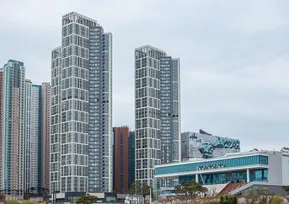
Photo by julien Tromeur on Unsplash


Korea’s strategy for metaverse promotion

In February last year, the Korean Ministry of Science and ICT revealed a metaverse promotion strategy involving a comprehensive support plan of 237 billion KRW ($179.6 million). This initiative seeks to cultivate an augmented reality ecosystem by developing metaverse platforms, fostering metaverse companies, and aiding their international expansion.

The expo will host exhibits centered around four key topics: metanomics, digital twins, education, and NFTs. Attendees will explore innovative business models, learn about the replication of physical objects in the virtual realm, discover the potential of the metaverse in reshaping educational approaches, and understand the role of non-fungible tokens in establishing digital ownership.


Side events to support businesses

In addition to the main exhibits, the expo will host various side events such as export and investment counseling sessions, new product presentations, and seminars. In collaboration with the Korea Trade-Investment Promotion Agency (KOTRA), a consultation program will be offered to encourage overseas buyers to engage with Korean companies. This program aims to support Korean businesses in promoting their products and services overseas, as well as connecting them with new buyers and investors who can contribute to their growth and expansion.

Previously known as the Seoul VR-AR Expo, this event has been an annual feature since 2018, with VR representing virtual reality and AR representing augmented reality. In line with evolving industry trends, the event was rebranded to the “Metaverse Expo” in 2022. This year’s event will mark its sixth running, further cementing its role as a beacon for developments in the rapidly advancing metaverse landscape.


More to Read
View All
Policy & Regulation·

Aug 08, 2023

Singapore Pledges $112M to Boost Fintech Solutions Including Web3

Singapore Pledges $112M to Boost Fintech Solutions Including Web3Acknowledging the growing significance of collaboration with industry stakeholders in propelling advancements in emergent technologies such as Web3, Singapore’s central bank, the Monetary Authority of Singapore (MAS), has unveiled plans to allocate up to 150 million Singapore dollars (approximately $112 million) towards supporting a spectrum of financial technology solutions, with a special focus on Web3.Photo by Jason Leung on UnsplashDistributed over three yearsThis financial commitment, outlined in a press release published to the MAS website on Monday, will be distributed over a three-year period as part of the revamped Financial Sector Technology and Innovation Scheme (FSTI 3.0), designed to invigorate and fortify innovation by backing projects that leverage cutting-edge technologies.The renewed innovation scheme encompasses multiple avenues, including the Enhanced Centre of Excellence track, the Environmental, Social and Governance (ESG) fintech track, and the Innovation Acceleration track — the last incorporating the realm of Web3.Emphasizing industry partnershipsMAS underlined the importance of forging partnerships with industry participants to bolster inventive fintech solutions originating from emerging technologies such as Web3.“MAS will conduct open calls for the use of innovative technologies in industry use cases. Grant funding will be provided to support actual trial and commercialization,” the central bank stated.In addition to these efforts, the initiative will maintain its commitment to encouraging adoption across domains like artificial intelligence, data analytics, and regulatory technology (RegTech). Furthermore, there will be an emphasis on fostering adoption within companies that are still digitally maturing and seeking to integrate RegTech solutions.Applicants across the various program tracks will be required to allocate resources toward nurturing talent. This strategy aims to augment Singapore’s fintech talent pool, ultimately contributing to the nation’s expertise in the sector.Ravi Menon, the Managing Director of MAS, underscored the substantial investment that the Financial Sector Development Fund (FSDF) has funneled into the FSTI program since its inception in 2015.Menon highlighted that this initiative’s overarching objective is to spur innovation and facilitate the seamless integration of novel technologies within the financial landscape. Over the years, the program has exemplified its commitment to driving transformation and pioneering the adoption of new technology across the financial sector.Nurturing Web3 innovationPotential Web3 and crypto hubs have come and gone, but Singapore has been vying to take its place as a center for Web3 innovation over a sustained period after it suffered some setbacks in 2022 related to a string of crypto business failures.While Binance had not been permitted to serve customers in the city-state, that meant that a disproportionate number of Singaporeans got caught up in the failure of the FTX crypto exchange. Alongside that regulatory failure, state investment giant Temasek had to write off a substantial investment in the company, while suffering reputational damage for not having detected the FTX fraud.The city-state has also been home to the failure of crypto lender Hodlnaut and crypto hedge fund Three Arrows Capital (3AC). Despite these setbacks, Singaporean authorities are continuing to work towards setting the proper stage to further develop Web3 innovation. In June, MAS proposed a comprehensive framework for the design of open networks relative to tokenized digital assets. This latest initiative will further Singapore’s ambition to grow its Web3 sector.

news
Policy & Regulation·

May 02, 2023

Bhutan Quietly Mining Bitcoin Since $5,000

Bhutan Quietly Mining Bitcoin Since $5,000The tiny nation of Bhutan continues to be full of surprises recently where crypto is concerned, with the latest report suggesting that the kingdom has been mining bitcoin for a number of years already.© Pexels/Pema GyamtshoAccording to a recent report in The Bhutanese, a Bhutan-based publication led by investigative journalist, Tenzing Lamsing, the landlocked nation had been mining bitcoin over the course of a “few years” already, in an effort to diversify its sovereign portfolio.Long-term investment strategyUjjwal Deep Dahal, CEO of Druk Holding and Investments (DHI), told the publication that the venture was part of a long-term investment strategy. DHI is the commercial arm of the Royal Government of Bhutan. It was formed pursuant to a Royal Charter in 2007 with the mandate of making investments on behalf of Bhutan while optimizing usage of resources.The mining activity had centered on Bitcoin although there was a small provision for Ethereum-based mining when Ethereum was a mineable proof-of-work (PoW)-based blockchain network. It’s unclear of the precise timeline but the report outlines that DHI has engaged in the mining space over a number of years, and at a time in which the Bitcoin unit price was as low as $5,000.Exploiting cheap hydroNestled in the Himalayas, Bhutan has considerable hydroelectric resources. Bitcoin mining is ordinarily an expensive exercise but in scenarios where there are plentiful energy resources with a marginally cheaper cost of production than the average, it can be an attractive and profitable enterprise. Dahal outlined that these conditions enabled DHI to reinvest profits back into additional mining equipment.The precise time-frame of DHIs entry into Bitcoin mining is open to speculation. However, we do know that the Bitcoin unit price was last below $5,000 at the onset of the pandemic in March 2020. Prior to that, Bitcoin had risen above $5,000 in April 2019 following an acute bear market in 2018.Crypto lender entanglementsBhutan and DHI hit the crypto radar last month when it was revealed that the kingdom had made significant investments into and out of failed crypto lenders Celsius and BlockFi. Dahal has said that the royal charter-mandated firm had taken out loans with both crypto lenders and had fully repaid those loans. However, that may have been something that happened later than anticipated. The Bhutanese company had a $30 million loan from BlockFi. BlockFi liquidated the Bitcoin collateral associated with that loan in 2022 but it left a shortfall of $800,000. The failed lender subsequently sued DHI. As of an April 13 court filing, BlockFi submitted a voluntary dismissal of the lawsuit to the courts, presumably because the shortfall was subsequently paid by DHI.In the case of Celsius, DHI had withdrawn $65 million from the lending platform prior to it declaring bankruptcy. Consequently, the matter has been the subject of speculation relative to the potential for the Celsius bankruptcy estate to pursue DHI for a clawback of the withdrawn funds.

news
Policy & Regulation·

Feb 27, 2024

Thai SEC seeks to revoke license of troubled Zipmex exchange

Zipmex, the Asian digital asset exchange, faces another setback as the Securities and Exchange Commission Board of Thailand (SEC Board) moves to recommend the revocation of its digital asset business license. This decision, announced last week, marks the latest in a series of challenges for the exchange, which has struggled to navigate the complexities of the crypto market's downturn.Photo by Oleksandr P on PexelsCapital requirements failureThe SEC's recommendation stems from Zipmex's failure to meet the increased net capital requirement and address deficiencies in its personnel and management structure. These shortcomings were deemed unacceptable by the regulatory body, prompting a 15-day ultimatum issued on Feb. 1. Earlier this month, the Commission ordered a halt to Zipmex operations, enforcing a temporary suspension until such time as the company had improved its financial position and applied needed changes to its management structure.Despite this window for compliance, Zipmex fell short of meeting the specified conditions, leading to the current proposal for license revocation and the imposition of stringent regulatory measures on Thailand's digital asset exchanges. Business suspension extensionDuring a meeting on Feb. 21, the SEC further resolved to extend Zipmex's business suspension, initiated on Feb. 1, and allowed clients to request asset returns on the exchange until March 11. Any unclaimed assets after this date will be required to be placed in a "trusted and secured system," with Zipmex obligated to report this to the SEC. Notably, even after the potential revocation of its license, Zipmex will retain its status as a limited company, subject to associated rights, responsibilities and liabilities, including the possibility of legal action. Zipmex's woes trace back to 2022 when it faced significant challenges due to exposure to failed crypto lender Babel Finance. In July of that year, the exchange suspended withdrawals for weeks due to concerns over its ties to crypto lenders Babel and Celsius, both facing financial distress. Although access to Trade Wallets was restored after three days, Z Wallets remained inaccessible into the following year. Failed Coinbase and V Ventures dealsIn the midst of its troubles, Zipmex attracted interest from Coinbase, albeit without success. While Coinbase made a strategic investment in Zipmex, the acquisition attempt did not materialize as initially intended. Furthermore, Zipmex's financial struggles led it to file for debt relief in Singapore in July 2022, further complicating its position in the market. The exchange's regulatory challenges continued as it faced scrutiny from the SEC regarding compliance with the Digital Assets Act. Despite attempts to secure acquisition deals, such as the proposed acquisition by Thai investor V Ventures, Zipmex has been unable to alleviate regulatory concerns or stabilize its operations effectively. Since obtaining its license from the SEC in January 2020, Zipmex has operated in Thailand, Indonesia, Singapore and Australia. However, its inability to address regulatory requirements and financial challenges has cast doubt on its future viability in these markets.  In November of last year, the company itself announced a temporary cessation of trading in Thailand while it worked towards becoming compliant within that jurisdiction. Earlier this month, Thailand’s SEC took legal action against Akarlap Yimwilai, the former CEO of Zipmex Thailand.

news
Loading