Top

Hong Kong Says No to Light Touch Regulation

Policy & Regulation·May 10, 2023, 11:25 PM

The CEO of the Hong Kong Monetary Authority (HKMA) has said that while the autonomous territory will allow innovation to develop in the crypto space, that will not mean light touch regulation.
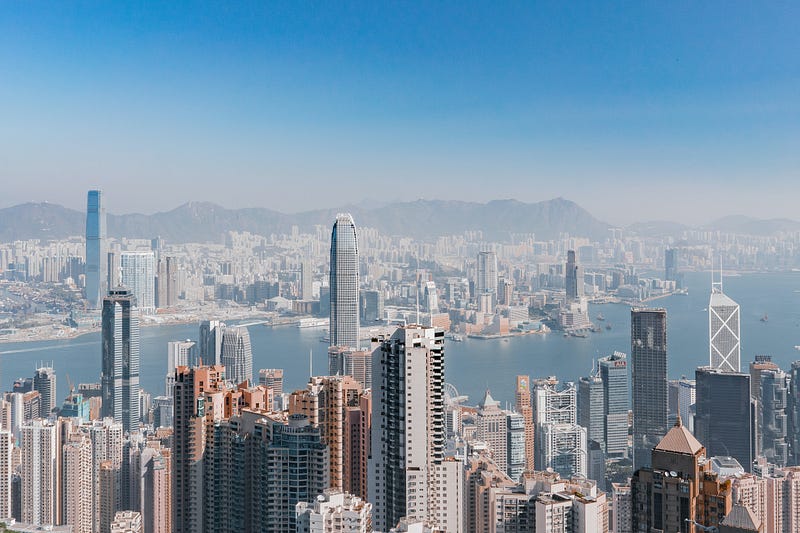
Photo by Ruslan Bardash on Unsplash


Lowering guard rails

After a three year hiatus, the Bloomberg Wealth Asia Summit returned to Hong Kong on Tuesday. Speaking at the conference, Eddie Yue, the CEO of the HKMA, Hong Kong’s regulatory body, outlined that the territory intends to enable innovation relative to crypto businesses that establish themselves in Hong Kong.

“We will let the industry develop and innovate, we will let them create an ecosystem here,” he said. However, he added the following caveat: “But that doesn’t mean light touch regulation. If any participant thinks that the regulation is too tight, they’re welcome to go elsewhere.”

Yue outlined that over the course of the past three years, guardrails relative to the operation of crypto-related activities were excessively high. Yue alluded to a new approach that sees those guard rails dropped to a level whereby innovation will be enabled in the digital assets space. However, he followed up by underlining the fact that the Authority has no intention of following a light touch regulatory approach.


No safeguards not an option

Although acknowledging that Hong Kong may have been excessively crypto unfriendly relative to digital asset regulation in the recent past, he believes that Hong Kong has now got it right. “Our guardrails are lower, to a reasonable and sustainable level,” Yue said.

The HKMA regulator flagged jurisdictions that provide little or no guardrails at all as the ones that will run into difficulties. “If you look elsewhere, there are no guardrails in some places, the guardrails are very low and there you see problems”, Yue clarified.

He cited FTX as a stand out example of a basic lack of internal controls. FTX International was based in the Bahamas. While customers of FTX International find themselves in a difficult position, those of subsidiary companies FTX Japan and FTX Europe are having their funds returned as a direct consequence of much better regulatory safeguards in those regions.

“All those wrongdoings by the platforms that we saw in the last one or two years will not happen in Hong Kong,” Yue claimed.


A continuing trend

While many commentators and critics from the conventional world have described bitcoin and crypto as a ponzi or a passing fad, Yue pointed out that digital assets are not going anywhere and that the trend towards digital assets will continue. Expanding further, he articulated that the overarching digital assets sector encompasses much more than just crypto: “Virtual assets or crypto is actually a very broad term. It’s not really about crypto, you’re talking about stablecoins or tokenized assets in the future.”

A mere $0.3 trillion of illiquid real world assets have been tokenized thus far. It’s anticipated that this level of tokenization will climb to $16 trillion by 2030.


More to Read
View All
Policy & Regulation·

Oct 06, 2023

Hong Kong Authorities Unite to Form Crypto-Centric Taskforce

Hong Kong Authorities Unite to Form Crypto-Centric TaskforceAuthorities in Hong Kong are taking action to address recent mounting concerns surrounding illicit cryptocurrency activities, particularly in light of the recent JPEX scandal. The Hong Kong Police Force and the Securities and Futures Commission (SFC) have come together to establish a specialized working group dedicated to closely monitoring and countering suspicious activities connected to virtual asset trading platforms (VATPs).In a statement published by Hong Kong’s Securities and Futures Commission (SFC) on Wednesday (local time), the agency set out details of a collaborative task force which has been formed in the wake of a high-level meeting held on September 28.The collaboration draws on input from the SFC as well as a number of law enforcement divisions within the Chinese autonomous territory, including the Commercial Crime Bureau, Cyber Security and Technology Crime Bureau, and Financial Intelligence and Investigations Bureau.Photo by Cheung Yin on UnsplashGreater coordination and information sharingThe primary objectives of this alliance are to enhance coordination, foster information sharing, assess risks tied to VATPs, and, above all, safeguard the interests of the Hong Kong public.Christopher Wilson, Director of Enforcement at the SFC, underscored the regulator’s commitment to allocating resources to combat problematic VATPs and safeguard investor interests. Eve Chung, Assistant Commissioner of Police (Crime) at the Hong Kong Police Force, emphasized the significance of intelligence exchange and collaborative efforts in responding to the challenges posed by VATPs to protect the Hong Kong public.Knee jerk response to JPEX scandalIt would appear that the necessity for such a concerted effort became patently clear as a direct response to the errant activities of Dubai-based crypto platform JPEX within Hong Kong.Issues with the exchange first emerged in September when the platform outlined that it was having liquidity issues as a consequence of some third party market makers having withdrawn their services. JPEX subsequently raised withdrawal fees to an unreasonable level to deter customers from withdrawing funds from the platform.The saga has affected over 1,600 investors with more than $150 million in assets becoming unavailable to them. The case resulted in the arrest of at least 20 individuals, with local telecom providers blocking online access to the platform as requested by law enforcement.Earlier, on September 13, the SFC had issued a warning accusing JPEX and crypto influencers of disseminating false or misleading information on social media about their application for a virtual asset trading license in Hong Kong.The ongoing JPEX controversy has prompted regulators in Hong Kong to explore measures to strengthen regulations governing the cryptocurrency market. The establishment of the task force signifies a proactive stance to address these concerns and ensure swift, effective action against illicit activities in the crypto sector.In addition to the joint task force, the SFC has taken steps to enhance transparency by publishing a comprehensive list that includes licensed, deemed licensed, closing down, and application-pending crypto exchanges, along with a list of “suspicious VATPs.” This transparency initiative aims to provide clarity and protect investors by offering insights into legitimate and questionable cryptocurrency trading platforms operating in Hong Kong.

news
Markets·

Apr 21, 2023

True Potential of Asian Crypto ETFs Yet to Be Realized

True Potential of Asian Crypto ETFs Yet to Be RealizedA recently published report by Hong Kong Exchanges and Clearing Ltd. (HKEX), the Hong Kong stock exchange, has found that crypto exchange traded funds (ETFs) have the potential to play a significant part in unlocking the next phase of digital asset expansion in Asia.©Pexels/Burak The WeekenderThe report, titled “Crypto ETF: Key to unlocking the next phase of digital asset growth in Asia,” highlights how crypto ETFs could attract more institutional investors and lead to increased liquidity in the digital asset market. Furthermore, HKEX claims that the ETF investment mechanism can play its part in offering a more regulated and safe manner through which investors can gain exposure to digital assets.Regulatory progressWhile the report cites an Asian regulatory environment that is becoming increasingly more supportive of digital assets of late, it still identifies a need for further progress to be made to improve the level of regulatory clarity and to provide a truly standardized approach to digital assets. That, it says, will result in crypto ETFs becoming more accessible, offering a diversified way in which the investor can access and gain exposure to digital assets in Asia.Nonetheless, HKEX applauds the work done thus far by regulatory authorities in Hong Kong and Singapore, where regulatory frameworks relative to crypto ETFs have been implemented. Those are measures that the Hong Kong stock exchange believes will increase investor confidence, and in turn, bring about further adoption of digital assets.Modest daily trading volumeBetween December 16 and February 7 the two Bitcoin ETFs and one Ether ETF listed on the Hong Kong stock exchange achieved a daily trading volume of $1.19 million. That’s rather underwhelming when compared with the $3 billion in daily volume being achieved by the Chicago Mercantile Exchange (CME) relative to its Bitcoin and Ether futures ETF in the United States. On the New York stock exchange ProShares Bitcoin Strategy ETF achieves a daily average trading volume of $196 million.These findings are a bit counter-intuitive given the contrasting regulatory approaches in the two territories. In the US, regulators have failed to approve a physically settled Bitcoin ETF. Furthermore, the Securities and Exchange Commission (SEC) has denied the attempts of Grayscale Bitcoin Investment Trust (GBTC) to convert the Bitcoin fund into an ETF. Meanwhile, Hong Kong has much more regulatory clarity but yet trading volume in crypto-related ETFs remains minuscule by comparison with the United States.Despite that, the report remains upbeat with regard to what can be achieved in the market with crypto-related ETFs. It makes a case for crypto ETFs as a means for traditional financial institutions to enter the digital assets market with relative ease. Similarly, it sees a role for global stock exchanges in facilitating future growth of crypto-related ETFs and in developing new ETF products that could unlock access to specific digital assets or bespoke investment strategies.

news
Web3 & Enterprise·

May 26, 2023

Renault Korea Establishes Metaverse Space for Car Enthusiasts

Renault Korea Establishes Metaverse Space for Car EnthusiastsRenault Korea Motors made an announcement on Friday that it will establish the Renault Korea Hub, an immersive automotive experience located within a metaverse, according to a report by Korean news media Dailian. The company intends to commence operations of this unique venture in the upcoming autumn season.Photo by Richard Horvath on UnsplashThe Sandbox and Korean brandsThe Renault Korea Hub will operate within K-verse, a designated area of Korean brands within The Sandbox, a metaverse platform based on blockchain technology.The Sandbox metaverse has recently announced its latest Korean brand partners, and as part of this development, a land sale event is being organized where their adjacent land will be raffled off. The event is named “Hallyu Rising.” Hallyu or the Korean Wave is a cultural phenomenon that has experienced a significant surge in global popularity since the 1990s, mainly thanks to its pop songs and TV shows.During the land sale event, users have the chance to acquire land adjacent to various prominent brands associated with Korean culture. This will be made possible through raffles and auctions facilitated by the metaverse platform. Other notable partners besides Renault Korea are Channel A, a TV broadcasting network; Netmarble, a game publisher; and CJ ENM, an entertainment company.Unique experiences for car enthusiastsThe Renault Korea Hub, the first of its kind in Korea, will provide a unique space for automobile enthusiasts to indulge in a diverse array of experiences and games. As per the automaker’s announcement, visitors will have the chance to engage in activities like developing their own vehicle designs.Visitors will have the opportunity to experience Renault Korea’s vehicles in voxel form, allowing them to explore the technology, design philosophy, and stories associated with each vehicle. A voxel can be understood as a 3D counterpart to a 2D pixel, representing a value on a regular grid in 3D space.Renault Korea CEO Stéphane Deblaise stated that the carmaker intends to continue its pursuit of diverse Web 3.0-based activities centered around metaverses and non-fungible tokens (NFTs). He said the automaker’s projects aim to establish a connection between customers’ mobility experiences and their digital lives. Deblaise also highlighted that these projects will undergo further development through the integration of artificial intelligence (AI) technologies.Storytelling contestEarlier this month, Renault Korea introduced the storytelling contest titled “create your SM6,” which concludes today. This campaign inspires customers to utilize emerging AI technologies to design their own SM6 vehicles and transform them into NFTs. The SM6, Renault Korea’s midsize sedan, initially debuted in 2016 and has undergone subsequent facelifts to enhance its features and aesthetics.The top ten performers in the storytelling contest, who create captivating renditions and stories featuring the SM6, will be rewarded with utility NFTs and KLAY, the native token of the Klaytn network. The first-place winner will receive a prize package consisting of 1 million KRW ($750) worth of KLAY, along with six SM6 NFTs.The announcement of the winners is scheduled to take place between May 31 and June 9. Following the announcement, the airdrop of rewards will be conducted from June 30 to July 7.

news
Loading