Top

BNP Paribas Partners With Chinese in Digital Yuan Push

Policy & Regulation·May 08, 2023, 12:19 AM

The Chinese authorities continue with their sustained efforts to promote use of the digital yuan, on this occasion by hooking up with French international banking group, BNP Paribas.

According to the South China Morning Post (SCMP) on Friday, the partnership will see BNP Paribas collaborating with the Bank of China (BOC) to promote the digital yuan to its corporate clients. The digital yuan or e-CNY is a digital representation of the Chinese sovereign currency, issued by the BOC.
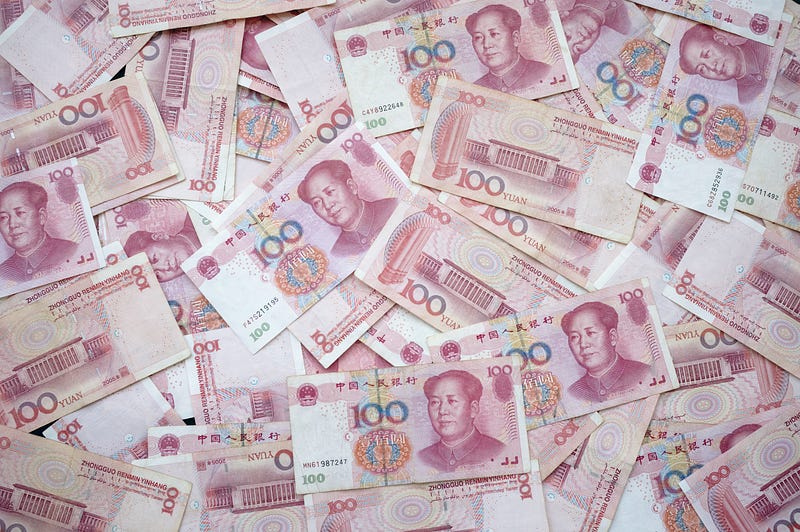
Photo by Eric Prouzet on Unsplash


e-CNY system access

As part of the arrangement, BNP Paribas China will connect into the BOCs system, accessing an e-CNY management system. The BOC has authorized ten banks in China including the four state-owned banks, all of which are domestic lenders, to deal with its digital currency business.

The direct e-CNY system access enables straight-through processing, allowing BNP Paribas to offer digital wallet functionality to its corporate clients relative to the digital yuan. Essentially, the system will allow BNP Paribas China’s corporate clients to link their bank accounts with an accompanying digital wallet. Other functionality that will be enabled as a consequence includes access to smart contract applications through the m-CBDC bridge (central bank digital currency).

BNP Paribas China CEO CG Lai commented on the partnership: “While this collaboration can supplement the Bank’s offline payment collection capabilities and further optimize our clients’ account structure, this also reinforced the Bank’s commitment to the China market.” Lai outlined that the bank intends to enhance customer service capabilities by pursuing digital innovation that, like in this instance, contributes to China’s economic development.

Louise Zhang, Head of BNP Paribas China Transaction Banking claimed that the partnership will “provide innovative, efficient cash management and trade financing services to local and multinational clients.”


CBDC development

There has been a lot of activity in recent years when it comes to the development of CBDCs. The central banks of most nations have carried out some level of preparatory or investigative work relative to a digital currency. However, China has been by far the leader in its development of a CBDC.

The BOC first began research into a digital currency in 2014. The country’s State Council approved the development of the digital yuan in partnership with China’s commercial banks in 2017. Beyond initial development, a testing phase began in 2019 with the project known as the Digital Currency Electronic Payment (DCEP) system emerging as the first version of the digital yuan after a number of years of development.

In 2020, the BOC began more extensive testing of the digital currency in four Chinese cities — Shenzhen, Suzhou, Chengdu and Xiong’an. To promote use of the currency at that time, they offered free digital yuan to residents of those cities to spend, in that way, stepping up efforts to popularize the digital currency.

Last month, the administrators of the Chinese city of Xuzhou announced that it was in the process of publishing a pilot scheme which will set out a means for promoting China’s e-CNY digital currency. Also in April, the eastern city of Changshu clarified that it is gearing up to commence paying state employees in the city in e-CNY. According to an announcement made by the city’s finance bureau the civil servants will start to receive e-CNY as payment in May.


More to Read
View All
Web3 & Enterprise·

Aug 11, 2023

BitKeep Changes Name to Bitget Wallet Following Acquisition

BitKeep Changes Name to Bitget Wallet Following AcquisitionContinuing the trend set by industry giants like Binance, KuCoin, and OKX, cross-chain wallet provider BitKeep has undergone a transformation, rebranding itself as Bitget Wallet. This strategic shift comes on the heels of the wallet’s acquisition by the prominent Seychelles-headquartered crypto exchange, which acquired a controlling stake for $30 million in March.Photo by Jon Tyson on UnsplashBitget Swap unveiledThe rebranding announcement, made on August 10, coincides with the unveiling of Bitget Swap, a novel cross-chain swap mechanism integrated into the wallet. This innovative feature draws liquidity from a network of approximately 100 decentralized exchanges spanning across 20 chains. The move positions Bitget Wallet as a versatile platform catering to traders seeking fluidity and efficiency across diverse cryptocurrencies.Bitget Wallet users are set to benefit from an enticing proposition as the exchange merges its offerings. A collective Bitget User Protection Fund, boasting a substantial $360 million pool, has been established.The fund is anchored by 6,500 Bitcoin, ensuring robust safeguards against security incidents. This initiative finds its origins in the wake of the FTX exchange collapse last November, with the fund’s value boosted by a subsequent $60 million capital appreciation due to the rally in Bitcoin prices.The synergy between the two businesses has already borne fruit for Bitget. Last month, it clarified that it had surpassed 20 million users, with the wallet integration believed to be responsible for a large part of that user growth.Growing painsBitKeep’s past wasn’t without its challenges. A security breach occurred in December when the wallet’s Android Package Kit (APK) was compromised by malware, causing losses of around $8 million among users who had installed the compromised package. In a commendable move, the company fully compensated the affected users on March 29, signaling its commitment to rectifying such setbacks.Moka Han, Chief Operating Officer of Bitget Wallet, underscored the wallet’s security-focused approach. Han revealed that cross-chain bridges are subject to stringent third-party security audits by notable entities like SlowMist and CertiK before deployment. Rigorous post-deployment monitoring further guarantees a resilient security environment.Payment channel integrationIn its recent evolution, Bitget Wallet has integrated five stable payment channels, including Banxa, Simplex, Alchemy Pay, MoonPay, and FaTPay. These integrations empower users to conveniently purchase cryptocurrencies within the wallet using methods such as credit cards, Google Pay, and Apple Pay. Additionally, the wallet has introduced a peer-to-peer marketplace, characterized by comprehensive security measures that protect both buyers and sellers.Bitget Wallet’s appeal extends far and wide across the Asia Pacific (APAC) region, boasting an impressive user base exceeding 10 million individuals. This figure constitutes nearly half of MetaMask’s user count, signifying the wallet’s considerable popularity.The company didn’t allow the rebrand milestone to pass without taking the opportunity to further promote its offering. On Thursday, it commenced a “Mystery Box Airdrop” event, offering new Bitget Wallet users the opportunity to claim individual rewards of up to 1,000 USDT.Biget’s wallet integration is in line with the changing landscape of crypto exchanges generally, with other prominent players such as OKX, KuCoin, and Binance having also ventured into the realm of self-custody wallets, enhancing their service offerings beyond traditional exchange operations.

news
Web3 & Enterprise·

Dec 02, 2023

Forkast Labs streamlines operations following merger

Forkast Labs streamlines operations following mergerForkast Labs, a crypto media and data intelligence firm, has streamlined and consolidated its operations in the wake of a merger which was carried out earlier this year.CryptoSlam mergerIn January, Forkast News, a Web3 media publication which had been founded in Hong Kong, merged with United States-based blockchain analytics firm CryptoSlam. The merger led to the formation of a newly branded entity known as Forkast Labs — a “Web3-focused data intelligence and media platform.”Forkast Labs’ merger with CryptoSlam brought together their respective strengths, with CryptoSlam specializing in non-fungible token (NFT) data tracking since its establishment in 2018. In January 2022, CryptoSlam secured $9 million in funding, led by Animoca Brands. It is worth noting that Forkast.News is also a portfolio company of Animoca, with Yat Siu, the founder and executive chairman of Animoca, overseeing the merger process.Photo by Possessed Photography on UnsplashStrategic pivotThe tie-up aimed to create a synergy between data intelligence and media in the cryptocurrency space. According to a report by The Block on Friday, recent developments suggest a potential pivot away from traditional editorial operations. Citing a Forkast Labs internal memo that the publication claimed had been shared with it, the memo stated:“There will be an increased focus on the data side going forward, and the collective team will be focused on launching new data products.”With that change of direction, it’s understood that some editorial staff have been laid off. The internal company memo went on to state that “the majority of editorial operations have been incorporated into Forkast Labs as a result of the merger between Forkast and CryptoSlam earlier this year.”The original crypto news site Forkast.News was co-founded by former Bloomberg anchor Angie Lau and former McKinsey consultant Sarah Chang in Hong Kong in 2018. The company raised $1.7 million in a seed funding round in 2021. In the wake of the January merger, the company had expanded its offerings in subsequent months with the release of indices, including the Forkast 500 NFT Index. Additionally, a partnership with The Sandbox in June aimed to “index the metaverse.”Consolidation trendThe changes effected by Forkast News and subsequently Forkast Labs are very much in line with a recent trend evidenced relative to crypto media. The Block carried out a reorganization in March that saw the firm layoff 27 staff, accounting for around one-third of its workforce. Last month, the media outlet was sold to Singapore-based venture capital group, Foresight Ventures, with a valuation of $70 million.Another prominent crypto media platform, CoinDesk, carried out an editorial staff reduction in August. It was subsequently acquired last month by cryptocurrency exchange platform Bullish in an all-cash deal led by former New York Stock Exchange President Tom Farley. Bullish is also one of three bidders in the running to buy out failed crypto exchange FTX.The evolving dynamics in the crypto media sector underscore the industry’s adaptability and pursuit of new avenues. In this instance, it demonstrates the pursuit of a data-focused business proposition amid changing market demands.

news
Web3 & Enterprise·

Dec 27, 2023

Dunamu releases content from Upbit D Conference for free on YouTube

Blockchain and fintech company Dunamu has decided to release videos and presentations from the Upbit D Conference (UDC) 2023 — one of the biggest blockchain events in the country this year — for free on the official UDC YouTube channel, as stated in an official press release on Tuesday (KST). According to the company, it aims to support and revitalize the blockchain industry by making the content publicly available, although the offline event had an admission fee.Photo by Andrei Stratu on UnsplashExpert insightsNow in its sixth year, UDC has evolved into a comprehensive conference covering not only technology, but policies, finance and culture as well. Touting the slogan “All That Blockchain,” this year’s event brought together 39 local and international experts to present an in-depth vision of the trajectory of the blockchain industry. The conference featured a series of sessions led by key industry figures such as Matt Sorg, Head of Technology at the Solana Foundation; Roger Ver, founder of Bitcoin.com; and Oh Se-hyeon, Executive Vice President of SK Telecom, who spoke on various topics like AI, blockchain and Web3. Active online participationThis year’s UDC was also the first to be held both on and offline in a hybrid format to expand access for a bigger audience. The offline event was held at the Grand Walkerhill Seoul hotel on Nov. 13 and was streamed via YouTube. It attracted a record number of online visitors, with more than 100,000 total views on the livestream and up to 10,000 viewers watching at once. The online sessions featured guests like Laura Shi, Head of International Expansion at Consensys, who explained the convenience of using digital asset wallets for managing digital asset transactions. In addition, Pacman Blur, Core Contributor at Blur, touched on the future of NFTs and their role in Web3 ecosystems. A summary of the conference’s events and discussions can be found in the UDC 2023 Report, which is available in both Korean, English and Chinese on the UDC website. “We hope that content from UDC 2023 will bring knowledge and vision of blockchain to more people,” the company said.UDC has become increasingly popular since its inception, with more than 23,100 attendees participating over the last six years. All of the videos from this year’s conference have racked up a cumulative view count of 1.28 million as of November.

news
Loading