Top

Busan Hosts Blockchain Conference with Aim to Become Digital Financial Hub

Policy & Regulation·April 26, 2023, 1:37 AM

Busan Metropolitan City hosted a blockchain conference on Monday as part of its aim to establish itself as a leading digital financial hub, according to Korean news agency News1.
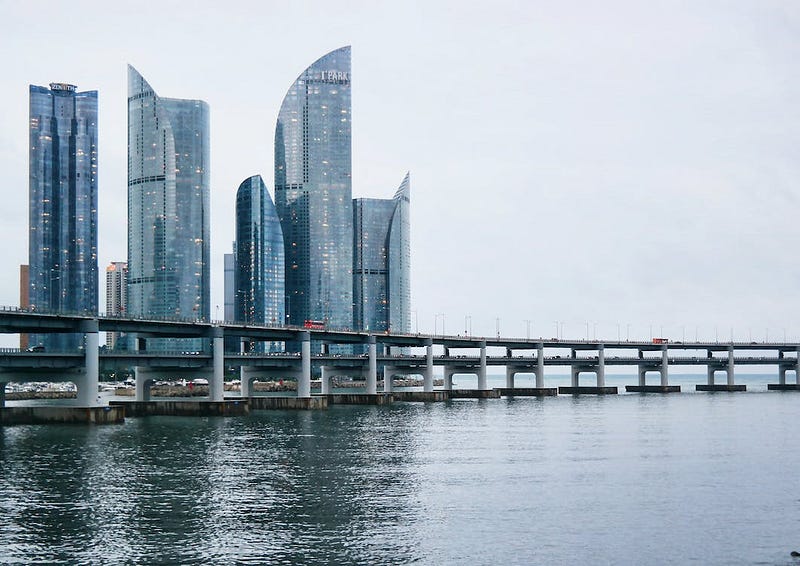
Busan, ocean view
©Pexels/BERK OZDEMIR


Dot-com bubble comparison

During the conference, Kim Sang-min, chairman of the Busan Digital Asset Exchange Establishment Committee, highlighted the distortion in the blockchain landscape caused by unfair trading due to market monopolies and subsequent regulatory challenges. He compared the current situation to the dot-com bubble, stating that despite past issues, Korea has become a technological powerhouse. Kim suggested that while there may be challenges in the crypto exchange industry, excessive regulation should be avoided to promote growth.

Kang Dae-goo, CEO of crypto exchange Borabit, agreed that many industries face initial growing pains, and the crypto industry is no exception. He urged Korea to join the race with financially-advanced countries promoting cryptocurrency in order to thrive in the digital age.


Busan as digital financial center

Experts at the event identified Busan as the city with the greatest potential to become the nation’s premier digital financial center. Kim noted that Busan, which has been designated as a zone with lenient blockchain regulations, houses financial institutions with assets totaling 261 trillion won (~$195 billion) as of 2021. The city also hosts various international events for games and movies, providing ample content to develop virtual asset ecosystems.

Kim proposed the establishment of a digital asset exchange that focuses on investor protection, emphasizing decentralization, fairness, and integration. He called for addressing current monopolistic governance practices and resolving unfair practices within crypto exchanges, such as cryptocurrency listing evaluations.


More efforts urged

Attendees at the conference suggested that the Busan government and regional banks should take the lead in building infrastructure to attract companies. Kang noted that even though Busan has been designated as a blockchain special zone for four years, 48% of the industry remain unaware of this. He encouraged Busan to step up its efforts, citing examples of other municipalities, such as Incheon, which are actively engaging in various blockchain projects.

Kang stressed the importance of public bodies providing infrastructure and support to attract businesses, adding that a business-friendly environment with a proper screening scheme will facilitate self-correction within the blockchain market as problematic companies are gradually filtered out.


More to Read
View All
Policy & Regulation·

Mar 28, 2025

Central Asian republics work towards crypto bank & crypto hub development

News emanating from the Central Asian republics of Kyrgyzstan and Kazakhstan in recent days points to further rollout and development of cryptocurrency sector infrastructure. A press release published on March 26 outlined that Kyrgyzstan is working on various initiatives in order to copper-fasten its position as a regional crypto hub. Those efforts include the advancement of digital asset regulation, enabling the launch of licensed crypto platforms and ongoing trials of legal frameworks relative to crypto. Photo by Steve Johnson on UnsplashA7A5 stablecoinOne initiative that may aid in the development of the digital assets sector in Kyrgyzstan is the rollout of the A7A5 stablecoin. A7A5 is pegged to the Russian ruble, with the token having been issued by Kyrgyz company Old Vector. The product was first launched in February, with the intention for it to be used on the A7 cross-border payment platform of Russian state-owned bank Promsvyazbank. Garantex, a Russian crypto exchange which had been sanctioned by U.S. and European authorities and was recently shut down, announced on Feb. 19 the listing of the A7A5 stablecoin. The stablecoin’s backers claim that it was issued “in complete accordance with the new national legislation - under the control of regulatory authorities and directed to an officially registered, regulated broker.” The stablecoin is being promoted on the basis of an annual yield of up to 20%, which has been established due to its link to the refinancing rate of the central bank of the Russian Federation. Kazakhstan crypto bank proposalMeanwhile, lawmakers in Central Asian neighbor Kazakhstan have proposed the creation of a national crypto bank. According to The Times of Central Asia, an English-language daily newspaper, Azat Peruashev, leader of the Ak Zhol political party within Kazakhstan’s lower house of parliament, put forward the proposal, which would implicate the involvement of the National Bank of Kazakhstan and a number of the country’s commercial banks. Peruashev addressed the proposal to Kazakhstani Prime Minister Olzhas Bektenov. However, the Central Asian country may have some fundamental issues to address before a crypto bank can become a reality. Currently, Kazakhstan has yet to establish a legal framework for the use of digital assets.  Last year, the authorities shut down 36 cryptocurrency exchanges which were deemed to have been operating illegally. In total, 3,500 illegal crypto exchanges have been shut down in Kazakhstan. Leading American crypto exchange business Coinbase faced a setback in the Central Asian country in November 2023 when the government cut access to its website within the country. While these crypto businesses have struggled to operate in Kazakhstan, Binance Kazakhstan successfully obtained a trading license from the Astana Financial Services Authority (AFSA) in September of last year. Earlier this month, the company added options trading and futures copy trading to the platform. Blockchain industry pioneer Kyle Chasse took to X to report on this most recent development. He suggested that given that 90% of crypto activity in Kazakhstan is off the books, the authorities are interested in launching a crypto bank so as to bring it all under their control. 

news
Policy & Regulation·

May 03, 2024

Upbit executive: Establishing crypto regulations hinges on building trust

At the 'Beyond Coin: Brace for Digital Asset Super Cycle' conference held in Seoul on April 30, Lee Hae-bung, Head of Investor Protection Center at Upbit, said that it is significantly important for virtual asset service providers (VASP) to fulfill their responsibilities at a time when the government authority is laying the groundwork for crypto regulations, according to local media TECH M. Upbit is one of the few licensed cryptocurrency exchanges in South Korea. The conference was jointly organized by SEUM Law Firm and local media outlet TECH M.  During his speech at the conference, Lee stated that by adhering to industrial rules and meeting obligations, VASPs can protect not only crypto investors but also themselves. This is how the crypto industry can enhance the value of blockchain and build trust surrounding the cutting-edge technology, he asserted. Photo by Lukas on PexelsShifting paradigm Lee said everything created based on blockchain and ledger technology is now deemed assets and property in the modern world, warranting new regulations. This marks a contrasting shift from the past when only fiat currencies were considered assets and mediums of storage.  In the following sessions, he delivered presentations about cryptocurrency regulations in various countries such as the U.S., Singapore, Hong Kong and several EU member states. During his speech, four moral pillars – legal clarity, responsible innovation, accountability and resilience – were particularly highlighted as ethical requirements for VASPs.  Ten minus one equals zeroLee noted that Korea's crypto industry is currently going through transitional phases, during which the nationwide crypto craze disrupted the market and turned many good-willed investors into victims. The recent Bitcoin rally has lured many young Korean investors in their 20s and 30s to the crypto market, many of whom engaged in reckless investments with borrowed money.  The industry is now at a point where regulations are being laid out for investor protection, however, heading into a sustainable and healthy direction, he added.  "Ten minus one equals zero when it comes to regulating the crypto industry," Lee said, underscoring the significance of completing all the tasks related to establishing regulation in the local crypto space. “Transparency and accountability are the two most important values VASPs must safeguard on their journey to building trust. If VASPs fulfill these obligations, they should be able to gain the trust of users. Otherwise, they must bear liability for the consequences,” he added, citing the European Union’s Market in Crypto Asset (MiCA) Regulation as a model example that values transparency and accountability. The MiCA Regulation is currently being discussed by legislators from EU member states.  

news
Web3 & Enterprise·

Apr 26, 2023

Singapore’s Cosmose AI Jilts Stripe in Favor of Near

Cosmose AI, an artificial intelligence-driven retail analytics firm headquartered in Singapore, has opted to collaborate with the Near Foundation with the aspiration of building a blockchain-based payments system centered on low transaction fees as a more cost-efficient alternative to more conventional payments processors like Stripe and PayPal. Payment platform disruptionThe Near Foundation is a non-profit organization responsible for guiding governance, contracting protocol maintainers and funding ecosystem development relative to the proof-of-stake (PoS)-based Near blockchain protocol. In a blog post published to the Cosmose AI website on Sunday, the company set out the extent of its new partnership with the Near Foundation.Cosmose AI uses AI-powered analytics to track in-store foot traffic as a basis to engage with shoppers online. Both companies will work towards building a payment system that facilitates shoppers to purchase goods and services at low transaction fees through cryptocurrency. As part of the deal, Near has made a strategic investment in Cosmose AI, reflecting a Cosmose company valuation of $500 million.In its press release, Cosmose stated that the investment from the Near Foundation means that the Cosmose “is set to apply Web3 principles and further advance the AI-driven retail ecosystem. Cosmose believes that it can leverage Web3 such that users maintain complete control over their data while benefiting from the ecosystem they help to create.The AI-driven company has a suite of retail solutions, including the KaiKai app, which enables retail customers to discover retail stores in their local vicinity. The app also includes an online targeting platform. Both elements are being overhauled with a Web3 facelift, with the Near collaboration enabling the integration of blockchain into the app.KaiKai already settles payments by leveraging Near Protocol with the creation of its own native stablecoin, Kai-Ching. Near Foundation CEO Marieke Flament said that Near will give Cosmose “the means to leverage the full potential of Web3 in a way that is sustainable, transparent, and infinitely scalable.” Moving away from Stripe, PayPalIn an interview with TechCrunch, Cosmose Founder and CEO Miron Mironiuk stated: “ I’m not sure if you know how expensive and slow it is to process online payments. It’s absolutely crazy.” The Near protocol leads with an ability to achieve inexpensive, scalable blockchain transactions. If successful in building this blockchain-based payments system, Cosmose would be in a better position to replace the use of payments service providers like Stripe and PayPal.Mironiuk gave the example of a simple coffee purchase. Small transactions like that can involve transaction fees in excess of 10%. This overhead is reflected in the overall price of the cup of coffee, with the seller passing on the cost to the buyer. In that one isolated example, Mironiuk makes the point that a regular coffee drinker could be spending an additional $200 per year to cover the costs of payments intermediaries.Over the course of nine years, Cosmose has grown to a point where it extends its service to 20 million stores. The firm operates on a global basis, with its team of eighty staff distributed across centers such as Hong Kong, Tokyo, Paris, Shanghai and Warsaw, as well as at its Singapore headquarters.

news
Loading