Top

Gemini Opening Engineering Center in India

Web3 & Enterprise·April 24, 2023, 2:29 AM

US-based crypto exchange Gemini announced on Thursday that it is in the midst of opening an engineering center in India. The company plans to open the center in Gurgaon, making it Gemini’s second largest engineering hub behind its existing base in the United States. Gemini also has offices in the United Kingdom, Singapore and Ireland.
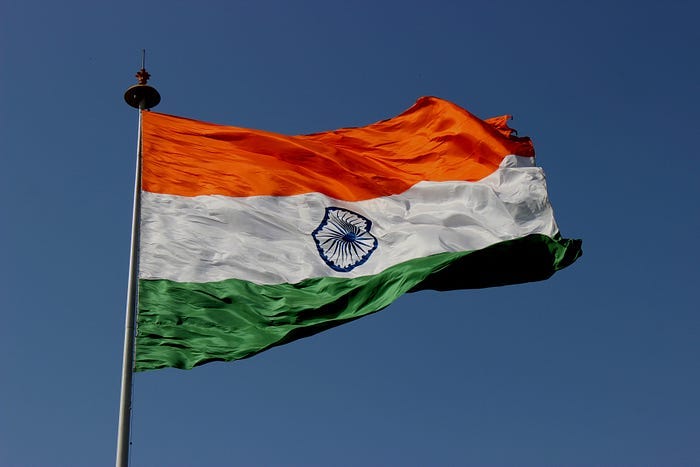
Indian flag waving
©Pexels/Studio Art Smile


Developing next-gen user experiences

The objective of the India-based engineering, design and operations team will be to work on the development of core platform fundamentals relative to compliance, security, payments, and data pipelines and warehousing. Furthermore, the unit is being set the goal of building new feature sets relative to the company’s NFT and digital asset marketplaces. What that team develops is intended to be used within Gemini’s overall retail and institutional product and service offering across in excess of seventy countries worldwide.

In the statement published to its website, Pravit Tiwana, Gemini’s Global Chief Technology Officer (CTO) and Asia-Pacific (APAC) region Chief Executive Officer (CEO) stated that the firm is actively recruiting software engineers and technical product managers and for other technical roles to staff the Gurgaon facility. Tiwana emphasizes a need for people who are “inspired to learn quickly” relative to DeFi, Web3, NFTs and DAOs.


Singapore expansion

Tiwana himself has been newly appointed to his role and in a separate announcement Gemini founders Tyler and Cameron Winklevoss welcomed Tiwana on-board. The statement also reveals that in addition to establishing an engineering team presence in India, it also intends to add a business team in India and to expand its business team at its existing Singapore base with the objective of growing its institutional and retail customer base in the APAC region.

The Winklevii twins said that they believe that “crypto and Web3 products will continue to have a [sic] strong growth trajectories in APAC. Crypto knows no boundaries, and that is why Gemini is a global company.”


Expanding beyond the US

It’s patently obvious to anyone following developments in the crypto space over the course of recent months that the Biden administration in the United States is currently hostile to crypto. The Washington, D.C. government has used various mechanisms of state including the Federal Reserve, the Securities and Exchange Commission (SEC), the Department of Justice and the Department of the Treasury to instigate a purge against crypto companies, including those who bank crypto companies. That has seen key operators in the US crypto ecosystem looking beyond US borders right now.

Earlier this week, Coinbase CEO Brian Armstrong signaled that the company would act and move overseas if the regulatory environment in the United States didn’t improve. Subsequently, it emerged that Coinbase had established a presence in Bermuda. It’s being speculated that this entity could be used to float an offshore exchange. Similarly, the company is understood to be seeking a crypto license in Abu Dhabi.

Gemini looking to develop overseas is likely to be motivated by similar concerns. Crypto companies can see that jurisdictional arbitrage applies and if governments act to stymie such business activity, other global centers such as Singapore, Hong Kong, Abu Dhabi, India and others will seize the opportunity and nurture that business and the innovation at hand.


More to Read
View All
Markets·

May 08, 2024

Hong Kong's spot Bitcoin ETFs experience first daily outflows 

On Monday, Hong Kong's spot Bitcoin exchange-traded funds (ETFs) marked their first cumulative daily Bitcoin outflows, with the sole occurrence arising from China Asset Management's (ChinaAMC) ETF. ChinaAMC's spot Bitcoin ETF witnessed an outflow of 75.36 Bitcoin, while the other two ETFs reported zero inflows. This development comes after these ETFs debuted on the Hong Kong Stock Exchange on April 30.Photo by Kanchanara on UnsplashInsights into daily trading dynamics and metricsOn their inaugural trading day, the three funds garnered an inflow of 3,910 BTC, as per data from SoSo Value. However, it's important to note that shares acquired through in-kind subscriptions of physical Bitcoin are not counted as U.S. dollar-based cash flows in SoSo Value's daily net inflow statistics. Instead, SoSo Value employs the Bitcoin-inflow metric, measuring the actual flow of Bitcoin into or out of all ETFs on a given trading day. As of Monday, the combined holdings of the three ETFs stood at approximately 4,150 Bitcoin, with total net assets reaching $266.8 million from $247.7 million on the debut day, according to SoSo Value data. Farside Investors' data corroborated similar findings, indicating an outflow of $4.9 million from ChinaAMC's spot Bitcoin ETF on Monday, while the other two ETFs saw no inflows. Trading volume and market activityDespite the outflows, the total trading volume for the three ETFs surged to $8.6 million on Monday, up from $8.01 million the previous Friday, according to SoSo Value data. Meanwhile, in contrast, spot Bitcoin ETFs in the United States witnessed a net inflow of $217.06 million on the same day, with Grayscale's GBTC fund registering its second consecutive daily net inflow.

news
Markets·

Apr 10, 2023

The Current Status of Crypto in Asia

The Current Status of Crypto in AsiaWith the United States having taken a very harsh line relative to cryptocurrency of late, there has been a lot of chatter surrounding the likelihood of Asia driving crypto forward. With that in mind, we’ve taken a look at the state of crypto in a number of Asian countries.©Pexels/RODNAE ProductionsJapanJapan is among the most crypto-friendly developed nations globally, having acknowledged Bitcoin as a legal payment mode and regulated crypto exchanges in 2017. Bitflyer and Bitbank are among the crypto exchanges operating in Japan, which currently has over 23 authorized crypto exchanges.The country aims to balance consumer protection and innovation by requiring crypto exchanges to register with the FSA, comply with stringent rules on security, anti-money laundering, and reporting, undergo regular FSA audits and inspections, and be part of the Japan Virtual Currency Exchange Association (JVCEA) for self-regulation.Despite being regulated, Japan’s crypto market is lively, with the Yen ranking second for Bitcoin trading volume by currency. The country has a flourishing crypto community, including blockchain firm LayerX, which requires ChatGPT expertise. Japan is also exploring the potential of central bank digital currencies (CBDCs) and plans to launch a pilot program with private sector partners in 2023 to test their feasibility for various use cases, aligning with the country’s strict approach to crypto.Japan’s crypto taxation is unfavorable, with crypto gains taxed at the same rates as regular income, potentially reaching up to 55% for higher income brackets. However, Japan is one of the few countries with comprehensive guidelines on crypto taxation, with the NTA providing a detailed document that explains different types of transactions and their corresponding tax calculations.ChinaChina’s ban on crypto mining led to many miners moving their operations overseas or selling their equipment at a loss. However, China’s crypto-mining industry bounced back, with a 21% share of the global hash rate. While China has a competitive advantage in cheap electricity, regulatory risks remain.China’s digital yuan is a legal tender fully backed by the People’s Bank of China (PBOC) and pegged to the renminbi. Unlike most cryptocurrencies, it is not decentralized or anonymous but is monitored by the PBOC. Adoption has been slow despite various partnerships and pilot tests, including with WeChat Pay.China is working with other countries on the Multiple CBDC Bridge project to explore the feasibility of cross-border fund transfers among different currencies. Launching its own CBDC may allow China to reduce its reliance on the US dollar and increase its influence over global trade and monetary policy. However, the success of that endeavor is questionable.Hong KongHong Kong is a crypto-friendly jurisdiction that faces banking access and mainland influence challenges. Despite difficulties opening local bank accounts after the closure of two crypto-friendly banks, Hong Kong remains committed to fostering its fintech hub status.The government proposed allowing retail investors to trade cryptocurrencies and ETFs and reviewing property rights for tokenized assets while considering legalizing smart contracts. Crypto purchases for all citizens are due to be legalized in June 2023. These measures should attract more investors and businesses to the city’s crypto industry.Nonetheless, Hong Kong must overcome hurdles regarding banking access and regulatory uncertainty from mainland China to maintain its attractive status for crypto businesses and investors.SingaporeSingapore has a supportive crypto ecosystem and regulations with low tax rates, favorable policies, strong financial center reputation, and proximity to other Asian markets. Notable international crypto players with offices in Singapore include Coinbase, Crypto.com and Kraken.However, Singapore imposes strict rules on crypto service providers to prevent illicit activities, requiring digital payment token (DPT) services to obtain a license under the Payment Services Act or face fines and jail time. Singapore’s crypto industry also faces competition from other jurisdictions, such as Hong Kong and the UAE, offering tax incentives and favorable legal frameworks.IndiaIndia’s crypto industry faces uncertainties due to the lack of a clear regulatory framework and frequent changes in the government’s stance. Despite having a large tech-savvy population and an active crypto community, the industry struggles with regulatory compliance and legal risks. In 2018, the Reserve Bank of India’s ban on banking channels cut off many crypto businesses and users.The Supreme Court of India later overturned the ban, but draft bills to ban or regulate crypto have since been proposed without official introduction or passage. India recently imposed a preemptive ban on crypto advertising and sponsorships and is exploring the integration of a CBDC. India’s position on crypto leans toward the anti-crypto side, just short of an outright ban.For brevity, we’ve confined discussion to these five Asian venues. However, it would be remiss of us not to mention that Vietnam has one of the highest levels of crypto adoption in the world while having a crypto trading ban in place. Not so in South Korea where crypto trading is legal, with strict regulation having been put in place. Meanwhile, Thailand’s Securities and Exchange Commission (SEC) has approved four cryptocurrencies as tradable assets, with crypto trading in the country having a legal status.It’s difficult to figure out precisely how crypto will develop geographically but it seems certain that its future will be molded to some extent in Asia.

news
Web3 & Enterprise·

Nov 17, 2023

Binance and Gulf Energy launch digital asset exchange in Thailand

Binance and Gulf Energy launch digital asset exchange in ThailandThe world’s largest cryptocurrency exchange, Binance, has teamed up with Gulf Energy Development, a leading energy company in Thailand, to operate a digital asset exchange in the country.Photo by Than Diep on UnsplashInvitation-only launchThe new platform, Binance.th, aims to capture the growing demand for crypto services in Southeast Asia. Binance.th, which is currently in its beta testing phase, is expected to open to the public in early 2024. A filing on Wednesday by Gulf to the Thai stock exchange demonstrates that the platform has received approval from the Thai Securities and Exchange Commission to offer exchange and brokerage services for cryptocurrencies and digital tokens. The filing states:“Gulf Binance’s digital asset platform will provide digital asset exchange and digital asset broker services for both cryptocurrencies and digital tokens, prioritizing security and compliance with SEC regulations.”The platform is initially available by invitation only, and the plan is to eventually open the exchange to the general public. It’s understood that the platform will strive to provide a “globally standardized” service that will enhance the level of service in Thailand and promote the development of the country’s blockchain ecosystem.Market opportunityBinance.th enters the Thai crypto market at a time when the local leader, Bitkub, holds a dominant share of 75.4%. Bitkub benefited from the global crypto market downturn in 2022, which affected its competitors such as FTX and Zipmex.Although it has extended market share during the downturn and as a consequence of the demise of other platforms, Bitkub has also struggled with market conditions. In July its parent company Bitkub Capital Group, reduced headcount by six percent. Bitkub recorded $28.6 billion in trading volume last year, out of the total $37.94 billion generated by the top four Thai exchanges.Binance.th hopes to challenge Bitkub’s position by leveraging Binance’s global reputation and expertise in the crypto industry.Legal woesThe launch of Binance.th comes amid Binance’s legal and regulatory troubles in the U.S. and Europe. In September, the U.S. Securities and Exchange Commission (SEC) sued Binance, its U.S. subsidiary, and its founder Changpeng Zhao (CZ) for allegedly listing unregistered securities in the form of cryptocurrencies.In June, the SEC also accused CZ and Binance of illegally marketing its international platform to U.S. customers.Binance has been trying to improve its compliance and governance standards in response to regulatory scrutiny. The company has hired former regulators and executives from the traditional finance sector to lead its operations in various regions. Binance has also applied for licenses and registrations in several jurisdictions, such as the U.K., Singapore and Japan.The origins of this deal stem from a memorandum of understanding (MOU) signed between Binance and Gulf Energy in January 2022. The joint venture business which emerged acquired a digital operator license in Thailand in May of this year.By expanding its presence in Southeast Asia, Binance hopes to tap into the potential of the emerging crypto markets and diversify its revenue streams. Binance.th also marks the first bank-backed crypto exchange in Thailand, as Gulf Energy Development is partly owned by the state-owned Krung Thai Bank.

news
Loading