Top

Hong Kong Enticing Crypto Firms from Mainland China

Policy & Regulation·April 14, 2023, 2:14 AM

In the wake of various scandals and high-profile bankruptcies, some governments have shunned the cryptocurrency industry, but Hong Kong is instead embracing mainland China crypto companies, urging them to relocate to the city in a bid to bolster its status as a financial hub.
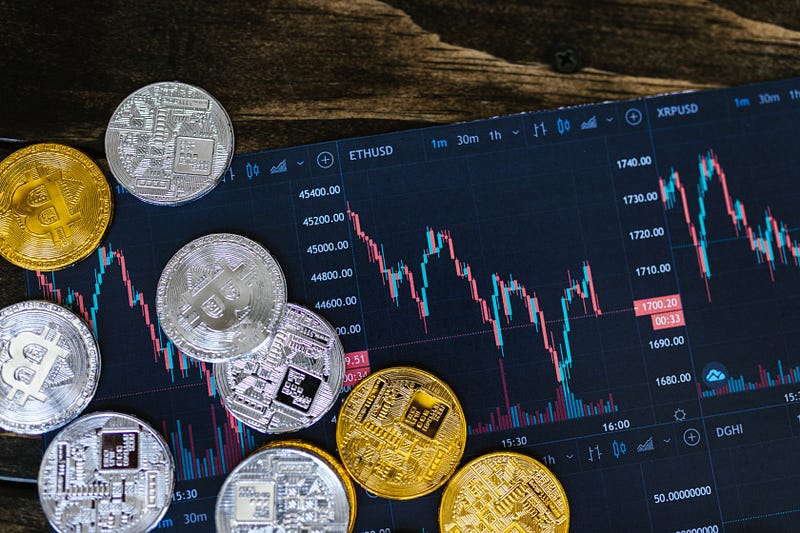
crypto coins and a candle chart on treading platform
©Pexels/RODNAE Productions


Embracing crypto

After enduring an exodus of bankers amid a China security crackdown and stringent COVID curbs, Hong Kong is now making a concerted effort to revitalize its finance sector by embracing crypto. Top Hong Kong government officials, including Chief Executive John Lee, have voiced their support, and the city is planning to hold 100 crypto-related conferences and lavish parties throughout April. Hong Kong is “very serious about building an international virtual asset center,” said Xiao Feng, chairman of Hong Kong crypto exchange HashKey, which drew 13,000 people on the first day of its Hong Kong Web3 Festival, the most significant conference of the month.

HashKey obtained a license to operate in Hong Kong last November, making it one of two licensed crypto exchanges in the city, alongside rival exchange OSL. Xiao told Reuters that many people in the crypto industry had initially assumed that Hong Kong would inevitably adopt the same regulations as mainland China. However, the government is now emphasizing that Hong Kong operates under the “One Country, Two Systems” framework and enforces distinct laws.


Skeptics

Despite this, many remain skeptical of Hong Kong’s promise of a stable regulatory regime on cryptocurrencies. One crypto venture capitalist, who spoke to Reuters on the condition of anonymity due to the sensitive nature of the matter, expressed concern over China’s crypto ban, which still looms large in the background. “If Hong Kong can suddenly claim to be crypto-friendly, that switch can be flipped off just as quickly should things become challenging,” he said.


Crypto licensing interest

Nevertheless, at least 10 companies with Chinese founders, including OKX, Bybit, and Huobi, have announced or are planning to announce their bid for licenses in Hong Kong. These firms, which have exited countries like Canada and the UK, are among the sponsors of the most glamorous Hong Kong parties this week. Bybit held a private dinner for industry heavyweights, and OKX reserved a rooftop venue overlooking Victoria Harbour, where guests could enjoy a stunning view.

At one event on Tuesday, Tron founder Justin Sun, addressed a mainly Chinese-speaking audience, stating, “I can’t believe that we are having such conferences on Chinese soil.” Sun has been charged with fraud by the US Securities and Exchange Commission (SEC), but he argued that the charges lacked merit and accused the regulator of targeting crypto players. “Hopefully, one day, we will have such events in Shanghai and Beijing,” he remarked.

Despite the lingering concerns, Hong Kong is committed to establishing itself as a leading finance hub in the cryptocurrency industry and is sparing no effort to achieve its goals.


More to Read
View All
Web3 & Enterprise·

Sep 08, 2023

AsiaNext Secures Market Operator License from Singapore’s MAS

AsiaNext Secures Market Operator License from Singapore’s MASThe Monetary Authority of Singapore (MAS) has granted regulatory approval to AsiaNext, officially designating it as a Recognized Market Operator (RMO).The firm announced the milestone achievement via a blog post published to its website on Wednesday. The license opens the doors for AsiaNext to operate as a digital asset exchange exclusively catering to institutions, including banks, family offices, asset managers, broker-dealers, prime brokers, hedge funds, and market makers.This RMO license, granted by MAS, complements the in-principle approval of the Capital Markets Services (CMS) license awarded to AsiaNext in June. AsiaNext, under the leadership of its CEO, Chong Kok Kee, has positioned itself as an institutional-grade exchange with a focus on compliance and risk management.Kok Kee expressed his elation at receiving the full RMO license from MAS, emphasizing that the AsiaNext team has constructed an institutional-grade exchange governed by stringent compliance and risk management standards, not only for their organization but also for the various asset classes traded on their platform.Photo by Davis Sánchez on PexelsPivotal and positive industry shiftRecent months in Singapore, Hong Kong, Dubai, and other centers geared towards progressive regulation have demonstrated a pivotal shift in the industry, as responsible contributions to a secure digital asset ecosystem are now better poised to advance the mainstream adoption of digital assets.Chua Kah Hau, Chief Compliance Officer at AsiaNext, reiterated the company’s dedication to upholding the highest standards of regulatory compliance and corporate governance, aiming to provide a fair, orderly, and transparent marketplace where institutional investors can confidently reap the benefits of digital assets.Amidst the growing institutional appetite for trading digital assets, AsiaNext’s role is significant. There is a noticeable scarcity of regulated and secure platforms to satisfy this demand, making AsiaNext’s presence crucial in meeting this market need.AsiaNext originated as a joint venture between SBI Digital Asset Holdings and SIX Group in 2021. Now, holding both the RMO and CMS (in-principle) licenses, the firm is well-equipped to provide integrated listing, trading, and post-trade services for digital assets.Fernando Luis Vázquez Cao, CEO of SBI Digital Asset Holdings, highlighted Singapore’s favorable regulatory environment, stating: “The regulatory environment in Singapore is favorable for fintech firms, which is why we have selected it as the headquarters for AsiaNext. The nation’s commitment to fostering innovation and worldwide recognition of Singapore’s economic potential as a global digital asset trading hub have been pivotal factors in our decision.”Colt Technology partnershipIn a strategic move, last month AsiaNext partnered with Colt Technology Services to leverage its suite of secure, high-performance digital infrastructure solutions, including Multicast Market Data in the Cloud and PrizmNet.The partnership is set to facilitate high-frequency trading of various digital securities and crypto derivatives trading on AsiaNext. Notably, AsiaNext stands as the first institutional-grade digital exchange to utilize Colt Multicast Market Data in the Cloud, providing a unique solution to connect buyers and sellers.This connectivity breakthrough aims to bridge the gap between mainstream finance and secure digital assets trading, coming at a time of rapid growth in digital asset trading in Asia and significant global investment in the region’s crypto markets.

news
Web3 & Enterprise·

Aug 08, 2025

Bakkt takes stake in Japanese textile firm in pivot to crypto treasury strategy

Bakkt, an American digital asset custodian and trading firm, has acquired a stake in Marusho Hotta, a Japanese textile firm, as part of a new crypto treasury strategy which the company adopted recently. The firm, which was established in 2018 and is 55% owned by Intercontinental Exchange, the owner of the New York Stock Exchange (NYSE), published a statement on its website on Aug. 6, outlining that it had acquired a 30% stake in Marusho Hotta. The textile firm, a publicly-listed company on the Tokyo Stock Exchange (TSE: 8105), is both a manufacturer and distributor of yarn and bedding, as well as Japanese and Western clothing.Photo by 🇸🇮 Janko Ferlič on Unsplash‘bitcoin.jp’As a result of the transaction, Bakkt International President Phillip Lord will become CEO of Marusho Hotta, and the company will be renamed as “bitcoin.jp.” Akshay Naheta, co-CEO of Bakkt, commented on the development, stating: "Japan's regulatory environment creates an ideal platform for a Bitcoin-centered growth business. We look forward to working with MHT's team to integrate Bitcoin into their operating and financial model and to establish MHT as a leading Bitcoin treasury company." Back in June, it emerged that Bakkt was working towards raising $1 billion from investors, providing the first indication that the firm was moving towards pursuing a crypto treasury strategy. A filing lodged with the Securities and Exchange Commission (SEC) at the time stated:“We may acquire Bitcoin or other digital assets using excess cash, proceeds from future equity or debt financings, or other capital sources, subject to the limitation set forth in our Investment Policy.” The company went on to outline that the timing and magnitude of any such crypto purchases would depend upon market conditions at the time, capital market receptivity, the firm’s business performance and other strategic considerations. Given the credentials within traditional finance of the company’s owners, the arrival of Bakkt in 2018 was seen as a significant event within the crypto sector. However, the firm’s journey has not been an easy one. It started out by trying to appeal to retail users and bring about real-world use of cryptocurrency. It established an app and a partnership with Starbucks, which looked to bring crypto into mainstream use in terms of everyday payments.However, that partnership fizzled out and in 2024 a filing lodged by the company with the SEC revealed that the company’s position was challenging, with it warning that it “might not be able to continue as a going concern.” When the business first launched, it aspired to bring Bitcoin to 401(k) retirement accounts in the U.S. It may have been ahead of its time in that regard as it had to contend with Donald Trump’s first term as president when he wasn’t particularly pro-crypto and a distinctly anti-crypto Biden administration immediately afterwards. It is only now, seven years after the founding of Bakkt, that the current Trump administration is finally moving to allow crypto investment to form part of 401(k) plans. More recently the firm had concentrated on catering to the needs of institutional investors but faced further turmoil earlier this year when it lost two customers who allegedly made up 73% of Bakkt’s revenue.

news
Policy & Regulation·

Apr 29, 2024

Investigation launched into prominent Chinese blockchain figure Yao Qian

Authorities in China have disclosed that Yao Qian, a prominent figure in the country's blockchain industry and former head of China's central bank digital currency institute, is under investigation by the nation's anti-graft watchdog. The announcement was made on Friday, revealing that Yao is "suspected of serious violations of discipline and law." However, specific details regarding the nature of the investigation were not provided.Photo by Max van den Oetelaar on UnsplashCareer and recent roleYao Qian currently holds the position of head of the technology regulation department at the China Securities Regulatory Commission. Earlier in the month, he authored an opinion piece titled “Warnings Mount Over Novel Bitcoin ETFs That Have Taken the U.S. by Storm” on Caixin, a prominent Chinese financial news platform. Born in 1970, Yao initially served as the inaugural head of China's central bank digital currency research institute in 2017 before transitioning to the securities regulator in 2018. Contributions to blockchain discourseThroughout his career, Yao Qian has been actively involved in discussions surrounding blockchain technology. In 2022, he published a book covering various topics within the blockchain space, including DAOs, DeFi, NFTs and X-to-earn models. In the foreword of his book, Yao emphasized the growing significance of Web3 innovation, noting it as a development direction of high importance and value for nations. Lack of specifics surrounding investigationThe announcement of Yao Qian's investigation has left many observers in the blockchain industry with questions, as authorities did not provide clear reasons for the probe. Despite his past contributions and current role in technology regulation, the investigation raises uncertainties about Yao's future involvement in the blockchain sector and his standing within Chinese regulatory circles. As developments unfold, stakeholders within the blockchain community will continue to monitor the situation surrounding Yao Qian's investigation and its potential implications for China's blockchain policies and initiatives. 

news
Loading