Top

Korean Prosecutors Say Do Kwon and His Colleagues Knew Terra Was Unviable from the Beginning

Policy & Regulation·April 11, 2023, 1:50 AM

Korean prosecutors claimed that Terraform Labs founder Do Kwon and the key members behind the Terra-LUNA crash were aware of the project’s unviability from the beginning, according to a file issued by the Seoul Southern District Court.

Terraform Labs logo
©Terraform Labs


Terraform Labs founders misleading Korean investors

Terraform Labs founders Do Kwon and Daniel Shin attracted 280,000 investors in Korea alone, claiming that the Terra stablecoin is a means of transaction, even though the company leaders had been notified by the financial authority that Terra-accepting businesses were impermissible. It is reported that during a search and seizure of the company, Korean prosecutors collected evidence that its employees shared such knowledge on their internal messaging system.


Terra’s cross trading on crypto exchanges

Knowing their cryptocurrency’s unviability, Terra executives registered its sister token LUNA for listing on major Korean crypto exchanges in May 2019. According to the Korean prosecution, they used a bot to create a trade volume of more than 800 million won in three domestic crypto exchanges by cross trading between 2019 and early last year.

Cross trading is illegal in the stock market, as it is considered as an act of price manipulation, but LUNA was traded in crypto exchanges and it hasn’t been determined whether their token is a security or not. Under current Korean law, the court has to accept it as a security to punish those behind the Terra collapse.


Shin’s denial of allegations

Meanwhile, Daniel Shin denied the prosecution’s allegations and argued that they had never received such a notice from the financial regulator.

More to Read
View All
Web3 & Enterprise·

Jan 17, 2024

Klaytn Foundation and Finschia Foundation to jointly launch largest blockchain network in Asia

The Klaytn Foundation and Finschia Foundation have jointly submitted a governance proposal to launch a new mainnet created by merging their respective blockchain ecosystems. The proposals have been submitted for open discussion, with voting scheduled for Jan. 26 to Feb. 2, according to an official announcement on Wednesday (KST).Photo by Shubham's Web3 on UnsplashThe main objective of this initiative is to create Asia’s largest Web3 ecosystem by combining key features of both blockchains. To do so, the two foundations plan to share their technologies, services and business networks and fortify connections between their partners like their mother companies Kakao and LINE, who have contributed to their development and expansion. “We are excited to be taking the first step toward unlocking the enormous synergy of merging the public blockchains started by Kakao and LINE, which are both leading IT companies in Asia,” the two foundations said. “We will give our best to make this merge an opportunity to innovate and lead the Asian blockchain industry in both technology and adoption.” An unprecedented mainnet ecosystemThe merger will bring together Klaytn and Finschia’s networks in different Asian countries, like Klaytn’s leverage in South Korea, Singapore and Vietnam, and Finschia’s service network in Japan, Taiwan, Thailand and Abu Dhabi. Once the combined ecosystem is launched, it will offer over 420 decentralized apps (dApps) and services, 45 governance partners and some 450 Web3 resources, becoming a mammoth Web3 network capable of swaying the trajectory of the Asian market. In addition, the blockchain will be connected with both Kakao and LINE messengers – two well-known messenger apps in Asia – opening up access to a vast continental user base of over 250 million people. The integration is also expected to catalyze the creation of new Web3 infrastructure in Asia, boosting scalability and liquidity. Future business plansThe joint foundation is specifically set to undertake projects in areas like RWA tokenization, GameFi, DeFi verticals, messenger-based Web3 services and digital commerce through partnerships with Japanese, South Korean and Southeast Asian firms. By leveraging its access to Kakaotalk and LINE users, the new public blockchain has the potential to be a springboard for IT and entertainment enterprises in Asia. Improved tokenomicsWhat may especially interest shareholders and users alike is a new native token that will be issued on the merged network, replacing the foundations’ respective tokens KLAY and FNSA. Holders of KLAY and FNSA will be able to swap their tokens for the new one. The proposed tokenomics system for the new token emphasizes sustainable value creation. This includes a lower base inflation rate and a 3-layer burning model created to encourage deflation as activity on the network increases. 24% of newly issued tokens will also be burned immediately as a trustworthy Zero Reserve Tokenomics measure. This will all be supported via an ecosystem fund and infrastructure fund that are constantly replenished via block rewards, rather than relying on reserves.Enhanced governance and interoperabilityKlaytn and Finschia also plan to bring together their experiences in practicing good governance to build a  permissionless node validation system to put the spotlight on users and the community, promoting transparency, trust and openness. To support the seamless migration and interoperability of existing dApps and services on Klaytn and Finschia, the merged chain will support the smart contract platforms EVM and CosmWasm. Ethereum and Cosmos builders will thus be able to gain access to the network. The foundations are set to host an upcoming event called Klaytn Community Town Hall on Friday to introduce the proposal and facilitate open dialogue and feedback.

news
Web3 & Enterprise·

Sep 02, 2025

Korean crypto exchanges list Trump-linked cryptocurrencies

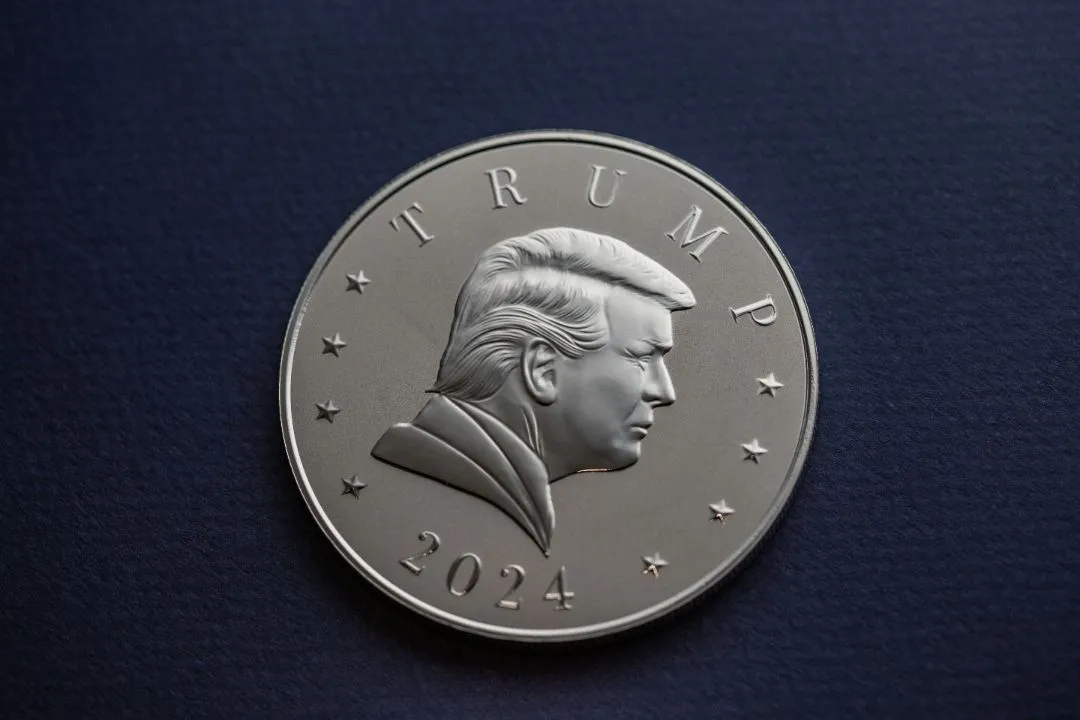
Cryptocurrencies tied to the family of U.S. President Donald Trump began trading on South Korea’s major exchanges on Monday. Upbit, the country’s largest exchange, listed WLFI—the native token of World Liberty Financial, a DeFi platform backed by the Trump family—and World Liberty Financial USD (USD1), a stablecoin the platform says is pegged 1:1 to the U.S. dollar and backed by dollars and government money market funds. Bithumb also listed both WLFI and USD1, while Coinone listed WLFI only.Photo by Scottsdale Mint on UnsplashFrom global listings to a volatile debutWLFI’s first session was volatile. It opened on Upbit at a floor price of 433.76 won ($0.31) and, roughly 17 hours later, was down about 25% at 323 won ($0.23) at the time of publication.Source: WLFI/KRW spot trading pair on UpbitThe Korean launch comes alongside listings on major global venues, including Binance and Coinbase. Until its exchange listings, WLFI holders had been unable to trade their tokens. The Wall Street Journal estimated the Trump family’s holdings, representing less than a quarter of the supply, to be worth close to $5 billion after the listing. Trump’s three sons are named as co-founders of World Liberty, which says tokens allocated to founders and team members will remain locked. President Trump is described as the project’s “co-founder emeritus.” Political controversy over crypto and holdingsThe project has drawn criticism from those who argue it could serve as a conduit for influence, with partners and investors seeking political favor. In April, Democratic lawmakers Senator Elizabeth Warren and Representative Maxine Waters warned the U.S. Securities and Exchange Commission that the family’s stake posed “an unprecedented conflict of interest” in oversight of the crypto industry. Later, White House press secretary Karoline Leavitt said, “Neither the President nor his family have ever engaged, or will ever engage, in conflicts of interest.” Controversy over public officials’ crypto exposure is not new. Recently, it was reported by The Chosun Ilbo that as of Aug. 14, Lee Eog-weon, nominee to chair South Korea’s Financial Services Commission (FSC), held 10 shares of Strategy, a Nasdaq-listed Bitcoin treasury company with 632,457 BTC in reserves. The disclosure indicates no legal violation because the holdings predate his nomination, but it highlights tension with his public views. In a letter to parliament ahead of his confirmation hearing, Lee questioned crypto’s intrinsic value and argued its volatility undermines its utility as a store of value or medium of exchange. If Lee were not seeking a government post, his holdings of crypto-related stocks would hardly surprise South Koreans. According to Money Today, citing data from the Korea Securities Depository (KSD), Korean investors increased purchases of crypto-related U.S. equities amid expectations of U.S. rate cuts. Bitmine Immersion Technologies—a Bitcoin miner that also accumulates Ethereum as a treasury asset—was the second-most purchased U.S. stock by Koreans in August, with net buys of $252.77 million, or 7.6% of all purchases among the top 50 U.S. stocks. Stablecoin issuer Circle ranked 10th at $92.62 million, and the GraniteShares 2x Long COIN Daily ETF, which delivers twice the daily price movement of Coinbase, ranked 11th at $90.74 million. In total, crypto-related stocks and ETFs accounted for 30.4% of the top 50 U.S. equity holdings by value. South Korea weighs spot ETFs amid investor surgePolicy is moving in tandem with market interest. Spot crypto ETFs have recently been elevated to South Korea’s national agenda, opening the door to potential approval. Analysts say such products could repatriate demand that has been flowing overseas. Kim Jin-young of Kiwoom Securities argues that expanded regulatory approval could reshape Korea’s capital market by widening investor access, drawing in institutional capital, stabilizing prices, and diversifying available crypto-linked products. 

news
Policy & Regulation·

Jul 01, 2025

Kazakhstan establishing national crypto reserve

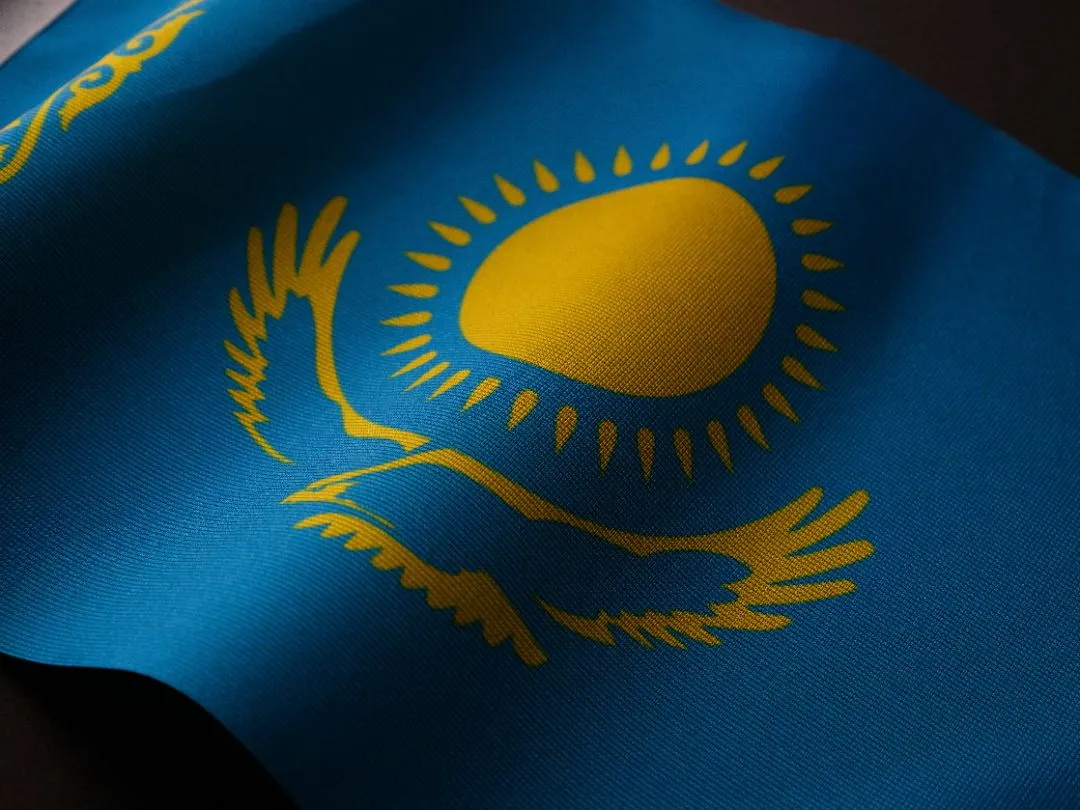
Kazinform, the state-owned official news agency of Kazakhstan, has reported that the central Asian republic is working towards the establishment of a national crypto reserve. The news agency revealed that in answering an inquiry from a member of the Kazakhstan parliament, Timur Suleimenov, Governor of the National Bank of Kazakhstan, said that the central bank is currently studying information related to the formation and management of a national crypto reserve. Photo by engin akyurt on UnsplashFollowing best international practicePlans are being devised for a crypto reserve on the basis that best international practice as applied to sovereign wealth fund management is adopted. In this respect, guidelines related to transparency of accounting and secure crypto custody will be followed. The reserve will be established through an affiliate entity of Kazakhstan's central bank, specializing in alternative investments. In responding to the parliamentary inquiry, Suleimenov also revealed the likely source of funding for the fund. He stated: “International practice shows that the sources for such a reserve may include confiscated crypto-assets, as well as  cryptocurrencies mined by a crypto miner partially owned by the government.” Suleimenov outlined that while crypto assets have proven to be volatile and riskier than other asset classes, having the reserve controlled and managed by a central bank affiliate would result in the required levels of risk management and overall oversight being applied. According to Kursiv, a news organization focused on the Central Asian region, the authorities in Kazakhstan plan to amend relevant legislation so as to enable the effective management of the crypto reserve. Suleimenov stated that the central bank is open to discussing potential legislative amendments with members of Kazakhstan's parliament. The National Bank of Kazakhstan's governor also warned that misinformation by pseudo-business coaches related to cryptocurrencies needs to be curbed. He feels that in order to protect investors, and particularly young people, legal measures will be necessary in an effort to bring about greater transparency within the country’s crypto market. The authorities in Kazakhstan currently have a crypto regulatory framework in place that requires crypto trading platforms that extend their services to local users to have acquired a trading license from the Astana International Financial Centre (AIFC).  In May, it emerged that the Central Asian republic is planning to establish a pilot project for cryptocurrencies called “CryptoCity.” At the time, Kazakhstan’s president, Kassym-Jomart Tokayev, delivered a speech at the Astana International Forum outlining that the CryptoCity project would facilitate the use of crypto for the payment of goods and services within a specific geographical zone. Crypto hub potentialEarlier that month, the country’s First Vice-Minister of Digital Development, Innovation and Aerospace Industry, Kanysh Tuleushin, said that Kazakhstan had the potential to emerge as a leading cryptocurrency hub within the Central Asian region. Following the implementation of a ban on crypto mining in China in 2021, Kazakhstan experienced an influx of miners, attracted by cheap electricity. However, the arrival of miners was unplanned for, putting extreme pressure on the local electricity grid, resulting ultimately in brownouts and protests. The country once accounted for 27% of global Bitcoin mining. However, regulations introduced in 2023 led to the activity being scaled back considerably.

news
Loading