Top

Four Pillars for Success in Korean Security Token Market

Policy & Regulation·April 10, 2023, 3:41 AM

On Wednesday, blockchain experts in various fields gathered at the 2023 Blockchain Meetup Conference held in Seoul to discuss issues with security tokens and their outlook.
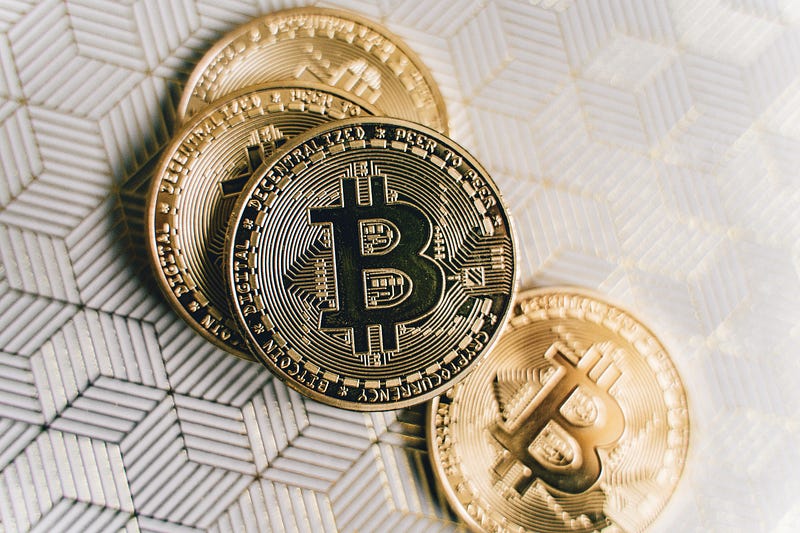
©Pexels/Alesia Kozik

What attracted security token businesses’ attention at the meeting was a presentation by Jung Eui-heon from Lambda256, a subsidiary of Korean crypto exchange Upbit’s operator Dunamu. He shared four pillars for success in the Korean security token market.


Security tokens gaining traction in Korea

Security tokens have been a trending topic in the Korean blockchain industry since the Korean Financial Services Commission (FSC) allowed the issuance and trading of security tokens last February. Furthermore, a 2022 report jointly published by Boston Consulting Group and Singaporean investment platform ADDX predicted that the total size of illiquid tokenized assets worldwide would reach $16 trillion by 2030.

Against this backdrop, here are the four keys to successful security token projects that Jung outlined.


Technology adaptation

First, he emphasized the importance of adopting rapidly changing technology. To tackle the issue, he suggested teaming up with advanced tech companies for long-term collaboration. When choosing tech partners, companies should ensure they are sustainable, possess technological prowess, hold credibility on high volume transactions, and maintain the security level of financial institutions, Jung advised.


Forging partnerships

The second point he mentioned was the need to forge partnerships. The FSC’s February guideline requires the issuance and distribution of security tokens to be managed separately. This means that security token projects require collaboration between issuers, distributors, account managers, asset holders, and tech companies.


New securities products

Jung also noted that discovering new securities products is crucial. Partnering with existing fractional investing companies may help accelerate the security token project initially, but in the long run, enterprises will eventually have to create products in various fields such as gaming, movies, and entertainment.


Token liquidity

Lastly, Jung underlined the token liquidity, which plays a crucial role in determining its prices. Issuers will need to find various distributors and vice versa. Securing liquidity requires the establishment of a technical standard that improves interoperability and compatibility, he highlighted.


More to Read
View All
Web3 & Enterprise·

Jun 30, 2025

Litigation set to fuel Bitcoin accumulation at Genius Group

Artificial intelligence-driven education technology firm, Genius Group, has announced a plan to buy Bitcoin from the proceeds of damages that the company is pursuing through the courts. In a press release published to the Singapore-headquartered company’s website on June 26, it outlined that the firm’s Board of Directors has approved a distribution plan that would see any potential damages received from litigation that Genius Group is currently embroiled in, divided equally for distribution to shareholders and for the purchase of Bitcoin for the company’s Bitcoin treasury.Photo by Kanchanara on UnsplashUp to $1 billion in potential damagesGenius Group CEO, Roger Hamilton, commented on the matter, stating:“We are seeking combined damages of over $1 billion. As both lawsuits are being pursued by the Company to recover damages caused by third parties directly to our shareholders, the Board believes that 100% of any proceeds from the successful outcome of these cases should be directly distributed or reinvested for the benefit of shareholders.” On X, Hamilton outlined that there’s no guarantee with regard to how much the company recovers through litigation. However, he added that if justice prevails and the company is awarded $1 billion in damages, that would equal a $7 dividend per share for shareholders and the addition of 5,000 BTC to the firm’s Bitcoin treasury. Last month, the company provided an update on a lawsuit it has taken under the Racketeer Influenced and Corrupt Organizations (RICO) Act. Initially, $450 million in damages had been pursued but Genius Group amended the lawsuit, raising its claim to $750 million.  The lawsuit is being taken against Peter Ritz and Michael Moe as the controlling officers and directors of LZGI International, and against Michael Carter and John Clayton, in the United States District Court, Southern District of Florida. The company alleges that the defendants attempted to defraud Genius Group.  ‘Bitcoin First’Genius Group announced its “Bitcoin First” approach, and the launch of a Bitcoin treasury in November 2024, getting started with an initial purchase of 110 BTC valued at $10 million at that time. In April 2025, a New York court prohibited the company from selling stocks in order to fund the purchase of Bitcoin. Those court-imposed funding restrictions led to the firm selling off a small proportion of the overall Bitcoin that it was holding.  Prior to that prohibition on the purchase of Bitcoin being imposed, Genius Group had expressed the aspiration to build up its Bitcoin reserve to a value equivalent to $100 million. Wading further into the Bitcoin space, the firm acquired blockchain learning platform, XD Academy, in December 2024. On May 22, Genius Group announced that the U.S. Court of Appeals had overturned the ban imposed on the company. With that, it increased its Bitcoin holdings by 40%. As of June 17, the company held 100 BTC, valued at around $10 million. The firm plans to bring forward another lawsuit “alleging naked short selling and evidence of spoofing against certain parties,” with damages being pursued in the region of $250 million. Commenting on the coming of age of Bitcoin and the pursuit of a Bitcoin treasury strategy back in November 2024, Hamilton stated that “we're living in a unique moment in history - one most public companies will miss.” 

news
Web3 & Enterprise·

Jul 28, 2023

Com2uS Integrates Summoners War: Chronicles into Blockchain Mainnet XPLA

Com2uS Integrates Summoners War: Chronicles into Blockchain Mainnet XPLASouth Korean game developer Com2uS announced today the onboarding of its massively multiplayer online role-playing game (MMORPG) called Summoners War: Chronicles on Com2uS’ blockchain mainnet XPLA.Photo by Muha Ajjan on UnsplashOwnership and rewardsWhat sets Chronicles apart is its play-to-own (P2O) service, allowing players to own in-game assets and be rewarded for their time and efforts. This is made possible through a system of tokenomics, enhancing the overall gaming experience.Since its global launch in March of this year, Chronicles has garnered significant recognition and popularity due to its sophisticated strategy gameplay and abundant content. Now, with its integration into the XPLA blockchain, the game aims to establish itself as an AAA title within the blockchain gaming market.Three in-game currenciesThe game’s P2O system is pillared by three in-game currencies: Rahild, Mileage, and Xlium. Players can earn Rahild by trading items, participating in events, and accomplishing challenging tasks. Rahild can then be exchanged for Mileage and other valuable items. Mileage, on the other hand, can be traded for Xlium, which can be further converted to XPLA, the native token of the blockchain, through XPLA GAMES Wallet.A Com2uS official said that the introduction of Chronicles on the XPLA mainnet opens up a world of exciting gaming experiences for both existing players and newcomers exploring the Web3 gaming realm. Players will not only be able to explore multiple ways to grow their characters but also have the chance to earn rewards for their gameplay. The game’s improved economic system will ensure that all users can make progress. Com2uS looks forward to taking this opportunity to help its flagship game succeed in the global blockchain game market.

news
Policy & Regulation·

May 24, 2023

Hong Kong Moves to Enable Retail Crypto Trade

Hong Kong Moves to Enable Retail Crypto TradeHong Kong’s Securities and Futures Commission (SFC) has moved to enable retail participation in crypto trading within the Chinese autonomous territory.The SFC has arrived at that determination, according to a report it published on Tuesday. The report, titled “Consultation Conclusions on the Proposed Regulatory Requirements for Virtual Asset Trading Platform Operators Licensed by the SFC (Note 1),” provides an overview of the nature of feedback the Commission received as part of its consultation process relative to virtual asset trading.Photo by Ben Cheung on PexelsRetail investor protectionIn the press release which accompanied the report, the Commission outlined that “a significant majority of respondents agreed to our proposal to allow licensed trading platform operators to serve retail investors.” On that basis, the SFC is moving forward in enabling retail trading of crypto assets through licensed virtual asset trading platforms effective June 1, and it’s setting out to do so while implementing a number of measures to protect retail investors.That will include ensuring that operators provide an appropriate on-boarding process. In the case of crypto asset projects, the SFC is determined to see to it that good governance is implemented, alongside enhanced token due diligence, admission criteria, and disclosures.In the statement, the SFC’s CEO Julia Leung, said that “providing clear regulatory expectations is the key to fostering responsible development.” She added that “Hong Kong’s comprehensive virtual assets regulatory framework follows the principle of ‘same business, same risks, same rules’ and aims to provide robust investor protection and manage key risks. This will enable the industry to develop sustainably and support innovation.”Specific conditionsOne item that the SFC’s new rule-book on virtual asset trading for retail investors outlines is a ban on crypto “gifts.” Effectively any promotions or incentives that lead with free gifts, and this will likely include token airdrops, will be prohibited.In terms of capital liquidity, virtual asset exchanges will be required to maintain a minimum of 5,000,000 Hong Kong dollars ($638,000) at all times as a minimum paid-up share capital. A Platform Operator must at all times maintain liquid capital which is not less than its required liquid capital,” the document outlines.Token due diligenceThe SFC acknowledged that it can be difficult for virtual asset exchanges to carry out due diligence on new tokens. With that in mind, it has incorporated a requirement for any new token to have a twelve-month track record before it can be considered to be listed to provide an indication of such things as supply, demand, maturity, and liquidity. In that way, exchanges have some data to work with in carrying out token due diligence.Smart contracts have been a point of weakness in recent years, with considerable sums lost through hacks that have exploited smart contract code vulnerabilities. To that end, the SFC insists that as part of token due diligence, new assets will have to undergo smart contract audits performed by independent assessors.Given that the spate of recent crypto platform failures implicated loss of customer deposits, the rule-book considers the need for segregation of client funds. Exchanges will need to segregate funds and can either hold them separately from the assets of the exchange itself or have them held in escrow.

news
Loading