Top

Bitget works towards goal of Bitcoin ecosystem support

Web3 & Enterprise·December 26, 2023, 1:19 AM

Bitget Wallet, a Web3 trading wallet offered by the Bitget Seychelles-based crypto derivatives platform, has unveiled a plan designed to bolster its support for and development within the Bitcoin ecosystem.
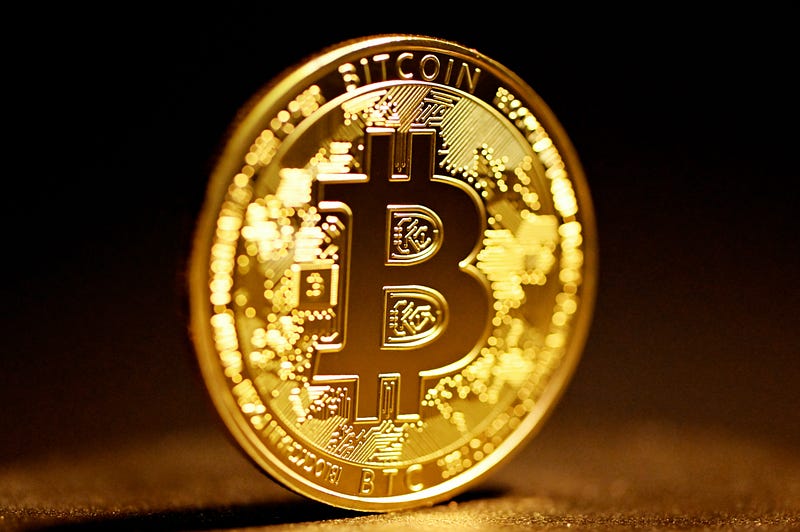
Photo by Kanchanara on Unsplash


Enhancing user experience

In an effort to elevate user experience and expand trading options, Bitget Wallet is committing to extensive product research, development initiatives and increased investments. The company plans on offering a wide array of services tailored to the Bitcoin ecosystem.

This includes robust support for BTC asset management, cross-chain swaps, on-ramping for externally owned account (EOA)-based wallets, multi-party computation (MPC) wallets, Taproot compatibility and streamlined asset transfers for both BRC-20 tokens and NFTs. In October, Bitget announced that it was taking the route of enhanced security by embarking on integrating MPC.


Integrated dApp browser

The platform also provides users with insights into macro and micro market trends through Bitget Swap, enabling interaction with popular projects via its dApp browser.

Bitget Wallet’s move has already garnered support from several Bitcoin ecosystem projects, with integrations on official websites such as Unisat, ALEX Lab, LifeRestart and Bitmap Explorer. The integrated dApp browser ensures convenient user access to these projects, fostering increased engagement and accessibility.

Looking forward, Bitget Wallet aims to capitalize on the medium to long-term market prospects within the Bitcoin ecosystem. The company is directing its efforts towards enhancing both technological infrastructure and product features, with a specific focus on critical areas such as Lightning Network, Nostr, Taproot Assets, BRC-20 and ARC-20 inscriptions.


Facilitating cross-chain transactions

An important facet of Bitget Wallet’s approach involves supporting multiple address formats, particularly within the Lightning Network. By doing so, the platform aims to improve asset transfer efficiency and introduce asset swaps between the Bitcoin mainnet and the Lightning Network. This move is geared towards facilitating cross-chain transactions between BTC and Ethereum Virtual Machine (EVM) assets on Bitget Swap, providing users with increased opportunities for portfolio diversification.

Alvin Kan, the Chief Operating Officer of Bitget Wallet, underscored the significance of Bitcoin as the foundational cornerstone of the crypto industry. He emphasized the platform’s commitment to becoming a key player in the growing Bitcoin ecosystem, providing users with robust and seamless ways to manage and grow their assets.

Formerly known as BitKeep, Bitget Wallet stands as Asia’s largest all-in-one Web3 trading wallet, boasting a five-year legacy and over 12 million users worldwide. On a global basis, the non-custodial wallet recently ranked fourth overall in terms of the number of wallet downloads.

Bitget acquired the Singaporean startup wallet project in June. Its addition helped the broader Bitget platform to achieve the milestone of 20 million users. The product was rebranded as Bitget Wallet shortly afterwards.

The company is keen to support other blockchain networks and ecosystems also. Earlier this month, the company announced an investment into Morph, a layer-2 blockchain that uses zero knowledge roll-up technology in an effort to focus on enhanced consumer experience.

Last week, the platform added support for ZKFair, a zero knowledge layer-2 network which is based on the Polygon CDK.


More to Read
View All
Policy & Regulation·

Oct 18, 2023

Israel Doubles Down on Blocking Crypto Funding of Hamas

Israel Doubles Down on Blocking Crypto Funding of HamasIn a move to disrupt the flow of funds to Hamas, Israeli authorities have ordered the closure of over 100 cryptocurrency accounts on Binance, the world’s largest crypto exchange.Photo by Leonid Altman on PexelsHeightened monitoring of crypto-related financingIsraeli authorities were already monitoring crypto accounts suspected of terrorism financing before the recent attack by the Palestinian militant group Hamas. Since then, they have requested information about hundreds of accounts on Binance, suggesting that the scale of their actions has grown significantly since October 7.A statement from Israeli police last week outlined that they had frozen crypto accounts related to financing of Hamas. According to a report on Tuesday by the Financial Times (FT), the Israeli authorities have taken matters further still, having closed more than one hundred accounts on Binance.Scrutinizing 200 additional accountsSources cited by the FT as being close to the situation have revealed that these actions were initiated in response to Hamas’s assault on October 7. Authorities have also sought information on approximately 200 additional crypto accounts, with most of them being held on Binance. While Binance has acknowledged blocking a “small number” of accounts since the summer, it emphasized its adherence to internationally recognized sanctions rules and declined to provide further comment.Governments and regulators have long expressed concerns that terrorist organizations might exploit lightly regulated crypto markets for financial transactions. However, the recent attacks on Israel and the subsequent crypto-based fundraising campaigns by Hamas have made these concerns more pressing.Tom Alexandrovich, the Executive Director at the Israel National Cyber Directorate, stated that cryptocurrency has become a major tool for terror financing during these times of conflict. He noted that the amount of crypto funds involved has significantly increased since the start of the attack.Tether freezes accountsTether, the issuer of leading US dollar stablecoin USDT, announced on Monday that it had frozen 32 addresses containing more than $873,000 due to their alleged links to “terrorism and warfare” in Israel and Ukraine. The exact timing of when these accounts were blocked and the distribution of assets between Israel and Ukraine were not disclosed.Notably, US financial regulators previously alleged that money held on Binance had ties to Hamas. A lawsuit by the Commodity Futures Trading Commission (CFTC) in the United States in March claimed that senior Binance executives had knowledge of “Hamas transactions” in 2019. Binance has refuted these allegations and expressed its intent to contest the lawsuit.Commentators within the crypto space fear that opponents of the development of crypto, like US Senator Elizabeth Warren, will try to capitalize on this issue by using the opportunity to further draconian regulation.Over the past two years, Israeli authorities have seized millions of shekels from crypto accounts with suspected ties to Hamas and other militant groups in the Middle East. A recent analysis by Elliptic found that crypto wallets associated with various suspicious Middle East groups have interacted and relied on the same crypto exchange services to convert crypto into sovereign currencies.

news
Policy & Regulation·

Feb 27, 2024

Korean and U.S. regulators to discuss recognizing NFTs as virtual assets in May

Lee Bok-hyun, the governor of South Korea’s Financial Supervisory Service (FSS), is set to have a meeting with Gary Gensler, the chair of the U.S. Securities and Exchange Commission (SEC), in May. The purpose of their meeting is to discuss whether to classify non-fungible tokens (NFTs) as virtual assets. Currently, NFTs are not seen as virtual assets in Korea, but there is a high likelihood of them being acknowledged as such following the meeting in May, local financial media outlet Edaily reported.Photo by Andrey Metelev on UnsplashLack of definition for NFTsAn NFT is a digital certificate of authenticity that is not fungible or replicable. NFTs tokenize content or assets of various types – from images, music, videos, games and artworks to real-estates – by assigning a unique token ID to them. Many see 2018 as the year NFT technology was first introduced.  Despite its wide range of applications, no legal definition has been made for NFTs. Some view NFTs as technology, and others as virtual assets or securities. The Korean government decided not to recognize NFTs as virtual assets under the Virtual Asset Protection Act (Virtual Asset Act), effective in July. Behind this decision is a perception that NFTs are less likely to pose significant risks to the market, as a large portion of NFTs are now traded by collectors seeking to expand their private collections.  However, NFTs are increasingly seen as speculative destinations by many investors over time, as prices of virtual assets including BTC surge. This shift backs the local movement to recognize NFTs as well as spot bitcoin ETFs as virtual assets. Opposition from NFT businessesBlockchain industry insiders say defining NFTs is of utmost importance, noting that classifying NFTs as virtual assets headfirst could deal a heavy blow to businesses in this sector. One finance insider mentioned that defining NFTs comes down to understanding their purposes and how they are utilized. If NFTs are primarily used for speculative purposes or as currency, they could be recognized as virtual assets, the person said.  The biggest resistance is coming from NFT-related businesses. That is because recognizing NFTs as virtual assets would require these businesses to obtain a virtual asset service provider (VASP) license from the financial authority, which takes significant costs and workforce in the process. A CEO of a blockchain startup, who preferred to remain anonymous, expressed concerns about the possibility of NFTs becoming virtual assets, saying that such recognition would enable NFT transaction tracing, potentially leading to severe violations of human rights. While many industry insiders expect that the financial authorities will bring NFTs under the forthcoming Virtual Asset Act, the FSS stated that no decisions have been made regarding details of the upcoming meeting with the U.S. SEC. 

news
Web3 & Enterprise·

Sep 27, 2023

Indian Crypto Platform Mudrex Expands Operations in Italy

Indian Crypto Platform Mudrex Expands Operations in ItalyMudrex, the Indian cryptocurrency investment platform, has achieved a new milestone by successfully registering to operate in Italy.News of Mudrex’s move into the Italian market emerged via a press release published on Tuesday, as well as through an interview given recently by CEO and Co-Founder Edul Patel to CoinDesk. The expansion into Italy marks a rare international move for Indian crypto entities, which have faced challenges due to stringent taxation policies and the global crypto market’s fluctuations.Photo by Mathew Schwartz on UnsplashGlobal expansion planPatel unveiled Mudrex’s ambitious plan for global expansion, with half of the team actively working on international initiatives. The firm’s journey into the Italian market involved gaining approval for registration with Italy’s Organismo Agenti e Mediatori (OAM), a crucial step for crypto firms operating in the country. This registration, granted on September 1, was a strategic move that the company had been carefully planning. Patel explained:“We just wanted some time to pass after the approval before we made the news public.”Coin Sets and thematic indexesDespite having only one million registered users, Mudrex stands out as one of India’s largest crypto platforms. It offers a unique investment approach, focusing on index investing through Coin Sets, an innovative alternative to speculative trading. These Coin Sets encompass various categories, including small, mid, and large-cap assets, as well as Bitcoin (BTC) and Ethereum (ETH). Additionally, Mudrex provides thematic indexes that cover layer one and layer two solutions, NFTs, metaverse projects, and Dow trackers.“While India is our home and where we initially grew, our international customers have told us that investment products in their regions lack diversity,” Patel noted. “We believe that our product is unique and offers distinct advantages.”Mudrex was established in 2018 in Bengaluru while also establishing an office in San Francisco. Alongside Patel, its other Founders included Alankar Saxena as CTO, Rohit Goyal in the role of VP of DeFi, and Prince Arora as VP of Engineering.In 2021 it raised $2.5 million in funding with a view towards launching crypto mutual funds and ETFs. It followed that up in 2022 when it raised $6.5 million in a pre-series A funding round, supported by Y-Combinator, Arkham Ventures, and Tribe Capital.The firm participated in what has become a crypto platform trend over recent months by incorporating an AI chatbot into its platform in June to assist platform users when it comes to learning about crypto.Lithuanian trading licenseMudrex’s expansion into Italy was facilitated by the company’s prior fulfillment of EU operating requirements. The company had obtained a license in Lithuania less than a year ago, enabling it to navigate the EU regulatory landscape efficiently. During the six months of pursuing registration in Italy, Mudrex’s presence in the EU grew substantially, with user numbers increasing from approximately 5,000 to 17,000.With its foothold established in Italy, Mudrex now seeks to make its investment products accessible through various registered entities, including banking partner apps. Patel confirmed ongoing discussions with potential partners, further signaling the company’s commitment to expanding its global footprint.

news
Loading
