Top

Lotte Data Communication launches NFT donation campaign for children’s rehab center

Web3 & Enterprise·December 01, 2023, 5:29 AM

South Korean IT service company Lotte Data Communication is running an NFT donation campaign dedicated to building a children’s rehabilitation center on its NFT marketplace KottonSeed, according to local newspaper The Herald Business on Friday.
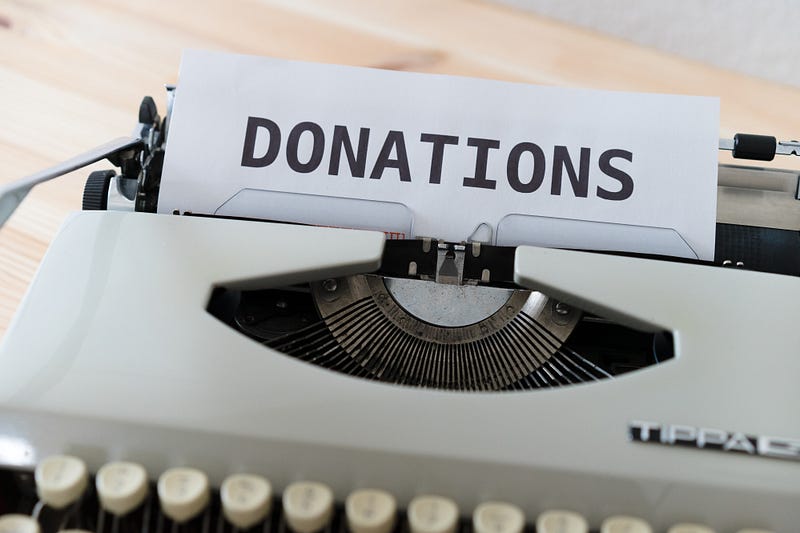
Photo by Markus Winkler on Unsplash


NFTs for charity

Sponsored by the South Korean Ministry of Health and Welfare, the Korea Disabled People’s Development Institute, the non-profit organization Todag Todag and Hanam City’s Disabled People Family Support Center, the donation campaign will run throughout this month, rewarding every participant with one free “Good Seed NFT”. For each NFT distributed, Lotte Data Communication vowed to donate KRW 1,004 ($0.77). In Korean, the number 1,004 has the same pronunciation as “angel.”

The company explained that the project aims to go beyond using NFTs simply as a form of virtual assets, but rather inspire a spirit of giving by showcasing the various ways that NFTs can be used. KottonSeed will also partake in more donation campaigns incorporating Good Seed NFTs in the future to contribute to this objective.

“Through this donation campaign, we wanted to demonstrate that there are no limits to the use of NFTs. We hope this becomes an opportunity for many people to feel that positive influences can reach even the places that tend to go unnoticed in our daily lives through NFTs.”


Bringing NFTs to various sectors

KottonSeed — currently a beta service — offers NFT marketplace and wallet services that support blockchain networks like Ethereum, Polygon and Klaytn and a variety of payment methods, making it easy for anyone to buy, sell and own NFTs. Lotte Data Communication has been making strides to increase KottonSeed’s presence in the NFT market since its launch earlier this year. It has been incorporating NFTs into various sectors such as proof of participation in activities, product promotion, sports marketing and environmental, social and governance (ESG) efforts.

More to Read
View All
Policy & Regulation·

Jan 02, 2024

K-GAMES and KOCCA release report on overseas gaming regulations

The Korea Association of Game Industry (K-GAMES) – the body responsible for overseeing and nurturing the country’s successful gaming industry – released its 2023 Global Game Policy and Legislation Study on Tuesday (KST) in collaboration with the Korea Creative Content Agency (KOCCA).Photo by Tingey Injury Law Firm on UnsplashThe report summarizes gaming-related regulations and laws in six Western European countries – the United Kingdom, Germany, Belgium, the Netherlands, Spain and France – including those on standard terms and conditions, the protection of minors, personal privacy, payment and more. "Through cooperation between public and private sectors, we have been able to achieve tasks like collecting information and securing databases on overseas gaming markets by country and continent," said Kang Shin-chul, President of K-GAMES. "We will continue to contribute to the development of the domestic game industry," he added. Regulatory landscapeThe study found that operators in the specified countries are not required to obtain special licenses, appoint local representatives, or set up servers in order to operate a gaming business in their respective countries. It also details country-specific requirements, such as in Germany, where the use of content that glorifies or justifies Nazi-related symbols or actions is prohibited. A closer look at Belgium’s stanceInterestingly, the report revealed that the regulation of randomly distributed in-game items varied by country. The UK, Germany, Spain, the Netherlands and France have no legal restrictions on such items, but the UK and the Netherlands have recommended that information on the odds of winning them in games of chance should be disclosed before a player obtains or opens an item. Meanwhile, Belgium has implemented a regulation that prohibits paid games of chance for stochastic items altogether due to its laws regarding gambling. However, there are no regulations on Play-to-Earn (P2E) games unless they constitute gambling, which is also true of the other five countries. Minting game items into NFTs is also not subject to oversight in all six nations unless they are considered financial instruments. There are also no standard terms and conditions set by Belgium’s national government for gaming services, which are instead governed by the European Union’s (EU) General Data Protection Regulation (GDPR). 

news
Web3 & Enterprise·

Aug 23, 2023

NEOPIN Partners with Lena Network for NFT-Fi Service Development

NEOPIN Partners with Lena Network for NFT-Fi Service DevelopmentNEOPIN, the global CeDeFi platform of South Korean investment holding company Neowiz Holdings, announced on Tuesday that it is teaming up with Lena Network, a Japanese developer of non-fungible token finance (NFT-Fi) services.Photo by Choong Deng Xiang on UnsplashFostering NFT-Fi and DeFi synergyIn this collaboration, the companies plan to promote NFT-Fi usage by onboarding NEOPIN onto Lena’s service framework and by launching NEOPIN as a decentralized finance (DeFi) product based on Lena’s governance token $LENA. They will also strengthen cooperative ventures by channeling NEOPIN and Lena Network’s NFT-Fi products. Both companies’ worldwide partners will also receive collective support as part of this agreement.“This partnership is meaningful in many ways. We have been able to secure an important Web3 partner in Japan, expand our global DeFi products, and grow our NFT-Fi business,” explained Ethan Kim, CEO of NEOPIN.This comes as part of NEOPIN’s bigger efforts to broaden its global user demographic by launching DeFi products associated with global projects, the first of which is the latest collaboration with Lena. This move will create a strong base for the entry of NEOPIN’s Web3 projects into the Japanese market.“We will continue to strengthen our partnerships with outstanding Japanese Web3 projects such as Lena Network, and establish a foundation for our success in the Japanese market,” CEO Kim added.Innovation at Lena NetworkLena Network is operated by professionals who formerly worked at institutions like SBI Holdings and JP Morgan. It plans to officially launch its new service, LENA, in the third quarter of this year, which offers loans in Ethereum or stablecoins against collaterals such as NFTs, tokens, and real-world assets (RWA).Key partners for this service include NFT collections such as Monkey Kingdom — the first Asian NFT collection and one of Solana’s chart-toppers — and Trekki, a collaborative travel-themed collection made by Polygon and Trip.com.“By onboarding NEOPIN, we aim to provide a seamless NFT-Fi adoption and launch DeFi products based on LENA tokens,” said Casper Cheng, CSO of Lena Network. “Following NFT-Fi, Lena Network’s next product will be RWA-Fi. Together with NEOPIN, we will continue to drive innovation in the Web3 space and explore new possibilities for NFT utilization.”The current NFT market capitalization is approximately $4.9 billion as of today, according to insights from the NFT analysis site NFTGo. While these assets have historically been liquidated through trading, NFT-Fi opens up various methods of liquidation, thereby expanding access to ownership of these assets.

news
Web3 & Enterprise·

Nov 17, 2023

Binance and Gulf Energy launch digital asset exchange in Thailand

Binance and Gulf Energy launch digital asset exchange in ThailandThe world’s largest cryptocurrency exchange, Binance, has teamed up with Gulf Energy Development, a leading energy company in Thailand, to operate a digital asset exchange in the country.Photo by Than Diep on UnsplashInvitation-only launchThe new platform, Binance.th, aims to capture the growing demand for crypto services in Southeast Asia. Binance.th, which is currently in its beta testing phase, is expected to open to the public in early 2024. A filing on Wednesday by Gulf to the Thai stock exchange demonstrates that the platform has received approval from the Thai Securities and Exchange Commission to offer exchange and brokerage services for cryptocurrencies and digital tokens. The filing states:“Gulf Binance’s digital asset platform will provide digital asset exchange and digital asset broker services for both cryptocurrencies and digital tokens, prioritizing security and compliance with SEC regulations.”The platform is initially available by invitation only, and the plan is to eventually open the exchange to the general public. It’s understood that the platform will strive to provide a “globally standardized” service that will enhance the level of service in Thailand and promote the development of the country’s blockchain ecosystem.Market opportunityBinance.th enters the Thai crypto market at a time when the local leader, Bitkub, holds a dominant share of 75.4%. Bitkub benefited from the global crypto market downturn in 2022, which affected its competitors such as FTX and Zipmex.Although it has extended market share during the downturn and as a consequence of the demise of other platforms, Bitkub has also struggled with market conditions. In July its parent company Bitkub Capital Group, reduced headcount by six percent. Bitkub recorded $28.6 billion in trading volume last year, out of the total $37.94 billion generated by the top four Thai exchanges.Binance.th hopes to challenge Bitkub’s position by leveraging Binance’s global reputation and expertise in the crypto industry.Legal woesThe launch of Binance.th comes amid Binance’s legal and regulatory troubles in the U.S. and Europe. In September, the U.S. Securities and Exchange Commission (SEC) sued Binance, its U.S. subsidiary, and its founder Changpeng Zhao (CZ) for allegedly listing unregistered securities in the form of cryptocurrencies.In June, the SEC also accused CZ and Binance of illegally marketing its international platform to U.S. customers.Binance has been trying to improve its compliance and governance standards in response to regulatory scrutiny. The company has hired former regulators and executives from the traditional finance sector to lead its operations in various regions. Binance has also applied for licenses and registrations in several jurisdictions, such as the U.K., Singapore and Japan.The origins of this deal stem from a memorandum of understanding (MOU) signed between Binance and Gulf Energy in January 2022. The joint venture business which emerged acquired a digital operator license in Thailand in May of this year.By expanding its presence in Southeast Asia, Binance hopes to tap into the potential of the emerging crypto markets and diversify its revenue streams. Binance.th also marks the first bank-backed crypto exchange in Thailand, as Gulf Energy Development is partly owned by the state-owned Krung Thai Bank.

news
Loading