Top

Korea requires lawmakers and senior officials to declare crypto holdings

Policy & Regulation·December 01, 2023, 6:15 AM

South Korea’s Ministry of Government Legislation announced on Thursday (local time) that 84 new legislative statutes are set to be implemented in December. Among these statutes, an amendment to the Public Service Ethics Act stands out, which will require lawmakers and senior government officials to report their virtual asset holdings.

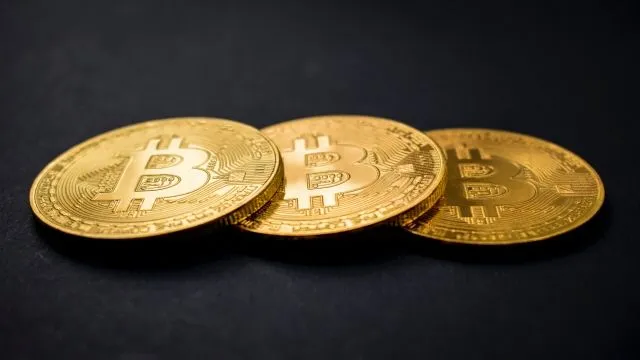
Photo by Huy Phan on Unsplash


Starting Dec 14

The Public Service Ethics Act requires public officials in political service, government officials of rank four or higher and executives of public service-related organizations to declare their own wealth as well as that of their spouses and lineal relatives. In Korea, public servants are ranked from one to nine, with one being the highest and nine being the lowest. As it stands, disclosing cryptocurrency holdings isn’t mandated, but this will change from Dec. 14 due to recent amendments. Records of cryptocurrency transactions will also be subject to disclosure.


Possible restrictions on departments or employees

Furthermore, the leader of a national or local government organization has the authority to enforce restrictions on the acquisition of virtual assets for specific departments or employees under their jurisdiction. This action is applicable if their roles are associated with accessing cryptocurrency information or having an impact on the crypto market. In such scenarios, the chief officer is obligated to report their methods of imposing these restrictions to the pertinent government ethics committee. The committee then holds the right to recommend adjustments to these strategies.

More to Read
View All
Web3 & Enterprise·

Sep 26, 2023

GroundX to Bring NFT Activities to 2023 Seoul Light Hangang Bitseom Festival

GroundX to Bring NFT Activities to 2023 Seoul Light Hangang Bitseom FestivalGroundX, the blockchain subsidiary of South Korean conglomerate Kakao, said Tuesday that it will host NFT-related activities at Seoul’s largest laser art festival, the 2023 Seoul Light Hangang Bitseom Festival, from October 6 to 15 in collaboration with the Seoul Metropolitan Government and other affiliates like LG Uplus and the Seoul Foundation for Arts and Culture.Photo by Wes Hicks on UnsplashMerging physical activity, learning, and artThe activities will fall under the theme of “3L”: Light Run, Laser Art, and Lecture. Light Run is a four-kilometer running course scheduled for October 6 and 14, for which GroundX will mint NFT certificates for participants who complete the course. The NFTs will contain information about the participant, as well as the date of the event and a record of completion. They will then automatically be sent to and stored in the participant’s Klip wallet, GroundX’s digital wallet service, and can be accessed at any time on the Klip app and KakaoTalk Wallet.GroundX said that it will also showcase digital artworks by eight artists, including Kim Duk-ki, Han Seung-ku, and Berry Kim. These works will be displayed on LED platforms installed at the Banpo and Ichon Hangang Parks.Kim Tae-keun, Head of Business at GroundX, is set to participate as a lecturer for the Bitseom Lecture segment on October 8, where he will discuss NFT art and the company’s vision for the media art industry. Bitseom Lecture is an outdoor art convergence lecture program that introduces immersive media artworks and technology in virtual reality (VR) and extended reality (XR).Bringing the NFT experience to Seoul“We hope that citizens visiting the Bitseom Festival will be able to get the real NFT experience through our media art displays, lectures, and running course completion certificates,” GroundX said. “We will continue to collaborate with various organizations and create NFT use cases through participation in offline festivals and events.”

news
Policy & Regulation·

Dec 28, 2023

Hong Kong considers rules for fiat-backed stablecoin issuers

The Financial Services and the Treasury Bureau (FSTB) and the Hong Kong Monetary Authority (HKMA) are charting new regulatory territory with the release of a comprehensive consultation paper outlining their proposal to accept and regulate fiat-referenced stablecoins (FRS) within the Chinese autonomous territory.Photo by Ben Cheung on PexelsConsultation processThe proposal has been published to the FSTB website in the form of a consultation paper titled “Legislative Proposal to Implement the Regulatory Regime for Stablecoin Issuers in Hong Kong.” Separately, the HKMA has published a press release on the topic. This development seeks to establish a regulatory framework for stablecoin issuers and address associated risks. The consultation period is scheduled to conclude on Feb. 29 of next year. At the heart of this legislative proposal is the requirement for companies actively marketing the issuance of FRS to the public of Hong Kong to obtain a specific local license from the HKMA. The proposed criteria for obtaining this license are robust and include key elements such as maintaining reserves “at least equal to the par value” of all circulating stablecoins. This measure ensures that stablecoins remain fully backed, contributing to their stability and reliability. The legislation also places a strong emphasis on the segregation and secure safekeeping of reserve assets, enhancing the protection of users’ funds and preventing misuse. Furthermore, issuers will be mandated to provide transparent disclosure and regular reporting, fostering accountability and transparency within the stablecoin ecosystem. It is noteworthy that the proposed regulations explicitly exclude algorithmic stablecoins from obtaining an HKMA license, underlining a preference for stablecoins with solid reserve backing. No doubt the spectacular collapse of the UST algorithmic stablecoin in 2022 has informed the Hong Kong regulator’s decision to exclude consideration of algorithmic stablecoins in this instance. Need to establish Hong Kong presenceTo underscore their commitment to regulatory compliance, stablecoin issuers seeking an HKMA license will also be required to establish a registered office in Hong Kong. This office must have a chief executive, senior management team and key personnel in place, aligning with Hong Kong’s efforts to ensure that all activities related to stablecoin issuance are conducted responsibly. The proposed licensing regime for FRS aligns with Hong Kong’s broader strategy to foster the growth of the Web3 ecosystem within the region. Christopher Hui, Secretary for Financial Services and the Treasury, highlighted the significance of this move, stating: “With the implementation of the licensing regime for VA trading platforms from June this year, the legislative proposal to regulate FRS is another important measure facilitating Web3 ecosystem development in Hong Kong.” Market competitionBack in February, the HKMA signaled its intent to regulate stablecoins when it issued a discussion paper considering various regulatory approaches. Competition is on an upward trajectory relative to stablecoin issuance and use. In June, Hong Kong-based qualified custodian First Digital Trust announced that it was gearing up to launch "First Digital USD," a U.S. dollar-backed stablecoin regulated in Asia rather than the United States. Leading stablecoin issuer Circle has been active in furthering its product offering in Asia during 2023. It successfully attained licensing approval in Singapore while in Japan, it joined forces with SBI Holdings in an effort to propel further growth of its USDC stablecoin within the Japanese market.

news
Web3 & Enterprise·

Nov 06, 2023

X-TICKET teams up with Catalyze Research for XRPL expansion

X-TICKET teams up with Catalyze Research for XRPL expansionSouth Korean Web3 performing arts platform X-TICKET has signed a memorandum of understanding (MOU) with Catalyze Research, a Web3 research firm and an official partner of Ripple, to jointly expand the XRP Ledger (XRPL) ecosystem and support the integration of Web3 into Korea’s performing arts landscape.Photo by Kanchanara on Unsplash“We are delighted to work alongside Catalyze Research. The XRPL ecosystem, together with XRP, is poised to play a significant role in bringing the Korean performing arts industry onto the global stage. We hope to create synergies through collaborations with Korean cultural performances,” said X-TICKET CEO Shin Yong-un.Leading a new era of event ticketingX-TICKET harnesses blockchain technology to provide digital collectible tickets for performing arts shows, including live musicals like “Cats” and “The Phantom of the Opera.” This service is expected to revolutionize the industry by preventing various problems that tend to occur with ticketing, such as duplication, loss and scalping, thus fostering a secure, transparent and efficient performing arts ecosystem. The platform recently launched its beta version and held a sales event for NFT tickets to “The Phantom of the Opera” shows.Pioneering Web3 solutionsCatalyze Research, on the other hand, specializes in Web3 and blockchain research and consultations. The firm teamed up with Ripple in July to expand the presence of XRPL in the Korean market — a decentralized, public blockchain for businesses and developers — and encourage participation in the XRPL developer community.“Catalyze Research is actively engaged in numerous collaborations to expand the XRPL ecosystem. We plan to implement blockchain technology into X-TICKET and the Korean performing arts sector to extend the ecosystem’s reach,” the firm stated.The partnership between the two enterprises represents a significant step forward in the intersection of technology and the arts in Korea.

news
Loading