Top

Mt. Gox edging closer to BTC payouts sparks market fears

Markets·January 24, 2024, 1:33 AM

The trustee of the failed Japanese cryptocurrency exchange Mt. Gox is preparing to initiate repayments of bitcoin (BTC) and bitcoin cash (BCH), prompting fears of a market sell-off among traders and investors.
https://asset.coinness.com/en/news/1d843ecdc3c8aa72684646b2f88b7577.webp
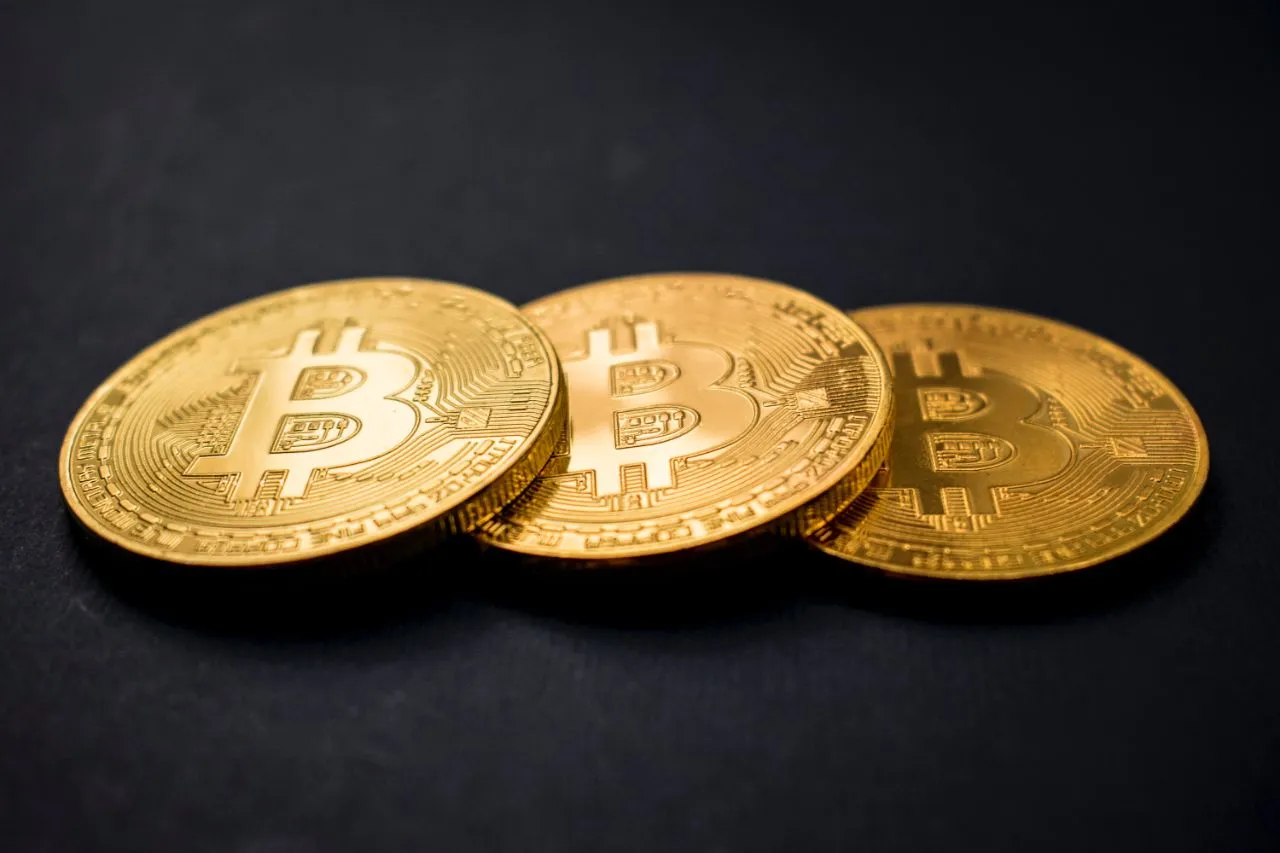
Photo by Dmytro Demidko on Unsplash

Confirming repayment details

The crypto community on the /mtgoxsolvency subreddit disclosed that the Tokyo-based bitcoin exchange has initiated the process of verifying creditors' addresses for forthcoming repayments. Emails have been sent to creditors, confirming that their repayment details have been validated with relevant cryptocurrency exchanges.


The communication from Mt. Gox appears to be staggered, with users on different platforms receiving emails at varying times. Some Bitstamp users reported receipt of the email, while several Kraken customers mentioned that they were still awaiting the confirmation.


Mt. Gox, cautioning creditors, clarified that users with disabled or frozen accounts would not be able to receive repayments using the provided addresses. Additionally, the emails specifically pertain to payments in bitcoin and bitcoin cash.


This recent communication follows Mt. Gox's announcement in November, where it committed to returning approximately 142,000 bitcoin, 143,000 bitcoin cash and 69 billion Japanese yen, valued at over $5.67 billion at the announcement date and approximately $6.46 billion at the present moment.


During the November announcement, Mt. Gox assured creditors that repayments would commence in the following months and weeks. Creditors with payment methods deemed "effective at this time" were earmarked to receive their assets first.


Towards the end of December, some creditors reported the addition of yen-denominated balances to their PayPal accounts by Mt. Gox, signaling progress in the repayment process.


Market fears

The fear among market participants of a distribution of bitcoin from the Mt. Gox estate has cast a shadow over the sector over the course of a number of years. With this latest development, it appears that the estate is finally on the cusp of executing on that distribution.


If distribution is achieved in the short term, it will come at a time when bitcoin has experienced a major unit price pullback already. Since the approval of spot bitcoin exchange-traded funds (ETFs) in the United States earlier this month, it appears that another bankrupt crypto exchange, FTX, has sold $1 billion worth of Grayscale Bitcoin ETF shares into the market. That move is believed to have been responsible for a dramatic drop in bitcoin’s unit price.


In tandem with that event, some commentators believe that a pullback at this point is healthy for the market. That’s the view of Charles Edwards, founder of Capriole Investments. Taking to social media, Edwards wrote:

”We're still not here yet. This pullback is very overdue and lower is healthier.”


At the time of writing, bitcoin has a unit price of $39,884, down from a high earlier this month of $48,494.


Confirmation emails have been reported by several Reddit users, with Bitstamp confirming for most, and a few Kraken users also acknowledging receipt. Nevertheless, a significant number of Kraken users mentioned they are yet to receive the confirmation email.


Mt. Gox officially closed its doors in February 2014, almost a decade ago, after succumbing to an exploit in 2011.



More to Read
View All
Policy & Regulation·

Nov 17, 2023

Philippines breaks new ground in first-ever tokenized bonds sale

Philippines breaks new ground in first-ever tokenized bonds saleThe Philippines is set to offer the country’s first tokenized treasury bonds, a novel way of issuing debt securities using blockchain technology.Photo by Mara Rivera on Unsplash$179 million tokenized bond issuanceAccording to a report by Bloomberg on Thursday, the Bureau of the Treasury announced that it will issue 10 billion pesos ($179 million) of one-year tokenized bonds next Monday after canceling the conventional auction scheduled for the same day. The bonds will be issued by the Development Bank of the Philippines, a state-owned entity, together with the Land Bank of the Philippines.The tokenized bonds will be sold to institutional investors at a minimum denomination of 10 million pesos, with increments of 1 million pesos. The bonds will have a one-year validity, maturing in November 2024. The treasury bond interest rate has yet to be determined and will be confirmed on the date of issuance.Deputy Treasurer Erwin Sta said that the government is exploring the potential of tokenizing real-world assets and bonds and will “continue to study the technology and test how far we can take it.”Tokenization is the process of converting physical or digital assets into digital tokens that can be stored, transferred and traded on a blockchain network. Tokenization can offer several benefits, such as lower costs, faster transactions, greater transparency and enhanced security.Asian surge in tokenizationThe Philippines is not the only Asian country that is experimenting with tokenized bonds. This latest bond tokenization project follows hot on the heels of a similar move in Singapore. Earlier this week, British banking conglomerate Standard Chartered, through its Singapore-based fintech investment subsidiary SC Ventures, unveiled a new platform called Libeara. Libeara is gearing up to offer the first-ever tokenized Singapore-dollar government bond fund.In February, Hong Kong issued $100 million of tokenized green bonds under its Green Bond Programme, using Goldman Sachs’ tokenization protocol. The tokenized green bonds, a first-of-its-kind issuance, have a one-year validity and aim to support environmental projects in the region.Authorities in Singapore have also launched a series of pilots on tokenizing real-world assets in collaboration with JPMorgan, DBS Bank, BNY Mellon and Apollo, an investment firm. The pilots will test the feasibility and efficiency of tokenizing assets such as equities, bonds and funds. The United Arab Emirates (UAE) partnered with HSBC to conduct the tokenization of bonds as well.The tokenization of real-world assets is not limited to Asia. Israel’s Tel Aviv stock exchange completed a proof-of-concept for tokenizing fiat and government bonds, demonstrating the potential of blockchain technology to transform the capital markets.The tokenization of real-world assets using blockchain technology is a growing trend among governments and financial institutions. According to the Boston Consulting Group, tokenized assets could reach a market capitalization of $16 trillion by 2030. By issuing tokenized bonds, the Philippines is joining the ranks of the pioneers in this field, opening up new possibilities and opportunities for the crypto industry and the economy as a whole.

news
Web3 & Enterprise·

Jun 10, 2025

Metaplanet raises funds to fulfill 2027 Bitcoin goal

Japanese Bitcoin treasury company Metaplanet, whose shares are listed on the Tokyo stock exchange (3350/TYO), has taken an important step towards its goal of holding 210,000 BTC by 2027. ‘Asia’s largest-ever equity raise’The firm’s CEO, Simon Gerovich, took to the X social media platform on June 6 to outline details of what he termed “Asia’s largest-ever equity raise.” Gerovich stated that Metaplanet had raised 770.9 billion yen ($5.4 billion) by means of moving strike warrants, implicating 555 million shares. Moving strike warrants are a type of equity warrant through which the strike price changes over time. Photo by Cullen Cedric on UnsplashGerovich claimed that the warrants were issued at a premium to the market due to Metaplanet’s “high volatility and deep liquidity.” The Metaplanet CEO stated that the firm is targeting 100,000 BTC by the end of 2026 and 210,000 by the end of 2027. On June 2, the firm announced that it had acquired its latest tranche of Bitcoin, adding another 1,088 BTC to its corporate treasury. The company paid an average Bitcoin unit price of 15,519,019 yen ($107,000). Metaplanet has adopted the treasury playbook first pioneered by Michael Saylor’s Strategy (formerly MicroStrategy), acquiring the leading crypto asset through a combination of equity issuance, debt financing and opportunistic buying.  Russell Okung, a former professional American football player and well-known Bitcoin proponent, took to X on June 6 to highlight that Saylor “lit the match” through Strategy in the United States.  Okung stated: “Metaplanet just launched the rocket in Asia. When capital moves, narratives follow.”He added that “Metaplanet didn’t just buy Bitcoin. They’re directing global attention toward Japan.” Both Metaplanet and Strategy have appealed to investors who are otherwise not in a position to gain exposure to Bitcoin directly, either as a result of regulatory issues or concerns with regard to the custody of the digital asset.  Corporate treasuries adopting BitcoinIn addition to these companies who have led first with a Bitcoin treasury as their primary attraction, other corporates have added Bitcoin to their corporate treasuries while maintaining their focus on other business activities.  Announcements have come thick and fast over the course of recent weeks, particularly in the Asian region.  A number of Nasdaq-listed companies, including Hong Kong-based Reitar Holdings, Indonesian fintech firm DigiAsia, Malaysia-based Treasure Global and South Korea-based K Wave Media, have all announced the addition of Bitcoin to their corporate treasuries.  Metaplanet’s new funding round will put it on track to achieve the goal of obtaining 210,000 BTC by 2027, equating to approximately 1% of the entire Bitcoin supply. The Japanese firm’s shares have risen in price by over 275% since the beginning of this year. According to BitcoinTreasuries.net, Strategy remains the largest corporate treasury holder of Bitcoin with 582,000 BTC. It’s followed by MARA Holdings, Twenty One, Riot Platforms, Galaxy Digital Holdings and CleanSpark. Tesla, Hut 8 Mining Corp and Coinbase Global also feature prior to Metaplanet which comes in tenth place.

news
Policy & Regulation·

Jul 26, 2023

Fair Weather Day for Rain With Abu Dhabi License Approval

Fair Weather Day for Rain With Abu Dhabi License ApprovalRain, the cryptocurrency exchange that serves the Middle East and North Africa (MENA), Turkey, and Pakistan, has scored a significant regulatory win in the United Arab Emirates (UAE). On Tuesday, the Abu Dhabi unit of Rain secured a license to operate as a virtual assets brokerage and custody service within the country.Photo by Agnieszka Kowalczyk on UnsplashCoinbase backingHeadquartered in Bahrain and backed by Coinbase, Rain’s Abu Dhabi Global Market financial free zone entity will now have the authority to offer virtual asset services to institutional and select retail clients in the UAE. This includes the ability to facilitate the buying, selling, and custody of cryptocurrencies.According to Co-Founder Yehia Badawy, the newly acquired license brings additional advantages to Rain. Notably, the exchange will be able to open a bank account in the UAE, simplifying fund management for its clients who can now utilize the local payment network.For Rain, this regulatory approval holds particular significance, as it addresses the hesitancy among local asset managers to engage with crypto firms lacking a domestic license. With this stamp of approval, these managers are expected to feel more at ease collaborating with Rain, thus expanding the potential demand from institutional investors.$500 million valuationRain has been gaining traction since its establishment in 2017 by Badawy and three other co-founders. Kleiner Perkins and Coinbase Ventures, two prominent investors from Silicon Valley, have backed the exchange. Both participated via a Series B funding round in January 2022 that saw Rain raise $110 million. Interestingly, Rain’s leading investor, Coinbase, also expressed an interest in developing a base in Abu Dhabi in recent months.There has been a lot of speculation in recent times with regard to where Binance, the world’s largest cryptocurrency exchange, is headquartered. Although still not certain, many believe that Abu Dhabi provided that base for the company. Meanwhile, US-headquartered cryptocurrency exchange Gemini, is working towards establishing a base in the UAE.Overcoming challenging market conditionsLast year’s Series B fundraise resulted in the company achieving a valuation of $500 million. The funds from that round were earmarked for the expansion of Rain’s operations throughout the region. Later that same year, the company laid off dozens of employees as bear market conditions within the digital assets space began to bite. As market conditions worsened later that year, the firm announced a fresh round of job cuts in September.The UAE has been positioning itself as a crypto-friendly destination, aiming to attract major players in the cryptocurrency industry. By enabling cryptocurrency payments in sectors like real estate and education, the UAE has spurred adoption rates and transaction volumes. Additionally, the country has been actively working on developing virtual asset regulations to accommodate new business opportunities in a highly competitive Gulf region.Rain’s recent licensing achievement signifies a significant milestone for the exchange and contributes to the UAE’s ongoing efforts to establish itself as a leading hub for the cryptocurrency sector.

news
Loading