Top

Bithumb surpasses Upbit in 24h trading volume for first time in four years

Web3 & Enterprise·December 28, 2023, 5:46 AM

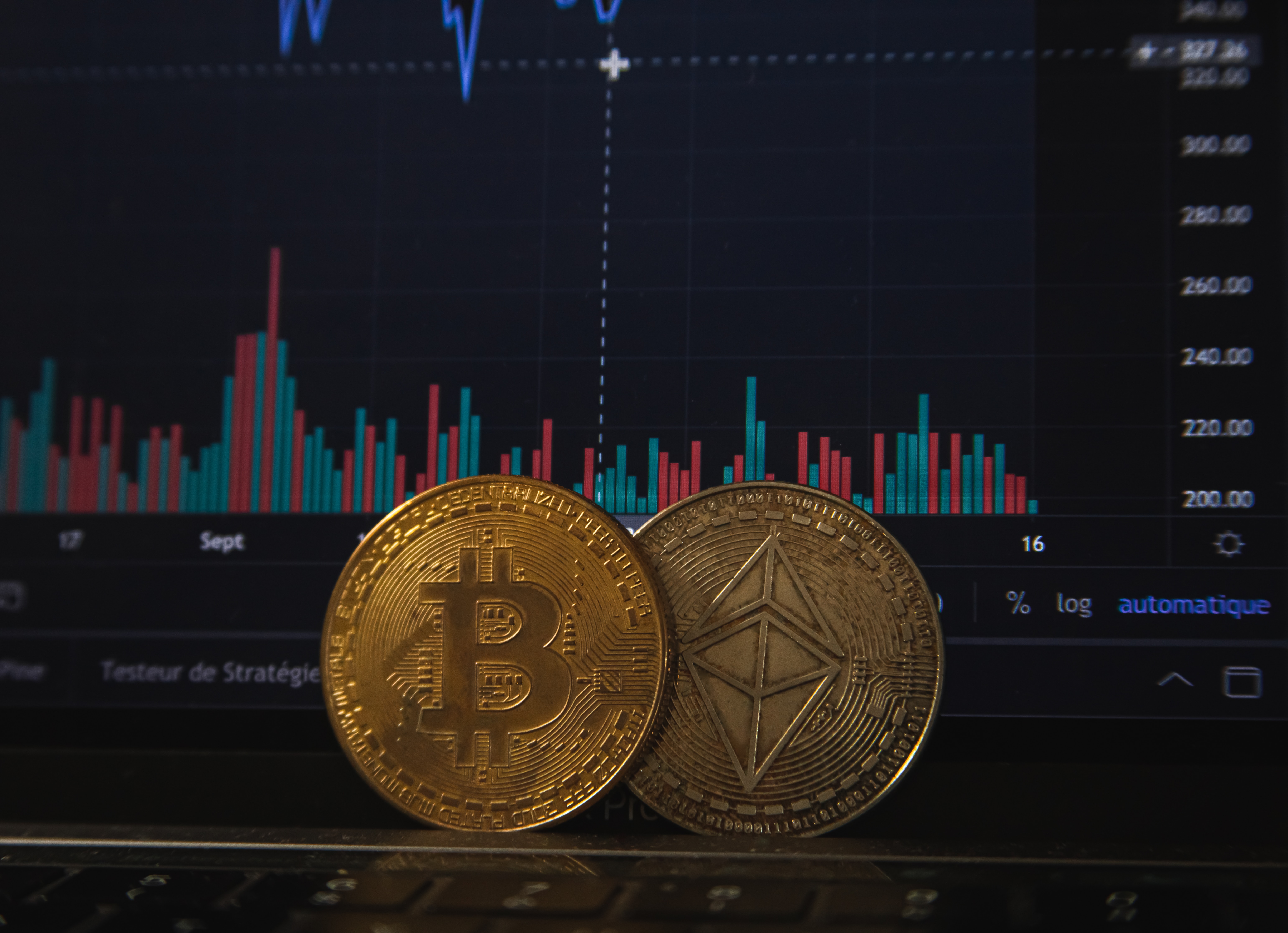
The trading volume of South Korean cryptocurrency exchange Bithumb exceeded that of its competitor Upbit as of 10:30 a.m. UTC on Wednesday, as reported by the local news outlet Etnews, which cited data from CoinMarketCap. This shift occurred for the first time in four years.


According to CoinMarketCap, as of the specified time, Bithumb's 24-hour trading volume reached KRW 4.93 trillion (approximately $3.8 billion), surpassing Upbit, which recorded a volume of KRW 4.37 trillion. Until 2019, Bithumb was the leading exchange in Korea. However, it ceded its top position to Upbit, which gained a competitive edge through its collaboration with the internet-only bank, Kbank.
https://asset.coinness.com/en/news/16902f23d0ccba899e5016370ba8434a.jpg
Photo by Pierre Borthiry - Peiobty on Unsplash

Zero trading fees and new crypto listings

Earlier in the year, Bithumb initiated a strategic plan with the objective of boosting its trading volume in order to increase its market share in the domestic market to 25%. To achieve this goal, the exchange implemented several key initiatives. One of the significant steps taken was the elimination of trading fees, aimed at attracting more users and increasing transaction volumes. Additionally, Bithumb broadened its cryptocurrency offerings by listing prominent cryptocurrencies such as Tether (USDT) and WEMIX.


Questioned sustainability of strategies

In anticipation of crypto winter giving way to crypto spring, trading platforms are gearing up for more intense competition to increase their market shares. However, there are concerns about the sustainability of strategies like implementing zero trading fees. Critics argue that such policies, while they may temporarily shift market shares, are unlikely to be successful in the long term. This skepticism is largely due to the fact that cryptocurrency exchanges heavily rely on trading fees as a primary source of revenue. 


An industry expert has pointed out that unless the cryptocurrency exchanges currently lagging behind develop innovative, paradigm-shifting strategies capable of significantly impacting the market landscape, there's a high likelihood that the ranking order will revert to the previously established, entrenched market order. 


In fact, at the time of this publication, Upbit upended Bithumb in 24-hour trading volume, recording KRW 4.4 trillion compared to Bithumb's KRW 3.2 trillion. This data underscores Upbit's strong position in the market, illustrating its continued dominance.

More to Read
View All
Web3 & Enterprise·

Aug 04, 2023

Dunamu Helps Adolescents Tell the Difference between Blockchain and Bitcoin

Dunamu Helps Adolescents Tell the Difference between Blockchain and BitcoinDunamu, the fintech company operating South Korea’s leading crypto exchange Upbit, announced on Thursday that its digital finance education program designed to help foster talent in digital finance amidst the current era of digitization and fintech has come to an end.Photo by Element5 Digital on UnsplashEmpowering digital finance literacy for the future generationDubbed “Duniverse” — a portmanteau of Dunamu and universe — the program was held from May to July for 4,100 middle school students throughout Seoul, Gyeonggi Province, and Incheon. The curriculum proved to enhance their understanding and literacy in digital finance.“Digital finance education for adolescents is essential in addressing various social issues, such as preventing financial accidents and income polarization,” said Lee Sirgoo, CEO of Dunamu.The first Duniverse program was held last year, hosting some 4,800 middle school students in vulnerable areas of Gyeonggi Province. Owing to the positive response, this year’s pool has been expanded to over 7,000 first-year middle school students in Seoul, Gyeonggi Province, and Incheon. In the first half of this year alone, a total of 4,120 students from 17 middle schools participated.The program featured lessons on the technologies of the Fourth Industrial Revolution, such as blockchain, NFTs, and metaverse, as well as basic financial knowledge. A total of eight sessions were led by a team of qualified instructors with years of experience in economic education. Dunamu employees also directly contributed to the review process of educational materials, the company said.Success recognized by students and teachers alikeIn a survey conducted by Dunamu targeting 435 participants, 93.1 percent of them expressed high satisfaction, stating that their understanding of digital finance improved. This portrays a meaningful upgrade from the answers of a previous survey conducted before the start of the program, where six out of ten respondents said that they had little knowledge about digital finance.They also reported that they now understand the difference between digital asset ownership and copyrights as well as blockchain and Bitcoin, and show interest when coming across digital finance-related content in the media.School teachers also praised the program for addressing blind spots in financial education and taking a proactive learning approach. “The students were able to learn about big data, ChatGPT, and more, which is especially valuable since such education for teenagers is still lacking. I believe it will help boost their competitiveness in the future job market,” said a teacher from Goam Middle School in Yangju, Gyeonggi Province.The teachers also approved of other topics that were covered, such as financial fraud prevention, to help teenagers avoid falling victim to financial scams. Suggestions were also made to expand teacher training courses.Upcoming programThis year’s second Duniverse program will be held from August to December for 2,712 middle school students in Seoul, Gyeonggi Province, and Incheon.Dunamu has continually devoted efforts to boosting social welfare and nurturing young talent. This includes “Dunamu Next Steppers,” a hope fund for young people with multiple debts, along with supporting emerging talents and artists with developmental disabilities in their participation in NFT projects.

news
Markets·

Apr 19, 2023

Experts Discuss Korean Security Token Market

Experts Discuss Korean Security Token MarketSince the Korean financial regulator released regulatory guidelines on security tokens in February, many have anticipated that the introduction of security tokens would transform the concept of investment and give rise to new market strategies based on blockchain technology.©Pexels/PixabayIndustry professionals have expressed their opinions on the matter in interviews with media outlets.Token issuance and distributionPark Hyo-jin, vice president at Sejong Telecom, in a recent interview with Korean media outlet Digital Today, expressed his disappointment about the Korean government’s decision to separate token issuance from token distribution. Sejong Telecom is the developer and operator of the blockchain-based real estate fractional investment platform Bbric.According to Park, the capital market law separates token issuance from token distribution in order to prevent conflicts of interest, as interested parties may attempt to control financial products according to their own preferences. However, things are different with security tokens, Park believes. With the help of blockchain technology, a mainnet can issue and distribute tokens without intermediaries.Higher investment limitsPark emphasized the importance of increasing investment limits and cited the small size of the Korea New Exchange (KONEX), a stock exchange for small enterprises, as a reason for its lack of activity. He added that higher caps would result in positive ripple effects.Regarding real estate security tokens, Park doesn’t expect more profitable products, but sees that more investment choices will be available. He is particularly interested in investment contract securities. One such example is renting a piece of land to farmers to distribute harvest profits.Connection with virtual assetsThe security token market will face limitations if it’s not connected with its virtual asset counterpart. He mentioned the need for a digital asset law to create an ecosystem that links security tokens with virtual assets.Meanwhile, in an interview with Economic Review, Lee Kun-ho, former CEO of KB Kookmin Bank, showed a somewhat pessimistic view about the Korean security token market while admitting its potential.Various uncertaintiesIn his opinion, while real estate holds potential as a security token investment, government policies may introduce uncertainties. Likewise, the markets for music and artwork are also subject to unpredictability. Consequently, security token strategies in these areas could encounter limitations.Lee also sees that some of the services don’t necessitate blockchain technology. It is unlikely that any clear winners will emerge in the short term; therefore, it is vital for the industry to approach this issue with prudence, he added.

news
Policy & Regulation·

May 28, 2025

Pakistan appoints crypto advisor to PM & allocates 2K MW to Bitcoin mining

Recent weeks have seen a positive policy shift in Pakistan with regard to digital assets and blockchain and that initiative has gathered further momentum with the appointment of a special assistant on blockchain and crypto to the Pakistani prime minister and the allocation of 2,000 MW of surplus electricity to Bitcoin mining and AI data centers.Photo by Abuzar Xheikh on UnsplashOn May 26, the Pakistan Observer, an English language daily newspaper, reported that Bilal bin Saqib has been appointed to serve as a special assistant on blockchain and crypto matters to Pakistani Prime Minister Shehbaz Sharif. Forbes ‘30 under 30’ social entrepreneurIn this role, Saqib assumes the status of a minister of state under Rule 4(6) of the Rules of Business, 1973, with the appointment effective immediately. Saqib had been featured by Forbes through its “30 under 30” list of social entrepreneurs in Asia in 2020. He is the founder of Tayaba.org, a non-governmental organization (NGO) focused on the provision of clean drinking water to vulnerable communities in Pakistan. Saqib came to prominence in the crypto sector earlier this year when he was appointed CEO of the newly formed Pakistan Crypto Council (PCC), an agency established to promote blockchain technology and digital assets within the South Asian country. In April he was added by World Liberty Financial, a crypto project connected with the family of U.S. President Donald Trump, as an advisor. Earlier this month, Pakistan’s Ministry of Finance gave the go-ahead for the establishment of the Pakistan Digital Assets Authority (PDAA), a body that will be responsible for the implementation of regulations governing the crypto and blockchain sector.  Utilizing surplus energyAt the time, one area of focus that had been highlighted in the announcement of the establishment of the PDAA was a desire to make better use of Pakistan’s surplus energy. The country runs an annual average surplus of 4,000 megawatts. A report by 24 Digital on May 25 indicated that action has already been taken in this regard. It outlined that Pakistan has allocated 2,000 megawatts of surplus electricity for the exclusive use of operators of AI data centers and Bitcoin mining facilities.  This plan is being rolled out in phases. The first phase makes surplus energy available to these operators. Phase 2 will focus on enabling crypto mining operators to avail of renewable energy to power their facilities, in an effort to develop the sector in Pakistan in an environmentally responsible manner. According to the Ministry of Finance, interest has already been expressed by international operators in the crypto mining and AI data center sectors. A number of international firms are understood to have visited the country in an effort to explore potential collaboration opportunities.  Earlier this month, Saqib claimed on social media that Pakistan “is moving at crypto speed.” He made the case that the country is a breeding ground for crypto innovation, citing the opportunity to exploit surplus electricity via crypto mining and the potential for crypto adoption given a $36 billion remittance market, millions of unbanked citizens and 64% of the population under 30.

news
Loading