Top

Maelstrom CIO predicts temporary bitcoin plunge

Markets·January 06, 2024, 1:49 AM

As the cryptocurrency market anticipates the approval of a spot bitcoin exchange-traded fund (ETF) in the United States and the subsequent boost to bitcoin’s unit price, Arthur Hayes, Chief Investment Officer (CIO) of family office Maelstrom, has issued a warning of potential market turbulence.


Hayes, better known as the founder of crypto derivatives platform BitMEX, has moved on to Hong Kong-based Maelstrom, a family office that invests in early stage infrastructure ventures that implicate a move towards the decentralization of everything.

Photo by Kanchanara on Unsplash

Macroeconomic risk factors

In a detailed blog post on Friday, Hayes outlines a number of macroeconomic variables that could lead to a bitcoin unit price downturn.


Hayes begins by highlighting the depletion of the Federal Reserve’s reverse repo program (RRP), which has served as a significant driver for risky assets over the past year. This program allows qualified banks and investment firms to park cash and earn interest on it. The RRP balance has rapidly declined from a record high of $2.5 trillion at the end of 2022 to $700 billion. Hayes projects it to reach its historical average of $200 billion by March. As this liquidity source dwindles, he anticipates negative impacts on bonds and stocks, as well as cryptocurrencies.


Fed BTFP expiration

The second factor contributing to the potential market turmoil is the expiration of the Bank Term Funding Program (BTFP) on March 12. This crucial Fed facility is designed to provide longer-term loans to commercial banks. The mechanism aids banking sector stability.


Hayes is concerned that the BTFP might not be extended. Such an eventuality could lead to bankruptcy for banks holding massive unrealized losses on their bond holdings. It could lead to a “liquidity rug pull” event reminiscent of the banking crisis in March of the previous year.


The crypto OG predicts that such an eventuality would force a response. “The combination of a lack of liquidity gushing from the RRP and the lack of printed money to cover the bond losses on banks’ balance sheets will decimate the financial markets globally,” he wrote.


Hayes asserts that the combination of reduced liquidity from the RRP and the lack of printed money to cover bond losses could have a global impact on financial markets. In response to this scenario, he predicts that the Fed will cut interest rates during its March 20 meeting and reinstate the BTFP funding line.


‘Healthy’ correction

In terms of bitcoin’s price, Hayes foresees a “healthy” correction of 20% to 30% from early March prices if the outlined scenario unfolds. However, he suggests the decline could be as much as 40% if BTC rallies to $60,000-$70,000 in the coming weeks. Despite this temporary plunge, Hayes remains optimistic about bitcoin’s resilience, emphasizing its status as a neutral reserve hard currency that is not a liability of the banking system and is traded globally.


In a recent podcast appearance, Hayes expressed the view that the business model of U.S. dollar stablecoin issuer Tether will be challenged once multinational banks receive the go-ahead to offer fiat-backed stablecoins.


Overall, Arthur Hayes has urged investors to be cautious and to prepare for potential market volatility in March, emphasizing the importance of understanding the interconnected factors influencing both traditional finance and the cryptocurrency market.

 

More to Read
View All
Web3 & Enterprise·

Sep 06, 2023

Blockchain Experts Gather at KBW 2023 Side Event to Discuss Future Prospects of South Korea

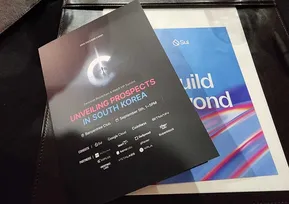
Blockchain Experts Gather at KBW 2023 Side Event to Discuss Future Prospects of South KoreaBlockchain experts from various corners of the industry converged to exchange insights on industrial and technological trends during “Unveiling Prospects in South Korea,” a side event affiliated with Korea Blockchain Week (KBW) 2023. This noteworthy gathering, co-hosted by Sui, Google Cloud, CoinNess, and Bitmain, took place on September 5 at Banyan Tree Club and Spa Seoul.Blockchain compatibility and Web3 adoptionAmong the distinguished speakers at the event, Derik Han, Head of APAC Partnerships at Mysten Labs, the team behind the layer-1 blockchain project SUI, discussed how the SUI project plans to enhance blockchain compatibility through a zero-knowledge (ZK) login feature, similar to single sign-on (SSO). SSO enables users to use a single set of login credentials to gain access to various applications.Han underscored the significance of reducing technical barriers for the widespread adoption of Web3 in our daily lives, and he pointed out that SUI’s ZK login feature would contribute to this goal. Additionally, Han shed light on SUI’s intention to add on-chain features highly favored among Korean gamers.Security tokens and RWAsJo Dong-hyeon, the CEO of Undefined Labs, a developer specializing in on-chain risk rating solutions, emphasized that the Korean decentralized finance (DeFi) market is poised for growth, driven by security tokens and real-world assets (RWAs). He highlighted the significant attention received by the Financial Services Commission’s announcement regarding guidelines for security token offerings (STOs) in February.Jo observed that tokens backed by real-world assets (RWAs) would serve as a bridge between the DeFi space and traditional financial markets, facilitating the development of the former. He also noted that this development would follow the pattern seen in the Korean cryptocurrency market whose liquidity has been supported by young investors.NFT ecosystemsMeanwhile, Kim Min-gu, Head of Web3 Business Development Lab at LG Uplus, a telecom company, expressed their commitment to expanding the Moono NFT ecosystem. This venture, anchored around their octopus character, intends to advance through collaborations with similar NFT projects like Lotte Homeshopping’s pink bear character, Bellygom. Kim highlighted that the company’s primary goal for this year is to make NFTs accessible even to customers who are unfamiliar with cryptocurrencies.Kim further explained that LG Uplus aims to delve into the differences between Web3 NFT communities and their Web2 counterparts. The company’s focus lies in improving the overall usability of its services, without narrowing down its target audience. They are particularly intrigued by the potential of wallets and decentralized applications (dApps) in this pursuit.Banks’ entry into the virtual asset landscapeFollowing this, Leem Min-ho, an analyst at Shinyoung Securities, predicted a strategic expansion by Korean banks, with an emphasis on offering digital asset custody services. This endeavor has been catalyzed by recent developments, including the introduction of security token guidelines in February and the passage of the Virtual Asset User Protection Act in June. These regulatory milestones are gradually shaping a more defined legal framework for virtual assets within South Korea. Leem went on to say that banks, known to favor engaging in business activities within established regulatory boundaries, are poised to concentrate their forthcoming initiatives on approved security tokens, ensuring compliance and adherence to regulatory standards.

news
Web3 & Enterprise·

Dec 20, 2023

MEVerse and XPLA forge partnership to herald new era of blockchain gaming

MEVerse and XPLA forge partnership to herald new era of blockchain gamingMEVerse, the blockchain metaverse platform operated by South Korean gaming company ME2ON Group, and global layer 1 blockchain XPLA have established a partnership to share their respective technologies and create content to popularize Web3 gaming, according to an official announcement on XPLA’s Medium on Wednesday (KST). Their larger goal outlines a commitment to redefining the industry’s landscape by creating a dynamic and engaging metaverse for users worldwide.Photo by Scott Graham on UnsplashHigh hopes“XPLA aims to broaden the horizons of the Web3 industry and contribute to the popularization of blockchain through collaboration with various projects. We plan to work closely with the MEVerse platform, which has secured a high-level lineup of Web3 games, to provide participants with an even richer experience,” said Paul Kim, Team Leader at XPLA.Seamless metaverse experienceMEVerse is known for leveraging its high-speed blockchain technology, which can process 9,000 transactions per second, to help users immerse themselves in the metaverse and enjoy the content it has to offer. Notably, it employs a Proof of Formulation (PoF) consensus algorithm developed by blockchain service platform FLETA — a more eco-friendly alternative to Proof of Work (PoW) that prevents forks by confirming blocks and transactions in real time. The platform also implements cross-chain technology to enhance scalability and interoperability.MEVerse’s blockchain infrastructure includes the Web3 P2E casual game portal MEVerse GameZ, non-fungible token (NFT) marketplace MEVerse DEX, blockchain explorer MEVerse Scan, and more. It also features games like X Heroes: NFT War and Pocket Battles: NFT War.This development is the newest partnership in XPLA’s growing lineup. The platform recently teamed up with Study-to-Earn (S2E) project EDUM and Game and Earn (G&E) platform PERPLAY in an effort to branch out its business.

news
Policy & Regulation·

Feb 27, 2024

Korea offers on-site consultation for virtual asset businesses for law compliance

South Korea’s Financial Supervisory Service (FSS) has initiated on-site consultation services for virtual asset businesses to help them comply with the upcoming Virtual Asset User Protection Act (Virtual Asset Act), which is set to be effective in July. This news was reported yesterday by local media outlet News1. Photo by Hunters Race on UnsplashSupporting VASPs in preparation for the Virtual Asset ActThe consultation services offered by the FSS are fundamentally different from the on-site inspections that have been conducted by the Financial Intelligence Unit (FIU).  Until now, the FIU has been conducting on-site inspections to ensure virtual asset service providers (VASPs) have adequate anti-money laundering (AML) systems in place and comply with the Act on Reporting and Using Specified Financial Transaction Information (the Financial Transaction Information Act). While the FIU has been tasked with conducting inspections, the FSS’s latest on-site consultation services are dedicated to supporting businesses in developing new monitoring systems, which would enable them to prevent unfair transactions ahead of the implementation of the Virtual Asset Act. The FSS has already begun providing consultation services, with the local crypto exchange Upbit being its first client last week. An insider of FSS stated that the schedule for the on-site consultation will be arranged in advance for those seeking the service.  Demand for new FDSDuring a roundtable meeting with VASP CEOs held on Feb. 7, Lee Hyun-deok, the director of the Virtual Asset Regulatory Bureau under the FSS, emphasized the importance of coming up with a new fraud detection system (FDS) specifically designed to block unfair transactions. Most of the current FDSs within local crypto exchanges are focused on AML.  Unlike the Financial Transaction Information Act which mainly focuses on AML, the Virtual Asset Act focuses on punishing unfair trading practices that exploit abnormal price fluctuation or undisclosed information. The FSS recommends that VASPs implement a new system preventing such practices by April, as the Virtual Asset Act’s enactment is just around the corner.  An FSS insider said there is a high chance that VASPs will get the consultation service multiple times on various themes since a lot has to be done before the Act takes effect in July, adding that this consultation is to encourage VASPs to comply with the law rather than to conduct inspections on them. 

news
Loading