Top

AsiaPay and BLOX explore crypto payments within Malaysian market

Web3 & Enterprise·January 11, 2024, 7:05 AM

BLOX, the Malaysian Web3 firm, has forged a strategic partnership with AsiaPay, a payment processor and gateway solution provider in Asia, focused on crypto payments.


Memorandum of understanding (MOU)

According to a recently published press release, the collaboration has been formalized through a memorandum of understanding (MOU) and aims to collectively explore and develop cryptocurrency digital payment solutions tailored for the Malaysian market.


As global consumers increasingly gravitate towards the most frictionless payment methods, cryptocurrencies are gaining significant traction. However, the seamless integration of cryptocurrencies into day-to-day transactions requires the support of adept payment service providers.
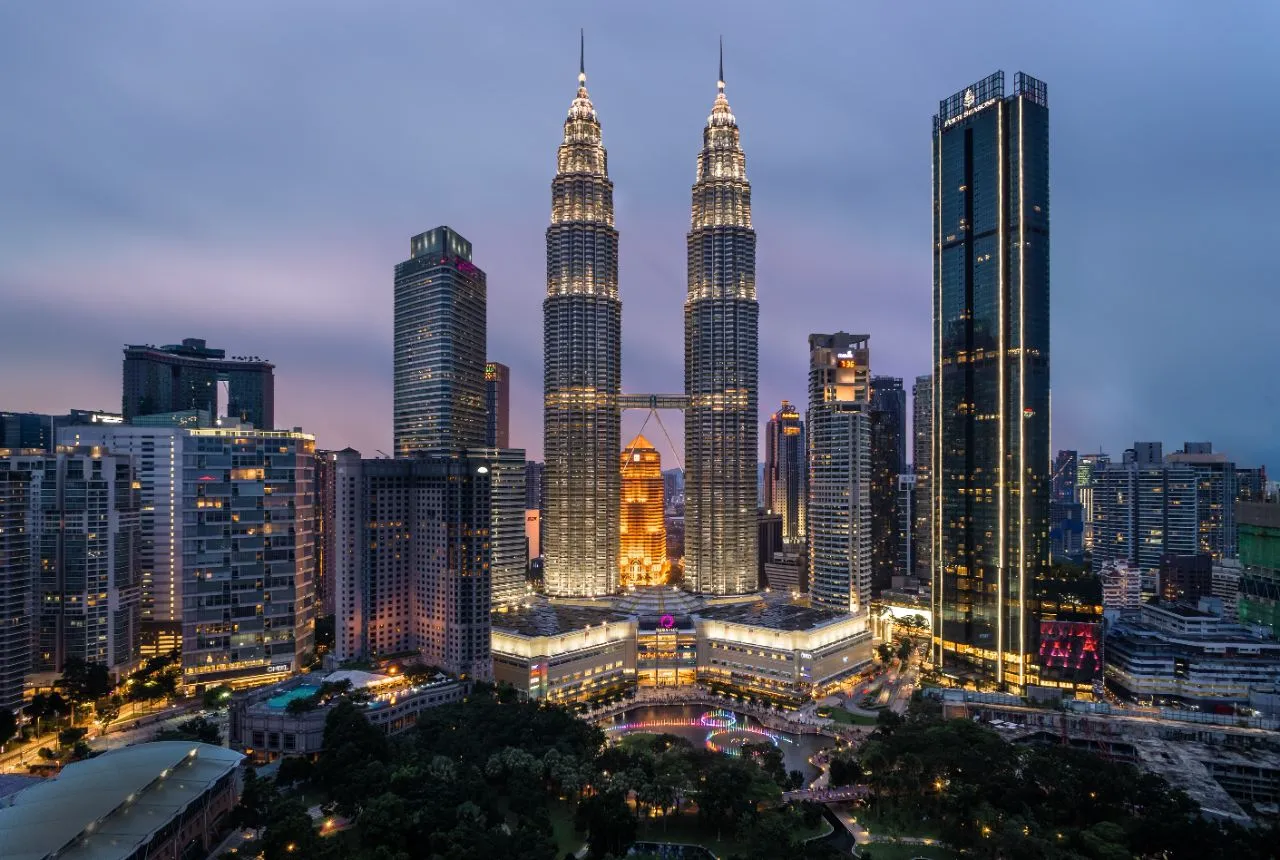
https://asset.coinness.com/en/news/ee36dfcca9140a88d21a03350a092138.webp
Photo by Esmonde Yong on Unsplash

Stablecoin potential

Despite the burgeoning popularity of cryptocurrencies, the inherent volatility in their prices poses a considerable challenge. To address this challenge, stablecoins have emerged as a viable solution. The adoption of stablecoins has gained momentum, particularly in the business-to-business (B2B) segment, where the efficiency of blockchain-based payments and instant settlement can be harnessed without being hampered by the uncertainties of price fluctuations.


It is within the area of stablecoins that BLOX can lend support, given that the entity is responsible for the first Malaysian ringgit-denominated stablecoin (MYRC). Ethan Chung, CEO and Co-Founder of BLOX, expressed enthusiasm about the partnership, stating:

“I’m excited to announce our partnership with AsiaPay, enabling Malaysian merchants to effortlessly accept crypto payments without the need for technical expertise. Empowering businesses, simplifying transactions.”


Regulatory sandbox

The crypto payment exploration, which will be undertaken by the two companies, is being enabled under the auspices of a regulatory sandbox environment provided by Malaysian central bank Bank Negara Malaysia.


Loo Tak Kheong, Country Head and Director at AsiaPay Malaysia, emphasized the added value this collaboration brings to their payment solutions. He said:

“At AsiaPay, we provide payment acceptance solutions with multi-currency, multi-lingual, multi-card, and multi-channeled payment capabilities, which we believe by adding an additional payment method via crypto, will further enhance the value-add service to our Merchants and Partners in the payments ecosystem.”


AsiaPay operates throughout the Asian region, headquartered in Hong Kong but with a local corporate entity also established to serve the Malaysian market.


Malaysia has shown interest in harnessing blockchain for the purposes of international trade and payments. Last year the Southeast Asian country’s Prime Minister had expressed interest in decreasing its dependency on use of the U.S. dollar. Under the guidance of the country’s central bank, Malaysian banks have explored the use of blockchain for the purpose of trade finance.


The country had expressed interest in a central bank digital currency (CBDC) in a financial sector blueprint it had previously published, mapping a way forward from 2022 to 2026. The same document deems decentralized cryptocurrencies like bitcoin to be “non-backed digital assets.” Previously the country’s deputy finance minister had said, “cryptocurrencies like Bitcoin are not suitable for use as a payment instrument due to various limitations.”


This strategic alliance between BLOX and AsiaPay reflects the ongoing evolution of payment systems, positioning both companies at the forefront of the exploration of crypto-as-a-payment means in Malaysia.

More to Read
View All
Web3 & Enterprise·

Jul 18, 2023

Survey Reveals Over Half of Korean Financial Firms Eyeing Both Issuance and Distribution of…

Survey Reveals Over Half of Korean Financial Firms Eyeing Both Issuance and Distribution of Security TokensIn a recent survey conducted by fintech solution provider Koscom, it was found that more than half of South Korean financial companies interested in security token businesses are planning to undertake both the issuance and distribution of security tokens. This result reflects the belief of the financial firms that if they engage only in the secondary market, they will experience reduced profitability due to the necessity of lowering transaction fees amidst fierce competition, as per local business newspaper Hankyung.Photo by Shubham Dhage on Unsplash62% of financial firmsAt a seminar held today, Koscom revealed the result of this survey it conducted among a total of 95 entities interested in security tokens, consisting of 30 securities firms, three banks, one asset management company, and 61 token issuers. Among the financial firms that belong to the first three categories, 62% answered that they will conduct both the issuance and distribution of security tokens. 31% expressed a preference for conducting only issuance, while 7% were inclined towards distribution alone.The survey also highlighted that 38% of financial companies hold a positive outlook on the security token market, although they acknowledge insufficient understanding. Additionally, 34% of respondents anticipate that the security token market will rival the exchange-traded fund (ETF) market in terms of size, while only 10% believe it will eventually replace the initial public offering (IPO) market.Cultural contentWhen it comes to the underlying real-world assets (RWAs) for security tokens, cultural content emerged as the most preferred option, with 71% of respondents selecting it. Real estate followed closely at 66%, with energy (55%), artworks (41%), and agriculture and fisheries (21%) also garnering interest. Respondents were allowed to choose multiple options for this section.Similarly, cultural content remained the top choice among token issuers, favored by 21% of respondents. It was followed by real estate (16%), artworks (14%), intellectual property (14%), and agriculture and fisheries (9%).A Koscom official attributed the preference for cultural content and real estate as underlying assets to their accessibility and profitability.This seminar, organized by Koscom, aimed to create a supportive environment for issuers and distributors struggling to promote security token businesses. Hong Woo-sun, CEO of Koscom, said the company will leverage its expertise in the capital market and blockchain technology to collaborate with authorities and relevant organizations in lowering barriers to entry for market participants who need technical infrastructure.

news
Markets·

Dec 08, 2023

CarrieVerse token CVTX listed on Bitget

CarrieVerse token CVTX listed on BitgetWeb3 metaverse and NFT platform CarrieVerse’s governance token CVTX will be listed on global cryptocurrency exchange Bitget on Dec. 13, according to an article published by South Korean news outlet Money Today. This is the eighth exchange listing for the altcoin, following Gate.io, GOPAX, BingX and more. This comes as part of the platform’s efforts to expand its Web3 ecosystem.Photo by Maxim Hopman on UnsplashCVTX’s versatilityBuilt on Polygon, CVTX is integrated into the tokenomics ecosystem of CarrieVerse and its card strategy role-playing game (RPG) SuperKola Tactics. It is also the governance token for the CarrieVerse blockchain gaming platform Cling. CVTX can be traded for USDT on all of the exchanges it is listed on except for GOPAX, which offers a CVTX/KRW pair. KRW stands for Korean won.Global expansionLast month, CarrieVerse also joined the Dubai Multi Commodities Centre (DMCC), the UAE’s largest free-trade zone for blockchain and crypto companies, as a metaverse service provider. The platform has received approval to set up a local subsidiary there, which will serve as a base to expand its ecosystem, particularly in the Middle East and North Africa (MENA) region.“The market value of CarrieVerse and CVTX is expected to significantly increase once the platform is released in target regions. This will serve as a foundation for more listings on major domestic and international exchanges,” the company said, adding that its number of daily active users has exceeded 5,000.Bitget’s substantial presenceBitget is a cryptocurrency derivatives exchange registered in Seychelles, with global offices in Japan, South Korea, Canada and more. As one of the top ten derivatives exchanges in the world according to CoinMarketCap, Bitget handles over five million users and more than 500 cryptocurrencies. It is also registered on South Korea’s two largest exchanges, Upbit and Bithumb, as a market that facilitates deposits and withdrawals after the implementation of the crypto Travel Rule. The Travel Rule, enforced by the intergovernmental Financial Action Task Force, states that VASPs must share personal information about customers when facilitating crypto transactions that exceed a certain amount as a means of preventing related crimes.

news
Policy & Regulation·

Apr 10, 2023

Korean Banks Look into Safer Crypto Investment Amid Wealth Management Growth

Korean Banks Look into Safer Crypto Investment Amid Wealth Management GrowthDespite growing economic uncertainties, the Korean wealth management market is expected to see growth, triggering fierce competition in the banking industry.©Pexels/Adrien OlichonWealth management growth in APACAlthough the Korean wealth management industry saw a slowdown in its growth last year amid burgeoning economic concerns, the banking industry expects recovery in the future. Management consulting firm Oliver Wyman forecast that the Asia-Pacific wealth management industry will experience a compound annual growth rate of 5.4% until 2026. Against this backdrop, Korean banks are focusing on improving their wealth management capabilities.Crypto-inclusive wealth management trendShim Hyun-jung, a researcher at Woori Finance Research Institute, said that following the global trend, the Korean wealth management industry will need to diversify its target customer groups, adding that banks have to devise phased strategies and deploy them while closely monitoring the domestic crypto market.Previously, several global consulting firms mentioned the following as this year’s asset management trend: Customer segment diversification, growing demand for asset transfer and withdrawal, digital asset management with better human interaction, more investment in environmental, social, and governance (ESG) projects, and advancement in virtual asset security and service technology.

news
Loading