Top

Hong Kong’s HKVAC drops XRP from top 5 crypto index

Markets·January 16, 2024, 7:38 AM

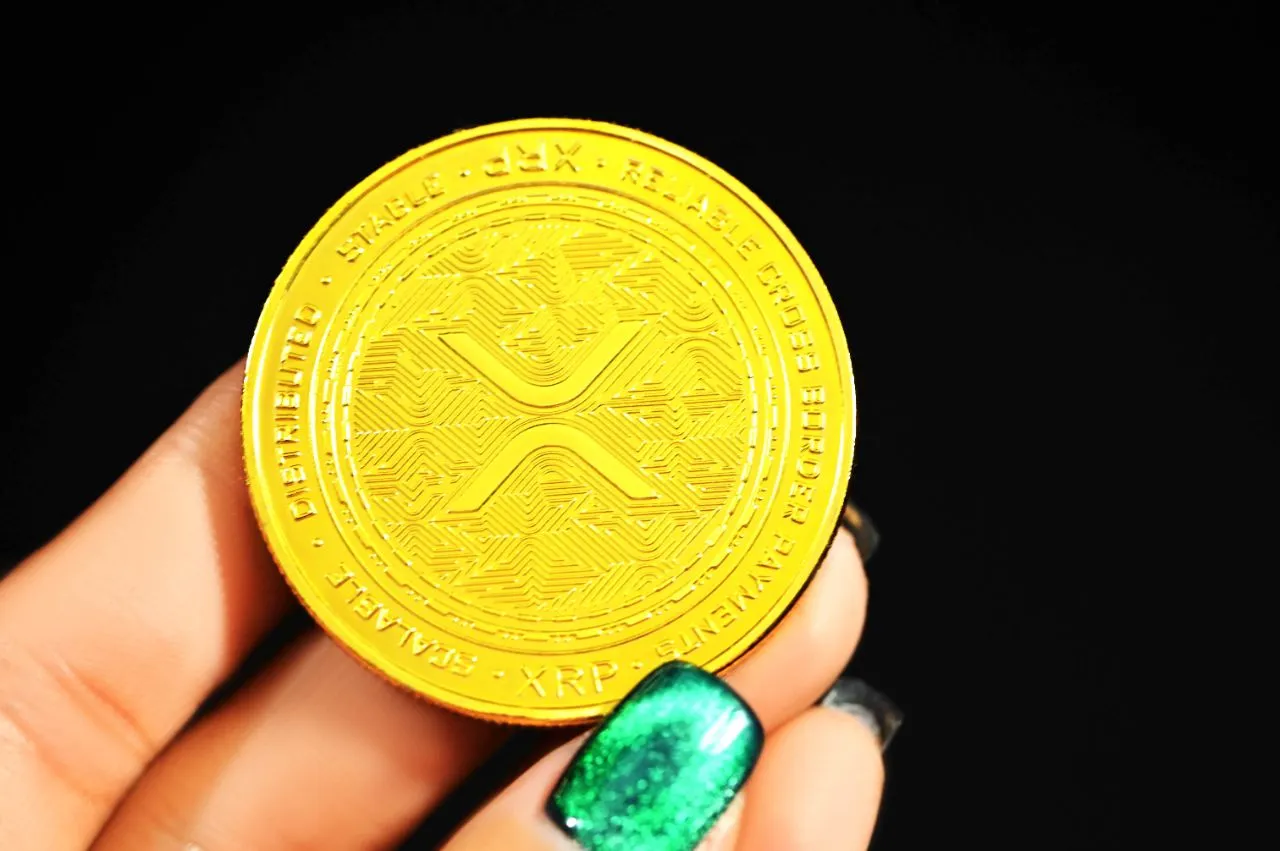
The Hong Kong Virtual Asset Consortium (HKVAC), a digital asset group in China's special administrative region, has announced modifications to its core cryptocurrency index, reshuffling the top contenders to the detriment of XRP, the payment solution token developed by Ripple Labs.
https://asset.coinness.com/en/news/89e98c2bec2b36b43ca45ef20278eb8b.webp
Photo by Kanchanara on Unsplash

Solana takes top 5 slot

Effective as of this Friday, HKVAC will replace XRP with Solana (SOL) in its Top 5 Large Cryptocurrency Index, signaling a shift in the composition of its benchmark index.


HKVAC is a collaborative effort between Hong Kong-based industry participants such as crypto exchanges and licensed ratings agencies. Its aim is to optimize the risk management capabilities of the crypto sector and in that way, assisting market participants including local regulatory bodies.


Crypto exchange platform HTX, previously known as Huobi, became the first member of HKVAC in 2023. It was joined by iPollo, KuCoin, LK Venture, Nano Labs, Purise, Wealthking Investment, G-Rocket Global Accelerator, Hong Kong Data Infinity Technology and others in making up the organization’s membership.


The HKVAC's Top 5 index reflects the global cryptocurrency ranking based on market capitalization, maintaining a pulse on the ever-evolving crypto landscape. However, beyond market cap, the digital asset group considers additional factors such as market valuation, investability and liquidity in its index rebalancing decisions.


Solana’s growth and progression

Solana, currently ranked as the fifth-largest cryptocurrency, has been making substantial strides in the market. Despite the 2022 collapse of the FTX crypto exchange, which significantly impacted SOL's price, the cryptocurrency has made an impressive recovery. Over the past year Solana has surged by 315%. Presently, SOL boasts a market cap of $41 billion, securing its position in the top echelons of the cryptocurrency market.


In contrast, XRP, the ousted cryptocurrency, has experienced a more modest price growth during the same period. As of the latest data, XRP holds the sixth position in the cryptocurrency ranking, with a valuation of $31 billion. The decision to remove XRP from the Top 5 index was met with a 3.9% decline in its value, settling at $0.57. XRP had moved within the Top 5 index in October of last year.


It was added to the index alongside SHIB in 2023. At the time of its formation, HKVAC emphasized that market capitalization was one of the primary criteria incorporated within the evaluation, which extends to 30 cryptocurrencies. A re-evaluation is carried out each quarter on the basis of that market cap criterion.


Crypto rating reshuffle

The HKVAC's reshuffling extends beyond the Top 5 index, impacting other leading cryptocurrencies. Notable changes include the removal of Filecoin (FIL), Binance USD (BUSD), Maker (MKR), Hedera (HBAR) and TrueUSD (TUSD) from the Global Large Cryptocurrency Index. These have been replaced by Near Protocol (NEAR), Internet Computer (ICP), Immutable (IMX), Optimism (OP) and Injective (INJ). Additionally, Avalanche (AVAX) is set to replace Tron (TRX) on the HKVAC Top 10 Global Large Cryptocurrency Index, effective this Friday.


These adjustments come amid Hong Kong's ongoing efforts to bolster the cryptocurrency industry within the region. In December, the financial regulator in Hong Kong signaled its readiness to accept spot crypto exchange-traded funds (ETFs). This move aligns with the United States Securities and Exchange Commission's review of 11 spot bitcoin ETF applications, ultimately approved on Jan. 10.




More to Read
View All
Policy & Regulation·

Apr 28, 2023

Hong Kong to Issue Digital Asset Licensing Guidelines in May

Hong Kong to Issue Digital Asset Licensing Guidelines in MayAccording to Hong Kong’s Securities and Futures Commission (SFC), the Commission will issue new guidelines for virtual asset exchanges within the Chinese autonomous special administrative region (SAR).© Pexels/Jimmy ChanSFC CEO Julia Leung made that announcement while speaking at an event in the city on Thursday, indicating that the guidelines are due to be released next month. Additionally the autonomous region intends to introduce a new licensing system from June 1 onwards, enabling the retail investors among Hong Kong’s populace to trade leading cryptocurrencies like Bitcoin and Ethereum.Hong Kong authorities had provided an insight into this approach back in February, when plans to provide retail access to digital assets were first set out. At the time, they outlined the need for retail customers to pass a knowledge test relative to digital assets or otherwise only being allowed to trade such assets once the customer had completed a certain level of training relative to digital assets, provided by a regulated crypto service provider.This latest announcement has arrived amid a backdrop of a series of recent indications that signify the intent of authorities in Hong Kong to make the autonomous region a major financial hub centered around digital assets.Leung articulated that the further development of this digital assets framework follows a consultation process that attracted more than 150 responses. Although virtual asset service providers (VASPs) will need to await the complete rollout of the licensing system, a handful of crypto businesses such as OSL and Hashkey, under the supervision of the Hong Kong regulator, have already started to offer their services.Crypto as propertyA Hong Kong court recently recognized cryptocurrency as property. The ruling emerged in a bankruptcy hearing pertaining to failed cryptocurrency exchange Gatecoin. In presiding over the case, Justice Linda Chan outlined that the autonomous region takes a broad view of what constitutes property. In finding crypto to meet the definition of property, she went on to clarify that it therefore has the capability of being held in trust.The finding has particular relevance in the crypto world right now given the consequences of an “in trust” custodianship of customer’s digital assets relative to numerous ongoing bankruptcy processes involving failed crypto businesses, and the pecking order of creditors in those instances, in their efforts to recover their digital assets.Positive approachWhile mainland China remains an adverse territory relative to digital assets, Hong Kong has taken to welcoming the sector and with that, enticing crypto firms to relocate to the autonomous region from the mainland. Leadership in the city has been making all the right soundings to demonstrate that it is actively trying to nurture the nascent sector.While recent months have seen the Biden administration in the United States attempt to close off banking from the crypto sector, in contrast, Hong Kong’s largest virtual bank, ZA Bank, was recently given permission to act as a settlement bank for regulated Web3 businesses located within Hong Kong.

news
Policy & Regulation·

Oct 27, 2023

CoinFLEX’s Creditors Sue CEO and OPNX in Legal Dispute

CoinFLEX’s Creditors Sue CEO and OPNX in Legal DisputeCreditors of Seychelles-incorporated crypto platform CoinFLEX have taken legal action against its CEO, Mark Lamb, alleging that his involvement in launching the claims trading platform OPNX violated his fiduciary duties to CoinFLEX.Photo by Sasun Bughdaryan on UnsplashDissatisfied CoinFLEX creditorsAccording to the civil action, which was filed in a Hong Kong court earlier this month, they view OPNX as a competing business to CoinFLEX. The lawsuit also implicates CoinFLEX investor Roger Ver.Lamb joined forces with Su Zhu and Kyle Davies, the founders of the now-defunct Singaporean crypto hedge fund Three Arrows Capital (3AC), to introduce a platform for trading bankruptcy claims, initially named GTX (later rebranded as OPNX). CoinFLEX co-founder Sudhu Arumugam also backed the project, with Leslie Lamb, Mark Lamb’s wife, installed as CEO.Lamb and CoinFLEX defended the project, claiming it would enhance transparency in financial markets and benefit CoinFLEX creditors. However, creditors argue that Lamb’s actions indicate a strategic move to distance himself and his associates from CoinFLEX. With that, they’re seeking to prevent him from representing CoinFLEX in the future.Complaint detailsThe creditors of CoinFLEX assert that OPNX was not authorized by CoinFLEX’s board or creditors and that Mark Lamb independently appropriated CoinFLEX’s intellectual property, technology, customer base, and employees to create the claims exchange.They accuse Lamb of entering into a harmful licensing and purchase agreement with OPNX’s parent companies, Open Technologies Holding LTD and Open Technology Markets LTD. Through their lawsuit, the creditors are aiming to nullify these agreements and place OPNX’s assets and profits into a trust.OPNX’s strugglesOPNX has faced difficulties from the point at which it was launched. While Zhu and Davies were once leading figures in the digital assets space, their reputations have been severely tarnished due to the manner of the 3AC collapse and its profound impact on the broader crypto market.In April the platform confirmed backing from various venture capital (VC) entities only for many of the VCs to turn around and deny any such involvement with the project. Having issued an investor and marketplace alert in relation to the firm in April, a short time later the Virtual Asset Regulatory Authority (VARA) in Dubai issued a formal reprimand to the business' founders.VARA followed up in August, applying a $2.7 million fine. OPNX had entered a bid for troubled Singaporean crypto lender Hodlnaut as part of that business restructuring process. The offer was turned down on the basis that the deal involved OPNX’s native OX token, which was deemed to be far too illiquid. A short time later, the OX unit price plummeted.Zhu was arrested in Singapore last month in connection with non-compliance related to 3AC’s bankruptcy, while Davies’ whereabouts remain undisclosed.CoinFLEX’s creditors also accuse Lamb of reaching a settlement agreement with Roger Ver, known as “Bitcoin Jesus.” Ver was one of CoinFLEX’s initial investors but later became entangled in a dispute over an $84 million debt he allegedly incurred on the platform due to market volatility. The lawsuit seeks to recover any benefits Ver received from the settlement.On X, a user called @CoinFLEXReal suggested that it has uncovered evidence that Lamb, Zhu, and Davies “used creditor assets as their personal piggy bank.”

news
Policy & Regulation·

Feb 24, 2025

Hong Kong strives for crypto hub status through ‘ASPIRe’

The Hong Kong Securities and Futures Commission (SFC) has unveiled a new roadmap for digital asset regulation titled “ASPIRe.” The authorities in the Chinese autonomous territory have been working towards crypto hub status in recent years. This latest ASPIRe roadmap initiative has been formulated in an effort to future-proof Hong Kong’s status as a location that has been optimized for crypto businesses to form and develop. The ASPIRe roadmap was announced by the SFC on Feb. 19 with comprehensive details on the plan published to the regulator’s website. Photo by Skull Kat on UnsplashFive pillarsA-S-P-I-Re details five pillars that the regulator is focusing on in order to address challenges to strengthen Hong Kong’s crypto hub status going forward. The “A” pillar refers to “access,” with a focus on fostering an ecosystem that’s aligned with a regulatory regime that enables global participation. The regulator wants to attract “qualified participants,” while enhancing investor choice and integrating Hong Kong’s digital assets sector with global liquidity. The “S” pillar stands for “safeguards” with the objective of adopting risk-proportionate oversight, promoting regulatory clarity and aligning compliance requirements such that a balance is struck between core regulatory objectives and providing flexibility for the adoption of new technology. “Products” forms another pillar, with a focus on expanding the range of digital asset products and services offered by regulated service providers in Hong Kong. “Infrastructure” is another aspect that the plan homes in on. The focus in this regard is on modernizing reporting, surveillance and cross-agency collaboration through infrastructure building and the use of new technology.  The final pillar, “relationships” (Re), focuses on the empowerment of both investors and the industry in general through education, engagement and transparency. Influencing modern financeThe Hong Kong regulator is putting forward this plan with the understanding that the global virtual asset market was valued at $3 trillion in 2024. It suggests that the sector “has significantly influenced modern finance.” At Consensus Hong Kong 2025 this week, a crypto conference held in the Chinese autonomous territory, SFC CEO Julia Leung suggested that this plan will put Hong Kong in a strong position to secure its role as a crypto industry hub going forward. Hong Kong Financial Secretary Paul Chan Mo-po also delivered a keynote speech at the conference. He said that Hong Kong would “remain a stable, open and vibrant market for digital assets,” adding that Hong Kong is “investing heavily in the related infrastructure and talent development.” Mo-po went on to assert that Hong Kong’s Cyberport Web3 network and the Hong Kong Science and Technology Park are “vibrant hubs for Web3 innovation and fintech.” He also claimed that industry partnerships and the city’s universities are bringing through blockchain expertise.  The Financial Secretary understands the importance of appropriate regulation. He stated: “The key to success lies in maintaining an open, fair, balanced and forward-looking regulatory approach that is conducive to the sustainable and responsible development of financial innovation, including Web3.”

news
Loading
