Top

Ethiopia may be embracing Bitcoin mining with new data mining partnership

Policy & Regulation·February 17, 2024, 12:16 AM

Ethiopian Investment Holdings, the largest sovereign wealth fund in Africa, has announced the signing of a memorandum of understanding (MoU), which is suspected to involve a deal on Bitcoin mining.


Deal uncertainty

Taking to LinkedIn on Feb. 15, the sovereign wealth fund outlined details of a partnership with Data Center Service, a subsidiary of Hong Kong’s West Data Group. Separately, Kal Kassa, CEO of Ethiopian operations at Hashlabs Mining, posted on the X social media platform, outlining that it was a stakeholder in the project and that it involved Bitcoin mining. The matter lacks full confirmation however, given that Kassa subsequently deleted his post while the sovereign fund’s statement falls short of mentioning Bitcoin mining.


Once verified, the project would signify a substantial investment of $250 million. It’s understood that the investment would be directed towards the establishment of state-of-the-art infrastructure tailored for data mining and artificial intelligence (AI) training operations within Ethiopia.
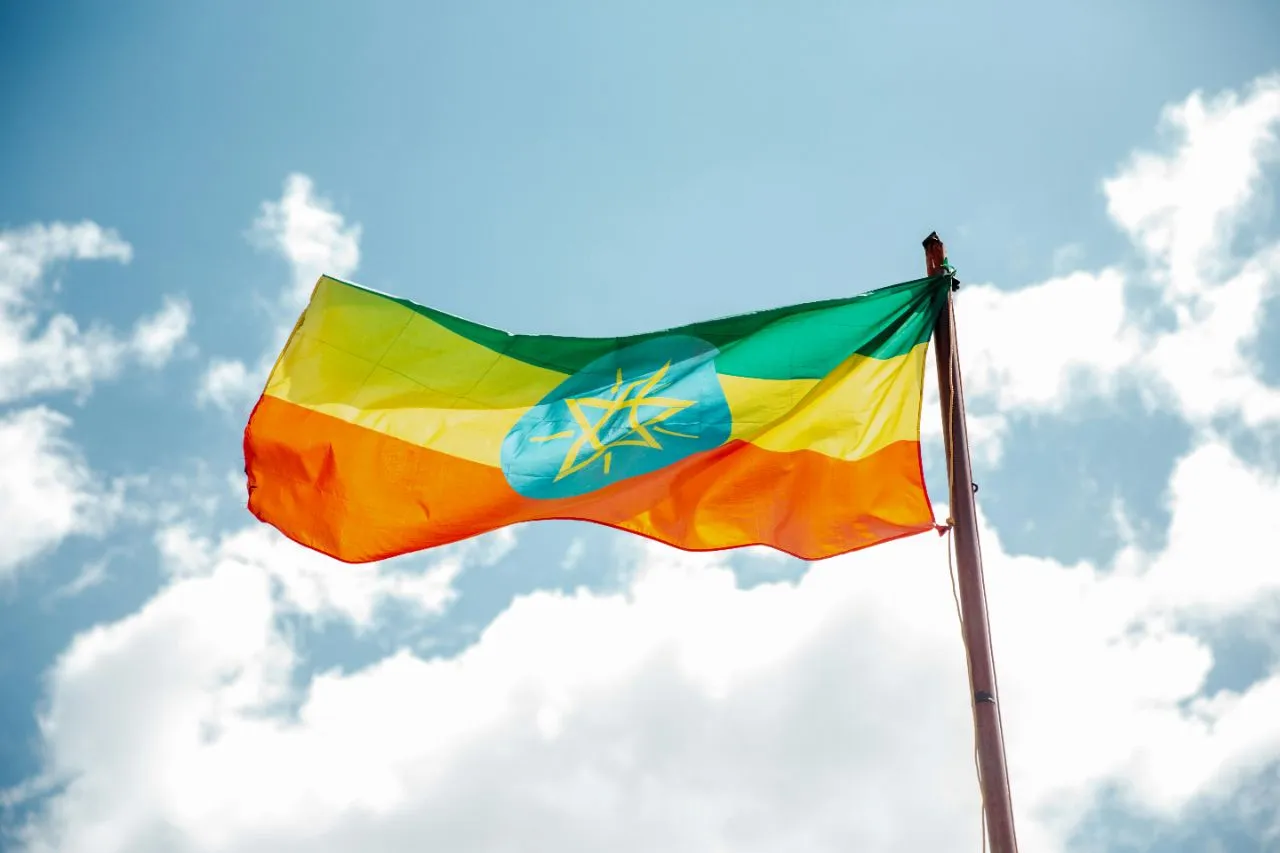
https://asset.coinness.com/en/news/5eb2203d16f268f18f530fd826549762.webp
Photo by Kelly on Pexels

Exploiting abundant energy resources

A key component of this venture may involve the setup of Bitcoin mining operations utilizing Canaan Avalon miners. This initiative would align with Ethiopia's broader strategy to capitalize on its abundant energy resources to attract international investment and stimulate economic growth.

Ethiopia has about 5,200 MW of installed generation capacity, 90% of it coming from hydropower and the remainder from wind and thermal sources.


While the official confirmation from the government is pending, the ambitious project has sparked both excitement and skepticism within the industry. Concerns linger regarding the energy-intensive nature of Bitcoin mining and its potential strain on the local electricity supply, an issue of particular relevance in a nation where energy accessibility remains a pressing challenge for many.


Bloomberg report

Earlier this month, a report from Bloomberg highlighted Ethiopia as being a new haven for Chinese crypto miners. Following the imposition of a mining ban in China in 2021, many operations were redeployed overseas. Kazakhstan in particular was a popular choice. The Eurasian country wasn’t prepared for the influx, leading to power blackouts.

Hashlabs Mining co-founders Jaran Mellerud and Alen Makhmetov both featured in the article. Mellerud outlined the difficulty, stating:

“Firstly, countries can run out of available electricity, leaving no room for miners to expand. Secondly, miners can suddenly be deemed unwelcome by the government and be forced to pack up and leave.”

Makhmetov outlined that he had a 10 MW facility in Kazakhstan which still sits idle today as curbs and taxes enforced in Kazakhstan on miners “basically killed the industry.”


Despite these difficulties in Kazakhstan and China's official ban on cryptocurrency trading, the legalization of Bitcoin mining in Ethiopia in 2022 has spurred a notable influx of Chinese miners seeking new investment avenues.


Ethiopia will need to be mindful of the difficulties experienced in Kazakhstan. With that, the Ethiopian government's move towards regulating cryptographic products, including mining activities, reflects a measured yet optimistic approach towards harnessing the economic potential of Bitcoin mining.


This regulatory framework aims to strike a balance between fostering sector growth and safeguarding the country's energy security and environmental commitments.




More to Read
View All
Web3 & Enterprise·

Dec 08, 2023

Digital wallet D’CENT and Astar Network team up to bring scalable wallet services to users

Digital wallet D’CENT and Astar Network team up to bring scalable wallet services to usersSouth Korean digital hardware wallet service D’CENT has partnered with Japan’s leading blockchain project, Astar Network, to offer users enhanced wallet scalability and seamless asset management, according to an official Medium post on Friday (local time). D’CENT will be integrated into Astar’s blockchain network.Photo by Shubham’s Web3 on UnsplashDriving blockchain innovationAstar Network is a layer 1 blockchain that supports Ethereum virtual machine (EVM) and WebAssembly (Wasm) smart contracts. Tailored to function as a centralized smart contract hub within the Polkadot blockchain ecosystem, it serves as a comprehensive platform for developers to create and deploy decentralized applications (dApps).Astar is revolutionizing blockchain for millions of users worldwide and is actively working with major South Korean companies to achieve this goal. Its newest partner, D’CENT Wallet, which currently provides cold wallet services for hundreds of users across the world, offers an easy-to-use, secure solution for managing digital assets. In particular, it boasts a convenient user experience (UX) that employs fingerprint authentication. Through the new partnership, D’CENT will become the first wallet to support Astar-zkEVM, Astar’s layer 2 scaling solution.Enhancing accessibility and interoperabilityThe two companies plan to work together to bring D’CENT’s unique services to Astar’s Japanese and global user base. Through its integration into Astar Network, the wallet now supports over 60 blockchain networks, 29 of which are EVM-compatible. Users can also store, manage and trade their ASTR tokens — Astar’s native token. This effectively removes the complicated process of managing assets across multiple blockchains.Beyond its role in asset management, the D’CENT wallet also serves as a gateway to the Polkadot ecosystem, where wallet holders can gain access to a plethora of dApps.Both D’CENT and Astar expect that their collaboration will contribute to shaping the future of blockchain transactions and fostering a more integrated blockchain ecosystem.

news
Web3 & Enterprise·

Sep 11, 2023

Ozys Expands into Japanese Web3 Ecosystem Through Partnership with GensoKishi

Ozys Expands into Japanese Web3 Ecosystem Through Partnership with GensoKishiOzys, a cross-chain platform builder based in South Korea, has made its moves into the Web3 ecosystem in Japan by forging an alliance with GensoKishi Online Meta World, a metaverse adaptation of 3D MMORPG Elemental Knights Online. 3D MMORPG stands for three-dimensional massively multiplayer online role-playing game.Photo by Bastian Riccardi on UnsplashElemental Knights Online’s achievementsWith a history of 15 years, Elemental Knights Online won the 2012 Game of the Year (Gold) in Taiwan and has logged over 8 million downloads. It is available on both Nintendo Switch and Play Station 4.GensoKishi’s Korean ambitionsIn the meantime, GensoKishi is setting its sights on entering the Korean Web3 market by teaming up with Ozys, a company well-versed in decentralized finance (DeFi) protocols and cross-chain technology. Kicking off its collaboration with KLAYswap, a prominent DeFi ecosystem in Korea, GensoKishi plans to grow its ecosystem further with the support of Ozys.Choi Jin-han, CEO of Ozys, conveyed his excitement regarding the company’s entry into the Japanese Web3 market through its collaboration with GensoKishi, a partner with a well-established global fanbase. Choi further emphasized that the Korean cross-chain project will contribute to expediting the growth of the Japanese gaming platform’s ecosystem, with the aim of creating meaningful outcomes.Maxi Kuan, CEO of GensoKishi, said that South Korea has been a significant target market for them since the official release of GensoKishi Online Meta World in November last year. He stated that the partnership with Ozys will accelerate GensoKishi’s progress towards achieving its goals.

news
Web3 & Enterprise·

May 24, 2023

BitMEX Launches Bespoke Service in Hong Kong

BitMEX Launches Bespoke Service in Hong KongSeychelles-based cryptocurrency exchange and derivative trading platform BitMEX announced on Monday that it is launching a dedicated virtual asset service for its Hong Kong customers.The exchange published a blog post to its website in which it said that it is in the process of launching “BitMEX Hong Kong,” a dedicated service offering that will be set up on a transitional basis initially. The company is currently in the process of securing a virtual asset service provider (VASP) license from the Hong Kong regulator, the Securities Futures Commission (SFC). Licensing becomes effective in the Chinese autonomous territory on June 1.Photo by Karolina Grabowska on PexelsDedicated mobile appAmong the features the exchange intends to offer its Hong Kong-based customers is a bespoke app, catering specifically to users in the city. The platform will offer Hongkongers the ability to buy and sell cryptocurrencies with eleven spot trading pairs. From an on-boarding and off-boarding perspective, the firm will facilitate the conversion of cryptocurrencies into over thirty fiat currencies.The company is looking to add value by offering additional services such as portfolio management and real-time deposits and withdrawals. BitMEX plans to enable additional functionality such as watchlists and detailed real-time data. Both of these features will enable service users to identify and follow crypto market trends.Licensing preparationsWhile the offering attempts to meet the specific needs of Hongkongers, it's likely that the main motivation relates to VASP licensing. The regulatory requirements in Hong Kong are likely to have distinct facets that would necessitate the company to tease out its service to Hong Kong citizens from its global platform.The SFC has indicated on Tuesday that it will enable crypto trading for retail investors. Notwithstanding that, it’s not doing that without the incorporation of several measures to protect the interests of retail users. Any promotions or incentives that lead a marketing effort with free gifts, and this will likely include token airdrops, will be prohibited.Minimum capital liquidity requirements are being set. Furthermore, client assets will have to be segregated from exchange assets, although the Commission doesn’t mind if the VASP simply segregates said funds itself or does so by way of using an escrow service.Stephan Lutz, acting CEO and group CFO at Bitmex, commented on the development: “We are optimistic that Hong Kong will achieve its ambition of becoming a world-leading Web3 role model city and potentially the Web3 hub for China in years to come.”On May 29, the firm will transfer existing Hong Kong-based customers from its global platform to its new affiliated Hong Kong entity, HDR BMEX Limited. Remaining account balances will be transferred over on that date. There will be no requirement for Hong Kong-based users to undertake additional KYC (know-your-customer) checks or account verification.Earlier this month, the exchange added two additional digital assets ($SUI & $PEPE) to its range of available perpetual contracts.

news
Loading