Top

Harvest Global CEO considers offering BTC and ETH ETFs to mainland Chinese investors

Web3 & Enterprise·May 13, 2024, 3:32 AM

Tongli Han, the CEO and CIO of Harvest Global, has expressed openness to the possibility of applying to offer Bitcoin and Ether exchange-traded funds (ETFs) to mainland Chinese investors through the Stock Connect program. This consideration is contingent on favorable developments in the next two years. Harvest Global, along with China Asset Management (ChinaAMC) and Bosera HashKey, recently launched Asia's first spot Bitcoin and Ether ETFs on the Hong Kong Stock Exchange, aligning with Hong Kong's ambition to establish itself as a global cryptocurrency hub. Han's remarks were delivered during the Bitcoin Asia conference in Hong Kong, underscoring the potential for expansion into the mainland Chinese market.

https://asset.coinness.com/en/news/b30e5932dab3fbec0f0d677274c3a5c4.webp
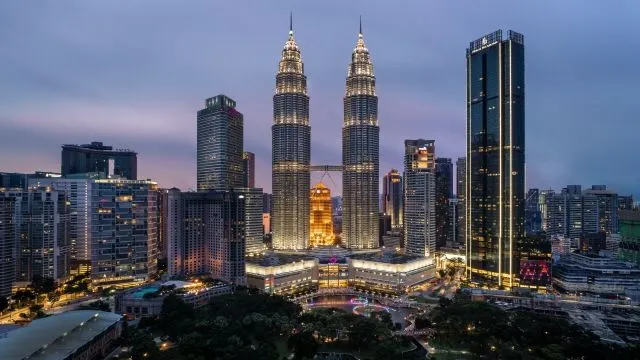
Photo by Jimmy Chan on Pexels

Uncertain regulatory landscape and growth prospects

Despite the introduction of spot crypto ETFs in Hong Kong, uncertainty looms over mainland Chinese investors' access to such products through the Stock Connect program. China's regulatory stance towards the cryptocurrency industry remains stringent, with most commercial crypto activities prohibited on the mainland. While there is speculation regarding the potential inclusion of crypto ETFs in the eligible securities list of the Stock Connect program, approval remains uncertain. The debut of Hong Kong's spot crypto ETFs recorded modest trading volumes compared to their U.S. counterparts, signaling a cautious start. However, Han anticipates the potential for growth in the Asia region, envisioning the Hong Kong ETFs to potentially double the size of their U.S. counterparts. Despite differing opinions on growth prospects, market observers highlight challenges such as the relatively small size of the Hong Kong ETF market and restrictions on mainland Chinese investors' participation, underscoring the complexities facing the expansion of crypto ETFs in the region.


 

More to Read
View All
Web3 & Enterprise·

Jan 17, 2024

Binance Thailand launches exchange services to the public

Binance, in collaboration with Gulf Innova, a subsidiary of Gulf Energy Development, has officially opened its joint venture crypto exchange, Binance Thailand, for public trading. Challenging the market incumbentThis move had been eight months in the making, signaling Binance's entry into the Thai crypto exchange market, following an announcement in 2023 that it intended to extend its offering to Thailand. While Binance is the largest global crypto exchange platform, in Thailand it will be challenging the dominance of an incumbent exchange. Bitkub is based in Bangkok, currently holding around 77% of the market share, with a daily volume of approximately $30 million, primarily trading the Thai baht and Tether USDT pair.Photo by Sara Dubler on UnsplashRegulatory approvalThe launch comes after Binance received regulatory approval from the local Securities and Exchange Commission (SEC) in 2023. Initially introduced on an "invitation-only" basis, the exchange is now accessible to all eligible users, with Binance having followed through on its plans to expand its presence in the region. In a statement released on Tuesday, Binance TH announced the implementation of a dedicated order book tailored for Thai baht trading pairs. Users can seamlessly deposit and withdraw local currency through integration with domestic banking systems. Binance has managed to push its service offering forward in Thailand despite regulatory concerns. In the aftermath of the company’s $4.3 billion settlement in relation to securities law violations with the authorities in the United States in November, concerns had been expressed that the charges brought against the firm in the U.S. would challenge the feasibility of the Binance TH venture. At present, the platform focuses solely on spot trading, with a Binance spokesperson revealing ambitious long-term plans for additional services pending regulatory approvals. Nirun Fuwattananukul, CEO of Gulf Binance, expressed gratitude, stating:"We are deeply humbled to finally announce the launch of our local platform to the general public in Thailand. Over the past year, we have been working closely with Thai regulators, putting substantial effort into detailed planning." Binance TH facilitates digital asset exchange services, collaborating with local banks in Thailand in enabling its service offering. The exchange has also partnered with Binance Kazakhstan for brokerage services, operating under the supervision of Thailand’s SEC. Richard Teng, CEO of Binance, emphasized the strategic significance of the venture, stating:“This is a strategic step forward, setting the stage for Thailand’s impending role as a key player in the global digital finance landscape.” No access for foreignersOne limitation of the service pertains to foreign nationals. There is a restriction on access for foreigners residing in Thailand, as Binance TH requires a Thai National Digital ID to complete Know Your Customer procedures. Despite regulatory challenges and tax implications on overseas income from stock and crypto traders announced by the government in September 2023, Binance remains optimistic about the future of crypto trading in Thailand. The exchange released its themes for 2024 report on Jan. 15, outlining key growth areas such as the Bitcoin ecosystem, ownership economy applications, artificial intelligence, real-world assets, on-chain liquidity and institutional adoption.

news
Web3 & Enterprise·

Jul 20, 2023

Former FTX COO Finds New Role at Sino Global

Former FTX COO Finds New Role at Sino GlobalConstance Wang, previously known for her executive roles at FTX, has recently joined crypto venture capital firm Sino Global Capital.That’s according to sources Bloomberg cited in a recent report as being familiar with the matter. Wang held the role of Chief Operating Officer at FTX and was also the Co-Chief Executive Officer of FTX Digital Markets, the affiliate of the now-defunct crypto exchange, which was based in the Bahamas. Her responsibilities at FTX included overseeing global business expansion, token listings, and public relations and marketing.Following the collapse of FTX and its sister trading firm Alameda Research, Wang has reportedly spent a significant amount of time in China, according to an undisclosed source.Sino Global Capital, founded in 2015 by Beijing-based American investor Matthew Graham, had revealed its early investment in FTX after the exchange’s collapse. The management team stems from a background in consulting, Wall Street, private equity, government, and corporate spheres. A year prior, the venture capital firm launched a $200 million fund with FTX as a key investor. Sam Bankman-Fried, the Founder of FTX, expressed gratitude for Sino Global’s support, stating that they believed in the FTX vision from the beginning and assisted in making it a reality.Photo by Henry Kobutra on UnsplashLawsuitGraham was quite public in his support of FTX and Sam Bankman-Fried. He appeared frequently on podcasts, always explaining that the FTX founder was a genius. On investing in FTX and in projects in general, Graham stated repeatedly that Sino Global maintained a high level of due diligence. Most of the leading venture capital investors in FTX (including Sino Global) have been subject to class action lawsuits filed by creditors. It’s claimed that many of these investors didn’t simply invest capital but also got involved in actively marketing what turned out to be a fraud.In January, the court-appointed management team overseeing the FTX bankruptcy proceedings sought permission to subpoena Wang and other former executives of the company. Court filings indicate that Wang has not been accused of any wrongdoing in relation to the collapse of FTX or Alameda.Prior to her tenure at FTX, Wang briefly worked at the crypto exchange Huobi in Singapore as a Business Development Manager. She also spent two years as an analyst at Credit Suisse.New rolesIn recent months, other former FTX employees have also reappeared in new roles. Amy Wu, who left Lightspeed Venture Partners to lead FTX Ventures, announced her joining Menlo Ventures, one of the oldest venture firms in Silicon Valley. Brett Harrison, former President of FTX US until his sudden resignation in September 2022, has founded a startup with plans to provide a “GPT-4-powered trading algorithm code generator.”The transition of Constance Wang and her fellow FTX alumni into new positions at face value seems like a logical progression. However, all of the FTX c-suite executives remain under ongoing scrutiny. Having brought charges against Bankman-Fried, Caroline Ellison, and Nishad Singh some months ago, Southern District of New York (SDNY) Attorney Damian Williams stated clearly that more arrests would follow.

news
Web3 & Enterprise·

Jan 11, 2024

AsiaPay and BLOX explore crypto payments within Malaysian market

BLOX, the Malaysian Web3 firm, has forged a strategic partnership with AsiaPay, a payment processor and gateway solution provider in Asia, focused on crypto payments. Memorandum of understanding (MOU)According to a recently published press release, the collaboration has been formalized through a memorandum of understanding (MOU) and aims to collectively explore and develop cryptocurrency digital payment solutions tailored for the Malaysian market. As global consumers increasingly gravitate towards the most frictionless payment methods, cryptocurrencies are gaining significant traction. However, the seamless integration of cryptocurrencies into day-to-day transactions requires the support of adept payment service providers.Photo by Esmonde Yong on UnsplashStablecoin potentialDespite the burgeoning popularity of cryptocurrencies, the inherent volatility in their prices poses a considerable challenge. To address this challenge, stablecoins have emerged as a viable solution. The adoption of stablecoins has gained momentum, particularly in the business-to-business (B2B) segment, where the efficiency of blockchain-based payments and instant settlement can be harnessed without being hampered by the uncertainties of price fluctuations. It is within the area of stablecoins that BLOX can lend support, given that the entity is responsible for the first Malaysian ringgit-denominated stablecoin (MYRC). Ethan Chung, CEO and Co-Founder of BLOX, expressed enthusiasm about the partnership, stating:“I’m excited to announce our partnership with AsiaPay, enabling Malaysian merchants to effortlessly accept crypto payments without the need for technical expertise. Empowering businesses, simplifying transactions.” Regulatory sandboxThe crypto payment exploration, which will be undertaken by the two companies, is being enabled under the auspices of a regulatory sandbox environment provided by Malaysian central bank Bank Negara Malaysia. Loo Tak Kheong, Country Head and Director at AsiaPay Malaysia, emphasized the added value this collaboration brings to their payment solutions. He said:“At AsiaPay, we provide payment acceptance solutions with multi-currency, multi-lingual, multi-card, and multi-channeled payment capabilities, which we believe by adding an additional payment method via crypto, will further enhance the value-add service to our Merchants and Partners in the payments ecosystem.” AsiaPay operates throughout the Asian region, headquartered in Hong Kong but with a local corporate entity also established to serve the Malaysian market. Malaysia has shown interest in harnessing blockchain for the purposes of international trade and payments. Last year the Southeast Asian country’s Prime Minister had expressed interest in decreasing its dependency on use of the U.S. dollar. Under the guidance of the country’s central bank, Malaysian banks have explored the use of blockchain for the purpose of trade finance. The country had expressed interest in a central bank digital currency (CBDC) in a financial sector blueprint it had previously published, mapping a way forward from 2022 to 2026. The same document deems decentralized cryptocurrencies like bitcoin to be “non-backed digital assets.” Previously the country’s deputy finance minister had said, “cryptocurrencies like Bitcoin are not suitable for use as a payment instrument due to various limitations.” This strategic alliance between BLOX and AsiaPay reflects the ongoing evolution of payment systems, positioning both companies at the forefront of the exploration of crypto-as-a-payment means in Malaysia.

news
Loading