Top

AsiaPay and BLOX explore crypto payments within Malaysian market

Web3 & Enterprise·January 11, 2024, 7:05 AM

BLOX, the Malaysian Web3 firm, has forged a strategic partnership with AsiaPay, a payment processor and gateway solution provider in Asia, focused on crypto payments.


Memorandum of understanding (MOU)

According to a recently published press release, the collaboration has been formalized through a memorandum of understanding (MOU) and aims to collectively explore and develop cryptocurrency digital payment solutions tailored for the Malaysian market.


As global consumers increasingly gravitate towards the most frictionless payment methods, cryptocurrencies are gaining significant traction. However, the seamless integration of cryptocurrencies into day-to-day transactions requires the support of adept payment service providers.
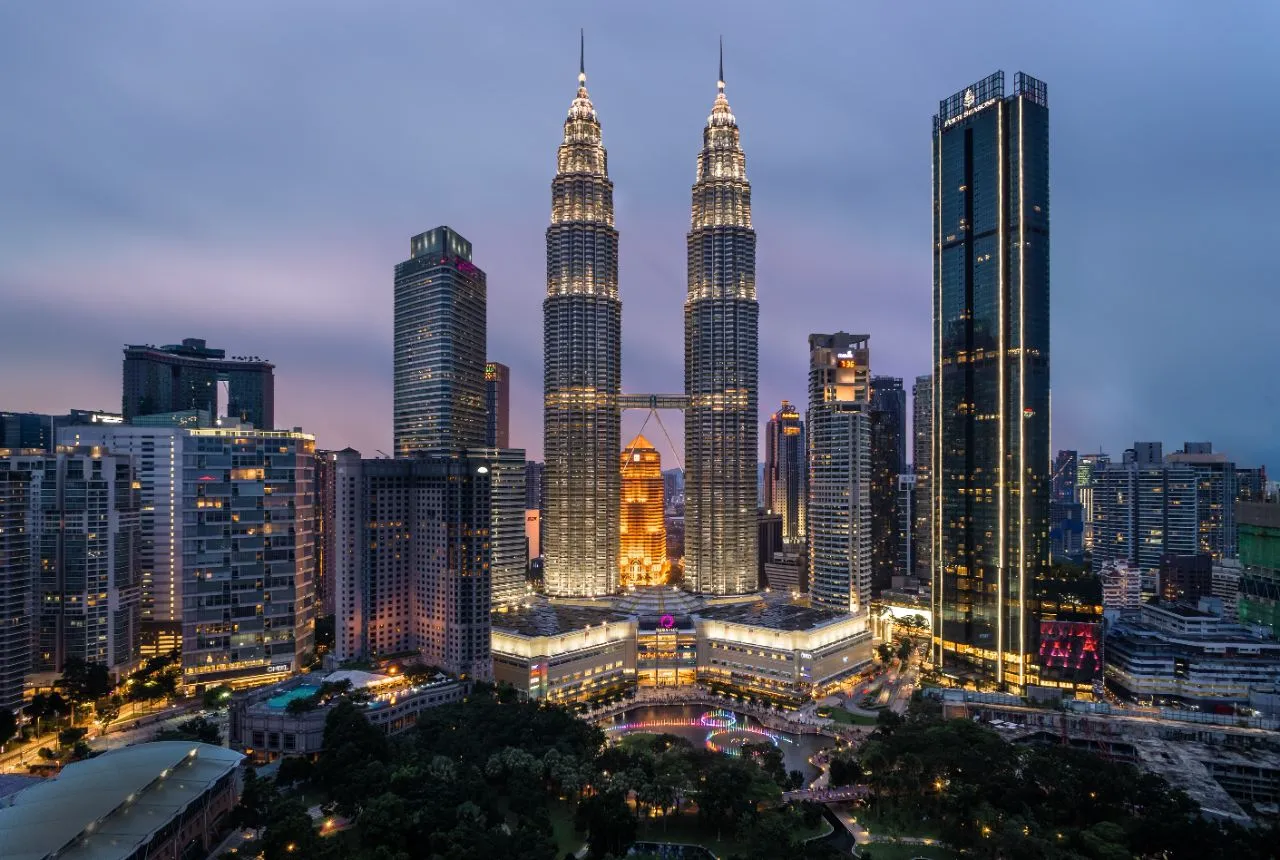
https://asset.coinness.com/en/news/ee36dfcca9140a88d21a03350a092138.webp
Photo by Esmonde Yong on Unsplash

Stablecoin potential

Despite the burgeoning popularity of cryptocurrencies, the inherent volatility in their prices poses a considerable challenge. To address this challenge, stablecoins have emerged as a viable solution. The adoption of stablecoins has gained momentum, particularly in the business-to-business (B2B) segment, where the efficiency of blockchain-based payments and instant settlement can be harnessed without being hampered by the uncertainties of price fluctuations.


It is within the area of stablecoins that BLOX can lend support, given that the entity is responsible for the first Malaysian ringgit-denominated stablecoin (MYRC). Ethan Chung, CEO and Co-Founder of BLOX, expressed enthusiasm about the partnership, stating:

“I’m excited to announce our partnership with AsiaPay, enabling Malaysian merchants to effortlessly accept crypto payments without the need for technical expertise. Empowering businesses, simplifying transactions.”


Regulatory sandbox

The crypto payment exploration, which will be undertaken by the two companies, is being enabled under the auspices of a regulatory sandbox environment provided by Malaysian central bank Bank Negara Malaysia.


Loo Tak Kheong, Country Head and Director at AsiaPay Malaysia, emphasized the added value this collaboration brings to their payment solutions. He said:

“At AsiaPay, we provide payment acceptance solutions with multi-currency, multi-lingual, multi-card, and multi-channeled payment capabilities, which we believe by adding an additional payment method via crypto, will further enhance the value-add service to our Merchants and Partners in the payments ecosystem.”


AsiaPay operates throughout the Asian region, headquartered in Hong Kong but with a local corporate entity also established to serve the Malaysian market.


Malaysia has shown interest in harnessing blockchain for the purposes of international trade and payments. Last year the Southeast Asian country’s Prime Minister had expressed interest in decreasing its dependency on use of the U.S. dollar. Under the guidance of the country’s central bank, Malaysian banks have explored the use of blockchain for the purpose of trade finance.


The country had expressed interest in a central bank digital currency (CBDC) in a financial sector blueprint it had previously published, mapping a way forward from 2022 to 2026. The same document deems decentralized cryptocurrencies like bitcoin to be “non-backed digital assets.” Previously the country’s deputy finance minister had said, “cryptocurrencies like Bitcoin are not suitable for use as a payment instrument due to various limitations.”


This strategic alliance between BLOX and AsiaPay reflects the ongoing evolution of payment systems, positioning both companies at the forefront of the exploration of crypto-as-a-payment means in Malaysia.


More to Read
View All
Web3 & Enterprise·

Jul 25, 2024

HKX latest exchange to drop out of Hong Kong market

HKX management has advised Hong Kong resident users of the platform to withdraw assets following the company’s decision to halt operations in Hong Kong.  The company publicized its decision on July 18, making the following statement on its website: “We would like to inform you that our management team has, after careful consideration, decided to withdraw our application for the Type 1 and Type 7 licenses under the Securities and Futures Ordinance (Cap. 571) and the virtual asset service provider license under the Anti-Money Laundering and Counter-Terrorist Financing Ordinance (Cap. 615).”Photo by Zhe ZHANG on UnsplashCompliance strugglesHKX’s exit from Hong Kong is the latest in a series of crypto exchange withdrawals from the Chinese autonomous territory. Other exchanges such as OKX, KuCoin, Gate.io and Binance had all bowed out back in May.  HKX initially applied for a Hong Kong license in February. However, like many others, the exchange failed to comply with Hong Kong’s regulatory requirements. While Hong Kong has been making a concerted effort to establish a regulatory framework and licensing system in order to create the conditions for it to become a crypto hub, it has also been grappling with making regulations strict enough to stamp out fraud in the wake of the JPEX exchange scandal. With that, it appears that many exchanges are finding the regulatory requirements difficult to live with. Originally, 24 exchanges had applied for a virtual asset trading platform (VATP) license. As it stands today, 12 of those original applicants have dropped out, with one more having its application returned with no clarity emerging as to the reason why. HKX has suspended new user registrations. The company’s management has not suggested that they will reapply for a license and reboot the service at a later stage. The company had flagged its intentions back in May, suspending trading and deposit services on May 29. OKX announced on May 24 that it was withdrawing from the Hong Kong market, citing a review of its business strategy. Around the same timeframe, Gate.io withdrew from the market in Hong Kong having failed to achieve compliance in accordance with the new licensing requirements.  Notwithstanding that outcome, the firm suggested that it planned to revamp its platform in line with the Chinese autonomous territory’s licensing requirements, and return to the market once that had been achieved. In a notice posted to its website on May 22, it stated: “Gate.HK is actively working on the aforementioned overhaul. We plan to resume our business in Hong Kong in the future and contribute to the virtual asset ecosystem after obtaining the relevant licenses.” That overhaul has yet to be completed as right now, the platform only allows the withdrawal of funds by its previous Hong Kong-based customers. Back in May 2023, Eddie Yue, the CEO of the Hong Kong Monetary Authority, suggested that there would be no light touch regulation in Hong Kong. HashKey Exchange, alongside OSL, was the first business to secure licensing under the new framework. In April, HasKey CEO Livio Weng told the Financial Times that these regulations block access to overseas investors while the local market in Hong Kong isn’t very big. It emerged in recent weeks that Hong Kong regulators are reviewing whether crypto regulation is “excessively stringent.” 

news
Web3 & Enterprise·

Sep 06, 2024

WazirX hack: Hacker launders $10M through Tornado Cash amid legal disputes and partial withdrawals

In the aftermath of the massive $235 million hack of the WazirX cryptocurrency exchange on July 18, users and stakeholders are grappling with its devastating consequences. The breach, which compromised a significant portion of the exchange’s reserves, has led to a series of legal, financial and security-related challenges, leaving millions of users uncertain about the future of their funds. The hack and its aftermathWazirX, once a leading Indian cryptocurrency exchange, lost approximately $235 million due to a breach in one of its multi-signature wallets. This included significant amounts of Shiba Inu (SHIB), Ethereum (ETH) and other assets. The hack crippled the exchange, forcing it to temporarily shut down operations and seek a restructuring process under Singapore's insolvency laws. The WazirX hacker has since begun laundering the stolen assets through Tornado Cash, a crypto mixer known for obscuring transaction details. According to blockchain security firm Cyvers, the hacker transferred over 5,000 ETH (approximately $12 million) to a new wallet and laundered $10 million in Ethereum through Tornado Cash. This mirrors the tactics of the North Korea-backed Lazarus Group, which has used similar methods in past high-profile crypto thefts. Photo by GuerrillaBuzz on UnsplashUsers seeking redress and government interventionAs the victims of the hack face uncertainty, over 4 million active WazirX users are expected to suffer a loss of at least 43% of their funds due to the restructuring process. Frustrated by the lack of action from Indian authorities, many users have sought help from Indian Prime Minister Narendra Modi, who was visiting Singapore at the time. Users took to social media to air their grievances and demand justice, urging the government to intervene. WazirX co-founder Nischal Shetty, who is based in Dubai, added to the confusion by stating that he does not know who is responsible for safeguarding user crypto funds on the platform. His statement has fueled outrage among users, who feel abandoned by the exchange’s management. Legal and ownership disputesAmid the chaos, WazirX is also battling a legal dispute over its ownership with Binance, the world’s largest cryptocurrency exchange. Shetty has repeatedly claimed that Binance acquired WazirX, granting it significant control over the platform's operations. However, Binance founder Changpeng Zhao (CZ) refuted these claims in 2022, stating that the acquisition deal was never completed. The uncertainty surrounding the ownership of WazirX has further aggravated users, many of whom are demanding a clear statement from Binance. So far, Binance has remained silent, neither confirming nor denying its involvement. This ambiguity has intensified calls for clarification, with users fearing that a lack of transparency may worsen their chances of recovering their funds. Partial withdrawals and restructuring effortsIn response to the crisis, WazirX has initiated phased withdrawals for users, allowing them to access 66% of their Indian Rupee (INR) token balances. Initially set for September 9, the withdrawal window was moved forward, offering some relief to users. However, many are dissatisfied with the partial access to their funds and are questioning when full crypto withdrawals will resume. WazirX’s legal team has indicated that users may recover only 55% to 57% of their crypto holdings, sparking further discontent. Meanwhile, the exchange has filed a moratorium application in the Singapore High Court, seeking a six-month reprieve from legal actions as it works on a restructuring plan. Looking aheadAs the WazirX saga unfolds, the future of the exchange and its users remains uncertain. The legal battles, ownership disputes and the ongoing laundering of stolen assets pose significant challenges to the platform's recovery. For now, users can only hope that the restructuring process will bring them closer to recovering their lost funds and that authorities will step in to provide clarity and resolution. 

news
Policy & Regulation·

Jun 17, 2023

Huobi Expands Crypto Trading Services in Hong Kong

Huobi Expands Crypto Trading Services in Hong KongHuobi, the Seychelles-headquartered prominent cryptocurrency exchange, is making strides in Hong Kong as its local subsidiary, Huobi HK, now offers crypto trading services to clients in the region.Following its expressed intention to apply for a virtual asset exchange license from the Hong Kong Securities and Futures Commission (SFC), Huobi HK has commenced providing crypto spot trading and virtual asset custody in Hong Kong. In order to comply with regulatory and anti-money laundering (AML) requirements, the exchange will collaborate with independent auditors, as announced by Huobi HK on Twitter.Photo by Shubham Dhage on UnsplashCrypto business licensingThis move aligns with the broader trend of crypto firms shifting their focus toward the East, where regulatory environments are becoming increasingly accommodative. A spokesperson for Huobi stated in a prepared statement: “Regulation of Web3 in Hong Kong will contribute to the widespread adoption of cryptocurrencies on a global scale.”Hong Kong, a Special Administrative Region under Chinese governance, recently introduced a regulatory framework for crypto exchanges, which took effect on June 1. Under these new regulations, retail investors in Hong Kong will be able to trade cryptocurrencies on licensed platforms, removing previous restrictions that limited trading to investors with portfolios exceeding HK$8 million (approximately $1 million).The new regulations impose requirements on virtual asset trading platforms to implement “suitable” onboarding processes and disclosures. Additionally, tokens must meet “minimum criteria” to ensure that “retail investors should be less prone to market manipulation.”Crypto sector interestHong Kong’s inviting regulatory landscape has already piqued the interest of crypto firms. The Greater China division of WeWork, a coworking provider, reported receiving 40 to 50 applications and inquiries from crypto businesses seeking to establish a presence in Hong Kong in recent months.Justin Sun, Tron founder and Huobi global adviser, drew parallels between the developments in Hong Kong and Beijing in a tweet, stating, “It is indeed fascinating to witness the Beijing government’s recent focus on Web 3.0, particularly considering the imminent June 1st developments in Hong Kong.” Sun added that this represents “a significant step towards recognizing the transformative potential of decentralized systems and blockchain-based solutions.”Huobi is actively involved in the development of Hong Kong’s Web3 ecosystem. In addition to its cryptocurrency trading license application, the firm became a significant contributor to Hong Kong’s first Web3 ecosystem fund during this year’s Hong Kong Web3 Carnival.HK Virtual Assets ConsortiumIn a separate announcement, Huobi disclosed that it has become the first member of the Hong Kong Virtual Assets Consortium (HKVAC), an organization dedicated to providing credit ratings for crypto asset exchanges and trading products. HKVAC, a collaborative effort between crypto industry players, including exchanges, institutional investors, and Hong Kong-licensed rating agencies, aims to enhance the security risk management capabilities of the crypto industry and assist authorities in establishing Hong Kong as a regional hub for virtual assets and digital finance.As a founding member of HKVAC, Huobi will serve as a reference point for the organization, leveraging its expertise in security technology and its compliance-oriented, standardized processes.

news
Loading