Top

SGX to list Bitcoin perpetual futures in H2

Web3 & Enterprise·March 13, 2025, 8:21 AM

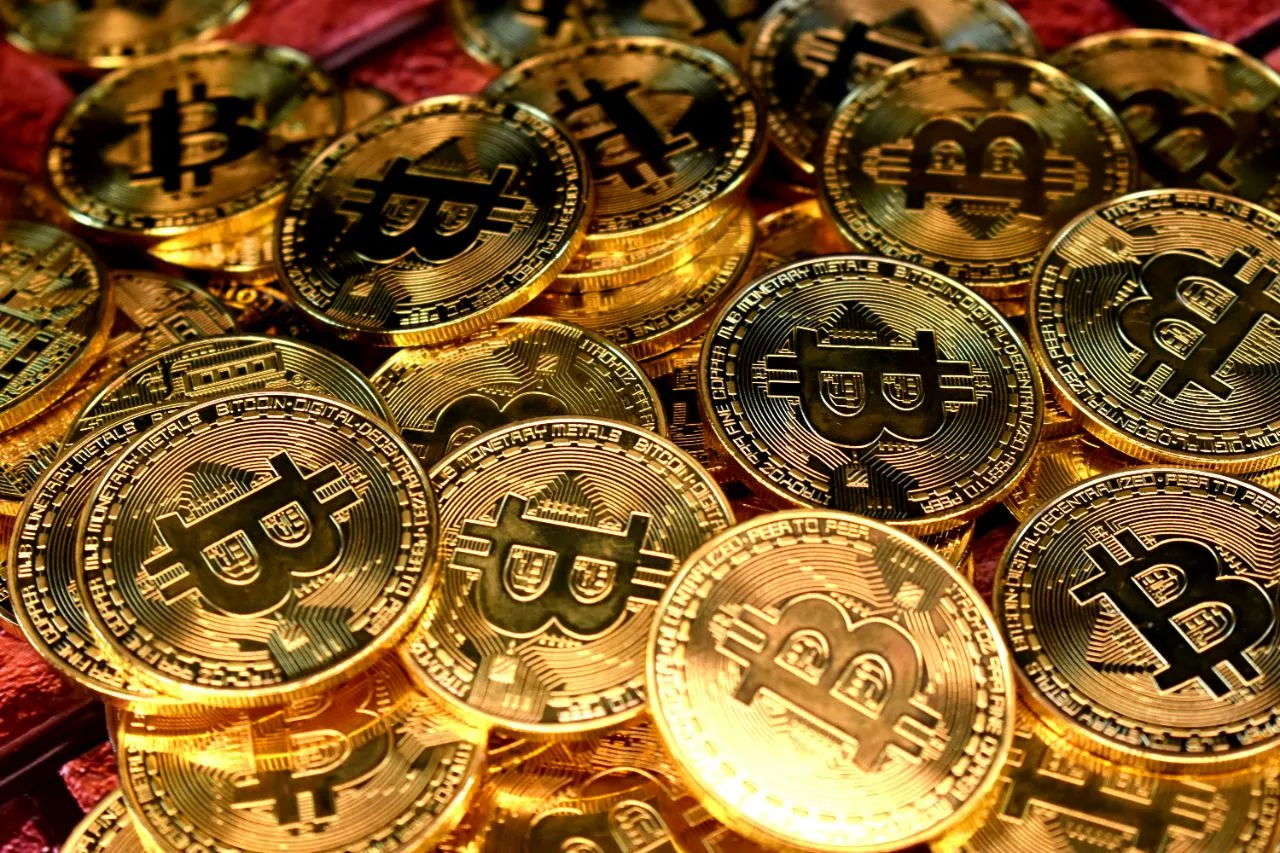
Singapore Exchange Limited (SGX), the city-state’s primary asset exchange, is in the process of establishing Bitcoin perpetual futures trading on the platform.
https://asset.coinness.com/en/news/df33c6d2d3dd1561e10b71712e87a852.webp
Photo by Kanchanara on Unsplash

Institutional product offering

According to a report published by Bloomberg earlier this week, the exchange platform intends to launch Bitcoin futures sometime during H2 2025. The product launch will be subject to regulatory approval from the Monetary Authority of Singapore (MAS).


A spokesperson for the company told Bloomberg that the product offering will be geared exclusively towards institutional investors and traders in an effort to “significantly expand institutional market access.” Retail access to the product will be prohibited.


Once launched, these Bitcoin perpetual futures contracts, being offered through a traditional finance (TradFi) outfit like SGX, will help to blur the lines between TradFi and the emerging crypto sector.


Perpetual futures have no expiry date. They offer a means for traders to bet on price changes in an underlying asset while doing away with the need to take ownership of the asset itself.


Cautious approach

SGX has been cautious in listing crypto assets and derivative products. Last year the firm’s CEO, Loh Boon Chye, said that the time was not yet right for such listings. 


His concern back then was that any such product launches would need “sustainable ecosystem support,” adding that “that means demand, that means governance, that means structure.”


While spot Bitcoin exchange-traded funds (ETFs) had been approved in the United States at that point, there has been much further development in the crypto-sphere since then, following the election of a pro-crypto administration in the U.S. That event has had knock-on effects globally.


Singapore’s SGX isn’t the only traditional exchange platform to respond. Japanese futures exchange, the Osaka Dojima Exchange (ODEX), is gearing up to file an application with the Financial Services Agency (FSA) to list a Bitcoin futures product later this month.


Closer to home, an American digital asset marketplace that focuses on institutional trading, EDX Markets, has plans to introduce Bitcoin perpetual futures products to the Singaporean market, according to a report which emerged in January. In May 2024, EDX launched EDXM Global, a settlement platform, in Singapore.


This product launch by SGX serves the purposes of decision-makers in Singapore, who have been trying to position the city-state as a digital asset industry hub. Additionally, the move will bring greater acceptance of the digital assets sector from traditional market participants.


Crypto perpetual futures contracts were first pioneered by crypto derivatives exchanges like BitMEX back in 2016. Since then, other crypto-native platforms like Binance and OKX have offered these products.


In the case of unregulated offshore exchanges, the products have proven to be controversial, as at times, they have been used in a manner that has exposed market participants to counterparty risk. Failed crypto exchange FTX, together with its sister company Alameda Research, relied on the products in their trading activities.


SGX, as a seasoned, regulated TradFi operator, which holds an Aa2 rating from Moody’s, is likely to prove to be a more palatable option for institutional players.


More to Read
View All
Markets·

Jun 27, 2023

Huobi Delists USDD Stablecoin Pairs

Huobi Delists USDD Stablecoin PairsHuobi Global, the Seychelles-headquartered cryptocurrency exchange, has made the decision to delist ten trading pairs, primarily involving tokens used in transactions with the USDD stablecoin issued by the TRON DAO Reserve.That’s according to an announcement published to Huobi’s website on Monday. These tokens are supported by TRON founder Justin Sun, who also acts as an advisor to Huobi. The delisting, effective from June 29, will impact several tokens, including the Cardano blockchain token ADA, Solana’s SOL, ApeCoin’s native token APE, MATIC from Polygon, FIL from Filecoin, and ETC from Ethereum Classic.Photo by Napendra Singh on UnsplashUnregistered securitiesAll of these tokens were offered on the Houbi platform in pairs with USDD. Additionally, trading pairs involving ARPA, GAS, QTUM, and ZKS with Bitcoin will also be removed from the platform. Huobi stated that these changes are aimed at providing users with an improved trading experience.Originating from China, Huobi has played a significant role in spot and derivatives trading for digital assets. The decision to delist these tokens follows their classification as unregistered securities in recent lawsuits by the US Securities and Exchange Commission against Binance and Coinbase. Prior to Huobi, Robinhood and eToro had already removed some of these tokens from their platforms.Stablecoins are designed to maintain a stable value by pegging them to less volatile assets like the US dollar. They achieve this by holding equivalent reserves of cash and cash-equivalent assets as collateral. Stablecoins are widely used by traders for transferring funds between exchanges and as a hedge against price volatility. This makes them some of the most heavily-traded tokens in the crypto space.USDD stabilityUSDD, the stablecoin at the center of this delisting, currently ranks as the eighth largest stablecoin by market capitalization, with approximately $750 million. Huobi is the primary exchange for buying and trading USDD, according to CoinGecko, a crypto market data provider. USDD is backed by various digital assets such as Bitcoin, Ether, and TRX, and it is issued by the TRON DAO Reserve. The TRON DAO Reserve operates as a decentralized autonomous organization (DAO), utilizing blockchain technology to automate voting and transaction processes.USDD is an algorithmic stablecoin, with the assets held in backing the coin over-collateralized to a level of 170%. Despite this, the stablecoin has had issues in maintaining its US dollar peg from time to time. The issue has been that the token is partly backed by the TRX token, the native token of the TRON ecosystem. If TRX backing is discounted, the stablecoin is only 49% backed.Reports indicate that Sun acquired a controlling stake in Huobi through a Hong Kong-based asset manager, reportedly paying around $1 billion in November. However, Sun hasn’t provided any details of any such ownership stake.Huobi’s decision to delist these trading pairs reflects the evolving regulatory landscape and the need for exchanges to ensure compliance with securities regulations. By removing tokens that have faced legal scrutiny, Huobi aims to maintain a robust and compliant trading environment for its users.

news
Web3 & Enterprise·

Dec 08, 2023

Digital wallet D’CENT and Astar Network team up to bring scalable wallet services to users

Digital wallet D’CENT and Astar Network team up to bring scalable wallet services to usersSouth Korean digital hardware wallet service D’CENT has partnered with Japan’s leading blockchain project, Astar Network, to offer users enhanced wallet scalability and seamless asset management, according to an official Medium post on Friday (local time). D’CENT will be integrated into Astar’s blockchain network.Photo by Shubham’s Web3 on UnsplashDriving blockchain innovationAstar Network is a layer 1 blockchain that supports Ethereum virtual machine (EVM) and WebAssembly (Wasm) smart contracts. Tailored to function as a centralized smart contract hub within the Polkadot blockchain ecosystem, it serves as a comprehensive platform for developers to create and deploy decentralized applications (dApps).Astar is revolutionizing blockchain for millions of users worldwide and is actively working with major South Korean companies to achieve this goal. Its newest partner, D’CENT Wallet, which currently provides cold wallet services for hundreds of users across the world, offers an easy-to-use, secure solution for managing digital assets. In particular, it boasts a convenient user experience (UX) that employs fingerprint authentication. Through the new partnership, D’CENT will become the first wallet to support Astar-zkEVM, Astar’s layer 2 scaling solution.Enhancing accessibility and interoperabilityThe two companies plan to work together to bring D’CENT’s unique services to Astar’s Japanese and global user base. Through its integration into Astar Network, the wallet now supports over 60 blockchain networks, 29 of which are EVM-compatible. Users can also store, manage and trade their ASTR tokens — Astar’s native token. This effectively removes the complicated process of managing assets across multiple blockchains.Beyond its role in asset management, the D’CENT wallet also serves as a gateway to the Polkadot ecosystem, where wallet holders can gain access to a plethora of dApps.Both D’CENT and Astar expect that their collaboration will contribute to shaping the future of blockchain transactions and fostering a more integrated blockchain ecosystem.

news
Web3 & Enterprise·

Oct 11, 2023

State-Owned Newspaper to Launch NFT Platform in China

State-Owned Newspaper to Launch NFT Platform in ChinaChinese government-owned media outlet China Daily, under the guidance of the Publicity Department of the Chinese Communist Party, has allocated a substantial budget of 2.813 million yuan (equivalent to $390,000) for the development of an NFT platform.Photo by Hanson Lu on UnsplashInviting bids from home and abroadThe move will open the door to both domestic and international blockchain technology firms, inviting them to spearhead the creation of the platform. According to a public tendering announcement published last month, the chosen firm must operate on a blockchain mainnet capable of handling over 10,000 transactions per second, ensuring top-notch performance and reliability.One of the platform’s key features will be its user-friendly interface, allowing users to effortlessly upload, display, and manage their digital collections. It will support a wide range of multimedia formats and diverse collection types, making it a versatile hub for creative expression. Additionally, the platform will offer advanced functionalities like pricing, bidding, limited-time offers, and multi-currency settlement to ensure a comprehensive and satisfying user experience.Extending the reach of Chinese cultureThe core objective of the China Daily NFT Platform is to amplify the global influence of Chinese culture by seamlessly blending technology and culture in the metaverse. This ambitious strategy integrates cutting-edge technologies such as virtual reality (VR), augmented reality (AR), mixed reality, blockchain, non-fungible tokens (NFTs), big data, and cloud computing.In an effort to expand the global reach of their digital collections, China Daily intends to collaborate with both domestic and international mainstream NFT platforms. This ambitious plan includes partnerships with well-known foreign platforms such as OpenSea, Rarible, SuperRare, and Foundation. Despite the rigorous regulatory landscape and scrutiny that blockchain entities face in China, this approach aims to make Chinese digital collections more accessible to a global audience.The urgency and importance attached to this project are evident in the tight timeline set by China Daily. The chosen contractor must submit their application by October 17 and complete the development of the platform within three months, highlighting the publication’s commitment to this venture.NFT platform development despite crypto banHowever, it’s important to acknowledge that this initiative unfolds within the backdrop of stringent cryptocurrency regulations in China. Since 2021, although NFTs have not been banned, all forms of cryptocurrency transactions have been prohibited in the country, and blockchain entities operating within China face intense regulatory oversight.In May the Supreme People’s Procuratorate of China issued a warning relative to NFTs on the basis that they have crypto-like properties. However, the agency also acknowledged that NFTs do present a novel application of blockchain technology.Recent events, including the detention of former China Evergrande executives Xia Haijun and Pan Darong for alleged involvement in fraudulent activities, underscore the strict regulatory environment prevailing in China.Within the Chinese autonomous territory of Hong Kong, the South China Morning Post (SCMP) spun out Artifact Labs, an NFT company, following an initial decision in 2021 to launch an NFT standard called artifact.China Daily’s foray into the NFT space demonstrates that some facets of blockchain innovation are being leveraged within China, in this instance with a view towards cultural promotion and global engagement.

news
Loading