Top

Tether eyes South Korean market as stablecoins gain momentum

Policy & Regulation·May 14, 2025, 2:43 AM

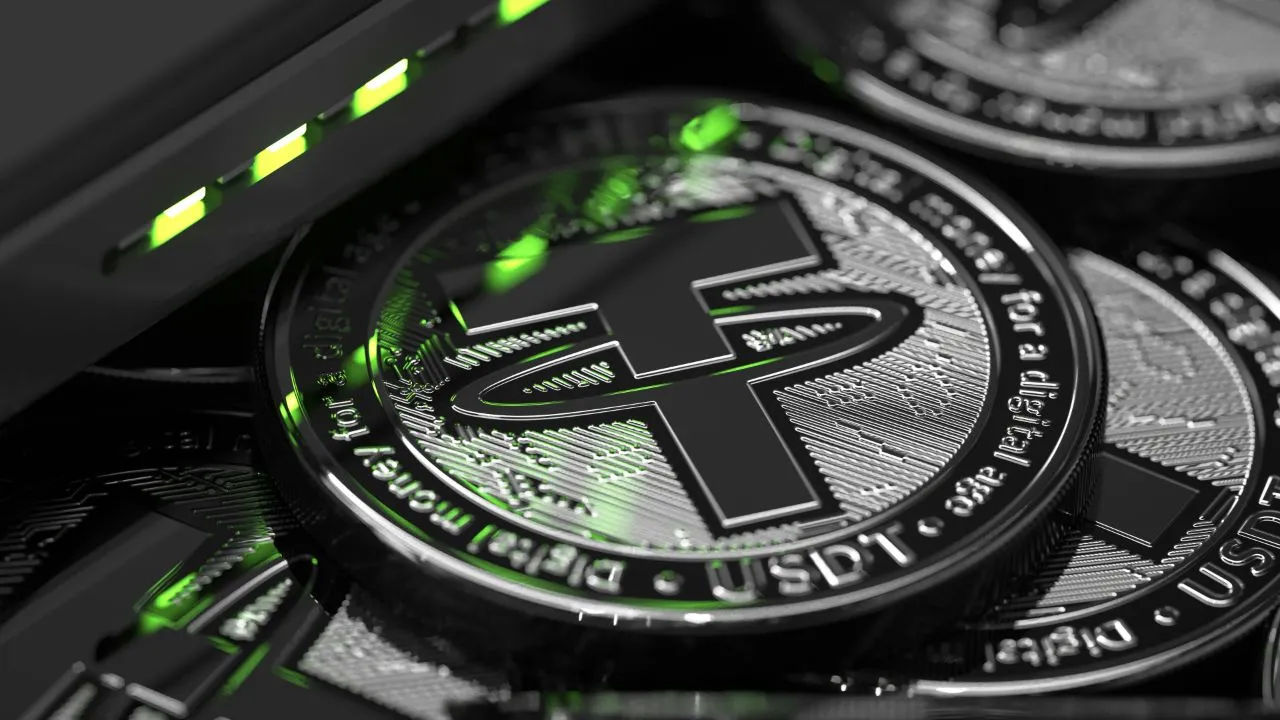
Tether, the company behind USDT, the popular dollar-backed stablecoin, is seeking to establish a presence in South Korea through remote hiring, according to a report from Maeil Business Newspaper citing industry sources.
https://asset.coinness.com/en/news/f9eb29e5cce05a746fb3edbb93f61e5d.webp
Photo by DrawKit Illustrations on Unsplash

Rather than opening a physical office, Tether is looking for a remote employee who will focus on increasing USDT adoption in Korea, exploring business opportunities, building partnerships and navigating the local regulatory landscape.


The expansion comes as stablecoins gain significant traction in South Korea. Data provided to lawmaker Min Byeong-dug from the country's five largest cryptocurrency exchanges via the Financial Supervisory Service (FSS) shows that dollar-pegged stablecoins accounted for 47% of crypto assets withdrawn from these platforms between January and March.


Central bank pushes for regulation

Meanwhile, South Korean officials are increasingly focused on regulating the stablecoin sector. Bank of Korea (BOK) Governor Rhee Chang-yong recently called for the swift implementation of stablecoin oversight, warning that they could bypass the country’s financial rules. During a press conference in Italy, Rhee argued that stablecoins pegged to either the Korean won or the U.S. dollar effectively function as alternative currencies and should be examined under existing money transfer laws.


Rhee has emphasized that authorities must first determine whether won-backed digital tokens should be permitted at all. Last October, during a national audit, he expressed concerns about stablecoins' dependence on fiat currencies and advocated for implementing a central bank digital currency (CBDC) instead.


These concerns were echoed by Ko Kyeong-cheol, head of BOK's electronic finance team, who recently highlighted at a financial law conference that stablecoins could profoundly impact the central bank's ability to carry out monetary policy, maintain financial stability and oversee payment settlements. Ko emphasized that if South Korea were to permit won-pegged stablecoins, the BOK should be involved early in the approval process to minimize potential risks to its policy objectives.


On the regulatory front, Financial Services Commission (FSC) Chairman Kim Byoung-hwan has indicated that discussions on developing a stablecoin regulatory framework are likely to begin in June as part of a broader initiative.


Presidential candidates weigh in on stablecoin future

The issue has also entered the political arena ahead of South Korea's June 3 presidential election. Lee Jae-myung, the Democratic Party of Korea's presidential candidate, has advocated for a market featuring won-based stablecoins. Lee argues that quickly adopting stablecoins would help South Korea keep pace with global trends and prevent capital outflows. His platform includes introducing spot crypto ETFs and reducing digital asset trading fees. 


Another candidate, Hong Joon-pyo of the People Power Party, also previously announced plans to explore the issuance of a won-pegged stablecoin before being eliminated in the party's primary election.

More to Read
View All
Web3 & Enterprise·

Feb 28, 2024

Profitability eludes Canaan despite further growth

Beijing-headquartered crypto mining equipment manufacturer Canaan recently revealed its financial results for the fourth quarter of 2023, demonstrating that it continues to struggle with profitability despite positive numbers relative to revenues and growth.Photo by Sasun Bughdaryan on UnsplashIncreased revenues and salesAccording to the company’s filing, during the last quarter of 2023 Canaan reported a surge of 45.7% in total computing power sold compared to the preceding quarter, reaching 5.5 million Thash/s. This ascent, which reflects a 191.9% increase from the same period in 2022, signifies not just a recovery but a robust resurgence in demand and operational ability. The company's dispatch of 19.6 million Thash/s throughout the year, marking a 29.6% leap from 2022, aligns with the rebound in bitcoin prices observed in Q4 2023, a pivotal factor shaping Canaan's operational revitalization. 47% growth on previous quarterA closer examination of the financials reveals not only surpassing total revenues but also a notable 47.3% quarter-over-quarter growth. Canaan's foray into international markets, bolstered by securing substantial orders from esteemed public company clients, underscores a buoyant sales performance and a positive outlook for the computing sector. Despite the buoyant sales and revenue figures particularly in the mining machine market, the sector has faced ongoing regulatory uncertainties and market fluctuations. Nonetheless, the company's strategic initiatives, alongside the positive market effects of the approval and listing of spot bitcoin exchange-traded funds (ETFs), have been positive. Moreover, Canaan's investments in wafer supply capabilities and strategic financial maneuvers garnered approximately US$136 million through at-the-market (ATM) programs and preferred shares. Recording a lossYet, the company’s journey in 2023 was not without its hurdles. Q4 2023 witnessed a significant increase in product revenues from the previous quarter but a decline from Q4 2022, attributed to dwindling sales prices as the halving event loomed, underscoring the volatility inherent in the cryptocurrency market. Results published last year are indicative of the company’s difficulty. In Q2 2023, revenues were strong, yet the company wasn’t turning a profit.With Q4 results, it’s now clear that the firm lost $421 million in 2023. In Q4, Canaan recorded a net loss of $139 million. That compares with a loss of $91 million in Q4, 2022. The company also expects tough market conditions in 2024. In its forward-looking outlook, it stated:”For the first quarter of 2024, and the second quarter of 2024, the Company expects total revenues to be approximately US$33 million and US$70 million, respectively, considering the challenging market conditions across the industry. This forecast reflects the Company’s current and preliminary views on the market and operational conditions, which are subject to change.” The crypto mining sector remains a very challenging market. With the upcoming Bitcoin halving event set to occur in April, it’s expected that as much as 20% of mining capacity could be forced offline, as some equipment would simply fail to mine on a profitable basis. Indicative of the challenges within the sector, crypto miner Core Scientific was forced into bankruptcy due to market difficulties in December 2022. It has only recently exited that bankruptcy process and now expects to generate revenues of $600 million in 2024. Another Bitcoin miner, Riot Platforms, has warned that profitability may be difficult to achieve in 2024 due to chip shortages.   

news
Web3 & Enterprise·

Nov 01, 2023

Rotonda holds blockchain hackathon at GBIC 2023

Rotonda holds blockchain hackathon at GBIC 2023Rotonda, the operator of the digital asset wallet platform Bithumb Buritto Wallet, hosted a hackathon on Monday (local time) at this year’s Global Blockchain Incheon Conference (GBIC), centered around the theme of addressing a variety of local issues, such as carbon reduction, industrial and urban issues and public services using Web3 technology. Contestants from across the country gathered to create blockchain-based prototypes aimed at addressing such issues.Photo by Marvin Meyer on UnsplashOther blockchain and Web3 companies like Roa Core, Ret Games and ReFi Korea also participated as sponsors for the competition, which was held at Songdo Convensia, an international conference complex located in Songdo International Business District.Innovative solutions recognizedThe ten teams that made it to the finals presented a range of ideas related to the theme, which were judged based on how applicable, feasible and influential they are, as well as their potential for development and social contribution.“Through this year’s hackathon, we were introduced to innovative ideas and high-quality technologies to address various local problems. Discovering and supporting passionate entrepreneurs is in line with the values that we uphold within our ecosystem at Bithumb Buritto Wallet,” said Lee Sang-ho, Vice President at Bithumb Burrito Wallet.The grand prize of KRW 5 million (approximately $3,600) was awarded to DIY, a team that developed a project to promote cultural resources, tourism experiences and sports industries in Incheon using dynamic non-fungible tokens (dNFTs). dNFTs can be adapted or changed based on external events and data. The hackathon judges praised the team for adding gamification elements to increase citizen participation and streamlining administrative procedures through smart contracts. The team also won additional benefits like office space in Incheon’s Jemulpo Smart Town.“We are delighted to be recognized for the in-depth discussions we had amongst our members to develop a highly usable and differentiated platform,” the team said in a statement. “We will strive to leverage blockchain technology to create various success stories.”Additional winnersTwo runner-up prizes went to the Caffeine Addiction team, which developed a platform for motivating coffee drinkers to dispose of used coffee grounds, and the Datayo team, which developed dBus, a smart mobility platform with token-based crowdfunding processes. They received KRW 3 million and KRW 2 million, respectively, in prize winnings.

news
Web3 & Enterprise·

Nov 15, 2023

Bitget withdraws from Hong Kong crypto market

Bitget withdraws from Hong Kong crypto marketSeychelles-incorporated cryptocurrency derivatives platform Bitget has made a decision to permanently exit the Hong Kong market, discontinuing its efforts to obtain a virtual asset trading platform (VATP) license.Photo by SHUJA OFFICIAL on UnsplashBitgetX platform shutdownThe decision comes only months after it had introduced its BitgetX platform to comply with local regulations. The company, which bases its operations out of Singapore, is a well-known entity in the crypto space, renowned as the operator of the 12th-largest cryptocurrency exchange globally in terms of 24-hour trading volume. It made this revelation on Monday, citing what it referred to as “business and market-related considerations.”In a published statement, the company said:”With a heavy heart, we regret to inform you that due to business and market related considerations, we have decided not to pursue a Virtual Asset Trading Platform (VATP) license in Hong Kong. As a result of this decision, the BitgetX website (www.BitgetX.hk) will cease its operations effective December 13, 2023. At the same time, Bitgetx.hk will permanently exit the Hong Kong market.”While outlining that BitgetX will close its doors, the firm urged users to withdraw their assets beforehand. Bitget is among a handful of exchanges that had publicly expressed their intent to secure a license following Hong Kong’s proactive push over the course of the past year to embrace the virtual asset sector.Broader challengesThe decision to abandon the pursuit of a VATP license echoes the broader challenges faced by the cryptocurrency industry in Hong Kong. Despite the city’s recent enthusiastic regulatory embrace of the virtual asset sector, a number of stumbling blocks remain.High compliance costs and the lingering aftermath of the JPEX financial scandal have hindered Hong Kong’s aspirations to establish itself as a leading crypto hub. A report back in June identified the major cost implications of acquiring a license in Hong Kong. At the time, it was estimated that the required spend to obtain a VATP license could range from $2.55 million to $25.5 million.Banking crypto companies has also become a major bottleneck. In June, the Hong Kong Monetary Authority (HKMA) urged banks such as HSBC, Standard Chartered and the Bank of China to bank the crypto sector, having identified a reluctance amongst them to do so.Limited interestThe forthcoming closure of BitgetX adds to a growing trend of limited interest in Hong Kong’s new licensing scheme. Only five companies, all local, have submitted applications for virtual asset licenses to the Securities and Futures Commission (SFC). This list began publication in response to the JPEX scandal, which significantly damaged public trust in virtual assets.The challenges faced by the industry go beyond regulatory hurdles. The damaged public trust, coupled with the high-profile exit of JPEX, has contributed to the hesitancy of international crypto platforms in pursuing licenses in Hong Kong. The abrupt withdrawal of Bitget raises questions about the viability of Hong Kong as a central player in the cryptocurrency industry and underscores the complexities faced by exchanges navigating the evolving landscape of the digital asset sector.

news
Loading