Top

Chinese food company adds Bitcoin to balance sheet

Web3 & Enterprise·May 27, 2025, 1:20 AM

DDC Enterprise, a Chinese company headquartered in Hong Kong and listed on the New York Stock Exchange (NYSE), has become the latest corporation to add Bitcoin (BTC) to its balance sheet.
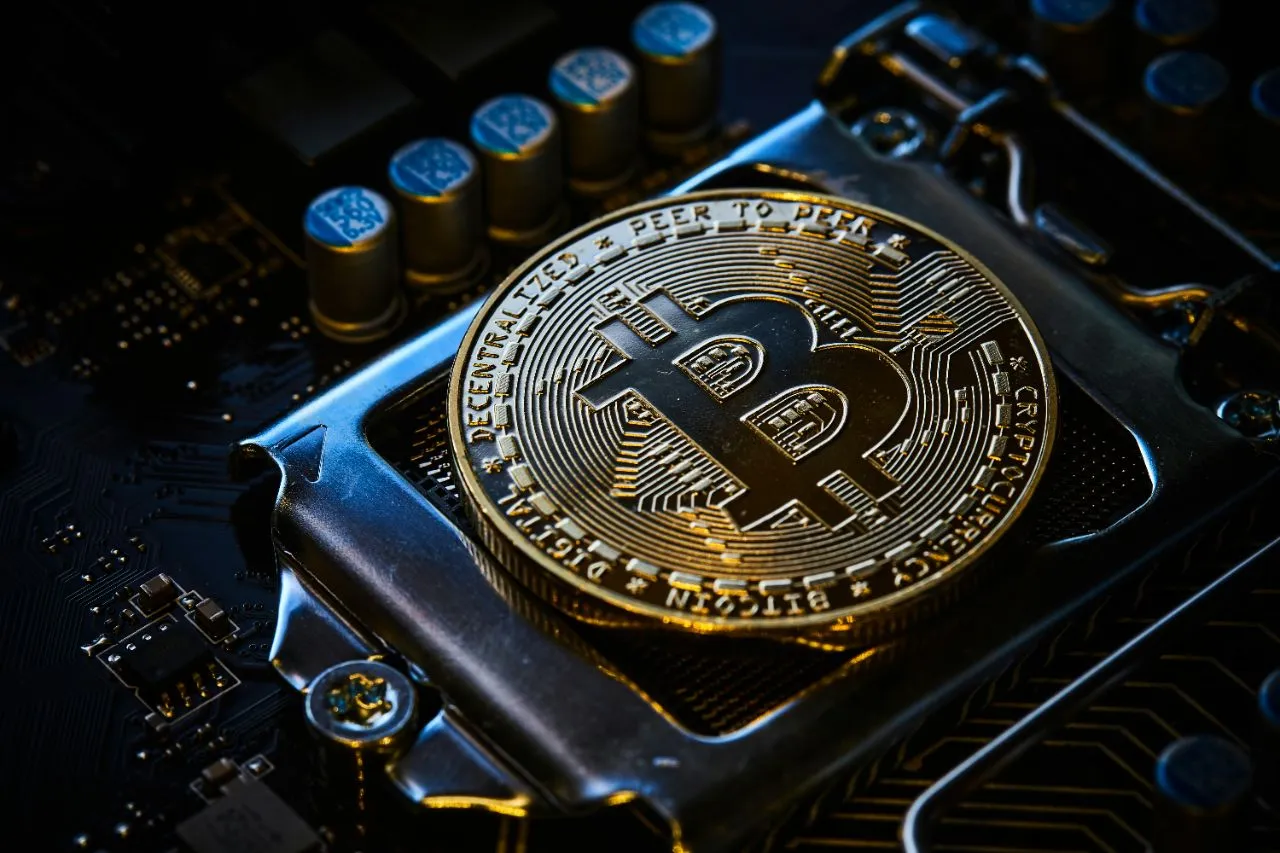
https://asset.coinness.com/en/news/fec0eb9dbc898b03122415d41d8d14f9.webp
Photo by Michael Förtsch on Unsplash

Initial 21 BTC purchase

The plant-based food products company which operates under the “DayDayCook” brand published a press release via Business Wire last Friday announcing its first Bitcoin purchase. It’s likely that there was a symbolic element to the firm’s first Bitcoin purchase, given that it bought 21 BTC while Bitcoin has a supply cap of 21 million BTC.


The company completed the transaction via share exchange with an investor group, issuing 254,333 class A ordinary shares while acquiring the 21 BTC at a market price of $2,283,667. DDC outlined that it plans to make two further purchases over the coming days of 79 BTC, at which point the firm’s corporate treasury will hold 100 BTC.


Targeting 5,000 BTC

The company has a much more ambitious Bitcoin accumulation plan, however. Over the course of the next three years, it is targeting the establishment of a Bitcoin treasury holding 5,000 BTC. At current market pricing, that would amount to a Bitcoin treasury of around half a billion dollars in value. In the near term, the firm is targeting the acquisition of 500 BTC by the end of this year.


DDC Founder and CEO Norma Chu described the development as a “pivotal moment” in the company’s evolution. She said that this plan reflects DDC’s “confidence in Bitcoin as a store of value,” while demonstrating the firm’s interest in pursuing innovation. “We are fully committed to ensuring the success of this strategy, which aligns with our vision to drive long-term value for our shareholders,” she added.


Web3 innovation

According to a DDC website, the company has innovative plans that go beyond just a Bitcoin treasury. It plans to deepen community engagement through the use of NFT loyalty programs and immersive Web3 experiences. It also plans to leverage blockchain transparency in its efforts to build greater community engagement. The website sets out a vision whereby DDC can blend its culinary heritage with next-generation technologies. 


The company suggests that real-world asset (RWA) tokenization has the potential to revolutionize consumer engagement, while offering the possibility of enabling fractional ownership of product lines. It has set out a roadmap where it outlines having established a digital platform in 2012, going on to engage in content creation and content commerce over the course of a decade. 


The firm carried out an initial public offering (IPO) in 2023 and from 2025 onwards, aside from its Bitcoin treasury strategy, it plans to integrate RWA tokenization and Web3 technology into its business, while also adopting AI technologies to enhance supply chain efficiency.


DDC is one of a growing list of corporations to adopt Bitcoin as a strategic asset over the course of the past 18 months. Earlier this month, another Chinese company, Nasdaq-listed Jiuzi Holdings, an electric vehicle (EV) retailer, announced that it had adopted a plan to acquire 1,000 BTC. Hong Kong-listed game developer Boyaa Interactive holds 3,350 BTC.
More to Read
View All
Web3 & Enterprise·

Jun 09, 2023

OKX Burns $244M $OKB in Record Exchange Token Supply Cut

OKX Burns $244M $OKB in Record Exchange Token Supply CutSeychelles-headquartered OKX, the world’s second largest cryptocurrency exchange, has conducted its largest-ever burn of its exchange token, $OKB, according to on-chain data.Approximately 5.5 million OKB tokens, equivalent to around $244 million, were removed from circulation. This record-breaking burn represents a significant milestone for OKX, surpassing the previous burns conducted since the monthly program’s inception.The burn was valued at approximately $258 million when calculated based on a 90-day average price, as reported by OKX. Chinese reporter Colin Wu highlighted that this burn marked another significant milestone in terms of the value of OKB tokens burned.Taking to Twitter on Thursday, Wu wrote: “The OKX exchange carried out the 20th OKB repurchase and burning on June 8, with a total of about 5.5 million OKB, or about 244 million US dollars, which once again set a new record for the value of OKB burning. OKX previously stated that it will burn OKX according to the seasonal market and operating performance, but has not disclosed the specific rules.”Photo by Jens Mahnke on PexelsBuy-Back & Burn program$OKB is described by OKX as a “global utility token issued by the OKX Blockchain Foundation,” offering holders various benefits such as discounts and exclusive access. The global exchange initiated the first Buy-Back & Burn program in May 2019. Since then, it has burned a total of 64,042,314.70 tokens as part of that ongoing burning process. Despite this significant development, the price of OKB has remained relatively stable, experiencing a slight increase of 0.29% on OKX. At the time of publication, the token was trading at a unit price of $44.97.Exchange token concernExchange tokens have recently garnered attention following the United States Securities and Exchange Commission’s (SEC) lawsuit against global crypto exchange Binance. The SEC has levied charges related to the sale of unregistered securities, resulting in a steep decline of nearly 15% in the value of Binance’s exchange token, BNB, over the past week.That scrutiny is likely to have followed the collapse of Bahamas-based cryptocurrency exchange FTX in November. At that time, it became apparent that the exchange was using its exchange token, $FTT, to prop up the business. FTX had issued $FTT tokens and used them as collateral, a dangerous act given that exchange tokens have no real-world asset backing and limited token utility.As the crypto market continues to face regulatory scrutiny and legal challenges, the burn of $OKB by OKX stands as a noteworthy event within the industry. The burn not only reduces the supply of $OKB tokens but also underscores OKX’s commitment to managing and enhancing the value of its exchange token. Market participants will undoubtedly monitor the implications of this burn and how it may influence OKB’s future performance in the evolving cryptocurrency landscape.Exchanges like OKX are likely to carefully manage the supply levels of exchange tokens, given market perceptions in relation to the extent of the utility of such tokens, the scrutiny of regulators, and the problems caused in over-extending supply in the case of other exchanges in the past.

news
Web3 & Enterprise·

Oct 05, 2023

Former SoftBank Executive Launches Stablecoin in Abu Dhabi

Former SoftBank Executive Launches Stablecoin in Abu DhabiAkshay Naheta, a former executive from SoftBank, known for his involvement in some of the firm’s most significant deals, is embarking on a new venture in Abu Dhabi, focusing on stablecoins.Photo by Mathilde Cureau on UnsplashDRAM Trust partnershipThe 42-year-old financier has established Distributed Technologies Research (DTR) within Abu Dhabi’s international financial free zone. The firm has partnered with Hong Kong-based DRAM Trust, an entity with connections to a pool of high-net-worth individuals.Together, the firms aim to tap into the stablecoin market, which analysts at Bernstein predict will surge more than twenty-fold, reaching $2.8 trillion within the next five years. While the vast majority of stablecoins are pegged to the US dollar, DRAM coins will have backing from the United Arab Emirates dirham.Targeting high-inflation countriesThis peg to a relatively stable currency like the dirham offers greater security for individuals residing in high-inflation countries like Turkey, Egypt, and Pakistan. Additionally, it presents an alternative to the SWIFT system. While the dirham currently plays a minor role in the global economy, it has recently gained prominence as a petro-currency.“Our main focus is the unbanked and under-banked in these nations,” Naheta explained in an interview from Dubai. “If you want to diversify your risk and be in a currency that’s complimentary to the dollar, there’s a big percentage of money that can move into this,” he added.Naheta previously worked as a trader at Deutsche Bank. He had played a central role in some of SoftBank’s most notable deals during his tenure. Notably, he pitched the sale of chip designer Arm to semiconductor giant Nvidia. He also led a $4 billion investment in Nvidia in 2017, generating a $3 billion profit.Since his departure from SoftBank last year, Naheta has been actively involved in various fintech projects, with the UAE serving as his base of operations.Growing stablecoin circulationStablecoins have been in existence for nearly a decade. However, their primary use has been for trading purposes to facilitate the movement of digital assets between exchanges, and their adoption in consumer payments has been limited. Currently, there are approximately $124 billion worth of stablecoins in circulation, with Tether’s USDT being the largest, followed by the Circle-issued USDC.Supporters of stablecoins view them as a superior means of achieving cost-effective and instant money transfers and payments. Nevertheless, they have encountered resistance from central banks worldwide, which are actively developing their own central bank digital currencies (CBDCs).DRAM coins will be accessible on decentralized automated market makers, including Uniswap, Sushiswap, and Pancakeswap. Additionally, the team plans to collaborate with centralized exchanges in the near future, as revealed by Naheta.UAE ‘the new Switzerland’The former SoftBank executive anticipates significant demand for DRAM coins in the UAE, where a sizable expatriate population resides. Furthermore, the country is situated close to several high-inflation nations in Africa, the Middle East, and Asia.“I’m extremely bullish on the UAE,” Naheta stated. “It’s the new Switzerland — geopolitically neutral, a great transportation hub and a top tourism destination.”

news
Markets·

Apr 14, 2023

Report: Asia Set to Dominate Web3 Gaming Market

Report: Asia Set to Dominate Web3 Gaming MarketA new report has revealed that Asia is poised to dominate the growing Web3 gaming market, accounting for as much as 80% of all players. The study, conducted by Japanese firm Pacific Meta and DappRadar, found that the region already accounts for 55% of the global gaming population, with 1.7 billion players.©Pexels/Lucie LizThe report identified that the role-playing genre is the most popular in Asia, with games such as Final Fantasy, Phantasy Star Online and Genshin Impact ranking highly.Legal restrictionsThe research noted that legal restrictions on gaming are prevalent across the region, with China only allowing gamers under 18 to play for one hour a day and blockchain games all but banned in South Korea. Despite these restrictions, the report argued that Nexon’s Web3 play with MapleStory Universe and Square Enix’s upcoming Web3 game Symbiogenesis are two examples of crypto games gaining traction in the East. Both games will use the Polygon blockchain, currently the most preferred network for Web3 gaming from a game studio perspective.The report also concluded that Web3 gaming is a “natural” fit for the Asian market because of the types of games to which the market is accustomed. It argues that as Web3 games become more focused on gameplay over financials, Western and Eastern audiences will come to expect similar experiences.A developing understanding of Web3 gamesTo better understand the market, Pacific Meta surveyed over 1,000 adults in Japan and found that 40% knew about blockchain games. Among those who knew about such games, nearly 57% said Web3 games “seemed interesting”, while roughly 10% said they did not seem interesting. Notably, about 33% said “neither”, suggesting they were perhaps unsure about Web3 games and hadn’t yet formed an opinion on them.When asked about the types of blockchain games they would be interested in, 773 out of the 1,030 surveyed said that they would like a game to be free-to-play, and that initial cost was an important feature to them. 538 said that they would like the game to be playable on a mobile phone. Player earnings, game quality, consoles, and famous IP scored lower on the list.Long road to mainstream adoptionThe report highlights that the nascent industry still has a ways to go before it sees mainstream adoption. Nevertheless, big brands such as Razer and FIFA are doubling down on Web3 gaming projects. With the Asian market poised to take a dominant role in Web3 gaming, developers will need to tailor their offerings to suit the preferences of the region’s gamers.The Web3 gaming market in Asia is enormous and is expected to dominate the global market, with Japan a key market for growth. Developers will need to focus on the role-playing genre and create free-to-play mobile games to appeal to gamers in the region. As the Web3 gaming market continues to grow, and blockchain technology advances, it is likely that we will see more games and platforms targeting Asian gamers in the coming years.

news
Loading