Top

Japan’s FSA set to approve JPYC stablecoin

Policy & Regulation·August 18, 2025, 11:53 PM

The Japanese Financial Services Agency (FSA), a government body that oversees banking, securities and the digital assets market in Japan, is gearing up to approve the country’s first stablecoin pegged to the yen.


Local media platform Nikkei reported on Aug. 18 that it is anticipated that the FSA will approve the issuance of the JPYC stablecoin in the coming months.

https://asset.coinness.com/en/news/41c0e339e81ce5847191896b474972a1.webp
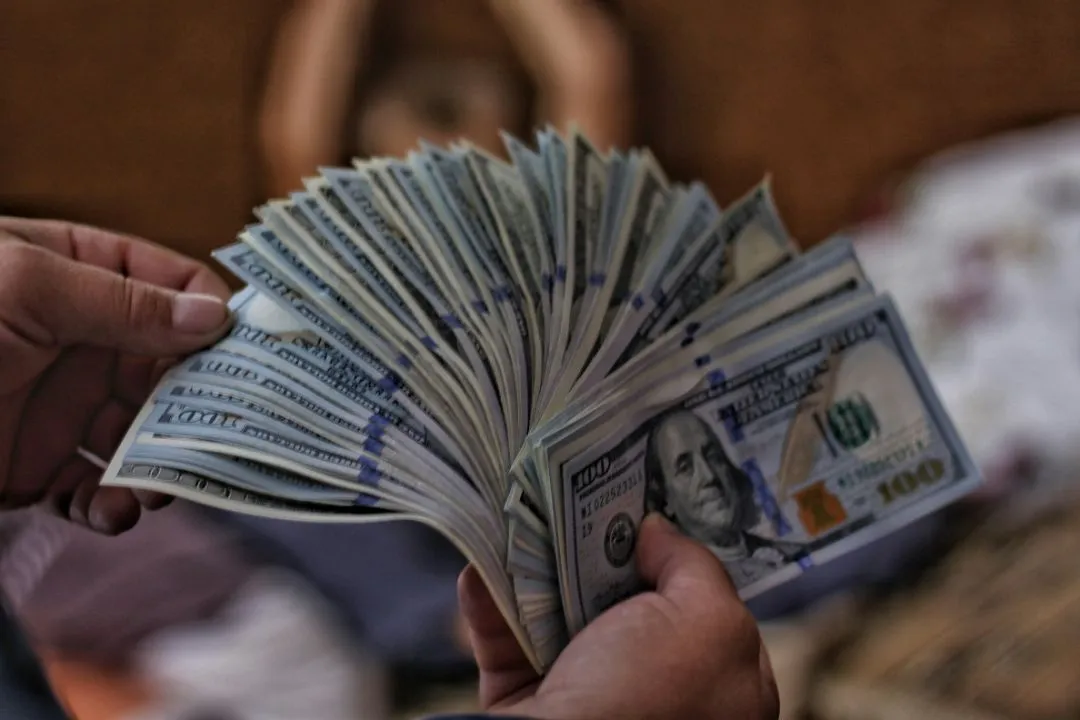
Photo by Dayo Adepoju on Unsplash

Efficient payment infrastructure

JPYC, Inc. was founded by Noritaka Okabe in 2019, establishing the JPYC yen-pegged stablecoin in 2021. Okabe believes that the company can better enable innovation in Japan through a more efficient payment infrastructure that JPYC claims to provide via its stablecoin.


Prior to launching the stablecoin, JPYC had entered into proof-of-concept and regulatory discussions with the FSA. The JPYC stablecoin has almost complete market dominance within its domestic market, with stablecoins to the value of 30 billion yen ($202.7 million) having been issued.


In 2022, JPYC registered with the FSA as a third-party prepaid payment instrument service provider. It’s understood that the company will seek registration once again within the month, this time as a money transfer business.


Japan’s Payment Services Act recognizes the issuance of stablecoins by banks, trust companies and money transfer businesses. JPYC backs its stablecoin with liquid assets such as Japanese government bonds and bank deposits.


Growing stablecoin importance

On a global basis, the leaders in terms of stablecoin market capitalization are Circle (USDC) and Tether (USDT), both U.S. dollar-pegged stablecoins. The U.S. recently enacted its GENIUS Act stablecoin legislation with many politicians and market commentators taking the view that USD-pegged stablecoins will promote ongoing use of the U.S. dollar internationally.

U.S. Treasury Secretary Scott Bessent took to X on Aug. 18 on that topic, stating:

”Stablecoins will expand dollar access for billions across the globe and lead to a surge in demand for U.S. Treasuries, which back stablecoins.”

Foreign governments are starting to see the significance of supporting stablecoins pegged to their country’s sovereign currency. The ongoing development of U.S. dollar-pegged stablecoins has not escaped the attention of Chinese officials. In July, government officials in Shanghai held a meeting to explore policy strategies for stablecoins. The same month, Darryl Chan, Deputy Chief Executive of the Hong Kong Monetary Authority (HKMA), said the authority was likely to issue its first stablecoin license in early 2026. His comments preceded the rollout of Hong Kong’s stablecoin regulatory framework on Aug. 1.


Last week, JPYC’s Okabe said that JPYC would soon start "buying up Japanese government bonds.” He added, “The interest rates on government bonds in countries where stablecoin issuance does not grow will likely continue to rise. It’s no exaggeration to say that the interest rates on Japanese government bonds rest on JPYC’s shoulders.”


Okabe is also going out of his way to draw a clear distinction between his company’s stablecoin and cryptocurrency. On X, he stated that “JPYC is an electronic payment method, not a cryptocurrency.” He went on to assert that given that the JPYC stablecoin is a currency-denominated asset whose value is linked to fiat currency, it incorporates the best qualities of both digital cash and deposits.

More to Read
View All
Web3 & Enterprise·

Aug 18, 2023

CME Group Expands Crypto Reference Rates to Asian Markets

CME Group Expands Crypto Reference Rates to Asian MarketsUS derivatives marketplace CME Group is making strides in its efforts to cater to the Asian cryptocurrency market. In collaboration with crypto indices provider CF Benchmarks, the company is set to launch new reference rates for Bitcoin (BTC) and Ether (ETH) aimed specifically at the Asia Pacific (APAC) region.Photo by Pierre Borthiry — Peiobty on UnsplashGoing live next monthThat’s according to a press release published by the company on Wednesday. These new rates, the CME CF Bitcoin Reference Rate APAC and CME CF Ether-Dollar Reference Rate APAC, are scheduled to become available on September 11, according to a joint announcement.This move comes in response to the growing demand from Asian investors and institutions for accurate pricing data during their local trading hours. Currently, a substantial portion of CME Group’s crypto volume, about 37%, occurs outside of US trading hours, with approximately 11% of trades originating from the APAC region. The new reference rates will be published daily at 4 p.m. Hong Kong time, allowing APAC-based participants to align their crypto price risk management more closely with their portfolio strategies.Building upon past effortsCME Group’s efforts to provide accurate and timely reference rates have been ongoing. The company initially introduced its Bitcoin Reference Rate (BRR) in 2016, followed by the Ether Reference Rate in 2018. The BRR calculates the US dollar price of one Bitcoin as of 4 p.m. London time. It leverages the trade flow data from major Bitcoin spot exchanges within a one-hour window to provide an average of volume-weighted medians across 12 five-minute intervals during that period.Notably, the newly announced Asia-focused reference rates will provide a variant to the existing rates tailored for London and New York. Giovanni Vicioso, CME Group’s Global Head of Cryptocurrency Products, emphasized that these APAC reference rates will facilitate more precise risk management for institutional clients utilizing Bitcoin and Ether futures products in their active portfolios or structured products like ETFs.Focusing on AsiaCME Group’s expansion into the APAC region aligns with a broader trend of institutional interest in cryptocurrencies in Asia. The region has seen regulatory developments aimed at providing clarity to crypto businesses over the course of the past twelve months while a lack of regulatory clarity currently prevails in the United States. This move also coincides with the company’s push to further engage with the global crypto derivatives market, which accounts for around 75% of the overall crypto trading volume.CME’s decision to launch Asia-focused reference rates is a strategic move to tap into the growing interest in cryptocurrencies from the Asia Pacific region. By offering accurate pricing information during APAC trading hours, the company aims to provide institutions and investors with better tools to manage their cryptocurrency price risks effectively. From the perspective of crypto market participants more broadly, the move is encouraging given that it comes from the world leader in derivatives markets.

news
Web3 & Enterprise·

Oct 26, 2024

Malaysian exchange Hata raises $4.2M

Hata Digital Sdn Bhd, the fifth licensed crypto exchange in Malaysia, has raised $4.2 million in a seed financing round. That’s according to a press release published by Cointelegraph on Oct. 22 on behalf of the company. The round was led by two blockchain and crypto-centric U.S.-based venture capital firms, Castle Island Ventures and Cadenza Ventures. Commenting on the development, Castle Island’s Nic Carter took to X, stating:”Excited to be coleading the seed for @hataglobal and joining the board. SE Asia is the #1 most active region for crypto adoption and we are pumped to see Hata build for the Malaysian market and beyond.” In further comments included within the press release, Carter complemented Malaysia and the overarching Southeast Asian region as being at the heart of blockchain adoption:“Malaysia and the broader SE Asia region is the global epicenter of blockchain adoption and we are excited to support the talented team at Hata in their support of this market. We believe Hata is well-positioned to win due to their differentiated product focus and regulatory approach.”  Photo by Vlad Shapochnikov on UnsplashAsian expansionThe company has said that it will use the funds in its efforts to expand its product offering and expand within the Asian region through the acquisition of more users. Reflecting upon the investment, Hata CEO David Low said that the company is “committed to creating a robust platform that empowers users in Malaysia and in the Asia region to navigate the digital asset market with confidence.” Other participating investors included Silicon Valley’s Plug and Play Tech Center, Singapore’s AP Capital, crypto accelerator Alliance.xyz and global crypto exchange Bybit. Bybit’s investment into Hata is not its first touch point with Malaysia as earlier this year the exchange business relocated some of its Chinese employees to the Southeast Asian nation.The other lead investor, Cadenza, is headed up by Max Shapiro alongside Kumar Dandapani. Shapiro gave his own take on Hata, stating:“We believe that Hata’s innovative approach and commitment to user engagement will drive the next wave of growth in Malaysia’s digital asset market. We are looking forward to working closely with the team as they navigate this evolving landscape.”  U.S. dollar trading pairsIn 2023 Hata received in-principle approval from the Securities Commission Malaysia (SCM), a local regulator. Earlier this year, it went one further and secured full approval from the regulator. The exchange relies upon offering trading pairs between crypto assets and the U.S. dollar. The platform currently supports in excess of 40 trading pairs.  In addition to the trading license it has acquired from SCM, Hata has also been licensed by the Labuan Financial Services Authority, the statutory body responsible for the development and administration of the Labuan International Business and Financial Centre. The Malaysian startup was established by three co-founders, one of them being a former executive at Luno, the crypto investment platform that operates across Africa, Southeast Asia and Europe. The exchange operates an affiliate program that enables platform users to participate in revenue sharing.

news
Policy & Regulation·

Sep 03, 2024

Qatar’s QFC launches digital assets framework

The Qatar Financial Centre (QFC), a business and financial center located in the Qatari capital, Doha, has announced that the Qatar Financial Centre Authority (QFCA) and the Qatar Financial Centre Regulatory Authority (QFCRA) have launched the QFC digital assets framework. In a press release published to the QFC website on Sept. 1, the project set out details of its QFC Digital Assets Framework 2024.Photo by 拜耳 闫 on UnsplashIndependent economic zoneThe QFCA and the QFCRA both act in a regulatory capacity relative to the financial center. The QFC is an economic zone, which operates independently from the rest of the country. With that, it has its own legal, tax, regulatory and business framework. The initiative is similar in this respect to projects located within its Middle Eastern neighbors, the United Arab Emirates (UAE), such as RAK DAO in Ras al Khaimah and Abu Dhabi’s international financial center, the Abu Dhabi Global Market (ADGM). The QFC incentivizes international startups to base themselves within the economic zone by allowing full foreign ownership and 100% repatriation of any profits made by the established entity, with a low rate of 10% taxation applied to those profits. In its press release, the QFC claimed that the framework establishes the legal and regulatory foundation for digital assets, including the process of tokenization, legal recognition of property rights in tokens and their underlying assets, custody arrangements, transfer and exchange.  Providing for a transparent ecosystemAdditionally, the framework provides for the legal recognition of smart contracts. The QFC claims that the framework will ensure a “secure and transparent digital asset ecosystem,” in accordance with international standards and best practices.  The financial center established its Digital Assets Lab in October 2023. Since then, it has welcomed in more than 20 startups, with those entities at various stages in terms of developing, testing and commercializing their products and services. The project outlined that the digital assets framework was developed simultaneously, alongside the operation of the QFC Digital Assets Lab, with industry engagement and collaboration arising as a consequence, having played a role in the framework’s development. His Excellency, Sheikh Bandar bin Mohammed bin Saoud Al Thani, the Qatari Central Bank governor, commented on the development, stating: “Launching the 2024 Digital Assets Regulations marks a significant milestone in our journey towards realising the Third Financial Sector Strategy.” The central bank governor added that the project was aligned with Qatar’s endeavor to achieve specific digital transformation goals. Sovereign wealth fund rumorsRumors had emerged in December 2023 that Qatar’s sovereign wealth fund was driving a Bitcoin price surge. While those rumors weren’t substantiated subsequently, this latest development has once again led to some market commentators considering the prospect of one of the world’s largest sovereign wealth funds investing in Bitcoin. Pseudonymous crypto influencer “MartyParty,” who has over 110,000 followers on X, commented on the development, adding that “[The Qatar Investment Authority (QIA) has] been very interested in #Bitcoin and other digital assets and are huge investors in technology.” Back in 2021, QIA CEO Mansoor Bin Ebrahim Al Mahmoud stated at the Qatar Economic Forum that crypto needed to mature before the $500 billion wealth fund would establish a view about investing in the space.

news
Loading