Top

Crypto rally drives surge in South Koreans’ offshore disclosures

Markets·August 28, 2025, 2:43 AM

Fueled by a crypto rally and higher overseas stock balances, South Korea’s National Tax Service (NTS) reported a sharp jump in disclosures of offshore accounts. On Aug. 26, the agency said 6,858 taxpayers declared overseas financial accounts this year, with a combined balance of 94.5 trillion won ($67.6 billion), up 38.3% in filers and 45.6% (29.6 trillion won or $21.2 billion) in value from last year.

https://asset.coinness.com/en/news/78789fd059c5f2a53bf10e538946fe4f.webp
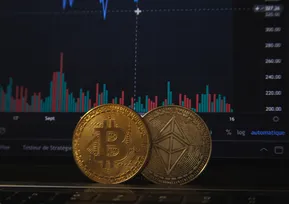
Photo by Piotr Łaskawski on Unsplash

Crypto gains drive offshore filings

Within that, reports of overseas bank deposits and cryptocurrency accounts rose to 46.4 trillion won ($33.2 billion) this year, more than 12% above 2024. That figure excludes stock accounts, which alone totaled 48.1 trillion won ($34.4 billion). Tax officials attributed the increase largely to the surge in crypto prices and higher balances in overseas stock holdings. The trend is underscored by CoinMarketCap data: the crypto market cap now stands roughly at $3.87 trillion, up 86% from $2.08 trillion a year ago.


By asset type, the largest share of filers reported overseas bank deposits (3,197 people), followed by cryptocurrency (2,320) and stocks (1,992). By value, stock accounts dominated with 48.1 trillion won ($34.4 billion), compared with 23.5 trillion won ($16.8 billion) in bank deposits and 11.1 trillion won ($7.94 billion) in cryptocurrencies.


Korean law requires residents and domestic corporations to disclose foreign financial accounts if their combined balance exceeds 500 million won ($358,000) on any month-end date during the year. Reports must be filed with the local tax office by June of the following year.


The NTS said it will step up enforcement against suspected non-filers, using cross-border information-exchange data to verify offshore holdings. Penalties will include administrative fines, penalty notices, criminal referrals, public naming of violators and the collection of back taxes. The agency added that it is preparing to share crypto transaction data under the OECD’s Crypto-Asset Reporting Framework (CARF) and urged anyone subject to the rules to promptly file amended or late reports for overseas crypto accounts.


The recent bullish sentiment in crypto, which fueled the uptick in foreign financial disclosures, has also been driving public interest in digital assets and boosting expectations for altcoins. A survey by CoinNess and Kratos conducted between Aug. 18 and 22 with 2,000 respondents found that 38.5% expect a limited bull run in a handful of altcoins, either with strong real-world use cases or serving as the underlying assets of launched ETFs. Another 28.5% predicted gains would remain centered on Bitcoin and Ethereum, while 20.7% anticipated a broader altcoin season reminiscent of past cycles. The remaining 12.3% forecast the end of the rally and the start of a downturn.


Won stablecoins: policy and risks

Policy momentum around stablecoins is also picking up in South Korea. The Financial Services Commission (FSC) plans to introduce a bill in October governing won-pegged stablecoins as part of the second phase of the Virtual Asset User Protection Act. The legislation is expected to set rules for issuance, collateral management and internal controls.


Amid these changes, companies are showing growing interest in launching won-based stablecoins. Kaia, an EVM-compatible, layer-1 blockchain, recently signed a memorandum of understanding (MOU) with blockchain solutions provider Open Asset to collaborate on projects tied to Korean won–backed stablecoins. The partnership will focus on issuance, distribution, service launches and developing practical use cases.


Circle President Heath Tarbert has recently joined calls for a won-backed stablecoin. In an interview with The Korea Economic Daily, he underscored South Korea’s world-class payments infrastructure and said a digital won could help the country play a leading role in blockchain finance. Blockchain transactions, he noted, operate differently from traditional payment rails, making some form of digital currency, whether a stablecoin or a central bank digital currency (CBDC), a necessity.


Meanwhile, at a recent meeting with top executives from the country’s four major financial groups, Tarbert ruled out collaborations on won-denominated stablecoins. Instead, he promoted Circle’s dollar-pegged stablecoins and suggested exploring joint initiatives centered around them.


Not everyone sees stablecoins as a net positive. NICE Investors Service, a local credit rating agency, warned in a recent report that if banks issue won-based stablecoins, their interest income could suffer. The agency said adoption would likely weigh on banks, benefit securities firms and leave credit card companies largely unaffected. It added that a large shift of funds into stablecoins could shrink banks’ deposit base and weaken their intermediary role. Still, banks that issue stablecoins directly could soften the blow by tapping new fee-based revenue streams.


 

More to Read
View All
Web3 & Enterprise·

Nov 25, 2023

Victory Securities granted approval for retail crypto trading in Hong Kong

Victory Securities granted approval for retail crypto trading in Hong KongHong Kong’s Securities and Futures Commission (SFC) has given the green light to Victory Securities, a well established investment firm headquartered in the Chinese autonomous territory, for retail virtual asset trading.Photo by Carlos Alberto Gómez Iñiguez on UnsplashFirst licensed corporationThe license will allow the investment firm to expand its crypto trading and advisory services to retail investors. The publicly traded company announced its crypto licensing achievement via a press release published to its website on Friday. In that statement, the company expressed the hope that “by connecting traditional finance with virtual assets, customers can configure assets in a flexible and convenient way, and [we] can provide general investors with investment advice on virtual assets and publish relevant research reports.”This approval marks Victory Securities as the first licensed corporation in Hong Kong to offer such services to the retail market, joining the ranks of already approved firms like HashKey Exchange and OSL Digital Securities. It builds upon previous licensing approval that the company received from the SFC to offer a full range of trading and advisory services in respect of virtual assets to institutional clients in November 2022.The move reflects Hong Kong’s commitment to crypto regulation, as earlier this year, the region established a framework enabling the provision of crypto services to retail clients. This development positions Hong Kong as a key player in the Asian crypto market, where firms seem to be receiving more regulatory clarity compared to their counterparts in the United States. The regulatory initiative gains significance in light of the recent JPEX scandal, involving an alleged HK$1.6 billion ($204 million) fraud.Bringing retail into cryptoVictory Securities, currently listed as an applicant on the SFC’s recently published roster of virtual asset trading firms, is navigating this regulatory landscape to bring retail investors into the crypto market. In parallel, HashKey Group, another Hong Kong-based cryptocurrency firm, has launched the city’s first SFC-approved trading app since the JPEX incident. HashKey Exchange’s app, boasting “full mobile trading capabilities,” became operational this month, a notable progression given its prior limitation to professional investors.Through HashKey’s app, local traders can now engage in bitcoin and ether transactions using funds from their Hong Kong or U.S. dollar bank accounts. In addition to pioneering retail crypto trading, HashKey has introduced its crypto over-the-counter (OTC) trading service, HashKey Brokerage, aligning with local securities regulations and the recently implemented cryptocurrency regulatory framework by the SFC.The Hong Kong regulator is also believed to be currently weighing up whether to allow retail investors the ability to access spot crypto exchange-traded funds (ETFs). Despite these advancements, the SFC maintains restrictions on retail traders engaging in stablecoin transactions until new regulatory arrangements are established. This decision follows the SFC’s consultation paper on regulating crypto activities, emphasizing the need to address risks associated with stablecoins and their regulation.The regulator aims to ensure appropriate management of stablecoin reserves to maintain price stability and safeguard investors’ redemption rights, underscoring the potential significant implications for stablecoin stability if these risks are not effectively managed.As Hong Kong solidifies its position in the evolving crypto landscape, Victory Securities’ approval signifies yet another milestone in the region’s journey toward fostering a regulated and inclusive crypto market for retail investors.

news
Policy & Regulation·

Jul 11, 2023

Hong Kong Crypto Licensing Yet to Result in Job Surge

Hong Kong Crypto Licensing Yet to Result in Job SurgeWhile Hong Kong has seen a rush for crypto licenses, scrambling for licensing has not yet resulted in a corresponding surge in job opportunities, according to recruiters in the industry.Approximately 150 companies applied for a local crypto license on June 1, allowing them to operate crypto trading platforms, but recruiters have not witnessed a high demand for talent in the field. That’s according to reports received by Cointelegraph from a number of recruiters active in the crypto space in the Chinese autonomous territory.Photo by Simon Zhu on UnsplashBear market hangoverSue Wei, the Managing Director of major recruitment firm Hays, revealed that her firm has experienced a significant decrease in requests for recruiting technical talent since the recent dip in the crypto market. This decline was particularly notable when many talents were laid off en masse, which led to hesitancy among individuals to work for crypto companies due to the volatile nature of the business, heavily reliant on cryptocurrency prices.Neil Dundon, the Founder of crypto recruiter Cryptorecruit, also noted a lack of significant activity in the Hong Kong market. Despite the regulatory changes, venture activity remains low. However, Dundon expressed optimism that the market has reached its bottom and expects an upward trend to emerge soon.Olga Yung, the Managing Director of Michael Page Hong Kong, echoed the sentiment, stating that there hasn’t been a substantial increase in individuals seeking jobs in the Web3 sector, despite the government’s recent efforts to promote it. However, Yung did mention a slight increase in Web3 firms seeking legal and compliance hires in the latter half of Q2 2023.At the time of publication, 85 crypto-related jobs were being advertised on LinkedIn. Meanwhile, Hong Kong’s Cyberport, the city’s flagship technology hub, has attracted more than 150 companies operating within the Web3 space over the course of the past 12 months. Authorities in Hong Kong are also trying to entice Web3 companies based in mainland China to establish bases within Hong Kong.Increased job openings anticipatedAlthough these firms have displayed enthusiasm in entering the Hong Kong market, the recruitment needs of the crypto industry remain relatively light at present, as many Web3 companies are still in their early stages of development. However, recruiters anticipate a rise in job openings as these companies continue to grow and mature.Kevin Gibson, Founder of Proof of Search, a Web3 recruitment specialist, said that it may take six months before current crypto licensing activity in Hong Kong translates into a surge in demand for staff. Gibson maintains that specialist talent in Hong Kong is in short supply due to many such professionals having left the city in recent years.While Hong Kong has witnessed a rush for crypto licenses, the recruitment landscape in the industry has yet to experience a corresponding surge. However, recruiters remain optimistic about future job opportunities as Web3 companies progress and regulatory conditions stabilize.With Singapore-based Matrixport and international banking firm Standard Chartered both predicting a Bitcoin unit price in the region of $120,000 by the end of 2024, the market is expected to trend upward in the coming months. That could potentially lead to increased hiring activity in the crypto sector.

news
Policy & Regulation·

Oct 13, 2025

UAE deepens its crypto push as Bybit wins full license and institutions move in

The United Arab Emirates (UAE) advanced its push to become a leading digital asset hub as crypto exchange Bybit received a full virtual asset platform operator license from the Securities and Commodities Authority (SCA). The permit enables Bybit to provide its entire range of products to UAE residents, the company said in an Oct. 9 press release. The clearance marks the culmination of a process that began when Bybit received preliminary approval from the SCA in February. The exchange says it is the first to complete the full licensing journey and notes that 2025 has been a year of major compliance wins, including new credentials in Europe and a return to the Indian market.Photo by Atikah Akhtar on UnsplashBitGo broadens institutional reach in DubaiInstitutional infrastructure is expanding alongside retail access. Crypto custody firm BitGo secured a broker-dealer license from Dubai’s Virtual Assets Regulatory Authority (VARA). The new authorization allows BitGo MENA to deliver regulated trading and intermediation services across the region through an integrated OTC desk and a digital platform supporting spot crypto trading in both dirhams and U.S. dollars. The UAE’s welcoming attitude toward digital assets is changing how major investors think about wealth. The Bitcoin Historian said on X that The Kanoo Group, which oversees about $20 billion in assets, intends to invest in Bitcoin. Bloomberg has reported that affluent families across the region are gradually diversifying beyond real estate and private enterprises. With around $1 trillion expected to shift to younger generations soon, many heirs are looking to allocate more toward cryptocurrencies, tokenized funds, and tokenized real-world assets (RWAs). New fund marks progress in tokenized financeThat growing appetite for digital exposure is now being met with new products. Last month Qatar National Bank (QNB) Group joined forces with Standard Chartered and DMZ Finance to launch the first regulated tokenized money market fund in the Dubai International Financial Centre. Using blockchain technology, the QCD Money Market Fund brings traditional financial assets on-chain, creating new yield opportunities for investors within the digital economy. The fund is managed by QNB Group, uses infrastructure provided solely by DMZ Finance, and has Standard Chartered serving as custodian of its assets. As the UAE deepens its role in global finance, regulators are also working to align with international standards. By 2027, it expects to adopt the OECD’s Crypto-Asset Reporting Framework (CARF), with cross-border data exchanges to begin in 2028. The Ministry of Finance has already signed the Multilateral Competent Authority Agreement to make this happen. The framework promotes automatic sharing of crypto-related tax information among member countries, underscoring the UAE’s commitment to global transparency as it expands its financial footprint. Recent developments show the jurisdiction striving for growth while strengthening oversight. Exchanges are gaining clarity on what they can offer, institutions are building trading rails, and investors are embracing tokenized products. They signal a market finding its balance between innovation and regulation. The coming years will reveal how well that balance can hold. 

news
Loading