Top

Leading Chinese gaming company lines up $100M crypto investment

Web3 & Enterprise·November 18, 2023, 12:37 AM

As yet another indicator of the rising trend of institutional crypto investments, China’s premier board and card game company, Boyaa Interactive, has unveiled plans to invest up to $100 million in cryptocurrency assets, with a focus on Bitcoin (BTC) and Ethereum (ETH).

News of Boyaa’s plans emerged following a disclosure from the Hong Kong Exchanges and Clearing Limited, which stated that the company will distribute notices regarding its crypto investment plans during an extraordinary general meeting (EGM). The relevant details are expected to have been supplied to shareholders on or before Nov. 30. The company has emphasized its intention to ensure transparency while adhering to listing rules throughout this process.
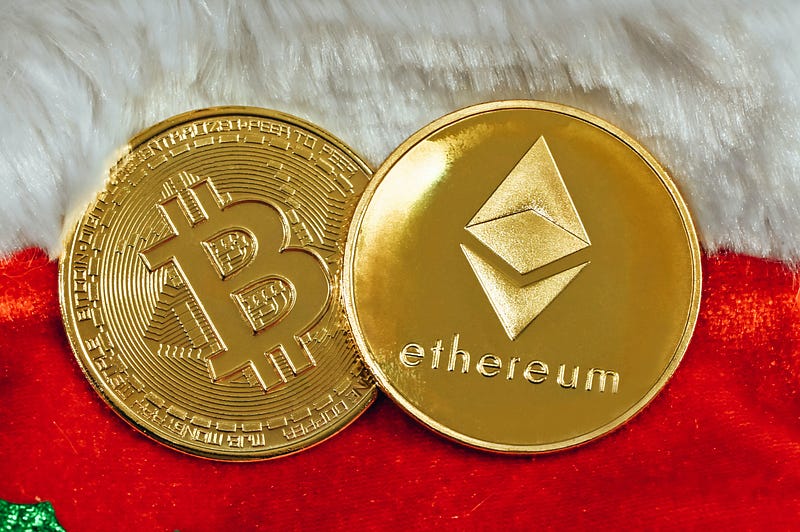
Photo by Traxer on Unsplash


Digital asset acquisition over a 12-month period

The decision to delve into the world of cryptocurrencies aligns with Boyaa Interactive’s commitment to strengthening its presence in the evolving Web3 landscape, as highlighted by the company’s board of directors. The proposal outlines a comprehensive strategy to acquire the assets over a 12-month period, pending approval at the upcoming EGM.

The planned acquisition involves allocating approximately $90 million equally between Ethereum and Bitcoin. The remaining $10 million is earmarked for stablecoins Tether (USDT) and USD Coin (USDC). Boyaa Interactive asserts that the actual acquisitions will depend on open market conditions, with a commitment not to pay premiums exceeding 10% of prevailing market prices. Funding for this initiative will be sourced from the company’s existing cash reserves.

The board will play a crucial role in determining the specific cryptocurrencies to acquire, their allocation ratios and the optimal timing for purchase. The emphasis is on prudent risk management, aligning with Boyaa’s business development strategies.


Diversification strategy

The company justifies its choice of Bitcoin and Ethereum by citing their alignment with its long-term development goals. In the document, Boyaa Interactive highlights the importance of investing in cryptocurrencies with robust market liquidity and substantial market values. Bitcoin, Ethereum, USDC, and USDT, chosen for their high market liquidity, align seamlessly with Boyaa’s strategic vision.

In its stock exchange filing, it justifies these plans on the basis of a desire to diversify its holdings. The document reads:

”[The] purchase of cryptocurrencies is also an important arrangement for the Group’s asset allocation, as allocating part of the Group’s idle reserve funds in cryptocurrencies can serve as a diversification to holding cash in treasury management, and a measure to balance investment risks and returns.”


Growing asset acceptance

The move into the cryptocurrency market comes at a time when institutional investors are increasingly flocking to major assets like BTC and ETH. Reports indicate significant inflows of institutional funds into these cryptocurrencies, setting the stage for what appears to be an extended bull market.

Boyaa first showed an interest in holding crypto on its balance sheet back in August when it proposed allocating $5 million towards cryptocurrency investment. The company following up with a $100 million investment serves as a testament to the growing acceptance and integration of cryptocurrencies within mainstream business strategies.


More to Read
View All
Policy & Regulation·

Dec 27, 2023

Worldcoin withdraws verification service from Indian market

Worldcoin, the startup co-founded by OpenAI CEO Sam Altman, has encountered setbacks in its eye-scanning initiatives just six months after its international expansion. A recent report by TechCrunch indicates that the company’s signature orb eye-scanner is no longer available to users in the Indian market. According to that report, the Worldcoin Foundation clarified that its activities have also been suspended in France and Brazil. The company clarified that its offerings in those markets were only intended to be limited-time product previews as opposed to long-term roll-outs.Photo by Big G Media on UnsplashTemporary service haltIn India, the World App is experiencing widespread adoption, but the orb-verified proof of personhood services has been temporarily halted. The pause aims to allow the protocol to develop and implement a bespoke, safe and orderly process to meet the growing demand. The setback comes after Tools for Humanity, the organization behind Worldcoin, announced the expansion of World ID, its digital identity program linked to iris scans, in July. The startup had ambitious plans, intending to make 1,500 orbs available in over 35 cities globally. Recently, the company unveiled a program offering $5 million in grants to developers utilizing its eye-scanning technology. Regulatory investigationsSam Altman and his co-founders established Worldcoin in 2020 to help individuals prove their digital identity amidst the rise of AI. Over the years, Worldcoin has secured $250 million in funding from notable venture capitalists, including Andreessen Horowitz. However, the startup has faced regulatory challenges, including investigations by French and German regulators and an Argentinian government agency. Altman, himself, has navigated recent challenges. In November, the OpenAI board temporarily removed him as CEO, reinstating him two weeks later. More recently, Fortune reported that Altman quietly received $75 million from the University of Michigan for a new venture capital fund, raising questions about transparency, particularly following the launch of OpenAI’s signature product, ChatGPT. Asian tourIn recent weeks, the project development team behind Worldcoin had engaged in a tour of Asia. The objective of that mission was to gather market feedback prior to engaging in greater efforts to expand the reach of its World ID verification system within the region. To gauge market receptiveness to its product offering, the tour included meetups in major Asian cities such as Hong Kong, Seoul, Singapore and Tokyo. Up until mid-November, the Asian region accounted for 1.4 million World App sign-ups.The introduction of World ID 2.0 by the company on Dec. 13 led to a surge in the price of WLD. Over the course of the 48 hours that followed, it jumped from $2.47 to $4.23, a 71% increase. At the time of writing, the token unit price stood at $3.66. As Worldcoin navigates these challenges, the cryptocurrency industry will closely monitor developments, recognizing the broader implications for the startup’s innovative approach to digital identity verification.

news
Policy & Regulation·

May 29, 2023

Bali Governor Warns Tourists of Consequences of Crypto Use

Bali Governor Warns Tourists of Consequences of Crypto UseAuthorities in Bali have issued a stern warning to foreign tourists, cautioning against the use of cryptocurrencies as a means of payment.Bali Governor Wayan Koster delivered the message during a tourism development press conference on Sunday, stating that individuals who pay with crypto or violate other regulations could face severe consequences, including deportation, criminal penalties, or strict sanctions.Photo by Alfiano Sutianto on UnsplashCrypto use “dealt with firmly”According to reports from state-owned Indonesian news agency Antara, Governor Koster emphasized the need for firm action against foreign tourists who engage in inappropriate behavior, violate their visa permit conditions, attempt to use cryptocurrencies for transactions, or infringe upon other provisions. Koster stated that tourists that violate Indonesian law and use cryptocurrency for payment “will be dealt with firmly.”Indonesian law mandates that all transactions within the country must be conducted in the local currency, the rupiah. Individuals found using alternative currencies can face imprisonment of up to one year and fines of up to 200 million rupiah ($13,300). These regulations were initially implemented to safeguard the rupiah from the widespread use of the U.S. dollar in the country.‘Silicon Bali’In recent years, however, Bali has emerged as a popular destination for crypto enthusiasts, earning the moniker of ‘Silicon Bali.’ The island has witnessed the rise of cryptocurrencies, with the local crypto community even establishing physical spaces such as the clubhouse set up by Indonesian exchange Tokocrypto.While the use of cryptocurrencies as assets is permitted in Indonesia, their use as a form of payment is strictly prohibited. The country also imposes restrictions on individuals engaging in foreign exchange business activities, requiring them to obtain permission from Bank Indonesia.During the press conference, Governor Koster reiterated the regulations, emphasizing that violations would result in administrative sanctions, including written reprimands, fines, and prohibitions on payment transactions.This latest announcement is part of ongoing efforts to curb negative tourist behavior on the island. Bali, heavily reliant on tourism, experienced significant setbacks due to the COVID-19 pandemic and subsequent travel restrictions. With the return of international visitors, new challenges have emerged.Earlier this year, Governor Koster proposed a ban on tourists using motorbikes following numerous traffic violations and accidents. Concerns have also been raised regarding tourists disrespecting local traditions by posing nude in sacred sites or engaging in digital nomad activities without obtaining proper visas.Policy strugglesThe firm stance taken in Bali on cryptocurrency payments aligns with the local administration’s commitment to upholding local regulations and maintaining the stability of the national currency. However, the Governor’s response is further evidence of the struggles that centralized governments and administrations around the world have been having in understanding decentralized cryptocurrency. The default position of many centralized governments has naturally enough been to control it.For that reason, we have seen administrations in places like India who have changed tact several times, sometimes banning crypto while at other times, permitting it. As time goes on, central administrators are beginning to realize that they can’t control it fully. They can only slow down its rate of progress at best.Over the course of the past 26 years, the Southeast Asian country’s sovereign currency has averaged an inflation rate of 9%, peaking in 1998 at a rate of 82%. Against that background, there’s likely to be an ever-growing interest in using decentralized cryptocurrency in the country.

news
Web3 & Enterprise·

May 08, 2023

Titi Financial Announces $TITI Airdrop

Titi Financial Announces $TITI AirdropTiti Financial, the team behind Titi Protocol, a project that aims to further its $TiUSD algorithmic stablecoin, announced that it is currently distributing the first round of airdrops of its $TITI governance token.Taking to social media, the Singapore-based project encouraged interested parties to check their eligibility for the airdrop on the project’s website. In a Medium blog post, the project stated: “In order to give back to the users who have supported us all the way, TiTi protocol has decided to conduct the first round of airdrops to community users.”An algorithmic stablecoinTiTi Protocol is a decentralized, 100% collateral-backed, ‘use-to-earn’ algorithmic stablecoin. It aims to provide diversified and decentralized financial services based on the crypto-native stablecoin system, with an autonomous monetary policy.Alongside $TITI as the project’s governance token, $TiUSD is the accompanying stablecoin issued by TiTi Protocol.Initial DEX offering (IDO)The airdrop runs until May 9. Once that process has been completed, the project intends to launch on mainnet through an initial DEX offering (IDO). IDO volume will be 10 million $TITI, 1% of total issuance, with an initial price per token of $0.06.Launching on the Ethereum blockchain, the IDO commences on May 10, with the sale running until 8:00 UTC on May 13. Buyers have until 08:00 UTC on May 14 to claim their tokens. Total token supply has been set at 1,000,000,000 $TITI. Purchase amount parameters have been set, with a minimum to maximum range extending from $100 to $3,000. The $TITI token can be purchased using USDC, USDT or DAI stablecoin. The project has advised participants to prepare by having an Ethereum compatible wallet available, such as MetaMask, Gnosis Safe or WalletConnect.$3.5 million fund raiseLast month, the project disclosed that it had been successful in raising $3.5 million in funding. The funding round was led by California-based Spartan Group, a blockchain advisory and asset management firm. Other venture investors included SevenX Ventures, Incuba Alpha, DeFi Alliance, Agnostic Fund, Fourth Revolution Capital and Solidity Venture. A number of individual investors associated with Alpha Venture DAO and 0x1b from Fold Finance also participated.Overcoming algorithmic design shortcomingsIt’s interesting to see a renewed interest in algorithmic stablecoins after the epic collapse of Terra Luna in 2022. Additionally, it’s noteworthy that an institutional investment appetite exists given that backdrop. Lead investor Spartan Group cited the depegging risk alongside poor liquidity as being a known problem where algorithmic stablecoins are concerned. However, the investor believes that the Titi Protocol has the necessary design elements incorporated to counteract these issues.One of the key features of the protocol is that liquidity providers only need to provide single sided liquidity to Titi automated market makers (AMMs). The protocol itself covers the other side of that process, doing the math to mint the equivalent value of TiUSD.In April, the project also announced a partnership with Alpha Venture DAO. The decentralized venture capital fund is financed by its own community. Furthermore, Titi Finance can call on the expertise and skills of the DAOs members.Photo by CoinWire Japan on Unsplash

news
Loading