Top

Singapore’s MAS gears up for live CBDC pilot

Policy & Regulation·November 18, 2023, 12:16 AM

The Monetary Authority of Singapore (MAS) has unveiled plans to initiate a live central bank digital currency (CBDC) pilot for wholesale interbank settlement in 2024.
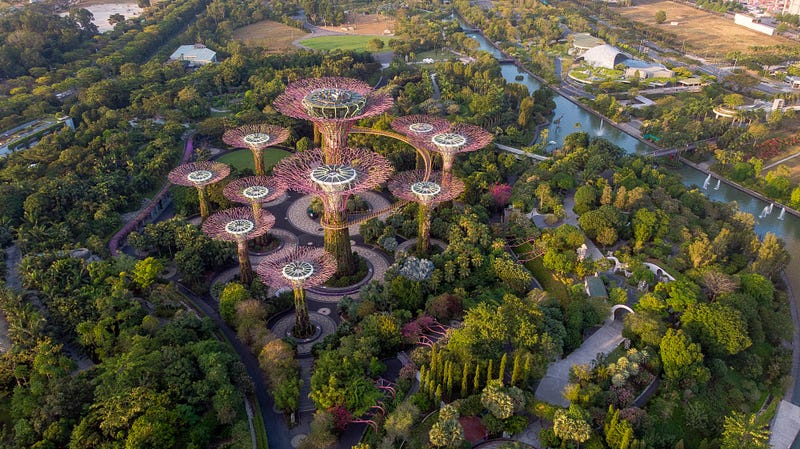
Photo by Sergio Sala on Unsplash


Moving beyond simulation

This pilot will move beyond simulation, involving the actual utilization of a live wholesale CBDC for settling payments between commercial banks. Furthermore, MAS indicated that upcoming pilots may extend to leveraging wholesale CBDCs for the settlement of cross-border securities trade.

MAS Managing Director Ravi Menon expressed the significance of this move, stating:

“The ‘live’ issuance of central bank digital money for use as a common settlement asset in payments is a significant milestone in MAS’ digital money journey that began in 2016. The issuance of wholesale CBDC reinforces the role that central bank money plays in facilitating safe and efficient payments.”


Orchid Blueprint

This announcement is a key component of the Orchid Blueprint, a comprehensive plan detailing the infrastructure essential for facilitating the pilot and future developments. In addition to the wholesale CBDC initiative, the Orchid Blueprint outlines the expansion of trials to encompass tokenized bank liabilities and regulated stablecoins, solidifying Singapore’s commitment to fostering innovation in the digital finance space.

As part of the Orchid Blueprint, MAS is set to create a settlement ledger to record digital money transfers. This ledger will incorporate features like programmability and atomic settlement of digital tokens. To enhance user experience, a “Name Service” for customer-friendly wallet addresses and name identifiers is on the agenda. Additionally, a tokenization bridge will be developed to connect existing account-based settlement systems with ledgers compatible with tokenized forms of digital money.


Purpose-bound money

The Orchid Blueprint introduces a “programmability protocol” based on the concept of “purpose-bound money” (PBM). PBM, a concept considered by the MAS in a whitepaper that it published earlier this year, allows for the specification of certain conditions for the use of digital money, enabling automation of transactions and predefined conditions for settlement. This innovative approach empowers centralized planners to define the conditions for usage, bringing a new level of flexibility to the digital financial landscape.

This development aligns with the broader trend of increasing institutional interest in digital currencies and blockchain technology. The move towards live CBDC pilots, tokenization and stablecoins underscores Singapore’s commitment to staying at the forefront of financial innovation. As the Orchid Blueprint unfolds, it sets the stage for a dynamic and technologically advanced financial ecosystem, reinforcing Singapore’s position as a leader in the global digital finance arena.

In a related move within the region, crypto firm Paxos recently announced plans to launch a new USD-backed stablecoin in Singapore, receiving in-principle approval from MAS to issue the stablecoin. Meanwhile, International Monetary Fund (IMF) Managing Director Kristalina Georgieva outlined in a keynote speech at the Singapore FinTech Festival earlier this week that CBDCs not only could replace cash but also improve financial inclusion.

These concurrent developments indicate the growing convergence of traditional financial systems with the expanding digital currency landscape.

More to Read
View All
Web3 & Enterprise·

Nov 15, 2023

Crypto.com’s Dubai-based subsidiary secures crypto license

Crypto.com’s Dubai-based subsidiary secures crypto licenseCRO DAX Middle East, the Dubai-based subsidiary of Singapore-headquartered cryptocurrency exchange platform Crypto.com, has achieved a significant milestone by obtaining a license from the emirate’s Virtual Assets Regulatory Authority (VARA) to provide specified virtual asset services.Photo by Timo Volz on UnsplashExpanding product offering in DubaiThe approval, announced by the firm via a press release published to its website on Tuesday, marks a pivotal moment for the Singapore-based Crypto.com, allowing it to offer regulated virtual asset services in Dubai, including exchange services, broker-dealer services, management and investment services as well as lending and borrowing services.The virtual assets service provider (VASP) license is contingent upon CRO DAX Middle East meeting specific conditions and localization requirements outlined by VARA. Once these conditions are satisfied and the operational approval notice is received from the regulator, the company will be poised to commence operations. These services will be made accessible to both retail and institutional users through Crypto.com’s app and exchange platform.Kris Marszalek, CEO of Crypto.com, expressed his enthusiasm for Dubai’s regulatory approach, stating: “Dubai continues to show it is a leading market when designing effective regulation for the crypto space while still supporting adoption and innovation.”Dubai’s virtual asset sector developmentThe regulatory framework for virtual assets in Dubai was established under the Dubai Virtual Asset Regulation Law in March 2022, leading to the creation of VARA. Sheikh Mohammed bin Rashid, Vice President and Ruler of Dubai, founded VARA with the aim of developing an advanced legal framework to safeguard investors. Furthermore, the objective was to set international standards for the governance of the virtual asset industry, while fostering responsible business growth.VARA issued regulations in February to provide clarity and certainty on the expected level of operator responsibility and to mitigate market risks. This move aligns with the broader context of global cryptocurrency regulations, aiming to create a safe environment for investors in the wake of recent collapses of major platforms.Crypto.com is working to become one of the first virtual asset exchanges to implement its VASP license in accordance with VARA’s specialized regulations issued earlier this year. The company had previously received its minimum viable product provisional license in June 2022 and the MVP preparatory license in March of the current year. The operational license, which follows the preparatory and provisional stages, grants virtual asset service providers permission to conduct activities in seven specified categories.Adapting to the marketThe company has also been working on licensing in other markets. In Singapore, where it is headquartered, the company received a Major Payment Institution (MPI) trading license from the Monetary Authority of Singapore (MAS) in June. The company has also re-calibrated its offering based on market shifts. Earlier this year, it halted its institutional exchange service in the United States due to a downturn in institutional demand stateside.In March 2022, Crypto.com declared Dubai as its regional hub for the Middle East and North Africa (MENA), solidifying its commitment to expanding its presence and contributing to the growth of the cryptocurrency ecosystem in the region.

news
Web3 & Enterprise·

Dec 27, 2023

Blade Entertainment partners with Cardo to venture into tokenized securities industry

South Korean entertainment production company Blade Entertainment has signed a memorandum of understanding (MOU) with Cardo, a firm specializing in custodial services for digital assets, to start a tokenized securities business, according to local news outlet Newspim on Wednesday. Blade Entertainment revealed plans to leverage its IP and content distribution rights to issue fractional investment-based tokenized securities based on underlying assets like waste landfills, electroceuticals and digital therapeutics.Photo by Verne Ho on UnsplashForging the future to tokenized securities"We will do our best to become a leader in tokenized securities by securing various underlying assets and building technology to facilitate valuation modeling for those assets," said Choi Young-in, head of the STO (security token offering) department at Blade Entertainment. "Through this agreement, we will cooperate in multiple ways with Cardo, who has expertise in blockchain and an understanding of financial products, to list our tokenized securities on the Korea Exchange’s (KRX) new securities market."  This market refers to an on-exchange market for new securities based on fractional investments that was recently designated by the South Korean Financial Services Commission (FSC) as a service under the financial regulatory sandbox system, according to a press release on Dec. 13.  The regulatory sandbox is a system run by the Korean government that exempts or suspends existing regulations for a designated amount of time for companies releasing new products and services and regulates them post-mortem if there is a problem.  Strategic collaborationBlade Entertainment said that it sought out Cardo – whose investors include one of South Korea’s major banks Nonghyup Bank – as a business partner to carry out this endeavor due to its accumulated knowledge and expertise in the blockchain sector. Cardo has also previously demonstrated its capabilities in the security token business by providing fintech solutions to financial service firm Galaxia Moneytree. "Currently, due to issues with the valuation of token securities, it is not easy for businesses in this area to operate smoothly, but we plan to issue and distribute tokenized securities of various assets soon," said Sohn Kyung-hwan, CEO of Cardo. "Based on the know-how we’ve accumulated from the two contracts we signed this year agreeing to supply security tokens platforms, we will actively help Blade Entertainment with the planning, design and platform construction of their security token venture to help establish a successful service."

news
Web3 & Enterprise·

Jul 13, 2023

3D Avatar Platform GoodGang Labs Joins Finschia as Joint Mainnet Operator

3D Avatar Platform GoodGang Labs Joins Finschia as Joint Mainnet OperatorGoodGang Labs, a Singapore-based metaverse platform developer, is set to become a joint operator of the public blockchain mainnet Finschia, as reported by South Korean news agency Yonhap.The Finschia mainnet was launched by Line Tech Plus, a blockchain business subsidiary of Tokyo-based messaging app developer Line Corporation. It has been operated by the Finschia Foundations, a non-profit organization established in March in Abu Dhabi, United Arab Emirates.Photo by GuerrillaBuzz on UnsplashAdvancing Finschia’s governanceGoodGang Labs’ participation as a joint operator of the mainnet came as part of the Finschia Foundation’s establishment of a new consortium to advance its governance structure. Along with GoodGang Labs, many esteemed companies have joined as governance members to collaborate on operating the mainnet. These companies include Japanese telecom giant SoftBank, NFT platform operator LINE NEXT, blockchain infra-service provider A41, crypto firm AhnLab Blockchain Company, CeDeFi protocol Neopin, quantitative trading firm Presto Labs, and GameFi-oriented platform MARBLEX.GoodGang Labs specializes in developing technology that utilizes artificial intelligence (AI) to translate users’ facial expressions and behaviors into real-time 3D avatars. Leveraging this technology, the company is currently piloting Kiki Town, a 3D avatar communication platform.Finschia-based NFT projectsWith its involvement in Finschia, GoodGang Labs will allow various Finschia-based NFT projects to have access to the company’s services including the Kiki Town platform. FNSA, the base coin of the Finschia ecosystem, is currently listed on cryptocurrency exchanges Bithumb, Bittrex, Huobi, and Gate.io, according to crypto data tracking website CoinMarketCap.Ahn Doo-kyung, Co-Founder and CEO of GoodGang Labs, said that this partnership demonstrates the company’s capabilities during times of limited investment opportunities. He stated that GoodGang Labs will showcase a profit-generating platform that enables users to express their emotions through avatars and share their knowledge and experiences.The members of GoodGang Labs have acquired their tech expertise from notable entities such as SNOW, a subsidiary of South Korean tech behemoth Naver, and Meta, the parent company of Facebook. The company has received investments from Naver D2 Startup Factory, a startup accelerator; Naver Z, the operator of metaverse platform Zepeto; and Kakao Investment, the venture capital subsidiary of another Korean tech giant, Kakao.

news
Loading