Top

Bitget withdraws from Hong Kong crypto market

Web3 & Enterprise·November 15, 2023, 3:12 AM

Seychelles-incorporated cryptocurrency derivatives platform Bitget has made a decision to permanently exit the Hong Kong market, discontinuing its efforts to obtain a virtual asset trading platform (VATP) license.

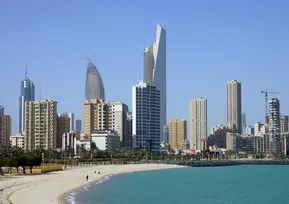
Photo by SHUJA OFFICIAL on Unsplash


BitgetX platform shutdown

The decision comes only months after it had introduced its BitgetX platform to comply with local regulations. The company, which bases its operations out of Singapore, is a well-known entity in the crypto space, renowned as the operator of the 12th-largest cryptocurrency exchange globally in terms of 24-hour trading volume. It made this revelation on Monday, citing what it referred to as “business and market-related considerations.”

In a published statement, the company said:

”With a heavy heart, we regret to inform you that due to business and market related considerations, we have decided not to pursue a Virtual Asset Trading Platform (VATP) license in Hong Kong. As a result of this decision, the BitgetX website (www.BitgetX.hk) will cease its operations effective December 13, 2023. At the same time, Bitgetx.hk will permanently exit the Hong Kong market.”

While outlining that BitgetX will close its doors, the firm urged users to withdraw their assets beforehand. Bitget is among a handful of exchanges that had publicly expressed their intent to secure a license following Hong Kong’s proactive push over the course of the past year to embrace the virtual asset sector.


Broader challenges

The decision to abandon the pursuit of a VATP license echoes the broader challenges faced by the cryptocurrency industry in Hong Kong. Despite the city’s recent enthusiastic regulatory embrace of the virtual asset sector, a number of stumbling blocks remain.

High compliance costs and the lingering aftermath of the JPEX financial scandal have hindered Hong Kong’s aspirations to establish itself as a leading crypto hub. A report back in June identified the major cost implications of acquiring a license in Hong Kong. At the time, it was estimated that the required spend to obtain a VATP license could range from $2.55 million to $25.5 million.

Banking crypto companies has also become a major bottleneck. In June, the Hong Kong Monetary Authority (HKMA) urged banks such as HSBC, Standard Chartered and the Bank of China to bank the crypto sector, having identified a reluctance amongst them to do so.


Limited interest

The forthcoming closure of BitgetX adds to a growing trend of limited interest in Hong Kong’s new licensing scheme. Only five companies, all local, have submitted applications for virtual asset licenses to the Securities and Futures Commission (SFC). This list began publication in response to the JPEX scandal, which significantly damaged public trust in virtual assets.

The challenges faced by the industry go beyond regulatory hurdles. The damaged public trust, coupled with the high-profile exit of JPEX, has contributed to the hesitancy of international crypto platforms in pursuing licenses in Hong Kong. The abrupt withdrawal of Bitget raises questions about the viability of Hong Kong as a central player in the cryptocurrency industry and underscores the complexities faced by exchanges navigating the evolving landscape of the digital asset sector.

More to Read
View All
Web3 & Enterprise·

Sep 01, 2023

Woori Bank Joins Forces with Samsung Securities and SK Securities to Pioneer Security Token Market

Woori Bank Joins Forces with Samsung Securities and SK Securities to Pioneer Security Token MarketWoori Bank has recently forged a memorandum of understanding (MOU) with Samsung Securities and SK Securities, aiming to swiftly venture into the security token market in anticipation of the forthcoming institutionalization of security tokens in South Korea, according to local news outlet Dailian.Photo by Anna Evlanova on UnsplashKorea’s regulatory pathway for security tokensIn February, the Financial Services Commission unveiled guidelines for regulating the issuance and distribution of security tokens. This initiative aligns with the South Korean government’s broader goal of driving innovation in digital finance. Following this, the National Assembly conducted a public hearing on the proposed legislation. Additionally, the Financial Supervisory Service organized an informative session discussing the updated application procedure for investment contract securities and the corresponding examination protocols. As a result, the outlines of the regulatory framework are beginning to take on a more defined form.Compliance with regulatory frameworkWoori Bank President Byung-Kyu Cho, Samsung Securities President Chang Seok-hoon, and SK Securities CEO Kim Shin were present at the signing ceremony. During this event, the three financial institutions agreed to embark on their collaborative efforts to explore business models for security tokens in compliance with the regulatory framework. Their aims include constructing the infrastructure for security tokens and validating distributed ledgers, as well as forming Finance 3.0 Partners (F3P), a collaborative consortium dedicated to formulating investor protection measures.Three entities’ individual endeavorsWoori Bank has undertaken extensive preparations to make its foray into the security token market. In an effort to swiftly adapt to the changing legal dynamics surrounding security tokens, the bank has established a dedicated division and is operating a task force responsible for devising strategic approaches, with participation from Woori Financial Group’s affiliates. By partnering closely with the securities firms, Woori aims to leverage its wealth of corporate finance expertise to identify innovative business models.Samsung Securities has successfully concluded its own functional verification of the security token platform. Furthermore, the company has secured the technology necessary to connect blockchain wallets and securities accounts. These efforts will contribute to providing stable services. Samsung is also anticipating the utilization of security tokens as a fresh avenue for financing, collaborating with various enterprises to discover their practical applications. Through these endeavors, the company intends to offer attractive and stable investment products to its clientele.SK Securities stands out as the sole Korean securities firm to have established an account management system for security tokens, with the intention of seeking designation as an innovative financial service by the Financial Services Commission. Initiatives chosen as innovative financial services are granted regulatory exemptions. SK Securities has partnered with a variety of fractional investment firms to spearhead the research and development of security token issuance and distribution systems. It also plans to collaborate with experts in the domains of finance, technology, and content. This joint effort aims to build the infrastructure necessary to create a financial ecosystem that welcomes diverse participants and creates new value.An F3P official highlighted that this tripartite partnership would facilitate the alignment of their members’ security token products with regulatory guidelines. The person also mentioned their commitment to swiftly establishing a top-notch platform and ecosystem that will help position them as market leaders.

news
Policy & Regulation·

May 24, 2023

Chinese Fentanyl Producers Taking Payment in Crypto

Chinese Fentanyl Producers Taking Payment in CryptoA report produced by blockchain analytics and crypto compliance solutions firm Elliptic has found that most Chinese suppliers of fentanyl precursors are accepting payments for the illicit material in cryptocurrency.In a blog post published on its website on Tuesday, Elliptic claimed that 90 percent of the 90 China-based firms, from which its researchers received offers of fentanyl precursors, accepted cryptocurrency as a form of payment. The majority of fentanyl which is trafficked into the United States is manufactured using imported fentanyl precursors like the material that the Elliptic researchers were offered.Seventeen of the suppliers even offered to provide fentanyl itself. Others still offered to supply synthetic opioids, equally or more potent than fentanyl, which are currently legal to both produce and supply within China.Photo by Hal Gatewood on UnsplashTracking blockchain transactionsIn tracing back transactions relative to these illicit suppliers, the Elliptic researchers’ analysis demonstrated that the digital asset wallets used by the rogue suppliers have received thousands of payments. The research team has estimated the net worth of those transactions to total $27 million.It appears that a move towards crypto payments is trending with this group of suppliers as there has been a 450% increase year-on-year when it comes to payments for fentanyl precursor using crypto.The study highlighted activity related to Dutch national Alex Peijnenburg. An alleged fentanyl supplier, Peijnenburg, made an $85,000 payment in crypto to one of the ninety fentanyl precursor suppliers identified by Elliptic researchers. In November of last year, the Dutchman was sanctioned by US authorities relative to his activities.Global trade and distributionThe report stated: “During our correspondence, the suppliers showed no concerns about how the chemical would be used, with some explaining that it was their best-selling product and could be used to produce fentanyl.”It went on to state that “others pointedly mentioned that they had sold it to customers in Mexico.” Mexico is a significant location in the global drugs trade, given the activity of drug cartels within the country. One supplier offered an insight to researchers as to the preferences of their nefarious Mexican clients, stating: “They always use USDT or Bitcoin to pay. It is no problem.”While it looks like these nefarious Chinese companies are able to trade into and out of crypto assets, that should be a difficulty for them as China banned the offering of crypto trading services going back a number of years already. Furthermore, foreign digital asset exchanges are prohibited from servicing the needs of Chinese clients where crypto is concerned.Elliptic’s research team uncovered that the majority of the illicit drugs trade suppliers have been using workarounds in order to gain access to overseas digital asset exchanges. The suppliers have used intermediaries in order to convert crypto into Chinese yuan.The report concludes that this part of the international fentanyl trade can be dealt with and “disrupted by the services that act as gateways into and out of crypto assets.” On arriving at that conclusion, Elliptic has acted by notifying the digital asset exchanges that these suppliers are using. “[We] have flagged hundreds of crypto addresses in our tools as being linked to this activity,” the report states.Crypto had infamously been associated with illicit activity on the dark web in its earliest years. It has moved well beyond that although due to its decentralized nature, it’s difficult, if not impossible, to control who utilizes decentralized digital currency.

news
Policy & Regulation·

Jul 06, 2023

UAE’s RAK DAO Partners with HBAR Foundation to Support Web3 Startups

UAE’s RAK DAO Partners with HBAR Foundation to Support Web3 StartupsRAK Digital Assets Oasis (RAK DAO), the world’s first free zone dedicated to digital and virtual asset companies located within the United Arab Emirates (UAE), has announced a collaboration with the HBAR Foundation which aims to provide growth and funding opportunities to members of the free zone.Leveraging blockchain technologyThe Cayman Islands-based HBAR Foundation, the project team behind the Hedera public ledger, will assist RAK DAO members in leveraging cutting-edge technologies, including blockchain, and building economies and applications on Hedera.In a joint statement released on Tuesday, the partners outlined the benefits of the collaboration, which include a grant program, financial backing processes, and specialized expert support in technology, marketing, and business development. They also aim to support the scaling of adoption and innovation of new ideas in the Web3 space.Photo by Mostafa Ashraf Mostafa on UnsplashRas Al Khaimah free zoneSheikh Mohammed bin Humaid Al Qasimi, Chairman of RAK Digital Assets Oasis, expressed his excitement about the partnership, stating: “Together, we are unlocking a world of new possibilities, empowering entrepreneurs, and propelling innovation forward. This collaboration is a testament to our shared commitment to driving sustainable growth and shaping a future where Ras Al Khaimah emerges as a global leader in the digital economy.”Ras Al Khaimah is the largest city within the Emirate of the same name. It’s the sixth largest city in the UAE and home to the RAK DAO free zone.In March, Ras Al Khaimah enacted a law to establish RAK Digital Assets Oasis, demonstrating its commitment to diversification, attracting new businesses, and positioning itself as a global tech center. The free zone is exclusively focused on digital and virtual asset companies operating in various sectors such as the metaverse, blockchain, utility tokens, virtual asset wallets, non-fungible tokens, decentralized autonomous organizations (DAOs), decentralized applications, and other Web3-related businesses.Various initiativesAs part of the collaboration, RAK Digital Assets Oasis and HBAR Foundation will undertake several initiatives, including start-up and scale-up pitching sessions, opportunities for partners and investors to connect, and exploration of joint projects such as venture studios or accelerators. Grantees of the HBAR Foundation will also benefit from discounted set-up and licensing packages to establish their presence within RAK Digital Assets Oasis.Shayne Higdon, CEO of HBAR Foundation, acknowledged the UAE’s reputation as a dynamic hub for Web3 innovation and its ability to attract global enterprises and top-tier talent. Higdon stated: “Through this exclusive relationship we are honored to provide grantees with greater access to the UAE while working together to establish RAK Digital Assets Oasis as a major hub for the Web3 and digital assets sector.”The UAE has been actively investing in its infrastructure and implementing policy reforms to attract more entrepreneurs and businesses, aiming to grow its non-oil sector. The country’s digital economy is projected to surpass $140 billion by 2031, up from nearly $38 billion at present, according to a report by the Dubai Chamber of Digital Economy in February.

news
Loading