Top

Kuwait Implements Full Ban on Crypto Activities

Policy & Regulation·July 21, 2023, 1:28 AM

In a significant move to combat money laundering and terrorist financing, Kuwait has taken a decisive step by announcing a complete ban on all crypto-related activities.
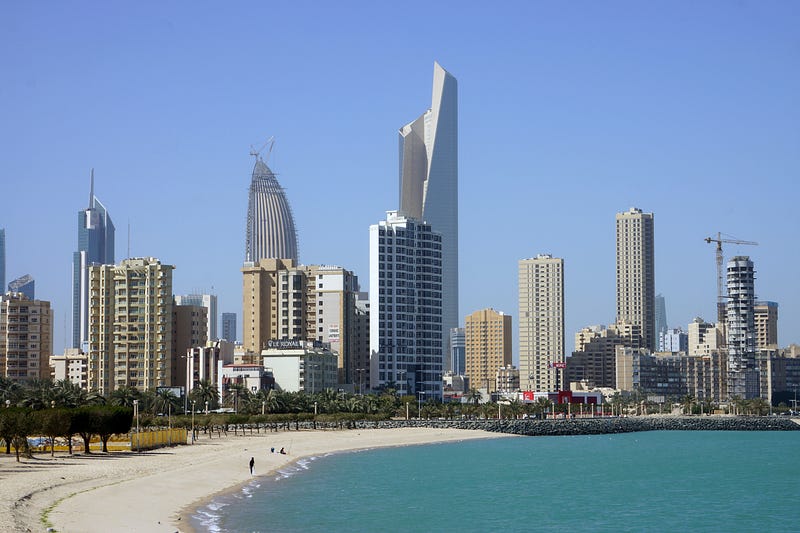
Photo by Jan Dommerholt on Unsplash


“No legal status”

According to a circular issued by the Capital Markets Authority (CMA), Kuwait’s top financial regulator, earlier this week, cryptocurrencies are deemed to have “no legal status” and lack the support of any government or any asset. As a result, the prices of these digital assets are vulnerable to speculative swings, exposing investors to potential substantial losses. Consequently, the CMA asserts that engaging in crypto activities can lead to adverse consequences and financial risks for individuals and businesses alike.

The ban extends beyond trading and mining. It also prohibits public companies from offering any cryptocurrency-related services. The CMA emphasized that it has never granted approval for crypto services in the past, and this outright ban reinforces the country’s commitment to curbing illicit financial activities facilitated by cryptocurrencies.


Aligning with FATF

The decision comes in the wake of Kuwait’s determination to align with the Financial Action Task Force’s (FATF) global requirements for handling crypto assets. The country is attempting to demonstrate its compliance with international anti-money laundering guidelines by clamping down on digital assets.

Kuwait’s approach towards cryptocurrencies diverges significantly from other Gulf states that have embraced the nascent industry with more openness. The likes of the United Arab Emirates (UAE), Saudi Arabia, and Bahrain have previously engaged with crypto assets in various ways.

For example, Bahrain granted approval to global crypto exchange platform Binance to provide digital asset services within the country. It’s keen to embrace digital assets as it pivots away from an oil-based economy. The Kingdom recently welcomed plans by Singapore-based private equity firm Whampoa Group to establish a crypto-friendly digital bank there.

Meanwhile, Saudi Arabia’s sovereign wealth fund has also invested in several US-based venture capital funds which are focused on crypto and blockchain technologies.

Dubai, in particular, has been actively working on establishing a regulatory framework for digital assets, aiming to position itself as a digital hub in the region. The UAE as a whole has recognized crypto assets as securities for several years, fostering a favorable environment for crypto businesses.


Criticism

News of the ban also provoked criticism, including commentary from Alex Gladstein, Chief Strategy Officer with the Human Rights Foundation. Gladstein, taking to Twitter, stated: “ Not surprising. I expect all authoritarian regimes (especially gulf tyrannies like the UAE and Saudi Arabia) to follow in Kuwait’s footsteps and eventually pass severe restrictions on citizen use of Bitcoin.” While the UAE trends in the opposite direction, Gladstein is not optimistic about the free use of decentralized cryptocurrencies in the UAE over the longer term.

As the global crypto landscape continues to evolve, each country in the Gulf region is adopting unique approaches to address the opportunities and challenges posed by digital assets. While there may be opposition to the technology, decentralized digital assets will benefit from jurisdictional arbitrage in efforts to get this innovation rolled out for the benefit of ordinary people around the world.

More to Read
View All
Policy & Regulation·

Sep 19, 2023

JPEX Exchange Scandal Sees Crypto Regulation Under Scrutiny in Hong Kong

JPEX Exchange Scandal Sees Crypto Regulation Under Scrutiny in Hong KongWhile Hong Kong has been developing steadily as a crypto sector hub, the focus in the Chinese autonomous territory has turned towards regulation after a recent scandal involving an unlicensed cryptocurrency exchange.Photo by Ihor Saveliev on UnsplashOngoing investigationYesterday we reported on some arrests relative to problems experienced at crypto exchange JPEX. The fallout continues on Tuesday, with the Hong Kong police now understood to have arrested eight individuals, including social media influencers who promoted the exchange and JPEX employees, on allegations of fraud. This illicit activity in and around the JPEX exchange has affected over 1,600 investors, implicating more than $150 million in assets.JPEX, in response to mounting pressure, announced the suspension of trading on its platform. In a statement, the exchange mentioned ongoing negotiations with third-party market makers to address liquidity shortages. However, JPEX also accused an unidentified third-party market maker of maliciously freezing funds, further complicating the situation.Politicians and regulators speak outResponding to the incident via a press conference on Tuesday, Hong Kong’s Chief Executive, John Lee, emphasized the significance of investing in virtual assets through licensed platforms. Lee stated:“This incident highlights the importance that when investors want to invest in virtual assets, then they must invest on platforms that are licensed.” He also pledged that the Securities and Futures Commission (SFC) would closely monitor the situation to ensure investor protection.Elizabeth Wong, the Head of the SFC’s fintech unit, revealed that an investigation was underway to determine whether JPEX had violated anti-money laundering laws. The SFC had already declared JPEX unlicensed, prompting numerous complaints from investors who were unable to withdraw their virtual assets or experienced unexplained reductions in their balances.Assets frozenHong Kong authorities have taken decisive action against those involved in the scandal. They have frozen bank accounts valued at 15 million Hong Kong dollars ($1 million) and seized three properties valued at 44 million Hong Kong dollars. The police have reported receiving 1,641 complaints related to JPEX, involving a staggering $1.2 billion Hong Kong dollars. By last Wednesday, the SFC had received in excess of 1,000 complaints and at that point, they notified the general public.The JPEX scandal has drawn attention to the need for stronger cryptocurrency regulations in Hong Kong, a region that has become attractive to cryptocurrency firms since mainland China banned cryptocurrency transactions in 2021. In mainland China, trading cryptocurrencies on foreign exchanges from within the country remains illegal.Hong Kong’s response to cryptocurrency regulation has evolved. Beginning on June 1, the SFC started accepting applications from cryptocurrency exchanges, allowing licensed operators to serve retail investors, provided they understand the associated risks. Previously, only professional investors had access to such exchanges. Currently, only two exchanges in Hong Kong, OSL Exchange and Hashkey Exchange, have received approval to operate.As Hong Kong reevaluates its approach to cryptocurrency regulation, the crypto sector will hope that it strikes a balance between fostering innovation and protecting investors from fraud and market manipulation.

news
Policy & Regulation·

May 03, 2024

Thai regulator takes action against deceptive crypto ads

In an effort to safeguard crypto investors from falling prey to misleading advertisements, the Securities and Exchange Commission (SEC) of Thailand has intensified its scrutiny of promotional campaigns within the crypto sphere.  Broker agent eventsOn April 29, the Bangkok Post reported that the SEC has raised concerns regarding the potential violation of local regulations through introducing broker agent (IBA) events. These events, the SEC clarified, may breach regulations as IBAs are only permitted to promote digital token services to deter speculation on cryptocurrencies, categorized as high-risk assets. IBAs, acting as local conduits for partner digital asset exchanges, typically earn commissions by onboarding clients within a specific market. Such practices are common for exchanges or brokers that don't directly operate in certain markets. Deputy Secretary-General Anek Yooyuen conveyed the commission's unease over crypto exchanges offering preferential treatment to onboard users. Yooyuen stated: "When operators organise sales promotions by offering rewards to entice people to use the service, this could encourage use of the service without considering the investment risks. This is especially the case for cryptocurrencies.”Photo by Than Diep on UnsplashWarning of consequencesHe cautioned that failure to adhere to these guidelines would result in “punishment according to the law.” While cryptocurrency exchanges are legal in Thailand, they must secure local approval. Notably, last month, Thailand even greenlit asset management firms to launch private funds, offering Bitcoin exchange-traded funds (ETFs) exclusively to institutional and ultra-high-net-worth investors. Nonetheless, the country recently prohibited the sale of cryptocurrency lending products and mandated that exchanges prominently display risk warning messages. International regulatory trendThis move by the Thai SEC mirrors actions taken by regulators in other major crypto markets. For instance, the United Kingdom's Financial Conduct Authority (FCA) issued 450 alerts for illegal crypto ads in 2023 alone. Similarly, Spain’s principal securities market regulator, the National Stock Market Commission, denounced fraudulent crypto asset promotions in November 2023, emphasizing companies’ obligations to adhere to local laws. Thai advertising guidelines mandate businesses and advertisers to substantiate the “facts” presented in their campaigns, failing which could lead to legal repercussions. A recent incident provides a case in point. Hackers hijacked advertisements on Etherscan, redirecting users to phishing sites aimed at draining crypto wallets. Scam Sniffer, a blockchain investigation firm, attributed the widespread phishing campaign to the inadequate oversight by advertisement aggregators. The company made the following statement on the matter: “Etherscan aggregates ads from platforms like Coinzilla and Persona, where insufficient filtering could lead to exposure to phishing attempts.” The wallet drainer scam involves enticing users to counterfeit websites and coercing them to link their crypto wallets, enabling scammers to siphon funds into their own wallets without user authentication or consent. This is not the first time that the authorities in Thailand have homed in on crypto-related advertising. In August 2023, the southeast Asian country’s Ministry of Digital Economy and Society (MDES) outlined that it had engaged with social media firm Meta, owner of Facebook, informing it that its response to the proliferation of fraudulent platform ads relative to crypto had been inadequate. 

news
Web3 & Enterprise·

Aug 06, 2024

Amber Group calls for crypto project transparency & accountability

At the end of last month, social derivatives trading platform ZKX, a protocol that runs on the Ethereum-centric Starknet layer-2 network, shut down blindsiding the project’s stakeholders. That event has led to Singapore-headquartered digital assets firm Amber Group speaking out, calling for cryptocurrency projects to be more accountable and transparent going forward. Not economically viableNews of the project shutdown emerged when ZKX founder Eduard Jubany Tur took to X on July 30 to outline the discontinuation of the protocol. Tur claimed that the project was “unable to find an economically viable path for the protocol.” In a long-form post, the ZKX founder outlined that user engagement had been minimal, resulting in disappointing trading volumes. By extension, Tur claimed that revenues didn’t come anywhere close to covering cloud server expenses. “The market is undervaluing the work done and infrastructure built by appchains and dApps coming from ecosystems like ours,” Tur added. Pseudonymous blockchain sleuth ZachXBT had a different take on the matter, claiming that the shutdown represented a rug pull. Amber Group chimed in on the subject on X on Aug. 3. Amber suggested that it wouldn’t break any contractual non-disclosure obligations it had with regard to ZKX but that aside, the firm took the opportunity to share its perspective more broadly in an effort to promote transparency.Photo by Markus Spiske on PexelsAmber Group criticismAmber Group criticized the ZKX team on the basis of a lack of transparency. It stated: “The last update we received was on July 30, when the project announced the cessation of operations. This decision was made without prior communication, highlighting the importance of transparency in our industry.” Staying with that theme, it claimed that clear communication and transparency are essential for fostering trust and collaboration within the crypto community, and that such principles would guide future projects. Amber Group had acted as a market maker relative to the ZKX project. It borrowed and purchased ZKX tokens in support of the launch of the token and in an effort to support token liquidity post-launch. It had secured two million ZKX tokens from the open market, with its overall holding totaling three million ZKX tokens. Project investor HashKey Capital also took to the X social media platform on the subject. Like Amber Group it too criticized the ZKX project for its lack of accountability and transparency. It described the project’s reluctance to communicate as “disappointing,” while it asserted that Tur’s handling of the situation had been “regrettable.” Ye Su, founding partner at ArkStream Capital, expressed a similar complaint, stating on X that “when ZKX shut down, as investors, we got zero heads-up.” He also singled out Tur, claiming that “Edward took the money from early supporters without any communication, showing no moral standards and losing his right to future entrepreneurship in the industry.”

news
Loading