Top

Terraform Labs Co-Founder Daniel Shin Denies Wrongdoing in LUNA Collapse

Policy & Regulation·October 31, 2023, 3:33 AM

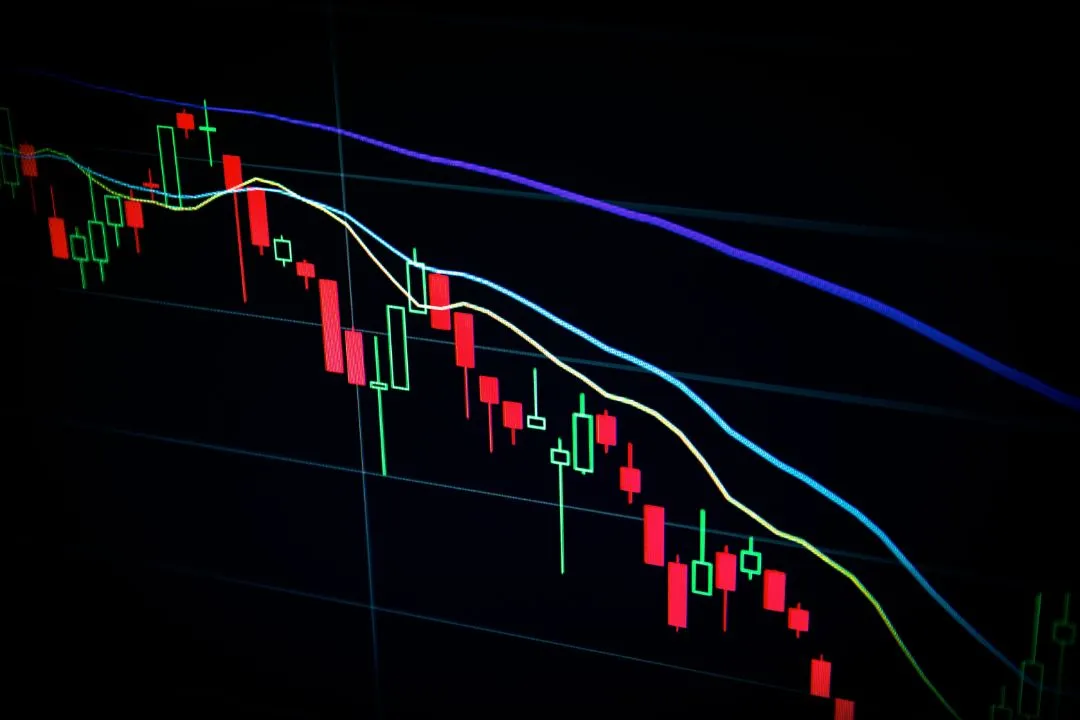
Shin Hyun-seong, popularly known as Daniel Shin, has refuted accusations against him related to the $40 billion collapse of the stablecoin TerraUSD and its companion token, LUNA, according to a report by local news outlet Newspim. He presented this defense during his initial trial at the Seoul Southern District Court on October 30 (local time).

Shin co-founded Terraform Labs, the company responsible for issuing TerraUSD and LUNA. His co-founder, Do Kwon, is currently serving a four-month prison sentence in Montenegro for passport forgery.

Photo by Tingey Injury Law Firm on Unsplash


Prosecution’s allegations

Korean prosecutors allege that since 2018, Shin and his colleagues have concealed the fabricated nature of the “Terra project.” By manipulating trades and releasing misleading information, they purportedly misled investors into thinking the project was successful. It’s believed they sold off their tokens before the LUNA crash in May 2022, earning KRW 462.9 billion ($343.3 million) from these activities. They are suspected of personally taking KRW 376.9 billion from this amount.

Prosecutors are focusing on Shin as the potential orchestrator of the LUNA crash. They speculate he began selling LUNA tokens around when Terraform Labs launched the Anchor Protocol in March 2021. This DeFi protocol increased the popularity and value of LUNA tokens. Before the crash, Shin is alleged to have gained at least KRW 154.1 billion.


Defense argument

However, Shin’s legal team countered by asserting that Shin had cut ties with Kwon in 2020. They argued the decline of TerraUSD and LUNA was due to Kwon’s mishandling of the Anchor Protocol and an external attack, neither associated with Shin. Regarding the exploit, Terraform Labs has pursued legal action in the United States Southern District of Florida, claiming that American market maker Citadel Securities played a part in undermining TerraUSD in May 2022.

Defending Shin, his lawyers emphasized that at the inception of the Terra project, there were no legal guidelines specifically for cryptocurrency transactions. Additionally, unlike Do Kwon who kept fleeing abroad, Shin willingly came back to Korea and has been cooperating with the investigation. They also noted he received only 32% of the 70 million LUNA tokens initially promised. Regarding classification, they stated LUNA isn’t legally recognized as a security.

Shin’s lawyers further argued the prosecution hasn’t clearly identified victims or adequately outlined the components of fraud in this case. They said the prosecution’s case hinges on viewing LUNA as a security. However, Shin’s legal representatives maintained that under the Korean Capital Markets Act, LUNA isn’t a security, making its trades non-fraudulent.

To counter a US court ruling the prosecution presented — that a token is a security — Shin’s defense highlighted that the verdict is from a lower court and remains contested. Earlier, prosecutors had cited a ruling from the United States Southern District Court of New York, which classified the XRP tokens sold to institutional investors as securities.

More to Read
View All
Policy & Regulation·

Sep 11, 2023

Korea to Ban Virtual Asset Deposit Services from Next July

Korea to Ban Virtual Asset Deposit Services from Next JulyDuring a recent criminal law seminar held at the Supreme Prosecutors’ Office, Park Min-woo, Director of the Capital Markets Bureau at the South Korean Financial Services Commission (FSC), underscored that starting next year, virtual asset service providers (VASPs) will no longer be permitted to offer deposit and management services for virtual assets. That’s according to a report by local crypto news outlet Digital Asset.This is seen as a response to the suspension of virtual asset deposits and withdrawals carried out by virtual asset yield platforms Haru Invest and Delio a few months ago.Photo by Mathew Schwartz on UnsplashLegal backgroundDirector Park referred to Article 7, Paragraph 2 of the Virtual Asset User Protection Act, clarifying that the intention behind this provision is to ensure that VASPs have the ability to fulfill asset withdrawal requests, even in the scenario where all their customers make such requests. This Act is scheduled to go into effect in July of next year, and Article 7 prohibits VASPs from entrusting customer assets to third parties.Deposit service providers receive cryptocurrency deposits and then distribute the resulting yields to their customers. In a bull market, these entities can manage yields on their own. However, in a flat or bear market, these asset managers may face challenges in paying yields unless they can generate profits by handing over customer assets to external custodians.Signs of giving upIn fact, centralized finance (CeFi) company HeyBit made an announcement last month, stating that it will discontinue its virtual asset deposit service starting from October 2. They cited this specific provision as the reason for their decision.Fraud chargesBoth Haru and Delio have been indicted by the Seoul Southern District Prosecutors’ Office on fraud charges.As an unregistered VASP, Haru suspended its deposit and withdrawal services on multiple occasions in June, causing substantial financial losses to numerous investors. This suspension was triggered by significant losses incurred at B&S Holdings, another unregistered entity to which Haru had entrusted virtual assets.Similarly, Delio, although registered, entrusted a considerable amount of virtual assets to Haru and Traum Info Tech but was unable to recover them.

news
Web3 & Enterprise·

Feb 26, 2024

FOBLGATE gears up for the launch of real estate security tokens

Korean cryptocurrency exchange FOBLGATE (FOBL) last Thursday showcased its ongoing project on real estate-based security tokens at Momo Network’s second security token offering (STO) and Web3 networking party, the game media outlet Kyunghyang Games reported. Momo Networks is the company behind Momoboard, an all-in-one app that combines bulletin board, messaging and cloud storage features. The event served as an opportunity for FOBL to inform participants about the current stage of the exchange’s project and where it is headed. Initially introduced in November last year, the project is a collaboration between FOBL and prop fintech company Plus Platform, an asset management and trading platform headquartered in New York, U.S. Photo by Glenn Carstens-Peters on UnsplashReal estate-based security token projectAt the event, participants are anticipated to discuss the future of the security token market, which is currently focused on conventional real-world assets (RWAs). This new security token project is expected to innovate traditional real estate investments, offering benefits such as high liquidity, low transaction fees and easy access to investors, explained FOBL. The crypto company aims to solidify its position in the crypto market while raising public awareness of real estate security tokens. Future of virtual assetsAhn Hyun-jun, CEO of FOBL, said he plans to make his company an innovator in virtual asset development and create various types of crypto assets that extend beyond real estate-based security tokens.   Furthermore, a FOBL spokesperson stated that this networking party will serve as a forum for Web3 and STO experts to explore new technologies and innovative investment strategies, providing valuable insights for investors and market participants. 

news
Markets·

Jan 15, 2024

Spot bitcoin ETF approval triggers surge and shift in Korean crypto exchange performances

The U.S. Securities and Exchange Commission (SEC) approved the spot bitcoin exchange-traded fund (ETF) last Tuesday, prompting South Korean investors to flock to cryptocurrency exchanges to make transactions. However, the revenues recorded by these exchanges showed a mixed performance in response to this development due to their differing transaction fee policies, according to local news outlet DealSite on Monday.Photo by Maxim Hopman on UnsplashTrading volumes surge and retreatAccording to crypto analytics platform CoinGecko, as of 9 a.m. on Jan. 12 (KST), Upbit's trading volume on Dec. 11 and 12 was approximately $5.1 billion and $6.1 billion, respectively, for a total of about $11 billion. During the same period, Bithumb recorded $2.6 billion and $2.4 billion, respectively, totaling nearly $5 billion. However, as of this writing at 11 a.m. on Jan. 15, Upbit’s 24-hour trading volume has dropped back down to $2.1 billion and Bithumb to $874 million. "After the SEC's approval, crypto exchanges were simultaneously flooded with transactions," an anonymous industry employee commented. "Bitcoin and Ethereum were mainly traded." Fee divergenceAlthough the ETF approval caused a general uptick in trading volumes, the amount of revenue that the exchanges earned from transaction fees varied. Upbit charges a fee of 0.05% for both buying and selling crypto, meaning the exchange made an estimated KRW 14.8 billion in revenue from the fees from Dec. 11 to 12. Bithumb, on the other hand, hasn't earned any revenue from trading fees since its zero-fee policy was implemented in October last year.  Bithumb had previously charged 0.25% for transactions and 0.04% with coupons. By implementing the former, the exchange lost about KRW 15.8 billion ($12 million) in revenue, and with the latter, it lost about KRW 2.5 billion. For crypto investors, Bithumb's zero-fee policy has made investing more accessible, but the exchange is unlikely to reap its own rewards. Significant investor interestMoreover, with trading for the spot bitcoin ETF beginning on the 11th, the influx of funds is expected to boost trading. "All told there were 700,000 individual trades today in and out of the 11 spot ETFs," Bloomberg ETF analyst Eric Balchunas told X (formerly Twitter). "For context, that is double the number of trades for $QQQ." $QQQ refers to the Invesco QQQ ETF. According to an image that accompanied Balchunas’ post, the total trading volume across all 11 spot ETFs was reportedly $4.3 billion. Grayscale's GBTC had the highest volume at $2.1 billion, followed by BlackRock’s IBIT at $1 billion and Fidelity’s FBTC at $673 million.

news
Loading