Top

As Excitement for First US Spot Bitcoin ETF Intensifies, South Korea Still Faces Mountain to Climb

Policy & Regulation·October 25, 2023, 8:35 AM

The price of bitcoin has surged significantly as it recorded an 18% increase in the past week, spurred by mounting anticipation surrounding the US’ first spot bitcoin exchange-traded fund (ETF) propelled by asset management juggernauts BlackRock and Fidelity Investments — a threshold that had not been crossed in over a year. According to CoinMarketCap, bitcoin is trading in the upper $33,000 range as of 5 p.m. KST on Wednesday.
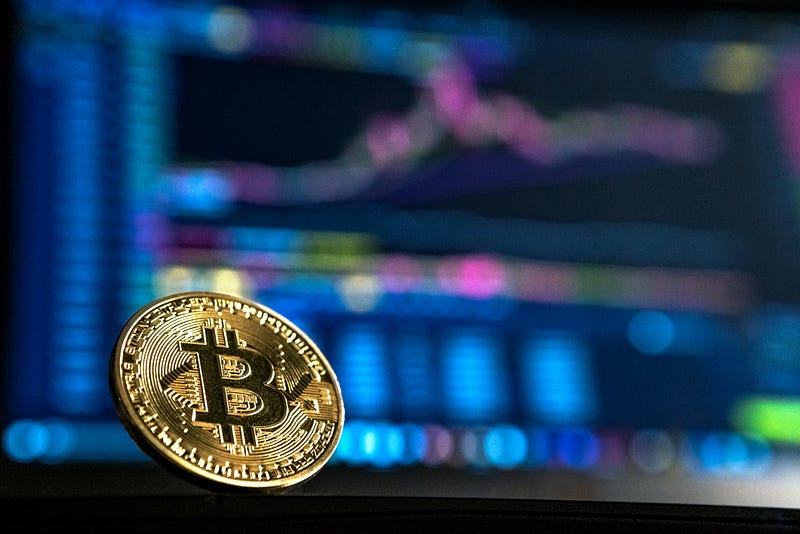
Photo by André François McKenzie on Unsplash


Ongoing buildup

The approval of a spot bitcoin ETF — long rejected or delayed due to a plethora of reasons like the volatility of cryptocurrencies and their susceptibility to market manipulation — would in the long run open up the possibility for institutions to earmark bitcoin as a major asset that can be integrated into the sphere of traditional finance. This would make bitcoin easier to handle and increase its exposure to traditional investors. “The mere possibility of this development marks a significant shift in the market landscape,” said an unnamed executive at a Korean asset management company in a news article by South Korean news outlet Maeil Business Newspaper.

BlackRock’s spot bitcoin ETF, the iShares Bitcoin Trust, was also listed on the US Depository Trust & Clearing Corporation (DTCC)’s website with the ticker symbol IBTC on Monday before it mysteriously disappeared the following day. It has since been relisted on the website. The listing is “all part of the process of bringing ETF to market”, as explained by Bloomberg’s senior ETF analyst Eric Balchunas via his X (formerly Twitter) account on Tuesday.


Is a spot bitcoin ETF on the table for Korea?

However, Korean experts believe that there are still numerous hurdles to overcome in order for a spot bitcoin ETF to settle in Korea. In particular, some question whether cryptocurrency platforms that offer custodial services can even be classified as exchanges. There is also the issue of bitcoin’s varying prices across different exchanges. Its current price on Upbit, the country’s largest crypto exchange, is in the KRW 45.9 million range as of 5 p.m. on Wednesday. Local financial authorities have reportedly expressed skepticism about bitcoin ETFs for these reasons, suggesting a murky future for this development becoming a reality in Korea.


More to Read
View All
Web3 & Enterprise·

Oct 19, 2023

OSL Parent Company Denies Sale Plans

OSL Parent Company Denies Sale PlansBC Technology Group, a Hong Kong-based investment holding company, has firmly denied recent reports suggesting it is exploring the sale of its licensed digital asset business, OSL, for up to HK$1 billion (US$137.3 million).Photo by Nextvoyage on PexelsCompany stock plummetsThis comes in response to a report that emerged via Bloomberg on Monday. The news of the possible sale had a significant impact on the company’s stock, which plummeted by over 22% to HK$3.35 the following day.BC Technology Group, which has been listed on the Hong Kong stock exchange since 2012, is the parent company of OSL. The reports hinted at the possibility of selling off parts of the business, citing undisclosed sources.In response to these rumors, BC Technology Group issued a formal statement to clarify the situation, deeming the article “factually inaccurate and highly misleading.” It vehemently refuted any intention to sell OSL, a key player in the cryptocurrency exchange sector.First licensed exchangeOSL was the first cryptocurrency exchange to be licensed by the Securities and Futures Commission (SFC) in Hong Kong in 2020, initially operated under a voluntary scheme and was limited to serving professional investors. However, the recent licensing requirement broadened its scope, allowing it to cater to retail investors as well, including popular cryptocurrencies like Bitcoin and Ethereum.Both OSL and HashKey had their licenses upgraded this year, enabling them to serve retail investors as per the new policy. However, the reception to this new regulatory framework has been somewhat lukewarm, with only five local exchanges applying for the new virtual asset trading platform (VATP) license. The SFC had to publish a list of applicants following a financial scandal involving the JPEX crypto exchange, which led to over 2,500 complaints and losses totaling approximately HK$1.5 billion.The backdrop of this unfolding situation is Hong Kong’s efforts to establish itself as a significant virtual asset hub. The city announced its ambition to transform into a hub for digital assets a year ago, drawing considerable attention from cryptocurrency exchanges. These efforts included implementing new regulations in June that mandated licensing for cryptocurrency exchanges.Several companies with connections to Hong Kong and mainland China have expressed their intent to obtain a license, potentially taking advantage of Hong Kong’s favorable stance toward virtual assets when compared to mainland China’s strict regulations.High compliance costsNonetheless, high compliance costs in Hong Kong continue to pose a barrier, potentially preventing the city from becoming the primary base of operations for crypto businesses. Industry insiders estimate that the cost of compliance from start to finish can be as high as HK$60 million for a company. Firms have reported that obtaining a trading license in Hong Kong can involve an outlay of between HK$20 million and HK$200 million.As per BC Technology Group’s mid-year report, the company reported a net loss of HK$94.7 million in the first half of 2023. This marked a notable improvement compared to the HK$312.1 million in losses during the same period the previous year. OSL remains a significant source of income for the company.

news
Policy & Regulation·

Jun 15, 2023

OKX Follows Path Towards Dubai Licensing

OKX Follows Path Towards Dubai LicensingSeychelles-headquartered OKX, one of the world’s largest cryptocurrency exchanges, has expressed its intention to seek regulatory approval for operating in Dubai as part of its expansion strategy in the Middle East.With that objective, the company has obtained a Minimum Viable Product (MVP) preparatory license, an interim step on its path towards full licensing. That’s according to a press release published on Thursday.Tim Byun, OKX’s Global Head of Government Relations, emphasized the growing trend of regulation within the industry. In an interview with Reuters, Byun stated: “We would like to get ahead of that curve and be regulated in a sound manner.” The move comes in the wake of recent legal action taken by the Securities and Exchange Commission (SEC) in the United States against Binance and Coinbase, two of the largest crypto exchanges, for alleged breaches of SEC rules.Photo by Marcus Herzberg on PexelsSwitching to DubaiByun believes that the SEC’s actions will compel more market participants to seek out innovative regulators such as Dubai’s Virtual Asset Regulatory Authority (VARA).To support its expansion plans, OKX intends to hire 30 staff members following the opening of an office last month in the Dubai World Trade Center, strategically located in the business and financial hub of the United Arab Emirates.Byun further explained that by expanding its services from Dubai to jurisdictions like Saudi Arabia or Bahrain, where no domestic regulatory framework is in place, the local populations would benefit significantly from OKX’s regulation under an international regulator.Following Bahamian regulationCurrently regulated in the Bahamas, OKX does not allow customers from the United States to utilize its platform due to regulatory concerns. Following the collapse of FTX in November of last year, the Bahamas has suffered reputationally.It’s seen as a jurisdiction with much looser regulation and as the FTX debacle demonstrated, one that proved to be totally ineffective in preventing the epic fraud that occurred in that instance.Effective regulatory frameworkIn contrast, Dubai and the United Arab Emirates (UAE) in general seem to be making a much better effort towards a workable yet effective regulatory framework. Established in March 2022, VARA serves as the regulatory authority overseeing the burgeoning virtual asset sector in Dubai, excluding the Dubai International Financial Centre financial free zone. The United Arab Emirates has been actively working towards positioning itself to become a global crypto industry hub.No company has yet obtained a license for VARA’s full market product (FMP) stage, which would grant permission to serve retail clients. Byun revealed that OKX intends to apply for such a license.Byun concluded by expressing OKX’s willingness to be regulated and licensed in jurisdictions that adopt a balanced, clear, and transparent approach to the industry. The exchange is committed to operating within frameworks that prioritize investor protection and promote market integrity.

news
Policy & Regulation·

Sep 20, 2023

CoinEx Reveals Insights Into Recent Platform Hack

CoinEx Reveals Insights Into Recent Platform HackHong Kong crypto exchange CoinEx has issued a further update relative to the security breach that occurred on the platform last week resulting in one of the exchange’s hot wallets being compromised.Photo by FLY:D on UnsplashImmediate responseIn the immediate aftermath of the $70 million hack, CoinEx took action to safeguard user assets and initiate an investigation into the incident. It suspended all deposit and withdrawal services and executed an emergency shutdown of the hot wallet server. Following this, the company securely moved the remaining assets to cold storage, commencing the process of reconstructing and deploying a new wallet architecture.The firm also engaged in an investigation, spearheaded by its wallet and security teams, to ascertain the extent of the breach. Moreover, CoinEx claims to have proactively reached out to fellow exchanges to freeze any assets related to the attack.Haipo Yang, the Founder and CEO of CoinEx, conveyed his apologies to affected users through his personal X (formerly Twitter) account. He emphasized the team’s commitment to restoring services promptly and reassured users that their funds will remain secure.Following up on that commitment, CoinEx published an update on the hot wallet hack on September 15 to address these concerns individually.New wallet deploymentThe exchange expects to finalize wallet upgrades within the upcoming week, after which withdrawals will gradually be phased in, subject to security evaluations. The CoinEx team is currently working on developing and deploying an entirely new and robust wallet system capable of managing activities across 211 chains and 737 assets.The firm has outlined that each of its product lines operates independently, featuring its own risk control system. Consequently, the security incident that occurred on CoinEx will not affect the integrity of its other product lines.In its most recent update on Tuesday, the Hong Kong crypto exchange confirmed that 80% of its wallet system has now been reconstructed. It added that it has initiated preparations to enable the withdrawal system on the platform. It stated:”Details about the resumption of withdrawals, including specific dates, times, and arrangements, will be announced on the CoinEx website. Please stay updated on our announcements for the latest information.”Ongoing investigationRegarding the identity of the attacker, CoinEx has confirmed that the matter is currently under investigation. While some security firms have made attribution claims, the company is focusing primarily on deploying the new wallet architecture, restoring affected users and functionalities, and enhancing overall security.At the same time, the company has initiated communications with the hackers in a bid to proactively seek a mutually agreeable resolution. While the incident implicates the loss of a substantial amount of funds, the firm maintains that in the context of the overall business, the sum represents only a small percentage of total assets under its management.Exchange security remains a major challenge in the crypto sector, with hacks happening on an ongoing basis. Last week, Seychelles-headquartered peer-to-peer crypto platform Remitano acknowledged a $2.7 million hack. At the beginning of September, crypto gambling platform Stake was reported to have suffered a $41 million hack.

news
Loading