Top

Seoul and Baobab Partners Face Controversy Over Unpaid Prize Winnings for SWF2023 Hackathon

Policy & Regulation·October 24, 2023, 8:53 AM

The city of Seoul has come under public scrutiny for failing to pay the winners of the Seoul Web3 Festival (SWF2023) Hackathon a cash prize worth KRW 150 million (approximately $112,000). The Seoul Metropolitan Government has argued that since it was simply a naming rights sponsor, the responsibility for paying the prizes lies with Baobab Partners, who co-hosted the event. However, critics argue that the city did not properly vet Baobab Partners more rigorously before hosting the event.
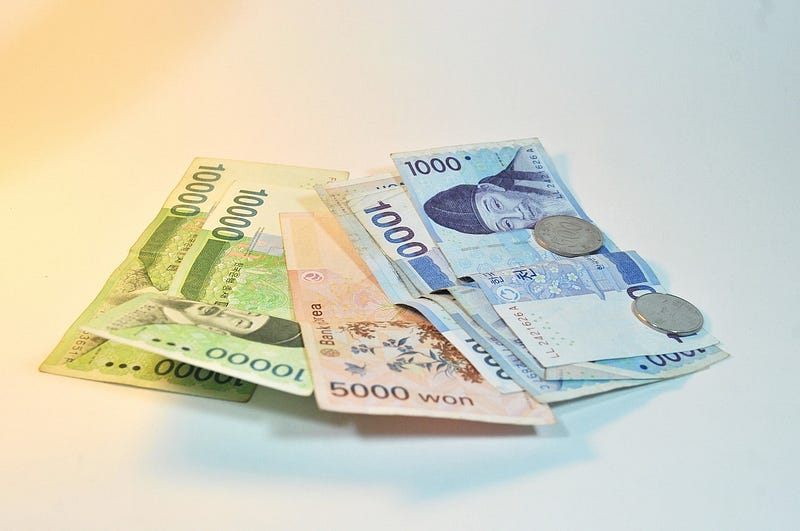
Photo by okaybuild on Pixabay


Unpaid prizes linger

The SWF2023 Hackathon took place from July 31 to August 2 at Dongdaemun Design Plaza (DDP) and was co-hosted by the city of Seoul, the Seoul Design Foundation, and Baobab Partners. It offered a total prize pool of KRW 150 million attracting 417 participants who made up 115 teams.

However, although over two months have passed since then, the winners are yet to be paid their prize money. “Baobab Partners initially proposed the SWF2023 event, and they were responsible for gathering the necessary sponsorship funds to run the event,” said a city representative.

According to industry sources on Monday, the company’s CEO, Choi Jin-beom, issued a handwritten apology last Friday regarding the incident. “We promised to pay the winners by today, but we were unable to deliver on that promise. We explored multiple avenues, including investors, new contractors, and other assets, but were ultimately unable to secure the funds to do so,” he said. “The narrative that the funds were diverted elsewhere or invested in cryptocurrencies or stocks is untrue,” he added, clarifying that related information was transparently disclosed to the city of Seoul.


Baobab Partners’ swift rise raises industry eyebrows

Baobab Partners had previously participated as an event planner at last year’s Blockchain Week in Busan, which turned out to be a success. “We also spoke with the Busan city government, who gave a positive opinion of the company,” the representative added. It was under this context that Seoul entered into a naming rights agreement with Baobab Partners. The agreement stipulated that the company would be in charge of attracting and managing sponsorships, and the prize money and operational costs would be covered by corporate sponsorship funds.

Nevertheless, questions have arisen within the industry about Baobab Partners’ short track record and its successive collaborations with public organizations. Baobab Partners is a startup that was founded in May 2021. In November of the same year, the firm signed memoranda of understanding with three blockchain companies during NFT Busan 2021, a large-scale NFT fair held in the southern port city to share the latest blockchain trends. As a result of its efforts, it was listed alongside prominent companies such as Coinone and Onther despite only six months passing since its establishment. Subsequently, Baobab Partners relocated from Seoul to Busan, and the following year, it participated as an event planner at Blockchain Week in Busan.


Accumulating allegations

Speculation suggests that this success was not solely due to Baobab Partners’s capabilities. The company’s CEO is believed to have political connections, according to an anonymous industry insider. Choi denied such claims and stressed that its technical expertise should not be downplayed, citing the fact that Baobab Partners was the first entity in Korea to develop virtual reality (VR) banking technology and had received a KRW 15 billion investment from Finger, a KOSDAQ-listed company.

Baobab Partners has also been mired in controversy over supposedly unpaid wages. In response to a claim made by an industry source that many former employees of Baobab Partners have still not received their due wages, a Seoul representative stated that there is no such dispute according to conversations with company representatives, seeking to dispel the dispute. Choi further explained, “We didn’t have wage disputes until last year. The difficulty in paying wages began in January this year due to the failure to execute promised investment funds.”

The city said that it is currently conducting legal examinations and looking into necessary measures for two matters involving Baobab Partners, including the handling of hackathon winnings.
More to Read
View All
Policy & Regulation·

Apr 08, 2025

Hong Kong establishes rules to enable crypto staking

Hong Kong regulator, the Securities and Futures Commission (SFC), has established guidelines for crypto staking service providers. That’s according to a statement published by the SFC to its website on April 7. The guidance is aimed at licensed virtual asset trading platforms (VATPs) and SFC-authorized funds with exposure to digital assets.Photo by Markus Winkler on UnsplashExpanding service offeringThe regulator points out that the guidance on staking falls in line with its recently announced “ASPIRe” roadmap, which is geared towards ensuring that the Chinese autonomous territory remains relevant in its efforts to maintain its status as a global hub for crypto businesses. Expanding product and service offerings within the crypto sector was one of the five pillars of that plan. Smoothing the way for the offering of staking works towards fulfilling that aspect of the ASPIRe plan. Written approvalIn this guidance, the SFC sets out that licensed service providers must obtain written approval from the regulator before any such product can be offered to investors in Hong Kong. That stipulation applies to both VATPs and authorized funds with digital asset exposure. Additionally, VATPs must retain control over staked assets, with no delegation in the custody of such assets to third parties permitted. In the case of authorized funds that include crypto assets, they must stake virtual asset holdings through licensed VATPs and other authorized institutions. Required disclosuresThe regulator has also stipulated that certain disclosures must be made by licensed exchanges to potential customers in respect of staking products. These include the disclosure of all associated risks, full transparency with regard to fees, minimum lock-up periods and custodial arrangements. Commenting on the provision of this guidance, SFC CEO Julia Leung said that the provision of a greater range of regulated services and products is crucial in order to sustain continued growth of Hong Kong’s virtual asset ecosystem. However, she added that any broadening of the range of services offered “must be done in a regulated environment where the safety of client virtual assets continues to be front and centre of the compliance framework for offering such service.”   The SFC outlined that it recognizes “the potential benefits of staking in enhancing the security of blockchain networks and allowing investors to earn yields on virtual assets within a regulated market environment.” The authorities in Hong Kong are not the only ones who recognize the benefits that the incorporation of staking within crypto investment products can bring. Last month, Robert Mitchnick, head of digital assets at the world’s largest asset manager, BlackRock, told the Digital Assets Summit in New York that Ether ETFs would benefit from the addition of staking.  Mitchnick suggested that the current inability to earn a staking yield within such products is a key limitation. He outlined that such a change is dependent upon relevant regulatory changes being implemented in the U.S. A more crypto-friendly climate in the U.S. since U.S. President Donald Trump took office has resulted in various lawsuits being dropped against companies like Coinbase related to the staking services that had been offered. A number of U.S. Ether ETF issuers, including Franklin Templeton, Grayscale and Bitwise, have put forward proposals to the Securities and Exchange Commission (SEC) to have staking included in these products.

news
Policy & Regulation·

Jul 17, 2023

Blockchain Council Exec: Philippines Poised for Crypto Adoption

Blockchain Council Exec: Philippines Poised for Crypto AdoptionDonald Lim, the Founder of the Blockchain Council of the Philippines (BCP), believes that the country has all the necessary elements for mainstream crypto and blockchain adoption.In a recent interview with Cointelegraph, Lim discussed the potential for crypto adoption in the Philippines and explained why he is optimistic about the success of blockchain projects in the country.Photo by Krisia on PexelsFinding its place in blockchainAccording to Lim, the BCP recognized the global shift towards Web3 and organized the Philippine Blockchain Week to explore the ecosystem’s potential. That activity revealed to the organizers that the country has a vibrant community eager to find its place in the world of blockchain. Lim expressed confidence in the Philippines becoming the blockchain capital of Asia, citing the country’s technical expertise, young population with a median age of 25, and its ability to adapt quickly, as demonstrated by the popularity of the play-to-earn game Axie Infinity.Crypto interestAxie Infinity, a play-to-earn blockchain game, gained significant traction in the Philippines in 2021, with 40% of its player base coming from the country. This increased awareness of Web3 concepts and the creation of crypto wallets. Additionally, research carried out recently suggests the Filipinos are among the most interested in crypto in the region.Lim noted that international organizations have been eager to enter the Philippine market due to favorable demographics and the government’s open stance on crypto and blockchain. The executive emphasized that the government is not seeking to stifle innovation in the sector. On the contrary, it welcomes blockchain and Web3 projects, creating an environment conducive to their growth.Ethan Rose, founder of Pouch, a wallet service supporting the Bitcoin Lightning Network in the Philippines, corroborated this sentiment. Pouch has successfully onboarded over 400 businesses in the country to accept Bitcoin payments. While the onboarding of Filipino merchants into the crypto space is a positive step, Lim believes that it will take time before living solely on Bitcoin or crypto becomes a reality.Adoption inevitableHowever, he remains optimistic about the future, stating that it is only a matter of time before crypto adoption snowballs into something more significant.Lim highlighted the need for infrastructure development, expecting it to mature within the next four to five years. As the infrastructure improves, crypto will not only be used for payments but also for activities such as purchasing non-fungible tokens (NFTs) and participating in the metaverse. This comprehensive adoption will pave the way for a crypto-powered future in the Philippines.Philippine regulator, the Securities and Exchange Commission (SEC), recently delayed publication of its crypto regulatory framework. However, it appears that the move stems from an abundance of caution in getting the regulation right. Earlier this year, Robert De Guzman, Head of Legal Compliance at Philippines-based cryptocurrency exchange, Coins.ph, expressed his optimism that the authorities are developing a progressive regulatory framework for crypto in the Southeast Asian country.The Philippines shows promising potential for crypto and blockchain adoption, fueled by its young population, technical expertise, and supportive government. As the infrastructure continues to evolve, crypto adoption is expected to expand beyond payments, encompassing various aspects of the digital economy.

news
Web3 & Enterprise·

Dec 09, 2025

Abu Dhabi broadens crypto regime with new stablecoin approvals and Binance licensing

While global cryptocurrency sentiment remains subdued, authorities and state-linked investors in Abu Dhabi are deepening their engagement with digital assets through expanded regulation and increased capital allocation. On Dec. 8, stablecoin issuer Tether and cryptocurrency exchange Binance announced they had secured regulatory approvals from the Abu Dhabi Global Market (ADGM), the international financial center and free economic zone in the UAE capital. The moves signal a continued effort by the United Arab Emirates to integrate blockchain technology into its formal financial system, creating a contrast with the broader market’s current “extreme fear” rating of 22 on the Alternative Fear and Greed Index.Photo by DrawKit Illustrations on UnsplashTether, Ripple stablecoins approvedTether confirmed that its USDT stablecoin has been designated as an Accepted Fiat-Referenced Token within the ADGM. This status allows financial entities licensed by the Financial Services Regulatory Authority (FSRA) to conduct regulated activities involving USDT across a broader range of blockchain networks, including Aptos, Celo, Cosmos, Kaia, Near, Polkadot, Tezos, TON, and TRON. The approval builds on previous authorizations for USDT on Ethereum, Solana, and Avalanche, and follows the FSRA’s recognition of Ripple’s RLUSD stablecoin last month. Binance fully cleared for regulated launch Simultaneously, Binance announced it has secured full authorization from the FSRA to operate a regulated platform within the financial center. Pending final operational preparations, Binance is scheduled to commence regulated activities on Jan. 5, 2026. The exchange will operate in Abu Dhabi through a three-entity structure that separates key functions, mirroring traditional financial infrastructure. Nest Exchange Limited (currently Nest Services) will function as the regulated arm for spot and derivatives trading, while Nest Clearing and Custody Limited will manage clearing and settlement. Broker-dealer activities will be handled by a third entity, Nest Trading Limited (currently BCI Limited). Circle awarded FSP for paymentsMore recently, Circle, the issuer of the USDC stablecoin, announced the receipt of a Financial Services Permission (FSP) license from the FSRA. The license allows Circle to act as a Money Services Provider within Abu Dhabi’s International Financial Centre (IFC), enabling it to support regulated payment and settlement services for businesses, developers, and financial institutions across the UAE. Circle has been expanding its regulatory presence in the region throughout the year. In February, the Dubai International Financial Centre (DIFC) recognized the company’s USDC and EURC tokens as permitted crypto assets under its virtual asset framework. This regulatory expansion comes amid the UAE’s efforts to develop a comprehensive financial compliance framework. A recent report by the Global Finance & Technology Network identified the UAE as one of seven jurisdictions globally that meet three core standards for anti-money laundering and counter-terrorist financing compliance. Those standards include know-your-customer (KYC) and identity verification, suspicious transaction reporting, and implementation of the Financial Action Task Force (FATF) Travel Rule. Institutional capital inflows riseIn parallel with the regulatory push, investment vehicles linked to the Abu Dhabi government have increased their exposure to digital assets. Bloomberg reported that in the third quarter, the Abu Dhabi Investment Council, a Mubadala subsidiary, increased its position in BlackRock’s iShares Bitcoin Trust ETF more than threefold to nearly eight million shares. Separately, the Royal Group, an investment firm associated with the Abu Dhabi royal family, currently holds roughly 6,516 Bitcoin, according to Arkham data. An earlier Crypto Briefing report noted that this acquisition was carried out through its majority-owned subsidiary, Citadel Mining. These simultaneous developments in licensing and capital allocation suggest a coordinated strategy to establish Abu Dhabi as a hub for institutional digital assets, with a focus on long-term infrastructure despite current market fragility. 

news
Loading