Top

Growing Concerns about Single Crypto Exchange Listings in Korea

Policy & Regulation·April 14, 2023, 2:11 AM

According to Yonhap Infomax, there is increasing concern about single crypto exchange listings in the Korean market, following the recent arrest of two former Coinone employees.
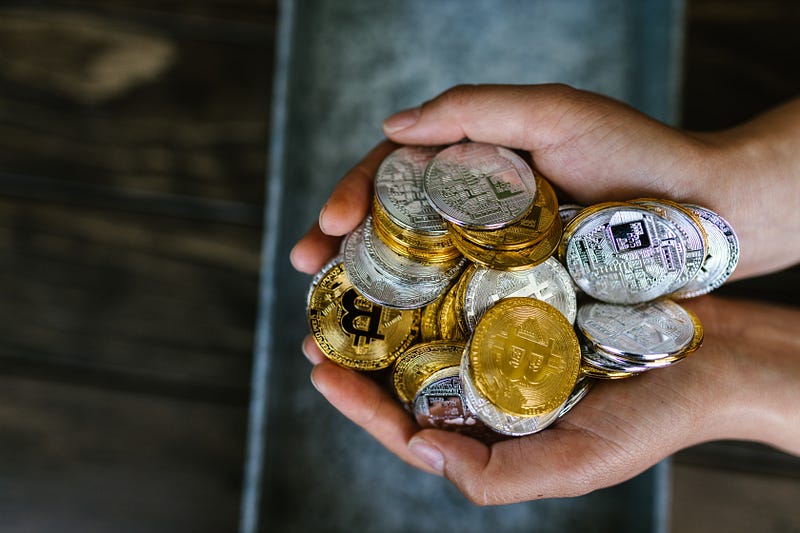
crypto coins
©Pexels/RODNAE Productions


Crypto listing bribery

The individuals were detained by the Seoul prosecution for allegedly accepting about 3 billion KRW (equivalent to over $2.2 million) in bribes to list a certain cryptocurrency on the exchange.

Prosecutors are investigating if these suspects were also involved in the listing of the Puriever token, which is reportedly connected to the kidnapping and murder of a woman in her forties in Gangnam, Seoul.


Single exchange-listed cryptos

A recent report by the Financial Services Commission (FSC) revealed that 389 cryptocurrencies were listed on a single Korean exchange in the second half of last year, a decrease from the previous year’s 403. Despite the decrease, the trend of single exchange listings continued. Exchanges often exclusively list specific cryptocurrencies to gain a competitive edge, as investors typically prefer larger exchanges with greater liquidity.

However, these cryptocurrencies may lack proper review and management and are often highly volatile. The FSC report showed that 34% of cryptocurrencies listed on a single exchange had a market cap of less than 100 million KRW (~$76,000). The Financial Intelligence Unit also warned investors about price fluctuations and liquidity shortages.

High volatile cryptocurrencies are attractive to exchanges, as they can lead to increased transaction fee profits.


Transparent listing

To address this issue, experts advocate for a transparent listing process.

One lawyer in the crypto industry noted that there is a global trend of regulating cryptocurrencies as securities, and if relevant bills pass in Korea, their issuance and disclosure will be regulated. Clear guidelines on disclosures could resolve the issues of single crypto exchange listings, the legal advisor added.

Another industry insider has called for investor caution, stressing the need to consider the potential delisting of these crypto assets.

More to Read
View All
Web3 & Enterprise·

Sep 12, 2023

Animoca Brands Secures Funding to Expand Web3 Identity Project

Animoca Brands Secures Funding to Expand Web3 Identity ProjectHong Kong-based Web3 firm Animoca Brands has successfully raised $20 million in a recent funding round, signaling a significant boost for its Web3 identity project, Mocaverse.Photo by Markus Winkler on UnsplashCMCC Global leads funding roundThe funding, announced via a blog post published to the firm’s website on Monday, was spearheaded by CMCC Global, a Hong Kong-headquartered venture capital firm that focuses solely on blockchain-related investments. Additionally, the round saw participation from prominent investors including Kingsway Capital, Liberty City Ventures, and GameFi Ventures.Prominent individuals within the industry also contributed, including Aleksander Larsen, Co-Founder of Sky Mavis, the developer of well-known blockchain play-to-earn game Axie Infinity, and Gabby Dizon, Founder of Yield Guild Games.Mocaverse, Animoca Brands’ ambitious project, is dedicated to the development of Web3-native tools catering to the gaming and entertainment sectors. This funding round points to the growing recognition of Web3’s potential to transform digital identities, particularly so within the areas of gaming, culture, and entertainment.Aiming to redefine Web3 user engagementMocaverse aims to redefine how users engage with these sectors by providing innovative solutions and unique experiences. One noteworthy aspect of this funding initiative is Animoca Brands’ commitment to granting investors “a free-attaching utility token warrant on a 1:1 dollar basis.” This strategic move not only bolsters investor confidence but also aligns their interests with the long-term success of Mocaverse.The injection of capital will be instrumental in advancing the Mocaverse project, with the imminent launch of Moca ID being a key milestone. Moca ID, a non-transferrable NFT collection, empowers users to create and nurture their on-chain identities, offering exclusive access to the Mocaverse ecosystem and the opportunity to earn loyalty points through active participation.Yat Siu, Co-Founder and Executive Chairman of Animoca Brands, who also participated in this funding round on a personal basis, expressed his vision for Mocaverse, stating:“The ongoing evolution of the Internet involves a shift from hierarchical power structures to autonomous ones, and the DAO-based approach of Mocaverse ensures that its community will be focused on driving innovation and collaboration across the broader Animoca Brands ecosystem.”Siu emphasized that Mocaverse’s scope extends beyond individual empowerment. It is poised to serve as a digital identity, reputation, and loyalty system for various decentralized organizations.Web3 thought leadershipThe Animoca Brands Co-Founder is catching the public eye with his commentary and thought leadership relative to the fledgling Web3 sector. In an interview last week, Siu voiced his belief that Saudi Arabia is proactively nurturing blockchain gaming, revealing that Animoca itself has partnered with the Gulf state on a Web3-related project.Giving a keynote speech at the Ethereum Community Conference (EthCC) in Paris in July, he voiced his opinion that Hong Kong’s recent crypto development has been sanctioned by mainland China.The $20 million raised signifies a significant stride toward realizing the potential of Web3 technology in shaping the future of gaming, culture, and entertainment. With Mocaverse at the forefront, Animoca Brands is poised to attempt to create a vibrant ecosystem where users can actively engage, redefine their digital identities, and unlock new economic opportunities, all within a collaborative and decentralized framework.

news
Policy & Regulation·

Jan 16, 2024

United Nations report cites popularity of USDT for fraud in Southeast Asia

USDT, the leading U.S. dollar stablecoin issued by Tether, has been highlighted as a major conduit for money laundering and scams in Southeast Asia, according to a United Nations report released on Monday.Photo by Mathias Reding on UnsplashIllicit stablecoin useThe report has been titled “Casinos, Money Laundering, Underground Banking, and Transnational Organized Crime in East and Southeast Asia: A Hidden and Accelerating Threat.” It points out that online gambling platforms, particularly those operating illicitly, are among the favored channels for cryptocurrency-based money launderers, with a notable emphasis on the use of Tether or USDT. In a foreword to the report, Jeremy Douglas, the UN’s Regional Representative for Southeast Asia and the Pacific, noted that technology had aided crime networks in Asia, and in particular, the Mekong Delta region. Developing upon that idea, he added:”This has necessitated a revolution in the regional underground banking architecture, resulting in the development of systems and infrastructure capable of moving and laundering massive volumes of state-backed fiat and cryptocurrencies.”The report itself asserts that illegal and under-regulated crypto exchanges have become “foundational pieces of the banking architecture used by organized crime.” The document highlights law enforcement efforts in disrupting multiple money laundering networks linked to the illicit transfer of Tether funds. Last August, Singaporean authorities dismantled a network through an operation, recovering approximately $735 million in both cash and cryptocurrency. ‘Pig butchering’The UN report further suggests that USDT has been extensively employed in various underground fraud activities, including so-called "pig butchering" romantic scams. Last November, Tether froze $225 million in stolen USDT following investigations by Tether in collaboration with crypto exchange OKX and the U.S. Department of Justice. The money had been held in self-custodied wallets associated with an international human trafficking group in Southeast Asia orchestrating a pig-butchering scam. In December, Tether CEO Paolo Ardoino informed U.S. legislators in a shared letter that the company has enlisted the U.S. Secret Service and Federal Bureau of Investigation onto its platform. Later that month, the Chinese authorities uncovered a massive underground banking operation that was designed to evade the country’s foreign exchange controls. There was more related activity in December when it emerged that USDT has been integrated into the shadow economy in Cambodia, against a backdrop of the currency being prohibited for the purpose of trade within the Southeast Asian country. TRM Labs reportIn July of last year, a report by blockchain analytics firm TRM Labs, found that pro-ISIS terrorist groups in Central and Southeast Asia and the Middle East are increasingly using cryptocurrency, with a particular preference for USDT transacted over the Tron blockchain network. The UN report cites the popularity of USDT among those engaged in cyber-fraud and online casino operations, located in Myanmar, along the border with Thailand. Throughout 2023, Tether witnessed a notable expansion in its share of the global stablecoin supply, growing from 50% to 71%. At the time of writing, USDT has a market cap of $95 billion with stablecoins having an overall market capitalization of $134 billion. The UN's findings raise concerns about the stablecoin's role in facilitating illicit activities and underscore the need for enhanced regulatory scrutiny within the rapidly evolving crypto landscape.

news
Policy & Regulation·

May 24, 2024

Thai regulator takes action against deceptive crypto ads

In an effort to safeguard crypto investors from falling prey to misleading advertisements, the Securities and Exchange Commission (SEC) of Thailand has intensified its scrutiny of promotional campaigns within the crypto sphere. Photo by Dave Kim on UnsplashBroker agent eventsOn April 29, the Bangkok Post reported that the SEC has raised concerns regarding the potential violation of local regulations through introducing broker agent (IBA) events. These events, the SEC clarified, may breach regulations as IBAs are only permitted to promote digital token services to deter speculation on cryptocurrencies, categorized as high-risk assets. IBAs, acting as local conduits for partner digital asset exchanges, typically earn commissions by onboarding clients within a specific market. Such practices are common for exchanges or brokers that don't directly operate in certain markets. Deputy Secretary-General Anek Yooyuen conveyed the commission's unease over crypto exchanges offering preferential treatment to onboard users. Yooyuen stated: "When operators organise sales promotions by offering rewards to entice people to use the service, this could encourage use of the service without considering the investment risks. This is especially the case for cryptocurrencies.” Warning of consequencesHe cautioned that failure to adhere to these guidelines would result in “punishment according to the law.” While cryptocurrency exchanges are legal in Thailand, they must secure local approval. Notably, last month, Thailand even greenlit asset management firms to launch private funds, offering Bitcoin exchange-traded funds (ETFs) exclusively to institutional and ultra-high-net-worth investors. Nonetheless, the country recently prohibited the sale of cryptocurrency lending products and mandated that exchanges prominently display risk warning messages. International regulatory trendThis move by the Thai SEC mirrors actions taken by regulators in other major crypto markets. For instance, the United Kingdom's Financial Conduct Authority (FCA) issued 450 alerts for illegal crypto ads in 2023 alone. Similarly, Spain’s principal securities market regulator, the National Stock Market Commission, denounced fraudulent crypto asset promotions in November 2023, emphasizing companies’ obligations to adhere to local laws. Thai advertising guidelines mandate businesses and advertisers to substantiate the “facts” presented in their campaigns, failing which could lead to legal repercussions. A recent incident provides a case in point. Hackers hijacked advertisements on Etherscan, redirecting users to phishing sites aimed at draining crypto wallets. Scam Sniffer, a blockchain investigation firm, attributed the widespread phishing campaign to the inadequate oversight by advertisement aggregators. The company made the following statement on the matter: “Etherscan aggregates ads from platforms like Coinzilla and Persona, where insufficient filtering could lead to exposure to phishing attempts.” The wallet drainer scam involves enticing users to counterfeit websites and coercing them to link their crypto wallets, enabling scammers to siphon funds into their own wallets without user authentication or consent. This is not the first time that the authorities in Thailand have homed in on crypto-related advertising. In August 2023, the Southeast Asian country’s Ministry of Digital Economy and Society (MDES) outlined that it had engaged with social media firm Meta, owner of Facebook, informing it that its response to the proliferation of fraudulent platform ads relative to crypto had been inadequate. 

news
Loading