Top

TRYB Emerges as Turkish Alternative to Dollar-Pegged Stablecoins

Web3 & Enterprise·September 02, 2023, 11:12 AM

In a market typically dominated by dollar-backed stablecoins like Tether (USDT) and USD Coin (USDC), a new player has emerged in Turkey to operate alongside those dominant stablecoins.

According to a report by CoinDesk on Friday, BiLira’s TRYB stablecoin, pegged to the Turkish lira (TRY), has rapidly climbed the ranks to become the world’s second-largest non-US dollar-pegged stablecoin. It currently trails Tether’s euro-pegged EURt, which according to Coingecko data, currently holds a market cap of $221 million. In just three weeks, TRYB has skyrocketed, quadrupling its market cap to $136.10 million.
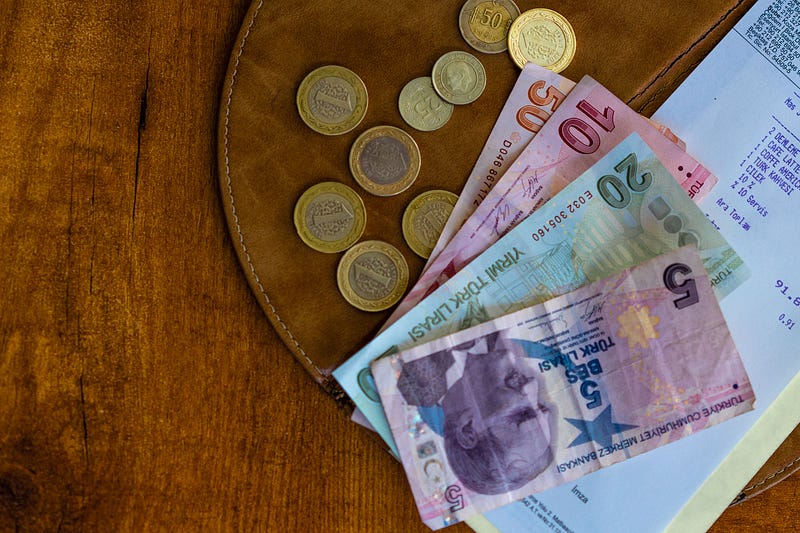
Photo by Oleksandr P on Pexels


Market cap volatility

However, TRYB's market cap had fallen off a cliff on Friday, dropping from $135 million earlier in the day to $40 million. TRYB, an Ethereum-based stablecoin, offers a unique proposition in that it is pegged to the Turkish lira, allowing users to exchange 1 TRYB for 1 TRY. The stablecoin offering, which is administered by Istanbul-based BiLira, is underpinned by 100% fiat reserves held in Turkish banks.

The Turkish lira has earned its reputation as one of the most volatile fiat currencies globally, often experiencing fluctuations against the US dollar. Over the course of the last five years, the currency has lost 94% of its value when benchmarked against the performance of the US dollar.

In response to this volatility, TRYB has found its purpose as a medium of exchange. It can act as a gateway to transition user’s Turkish lira into cryptocurrencies and vice versa. This trend aligns with the global use of stablecoins as the foundation of crypto trading pairs, providing traders with a stable asset while sidestepping fiat currency’s unpredictability.


Exiting the lira

The US Federal Reserve acknowledged the significance of stablecoins in December 2022, highlighting their role in facilitating crypto trades, serving as collateral for crypto loans, and minimizing inefficiencies tied to fiat-to-crypto conversions. In fact, stablecoins account for over 80% of the trading volume on centralized exchanges, attesting to their pivotal role in the crypto ecosystem.

It’s likely that the Lira-pegged stablecoin will act as a means to access other cryptocurrencies and US dollar-pegged stablecoins like USDT and USDC, rather than be considered as a rival or replacement. That’s by virtue of the ongoing difficulties of the Turkish sovereign currency which it tracks. So long as the lira continues to erode in terms of buying power, it’s likely that citizens will be looking for avenues to escape from that erosion of value.


Increased interest in crypto

Given this monetary backdrop in Turkey, it shouldn’t surprise anyone to learn that interest in crypto is on the rise. In a recent report published by Seychelles-based cryptocurrency exchange KuCoin earlier this week, a significant increase in the number of crypto investors in Turkey over the course of the past eighteen months has been identified.

The report found that 52% of the adult Turkish population have participated in crypto-related investments. Over the past 18 months, the number of Turkish adults embracing crypto has risen to that 52% level from 40%.


More to Read
View All
Web3 & Enterprise·

Oct 31, 2023

Zodia Custody Expands to Hong Kong to Meet Asian Institutional Demand

Zodia Custody Expands to Hong Kong to Meet Asian Institutional DemandZodia Custody, the crypto arm of British banking conglomerate Standard Chartered, is extending its digital asset custody services to financial institutions in Hong Kong, making further in-roads in terms of the company’s Asia-Pacific expansion.News of the expanded offering came via a CNBC report published on Sunday. Launched in 2020, Zodia Custody was founded to address the growing institutional demand for secure crypto asset storage, making Hong Kong a strategic addition to its service areas alongside its recent foray into the Australian market.Photo by Emily Xie on UnsplashAsia-Pacific expansionCurrently, only two companies, OSL Digital and HashKey, have obtained licenses from the Securities and Futures Commission (SFC) to operate within Hong Kong’s regulated crypto space. In its initial phase of operations in Hong Kong, Zodia Custody intends to offer a limited range of crypto assets to its institutional clients, aligning with its commitment to prudent expansion.Zodia Custody’s expansion into Hong Kong follows a series of moves into other key Asia-Pacific (APAC) markets, including Japan, Singapore, and Australia. Moreover, the company remains open to potential partnerships and clientele from regions beyond its current operational footprint.Earlier this month, Zodia Custody made headlines in Australia with the introduction of SAF3, a digital asset custody platform tailored specifically for institutional clients. SAF3 boasts bank-grade cold wallet storage accessible in real-time, complemented by advanced risk management and fraud detection capabilities. Julian Sawyer, the CEO of Zodia Custody, emphasized the importance of responsible institutional adoption, a significant step as Australia’s digital asset industry continues to mature.Institutional demand in Hong KongIn response to the surging institutional interest in crypto assets, Zodia Custody is capitalizing on this market trend, recognizing that Hong Kong’s demand for crypto services is predominantly institutionally driven. Sawyer underlined the unique character of the Hong Kong crypto market compared to other regions, where retail consumers often dominate trading activities. The confluence of institutional demand and Zodia’s specialized services positions Hong Kong as an ideal market for the company’s expansion.Notably, Hong Kong has demonstrated a more crypto-friendly stance compared to its neighboring China, which has taken a stricter approach with crypto bans. Earlier this year, Hong Kong’s SFC introduced a regulatory framework that allows companies to register and provide regulated crypto services. In light of these developments, Zodia Custody is in talks with both the SFC and the Hong Kong Monetary Authority to secure regulatory approval within the financial district.Julian Sawyer articulated this opportunity, stating:“The Hong Kong government and the regulators see digital assets as the future and also want Hong Kong to be a hub.” These discussions are poised to pave the way for Zodia Custody to operate within a well-regulated environment.Standard Chartered has been making in-roads into the Asian market, largely through its Singaporean subsidiary SC Ventures. Zodia Custody launched in Dubai in June and in Singapore last month.However, it is not just progressing solely in the Asia-Pacific region. Recently, Zodia Markets, another Standard Chartered subsidiary, achieved registration as a Virtual Asset Service Provider (VASP) with the Central Bank of Ireland. In September, Zodia Markets also made significant strides in the Middle East and Africa by securing In-Principle Approval from the Abu Dhabi Global Market.

news
Policy & Regulation·

May 16, 2024

China busts underground bank conducting illegal currency exchanges via crypto

China's authorities have dismantled an underground bank that illicitly utilized cryptocurrency for currency exchange operations between the Chinese yuan and the South Korean won, involving approximately 2.14 billion yuan ($295.8 million). China has a history of imposing strict capital control policies, prompting some individuals and entities to resort to cryptocurrency as a means of bypassing these regulations. According to a report published by local police in Northeast China’s Jilin province, six suspects were apprehended for their alleged involvement in facilitating the illegal operations spanning China and South Korea.Photo by Hyory Liu on UnsplashExploiting cryptocurrency featuresThe suspects purportedly took advantage of cryptocurrency features like transaction anonymity and decentralization to execute foreign currency exchange activities unlawfully. Investigations revealed that the criminal group utilized domestic accounts for fund receipt and transfer, alongside over-the-counter cryptocurrency transactions. Supporting illicit transactionsThe arrested individuals allegedly aided various entities, including South Korean purchasing agents, cross-border e-commerce platforms and import-export trade firms, in circumventing currency exchange regulations between the Chinese yuan and the South Korean won. 

news
Web3 & Enterprise·

Aug 31, 2023

Binance Japan Sets Out Market Vision

Binance Japan Sets Out Market VisionDuring a virtual business discussion recently led by Takeshi Chino, the Head of Binance Japan, the firm provided insights into its vision within the Japanese market.Photo by David Edelstein on UnsplashIntegrating international version featuresSince its recent launch, Binance Japan has primarily been offering cryptocurrency spot trading and its “Simple Earn” crypto lending service. Expansion into leverage trading is on the horizon, aligning with the international version once regulatory requirements are met.Other key services that Binance has been offering on an international basis include its Initial Exchange Offering (IEO) platform “Launchpad” for emerging projects, staking services, and an NFT marketplace. While the exact timeline for introducing these services in Japan remains undisclosed, Chino assured attendees that there would be a gradual roll-out in compliance with local regulations.The vision that has been set out will see a particular focus being placed on potential collaborations involving stablecoins. Elaborating further on the company’s plans, Chino outlined that domestic expansion would encompass equities management, leverage trading, and the integration of features present in Binance’s global version.In reporting on the event, local crypto media outlet Coinpost explained that Chino further expressed Binance Japan’s ambition to establish connections between its ecosystem and Japanese private entities and government bodies, going beyond the scope of crypto transactions.Focusing on stablecoinsCentral to this vision is the integration of stablecoins into the existing financial infrastructure, with active partnerships leveraging Binance’s technology stack and track record.Chino recognizes the recent regulatory developments regarding yen-based stablecoins as a positive development for business expansion. While Japan’s stablecoin issuance framework remains stringent, collaborations for joint developments are being considered. The potential of yen-backed stablecoins for trade settlements and programmable payments is also being explored.Expanding crypto asset offeringBinance Japan has already made a significant mark by managing 34 equities since its inception, establishing itself as a leader in the Japanese equities landscape. Notably, Binance’s native BNB (Build and Build) token and the Algorand ALGO token have made successful entries into the Japanese market.In its take on the online briefing, Bloomberg outlined that Chino has an initial target of one hundred crypto assets. The global version of the company offers in excess of 350 assets to its users. In adding new assets, a focus will be placed on those particular digital assets that resonate with Japanese market preferences.Other short-to-mid-term goals include facilitating Security Token Offering (STO) payments through stablecoins, merchant onboarding for “Binance Pay,” educational initiatives, among others.Binance Japan emerged following the acquisition by Binance of Sakura Exchange Bitcoin (SEBC), a local crypto exchange, in November of last year. A regulatory backlash following a number of high profile crypto platform failures in 2022 led to Japanese regulators issuing Binance with a warning letter for failing to attain full registration.A response to past difficulties in Japan, in particular relative to the failure of Mt.Gox in 2014, meant that crypto market traders were protected better by comparison with market participants overseas.

news
Loading