Top

XREX secures MPI license from Singapore regulator

Web3 & Enterprise·November 18, 2023, 1:10 AM

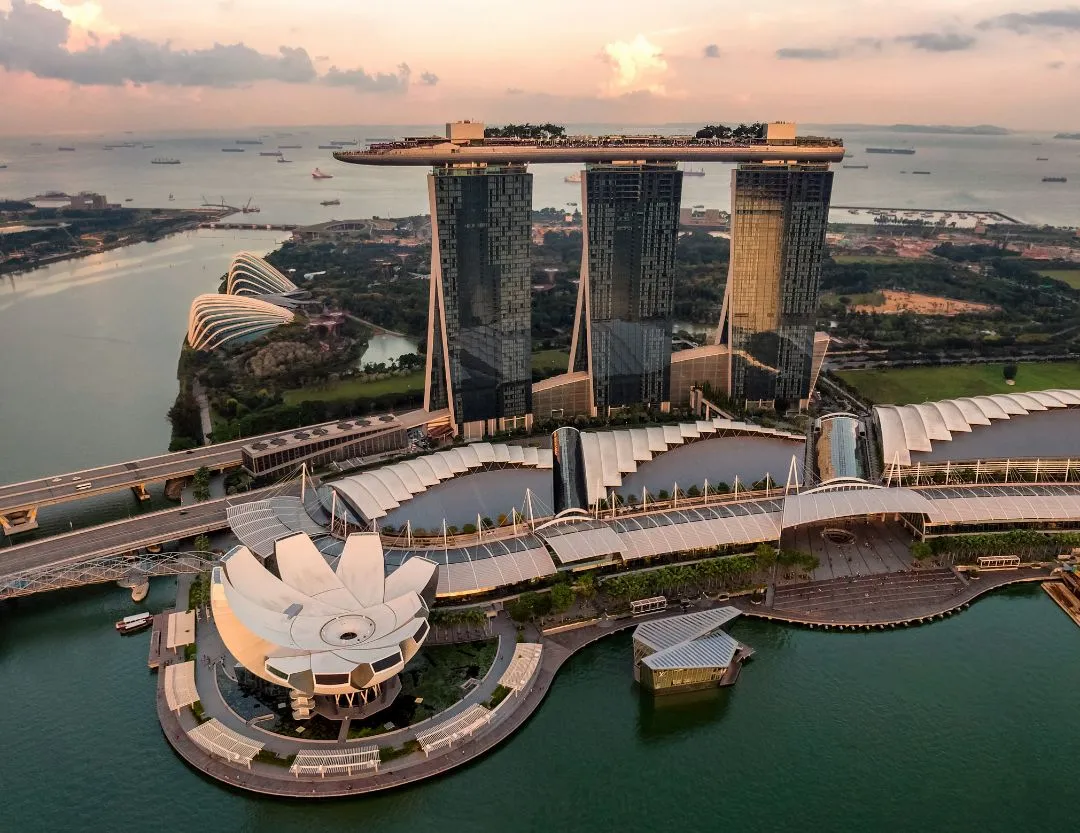
Taipei-based cryptocurrency exchange XREX has received in-principle approval from the Monetary Authority of Singapore (MAS) for a Major Payment Institution (MPI) license.

Photo by Mark König on Unsplash


BitCheck payment tool offering

The approval marks a crucial step for the fledgling exchange business, enabling it to offer digital payment token products and services in Singapore. Once it’s upgraded to a full license, XREX will be able to expand its BitCheck payment tool, currently facilitating transactions involving fiat currencies, stablecoins and various cryptocurrencies.

This regulatory milestone places XREX among the approved exchanges, stablecoin issuers, neobanks and payment service providers in Singapore. Since the introduction of the licensing regime in January 2020, the MAS has received over 580 applications for payment services licenses, with fewer than 20 Digital Payment Token (DPT) licenses and in-principle approvals granted to date. XREX now joins the ranks of established entities like Coinbase, DBS Vickers, Circle, Paxos, Ripple and Revolut in receiving approval from the MAS.

Taking to X on Friday, the company acknowledged the license award while outlining that the license would mean that it can now start to offer an e-money issuance service, cross-border money transfers, account issuance services, digital payment token services, as well as merchant acquisition and domestic money transfer services.


Serving home and overseas markets

Wayne Huang, Co-Founder and Group CEO of XREX, emphasized that XREX Singapore will serve as the primary provider of products across the Asia Pacific (APAC) region. Simultaneously, XREX Taiwan will continue to play a pivotal role in product design, engineering, research and threat analysis functions for the company. Positioning itself as the Asia Pacific headquarters for the group, XREX Singapore aims to target emerging markets in the region where access to USD liquidity may present challenges.

Christopher Chye, CEO of XREX Singapore, expressed the significance of the approval, noting the thorough scrutiny by Singapore’s regulatory authorities. Chye stated:

“Singapore wants to attract responsible actors, and the reality is that doing so necessitates a fine-tooth comb. This is great for Singapore and great for our industry as a whole. XREX is looking forward to introducing cheaper, safer, and faster domestic and cross-border payments for Singapore and emerging market businesses.”

It was no secret that the company had been working towards acquiring a license in Singapore for some time. In December 2022, its Singapore team tweeted out such a claim, adding that an MPI license from MAS “is one of the most coveted and well-regarded licenses worldwide.”

Highlighting Singapore’s progressive and robust regulatory framework, Nick Chang, XREX Group and XREX Singapore Head of Compliance, said:

“Singapore boasts a progressive and robust regulatory framework, offering our users the clarity and confidence they need to access digital assets and use stablecoins.”

XREX has also made in-roads into the European market. In May of last year, the company opened an office in Lithuania, while becoming a crypto asset service provider within the Baltic state. Earlier this year the company strengthened its compliance process by integrating transaction monitoring and investigative tools from blockchain analysis firm Chainalysis.
More to Read
View All
Web3 & Enterprise·

Nov 10, 2023

Shinhan Bank to issue NFTs at 2023 Blockchain Grand Week in Seoul

Shinhan Bank to issue NFTs at 2023 Blockchain Grand Week in SeoulShinhan Bank, one of South Korea’s leading financial institutions, is set to issue non-fungible tokens (NFTs) and operate a promotional booth in celebration of its participation in the upcoming 2023 Blockchain Grand Week, scheduled for next Wednesday, according to a report by local news outlet Newspim.The Blockchain Grand Week, an annual event since 2018, is hosted by the Ministry of Science and ICT and organized by the Korea Internet and Security Agency (KISA), the National IT Industry Promotion Agency (NIPA) and the Institute of Information and Communications Technology Planning and Evaluation (IITP). Its objectives are to increase public awareness of blockchain technology and to facilitate the broader adoption of its ecosystem.Photo by Pete Linforth on PixabayNFTs to first 2,000 visitorsThe event is set to take place at the Convention and Exhibition Center, better known as COEX, in Seoul over two days. It will feature a conference centered around the theme “Adding Trust to Digital Platforms” and will include several academic seminars. Various blockchain companies will also be showcasing their products and services at their respective booths. For this event, Shinhan Bank is collaborating with Hexlant and Vircle to introduce their NFT project. They also plan to offer NFTs to the first 2,000 visitors to their booth.The NFTs will be distributed through Shinhan Bank’s NFT wallet, SOL Wallet, and will come with practical perks such as tickets for events at the booth and coffee coupons. Furthermore, these NFTs will be transferable to others.A representative from Shinhan Bank expressed hope that visitors will have the opportunity to experience the bank’s NFTs and gather diverse information related to blockchain technology. The official also emphasized the bank’s commitment to continually developing and introducing blockchain services that can be integrated into customers’ daily lives.Shinhan Bank’s endeavors in blockchainShinhan Bank’s efforts in the blockchain sector have been marked by various accomplishments in recent years. In 2021, the bank received the Ecosystem Transformation Award at the Enterprise Blockchain Awards, now known as the Web3 and Blockchain Transformation Awards (W3B Awards). This January, Shinhan integrated the SOL Wallet service into its financial services application. The bank remains dedicated to spearheading client-centric blockchain initiatives, one such effort being the development of NFT technology in collaboration with Hexlant and Vircle for corporate marketing purposes.Prohibition on discussing virtual assetsMeanwhile, there has been some dissatisfaction among industry insiders regarding the event’s restrictions. Those operating booths are prohibited from mentioning virtual assets in their projects. The application form for booth holders explicitly stated that exhibitions related to virtual assets are not allowed. This cautious approach is believed to be a response to recent cryptocurrency scandals, such as the $40 billion Terra-LUNA crash and the controversy surrounding a Korean lawmaker’s crypto holdings.

news
Web3 & Enterprise·

Oct 06, 2023

CoinDCX Expands Okto Wallet’s Global Reach with Transak Integration

CoinDCX Expands Okto Wallet’s Global Reach with Transak IntegrationIndian cryptocurrency exchange CoinDCX has moved to broaden the accessibility of its self-custody wallet, Okto. The exchange recently announced the addition of Transak, a major on-ramp platform that enables a fiat-to-crypto payment gateway integration, to enhance the wallet’s global capabilities.Photo by Kanchanara on UnsplashBuilding on OktoThat’s according to a report published by Cointelegraph on Thursday. Okto was introduced by CoinDCX in August 2022, and the firm swiftly moved to expand its services. The integration with Transak represents a pivotal step in this direction.This strategic integration immediately expands the reach of the Okto wallet from supporting 60 countries to an impressive 155 jurisdictions. Neeraj Khandelwal, Co-Founder of both CoinDCX and Okto, emphasized the significance of this move, stating that it allows users in numerous countries to engage with cryptocurrencies directly through Okto.While Transak supports approximately 160 tokens, Okto goes above and beyond by allowing users to store more than 1,000 tokens across multiple blockchain networks, including Polygon, Fantom, Avalanche, and others. According to an Okto spokesperson, the wallet can accommodate up to 3,000 tokens, providing ample flexibility for cryptocurrency enthusiasts.Seamless fiat-to-crypto conversionKhandelwal also spoke to the value add that a more seamless asset conversion process will bring. He stated:“The integration of Transak now allows users to seamlessly convert fiat to crypto right within the app. Prior to this integration, users had to transfer funds from another decentralized wallet, such as MetaMask.”Transak’s integration brings a key feature to Okto — the ability for users to purchase cryptocurrencies like Bitcoin (BTC) directly within the wallet. Notably, this functionality accepts a wide range of fiat currencies, including the US dollar, euro, Hong Kong dollar, and others. Prior to the Transak integration, users were required to transfer digital assets from external wallets like MetaMask. With this development, Okto streamlines the process, enabling users to seamlessly convert fiat into crypto within the app itself.Months-long integration processIt’s worth noting that although the announcement of Transak’s support on Okto was made on Thursday, the integration process began several months earlier. As early as August, some Indian users reported encountering Transak while Okto was in the testing phase. The integration process itself commenced in April, with the official roll-out to all customers occurring in mid-September.Transak, a global Web3 payment and onboarding infrastructure provider, plays a crucial role in bridging the gap between traditional finance and the digital asset ecosystem. It is a well-established on-ramp solution in the cryptocurrency industry, with platforms like MetaMask, Coinbase, and PancakeSwap among its clientele.In recent days, Okto has also announced a partnership with ReHold, a multi-chain protocol which has been developed to enable users to maximize their crypto earnings. In the coming weeks, Okto and ReHold will work towards integrating Okto’s wallet with ReHold.The Okto-Transak integration is in line with Transak’s mission to facilitate crypto adoption by providing easy access to digital assets. Earlier this week, Transak also announced its integration with The Open Network’s (TON) wallet, known as Tonkeeper. This collaboration opens up Toncoin (TON) purchases directly with fiat currencies to users in more than 150 countries, marking a significant milestone in expanding the TON ecosystem.

news
Policy & Regulation·

Dec 29, 2025

Japan plans separate tax treatment for crypto ETFs and derivatives

Japan’s Financial Services Agency (FSA) is advancing proposals to authorize exchange-traded funds (ETFs) backed by specific cryptocurrencies, a move that fleshes out previously reported plans to apply a flat 20% separate tax to crypto gains. According to agency materials released on Dec. 26 and reported by CoinPost, the regulator has now clarified that crypto-linked ETFs and derivatives will be integrated into this new tax framework.Photo by Jakub Żerdzicki on UnsplashThe materials, part of the tax reform framework for the fiscal year 2026, indicate that the regulator intends to align the tax treatment of crypto-linked ETFs with that of stocks and foreign exchange trading. Under the current system, cryptocurrency gains in Japan are classified as miscellaneous income, subjecting investors to progressive tax rates that can reach approximately 55% when local levies are included. The proposed reforms aim to integrate crypto assets into the Financial Instruments and Exchange Act (FIEA), a legislative package slated for debate during the 2026 Diet session. Derivatives also subject to separate taxBeyond ETFs, the regulator plans to adjust the taxation of derivative products based on certain crypto assets. While these derivatives would remain classified as miscellaneous income—similar to conventional futures—the method of taxation would shift from comprehensive taxation to a separate self-assessment model. Despite the outlined tax reductions, market observers anticipate that full implementation may be delayed until 2028 due to the time required to amend the relevant laws and government ordinances. FSA restructures to better oversee cryptoIn parallel with regulatory updates, the FSA is restructuring its internal operations to better address digital finance. Nikkei reported that the agency has decided to elevate its Crypto-Assets and Blockchain Innovation Office to the status of a division beginning in the administrative fiscal year starting July 2026. This restructuring follows an August proposal in which the FSA cited the need to bolster its capacity to handle financial services transformed by financial technology, crypto trading, and generative artificial intelligence (AI). The agency noted that it faces accumulating challenges, including fraud prevention and the government's broader goal of positioning Japan as a leading asset management nation. Additionally, the establishment of a new Asset Management and Insurance Supervision Bureau is expected as part of the reorganization. The regulatory shifts coincide with broader efforts to integrate blockchain technology into Japan's financial infrastructure. A separate Nikkei report last week stated that policymakers have agreed to prepare for the issuance of local government bonds as blockchain-based security tokens. The government plans to submit the necessary legislation during the next ordinary Diet session, aiming to streamline settlement processes and enable real-time monitoring of investor data. Corporate crypto strategies persist despite concernsIn the private sector, Tokyo Stock Exchange-listed Metaplanet is proceeding with a corporate strategy focused on Bitcoin accumulation. Dylan LeClair, the company's Director of Bitcoin Strategy, said on X that shareholders at an extraordinary meeting approved proposals to raise capital for additional Bitcoin purchases, including the issuance of Class B preferred shares to overseas institutional investors. Earlier this year, Metaplanet shareholders authorized a long-term plan to acquire more than 210,000 Bitcoin by 2027, representing roughly 1% of the total supply. However, analysts warn that corporate models based primarily on asset accumulation face structural risks. According to Cointelegraph, industry figures such as MoreMarkets CEO Altan Tutar and Solv Protocol co-founder Ryan Chow have cautioned that companies relying solely on digital asset holdings may struggle to maintain valuations without developing operational businesses that generate consistent returns. 

news
Loading