Top

NFT Seoul Conference 2023 to Picture the Future of Digital Innovation

Web3 & Enterprise·August 25, 2023, 6:27 AM

Art Token, a South Korean company that operates non-fungible token (NFT) marketplace 2R2, has made an announcement regarding the upcoming NFT Seoul Conference 2023, scheduled to take place at COEX on September 1. This conference is poised to provide insights into the future trajectory of the ever-evolving digital landscape.

According to a local news outlet, the event is co-hosted by Art Token, along with The Korea Herald, an English-language newspaper in Korea, and Soongsil University. Noteworthy support is also coming from Crypto.com, a crypto exchange headquartered in Singapore.
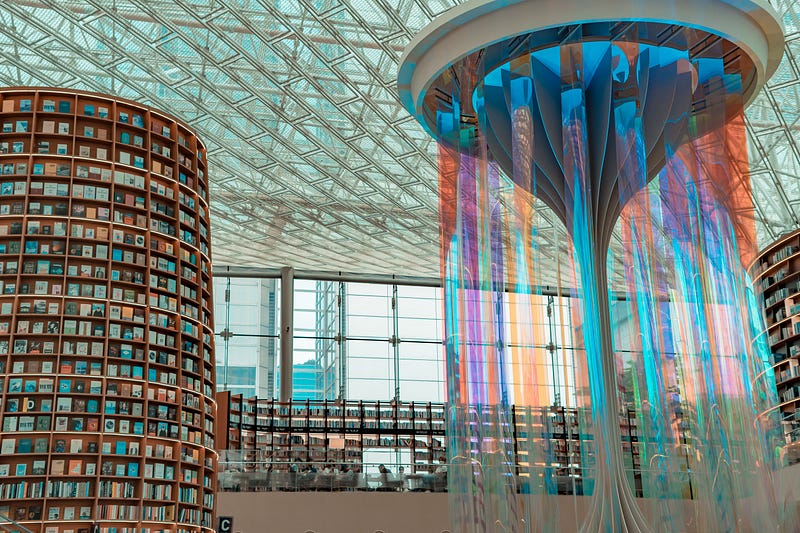
Photo by Riza Gabriela on Unsplash


NFTs as economic vehicles

Hong Ji-sook, CEO of Art Token, shared the motivation behind orchestrating this NFT-focused conference. According to her, the event focuses on the future of NFTs, which are anticipated to serve as economic vehicles in the emerging Web3 digital ecosystem. Hong added that the conference is designed to provide strategic responses to the burgeoning concepts in the expansive digital realm such as decentralization, decentralized autonomous organizations (DAOs), and crypto rewards.

Highlighting the pivotal role of NFTs in embracing necessary digital innovations across the domains of art and finance, she emphasized that the conference agenda will showcase sessions and programs that foster a dynamic exchange of ideas. This collaborative environment is anticipated to pave the way for novel opportunities and solutions that hold relevance across blockchain technology, the tech industry, and the artistic landscape.


Web3, NFT art, and security tokens

The in-person conference will be structured around three main themes: Web3, NFT art, and security token offerings (STOs). The keynote speakers will delve into the future trends of NFTs and their potential in the Web3 era. They will also analyze the utilization and significance of NFTs in the realm of art. Lastly, the presenters will assess the current state of the Korean security token market and discuss the diverse industrial applications of security tokens. Meanwhile, visitors will have a chance to glean insights from other separate sessions that shed light on the evolving global landscape.

More to Read
View All
Policy & Regulation·

Apr 20, 2023

Hong Kong Launches Web3 Institute

Hong Kong Launches Web3 InstituteThe Institute of Web3 Hong Kong has recently been established with the aim of promoting and developing Web3 technologies, including blockchain and other decentralized technologies. That’s according to a report that was published by the Hong Kong China News Agency (HKCNA) last week.©Pexels/Zetong LiPromoting Web3 developmentThe Institute of Web3 Hong Kong aims to promote the development of Web3 technologies by providing education, research, and development support to individuals and organizations interested in these technologies. It will also serve as a platform for collaboration between different stakeholders in the Web3 ecosystem, including developers, entrepreneurs, investors, and regulators.The institute is being led by Joseph Yam, the former Chief Executive of the Hong Kong Monetary Authority (HKMA), and is expected to play a key role in the growth and development of Web3 in Hong Kong and beyond.Yam is well-known for his expertise in financial regulation and has been a strong advocate for the adoption of blockchain technology in the financial industry. In his new role as the head of the Institute of Web3 Hong Kong, he is expected to use his experience and knowledge to promote the adoption of Web3 technologies in Hong Kong and the wider Asia-Pacific region.Developing financial centerThe establishment of the Institute of Web3 Hong Kong is seen as a significant development in the growth of the Web3 ecosystem in Hong Kong. Hong Kong is already known for its strong financial industry, and the adoption of Web3 technologies could further enhance the city’s position as a leading financial hub in the region. The institute’s focus on education and research will also help to develop a skilled workforce that can support the growth of the Web3 industry in the future.The institute is expected to work closely with the Hong Kong government and other stakeholders to create a regulatory framework that supports the growth and development of Web3 technologies. This is important, as regulatory uncertainty is often cited as a barrier to the adoption of blockchain and other decentralized technologies.Precursor to investmentThe establishment of the Institute of Web3 is also expected to attract more investment in the Web3 industry in the region. The institute’s focus on education and research will help to create a favorable environment for startups and other organizations that are developing Web3-based applications.While China has not been a crypto-friendly region in recent years, there are increasing signs that Chinese officials are content to see Hong Kong develop as a hub for Web3-based technologies while keeping the sector under much stricter control within mainland China. Chen Dong, Deputy Director at the Liaison Office of the Central People’s Government in Hong Kong has publicly praised Hong Kong’s push to become a regional center for Web3 innovation. Meanwhile, Li Feng, the Chairman and CEO of China Mobile, has been installed as the non profit’s honorary chairperson.The establishment of the Institute of Web3 Hong Kong is a significant development in the growth and development of Web3 technologies in the Asia-Pacific region. The institute’s focus on education, research, and collaboration will help to promote the adoption of Web3 technologies and create new business models in various industries. With the leadership of Joseph Yam, the institute is expected to play a key role in the growth of the Web3 ecosystem in Hong Kong and beyond.

news
Web3 & Enterprise·

May 15, 2023

LG Goes Further Down the Web3 Rabbit Hole with NFT Patent

LG Goes Further Down the Web3 Rabbit Hole with NFT PatentSouth Korean consumer electronics behemoth LG has delved deeper into the Web3 world, this time with a patent filing that would make NFTs more available to TV viewers.Enabling NFTs for the mass marketAccording to the filing, which was made with the World Intellectual Property Organization (WIPO), the electronics giant is seeking to acquire intellectual property protection on a capability to have a smart TV connect with an NFT market server.That ability would allow the user to then send, receive and display digital artwork. Furthermore, the consumer could complete purchases using an associated digital wallet, relative to NFT-based artwork that they would have the ability to browse through on their LG smart TV.While crypto and Web3 continue to garner a lot of attention, it can still seem sometimes that it exists in a bubble all of its own. Moves like this one from an organization as professional as LG are encouraging, as they demonstrate that LG believes that NFTs are going to be a part of the future, and most importantly, that they’re going to enable mass market participation and adoption.Blade WalletThis is not LG’s first venture into the world of NFTs. Last year, the corporation launched its very own NFT marketplace. Known as “LG Art Labs”, it enables users of US LG TVs that run the WebOS 5.0 operating system, to trade digital collectibles.Earlier this year, the firm launched the Blade Wallet, a third party audited, self-custody digital wallet which runs on the Hedera public ledger. That development has come out of a partnership that LG has developed with the Hedera Hashgraph platform much earlier in 2020. Just as with the Blade Wallet, the LG Art Labs NFT marketplace also runs on Hedera. To support these early stage products, LG itself has been a node operator on the Hedera network since 2020.This recent patent filing references an NFT marketplace and a digital wallet. As we’ve established, the corporation has already launched both of them already. All of that points to the electronics giant executing on a well thought through plan which will bring NFTs to the mass market.Broader interestLG isn’t going to have it all to itself. Samsung, yet another South Korean consumer electronics giant, has also dipped its toe in the water where NFTs are concerned. In January 2022, the company released an NFT marketplace on three of its TV models. That initiative was enabled due to its partnership with leading curated NFT marketplace, Nifty Gateway.Neither will the South Koreans have the consumer electronics-enabled NFT market all to themselves. Japanese consumer electronics conglomerate Sony filed a patent in March that will allow players of Sony products to access interactive Web3 gameplay. That application will be centered upon the use of NFTs also.Sony’s attempts to delve into the Web3 arena have been more recent. In February of this year, Sony Network Communications, its internet provider division, partnered with the project team behind the Astar blockchain in order to create an incubation program for companies who are working on NFT-based innovation and decentralized autonomous organizations (DAOs).Photo by Shubham Dhage on Unsplash

news
Policy & Regulation·

May 25, 2023

Japan Set to Tighten Crypto AML Rules

Japan Set to Tighten Crypto AML RulesJapan is working on tightening anti-money laundering (AML) rules relative to digital assets shortly. That’s according to a report by local media outlet Kyodo News.The stricter enforcement measures will take effect from June 1. The objective is to include the tracing of cryptocurrency asset transactions into the legal framework relative to AML, and in that way, bringing the application of AML in Japan into line with global standards.Photo by Louie Nicolo Nimor on UnsplashTravel ruleIn December of last year, the Financial Action Task Force (FATF), a global money laundering and terrorist financing watchdog based in Paris, France, deemed that the approach taken to crypto-related AML in Japan fell short of international requirements and best practice.Specifically, it’s the FATF’s “travel rule” that the Japanese are about to implement. Otherwise known as FATF Recommendation 16, the travel rule is a set of guidelines devised to prevent both terrorist financing and money laundering.The measure puts an onus on all crypto companies to screen all crypto transactions that exceed the value of $1,000 or a variance of this amount based on implementation by each FATF member state. As an example, in the United States, the FATF travel rule is being implemented with transaction monitoring being applied on transactions to the value of $3,000 and above.Once identified, the crypto firm must record details of the transaction and communicate that information, including both sender and recipient data, to the authorities. That would involve the sender and receiver’s legal names, their account numbers, and addresses. Relevant transaction activity includes exchanges between one or more forms of digital currency and the transfer of virtual assets.G7 alignmentThe move follows a decision taken at a Japanese cabinet meeting on Tuesday, as a direct response to FATFs recommendations. Following discussions earlier this month, the intergovernmental political forum of the G7 group of countries indicated its support for the FATF’s call for the establishment of the travel rule as a global standard. Japan is currently leading the group through its G7 presidency and likely wants to align with the views of its international peers.The country had been moving towards travel rule implementation in the past but in a less decisive way. Two years ago, Japan’s Financial Services Agency (FSA) requested virtual asset service providers (VASPs) to implement the travel rule. In a self-regulatory approach in 2022, the country’s Virtual Currency Exchange Association issued a recommendation for members to apply the rule.Those approaches lacked teeth, leading to a cabinet decision to amend existing legislation late last year and this more recent move to apply and enforce the rule.Regulatory frameworkWhile Japan may not be top of the class in terms of AML regulation relative to crypto, it is a forerunner in terms of crypto regulation generally. It was the first country in the world to suffer a serious crypto-related failure when the Mt.Gox cryptocurrency exchange collapsed in 2014.The fall-out from that collapse led to the Japanese introducing more stringent regulations although it took until 2017 to get them implemented. As a consequence, when the next major collapse occurred, the fall of FTX in November 2022, the Japanese have fared much better than investors located elsewhere. Regulation meant that a separate Japanese entity, FTX Japan, was established. It had to adhere to stricter conditions, meaning that FTX Japan customers have been allowed to withdraw their funds since February while their international counterparts must undergo a much longer process to recover their funds.

news
Loading