Top

$100M Pyramid Scheme Linked to Prominent Chinese Filecoin Project

Policy & Regulation·August 16, 2023, 12:45 AM

A courtroom showdown currently playing out in the People’s Court of Pingnan County in northeastern Fujian province in China is laying bare an intricate pyramid scheme entwined with one of China’s flagship ventures in the Filecoin ecosystem.

The lawsuit thrusts five defendants into the spotlight, alleging their orchestration of an expansive pyramid scheme under the guise of their enterprise, Shenzhen Space-Time Cloud Company. The operation is purported to have siphoned off millions of dollars, leaving in its wake a trail of financial wreckage.
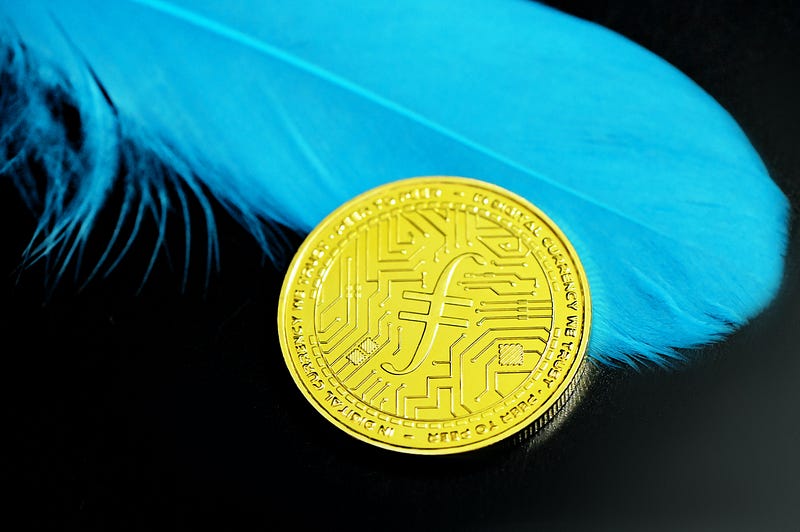
Photo by Traxer on Unsplash


Aggressive project marketing

According to a local media report published on Monday, the saga began in June 2018 when Lai Mouhang and Lai Moujun established the Space-Time Cloud Company. Subsequently, co-defendants Hu and Liang joined the ranks in the following months. However, it wasn’t until September 2019 that Lai Mouhang escalated the company’s operations, leveraging the ipfs.cn domain to aggressively market and peddle investments linked to distributed storage technology and Filecoin’s intricate economic model.

Central to Filecoin’s model is its block reward system, where miners validating new blocks receive Filecoin tokens (FIL) as a reward. In a stunning revelation, the prosecution claims that Lai Mouhang and his accomplices crafted a scheme mirroring this economic structure.

Their brainchild, the filpool.io platform, served as a conduit for joint mining, masquerading as a storage server vending operation for FIL mining. This platform, intrinsically linked to Space-Time Cloud Company, allegedly formed the epicenter of the defendants’ fraudulent maneuvers.


Almost 60,000 users

The gravity of the scheme becomes evident when considering the staggering numbers: a reported 57,122 members registered on the filpool.io platform and an additional 143 partners on the bpool.io platform, a sibling project of Space-Time Cloud Company. These platforms collectively amassed a jaw-dropping RMB 607 million ($83 million), alongside RMB 62 million in diverse cryptocurrencies.

The modus operandi of the defendants was rooted in enticing participants with rosy prospects of exponential profits. By acquiring a minimum of 8 terabytes of cloud computing power, individuals could attain bronze membership status or higher, unlocking the ability to further recruit participants. Unsurprisingly, the magnitude of returns correlated directly with the size of investments and the recruitment spree — classic hallmarks of a pyramid scheme.

The prosecution contends that the defendants exploited these platforms as bait for participants, perpetuating the myth of high returns. This alleged deception led to substantial financial losses for many unsuspecting victims. Furthermore, these actions purportedly sowed discord and upheaval in both economic and social spheres, potentially transgressing criminal law boundaries.

As the investigation into this convoluted case unfurls, its implications resonate far beyond China’s territorial confines. The intertwining of cryptocurrency, blockchain, and pyramid schemes punctuates the ever-evolving narrative of financial crime. The case highlights the importance of vigilance and regulatory scrutiny in an innovative industry that has more than its fair share of bad actors.


More to Read
View All
Policy & Regulation·

Aug 16, 2023

Singapore Takes Lead in Regulating Stablecoins

Singapore Takes Lead in Regulating StablecoinsSingapore has taken a proactive step by finalizing regulations for stablecoins, solidifying its position as one of the first jurisdictions to do so on a global scale.The Monetary Authority of Singapore (MAS) has established a comprehensive framework that outlines essential prerequisites for stablecoin operations, according to an announcement made by the central bank on Monday.Key highlights include:Reserve Backing: Stablecoins must be backed by reserves consisting of low-risk and highly liquid assets. The value of these reserves should equal or surpass the circulating stablecoin value at all times.Prompt Redemption: Stablecoin issuers are mandated to return the par value of the digital currency to holders within five business days upon redemption requests.Transparency: Issuers must furnish users with “appropriate disclosures,” including audit outcomes of the backing reserves.These regulations will be applicable to stablecoins issued in Singapore that mirror the value of the Singapore dollar or any G10 currency, such as the US dollar. Stablecoins meeting all the requirements outlined by the regulations will receive recognition from the regulator as “MAS-regulated stablecoins.” This distinct categorization will differentiate them from tokens lacking regulation.Photo by CoinWire Japan on UnsplashKey roleWith a market valuation of approximately $125 billion, stablecoins have rapidly emerged as a significant force within the crypto space. Leading the pack are Tether’s USDT and Circle’s USDC, which together command around 90% of the market’s total value.Stablecoins play a key role in the crypto trading market. They allow traders to move in and out of various cryptocurrencies and back into fiat. However, despite their immense influence, stablecoins have largely remained unregulated across the globe. While their primary use has been in trading, stablecoin proponents assert their versatility in various applications, including remittances.Digital currency hubSingapore has been actively positioning itself as a hub for digital currencies, striving to attract foreign companies seeking refuge from the crypto industry’s apprehensions surrounding the current unwelcoming US regulatory approach.Despite their prevalence, stablecoin issuers have faced criticism regarding the transparency of their reserve holdings. Singapore’s regulatory measures aim to bring increased clarity to this sector.Ho Hern Shin, Deputy Managing Director of Financial Supervision at MAS, expressed that the framework’s purpose is to enable stablecoins to serve as a credible digital medium of exchange and bridge the gap between fiat and digital asset ecosystems.Positive industry responseLeading stablecoin firms, Tether and Circle, have applauded Singapore’s new regulations. Yam Ki Chan, Vice President of Strategy and Policy for APAC at Circle, stated that MAS is at the forefront of forward-looking regulators globally, establishing a transparent regulatory framework for stablecoins and digital assets. Paolo Ardoino, CTO of Tether, hailed the framework for providing a clear structure, accountability, and transparency in stablecoin operations within Singapore.The collapse of algorithmic stablecoin UST last year drew regulatory attention to this category of stablecoins. Unlike traditional stablecoins like USDT and USDC, UST was governed by an algorithm and lacked real-world assets as reserves.Singapore’s stablecoin regulations have placed it in a select group of jurisdictions pioneering such rules. Hong Kong is presently undergoing public consultation on stablecoins and plans to introduce regulations in the coming year.

news
Web3 & Enterprise·

Aug 14, 2023

Hana Financial and FSS join hands to foster young digital talent

Hana Financial and FSS join hands to foster young digital talentHana Financial Group said Sunday that the South Korean financial holding company held a proclamation ceremony for the second Hana Digital Power On Project last Thursday — a program designed to cultivate young digital talent in emerging technologies like blockchain and big data — at the Hana Global Campus in Incheon.Support from tech juggernautsThe program, sponsored by the Korean Financial Supervisory Service (FSS) and several tech giants such as Google, Amazon Web Services, Microsoft, and SK Telecom, was first held last year. This year’s project saw the participation of over 50 individuals forming 16 teams, Hana said.Photo by Marvin Meyer on UnsplashCompetitions and trainingA contest centered around new digital technology was also held on the same day. Participating teams proposed ideas for solving issues that may arise in the financial industry using artificial intelligence, blockchain, cloud computing, and big data technologies.Winning teams will be rewarded up to KRW 10 million (approximately $7,500) in prize money along with the opportunity to visit several information technology companies. They will also have the chance to participate in a hackathon competition organized by SK Telecom to further develop their ideas.They will also undergo a four-week digital education program put together by Google, Microsoft, and Amazon, as well as practical training provided by the Hana Institute of Technology. Notably, graduates of the program will be exempt from going through the initial screening process when applying for positions at Hana Financial Group.Officials including Lee Bok-hyun, Governor of the FSS; Lee Hoon-kyu, Director of Future for Youth Foundation; and Ham Young-joo, Chairman of Hana Financial Group, were in attendance.“We will strive to cultivate young digital talent and create employment opportunities for the youth,” said Hana Chairman Ham. FSS Governor Lee also added that there is a need to secure interdisciplinary talents capable of generating innovative ideas.

news
Markets·

Apr 21, 2023

True Potential of Asian Crypto ETFs Yet to Be Realized

True Potential of Asian Crypto ETFs Yet to Be RealizedA recently published report by Hong Kong Exchanges and Clearing Ltd. (HKEX), the Hong Kong stock exchange, has found that crypto exchange traded funds (ETFs) have the potential to play a significant part in unlocking the next phase of digital asset expansion in Asia.©Pexels/Burak The WeekenderThe report, titled “Crypto ETF: Key to unlocking the next phase of digital asset growth in Asia,” highlights how crypto ETFs could attract more institutional investors and lead to increased liquidity in the digital asset market. Furthermore, HKEX claims that the ETF investment mechanism can play its part in offering a more regulated and safe manner through which investors can gain exposure to digital assets.Regulatory progressWhile the report cites an Asian regulatory environment that is becoming increasingly more supportive of digital assets of late, it still identifies a need for further progress to be made to improve the level of regulatory clarity and to provide a truly standardized approach to digital assets. That, it says, will result in crypto ETFs becoming more accessible, offering a diversified way in which the investor can access and gain exposure to digital assets in Asia.Nonetheless, HKEX applauds the work done thus far by regulatory authorities in Hong Kong and Singapore, where regulatory frameworks relative to crypto ETFs have been implemented. Those are measures that the Hong Kong stock exchange believes will increase investor confidence, and in turn, bring about further adoption of digital assets.Modest daily trading volumeBetween December 16 and February 7 the two Bitcoin ETFs and one Ether ETF listed on the Hong Kong stock exchange achieved a daily trading volume of $1.19 million. That’s rather underwhelming when compared with the $3 billion in daily volume being achieved by the Chicago Mercantile Exchange (CME) relative to its Bitcoin and Ether futures ETF in the United States. On the New York stock exchange ProShares Bitcoin Strategy ETF achieves a daily average trading volume of $196 million.These findings are a bit counter-intuitive given the contrasting regulatory approaches in the two territories. In the US, regulators have failed to approve a physically settled Bitcoin ETF. Furthermore, the Securities and Exchange Commission (SEC) has denied the attempts of Grayscale Bitcoin Investment Trust (GBTC) to convert the Bitcoin fund into an ETF. Meanwhile, Hong Kong has much more regulatory clarity but yet trading volume in crypto-related ETFs remains minuscule by comparison with the United States.Despite that, the report remains upbeat with regard to what can be achieved in the market with crypto-related ETFs. It makes a case for crypto ETFs as a means for traditional financial institutions to enter the digital assets market with relative ease. Similarly, it sees a role for global stock exchanges in facilitating future growth of crypto-related ETFs and in developing new ETF products that could unlock access to specific digital assets or bespoke investment strategies.

news
Loading