Top

NEOPIN and SBINFT Join Forces to Expand DeFi and NFT Ecosystems

Web3 & Enterprise·August 09, 2023, 6:59 AM

NEOPIN, the global CeDeFi platform of South Korean investment holding company Neowiz Holdings, announced today its strategic partnership with SBINFT, the NFT marketplace developer and Web3 subsidiary of Japanese online financial conglomerate SBI Holdings.

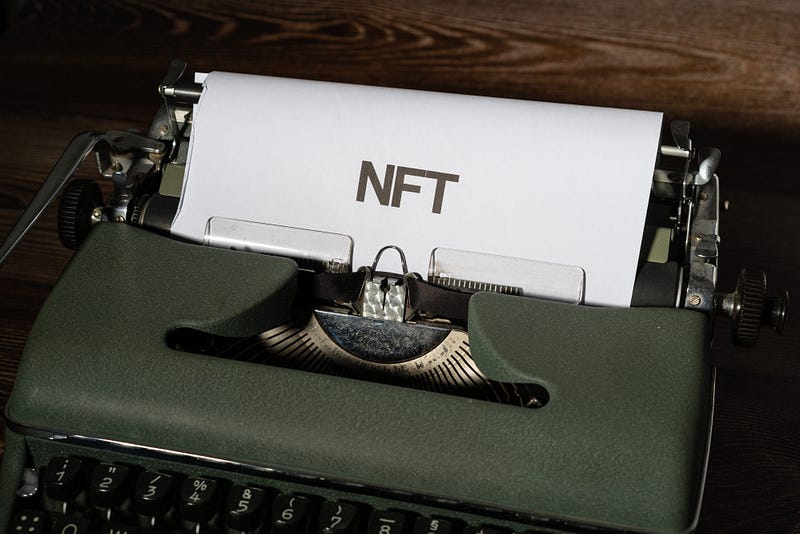
Photo by Markus Winkler on Pexels


Extending their global reach

Through this partnership, the two companies will combine their individual expertise to enhance the global reach of each other’s ecosystems. Their strategy involves facilitating the introduction of established NFT projects from regions such as South Korea, the Middle East, and Southeast Asia into the Japanese market. Additionally, they will collaborate to offer both financial and technical assistance to promising Japanese Web3 initiatives, enabling them to expand internationally.


Web3 projects and utility NFTs

To achieve this objective, NEOPIN will onboard a diverse range of Web3 projects to its ecosystem, thereby broadening their adoption and appealing to a worldwide user base. Meanwhile, SBINFT will proactively seek to bring utility NFTs into its NFT marketplace.

NEOPIN’s partnership with SBINFT is a strategic step in its plan to enter the Japanese market. Just recently, the South Korean enterprise revealed its proactive approach to intensify endeavors to attract a Japanese customer base.

Kim Yong-ki, NEOPIN’s CEO, mentioned that the collaboration with SBINFT represents one of their initial endeavors to penetrate the Japanese market. Kim further stated that NEOPIN is dedicated to achieving favorable outcomes not only within Japan but also across the East Asian region.

Ko Jang-deok, CEO of SBINFT, echoed this sentiment, expressing that NEOPIN possesses a robust strategy tailored for the Japanese market. He mentioned that the partnership with such a company will help SBINFT introduce international content to the Japanese market. Ko highlighted SBINFT’s commitment to extending its presence in the East Asian market.

More to Read
View All
Web3 & Enterprise·

Oct 25, 2023

Web3 Security Startup Blockaid Raises $33M in Funding

Web3 Security Startup Blockaid Raises $33M in FundingIsraeli enterprise Blockaid, a Web3 security startup founded by two former Israeli military cyber intelligence personnel, has secured a total of $33 million in funding.The recent Series A round of $27 million was led by Ribbit Capital and Variant and saw participation from Cyberstarts, Sequoia Capital, and Greylock Partners. This funding totals $33 million when consolidated with an initial $6 million seed round.Photo by Shubham’s Web3 on UnsplashSecuring Web3 against threatsBlockaid offers comprehensive Web3 security solutions designed to combat crypto fraud, phishing, and hacks. Its approach involves the examination of both on-chain and off-chain transactions. In this way, the firm is seeking to set itself apart from competitors like CertiK and Cyvers.The company’s decentralized application (dApp) Scanning Engine simulates and validates blockchain transactions before they are executed. This process takes place within Blockaid’s dApp Scanning Sandbox, which also assesses the potential maliciousness of interactions and dApps.Since its inception in September 2022, Blockaid claims to have successfully scanned over 450 million transactions, preventing over 1.3 million attacks and safeguarding more than $7.1 billion in assets. Furthermore, the Israeli startup’s efforts have averted losses of over $500 million in the Web3 ecosystem.Recent success storiesOne notable success story involves the prevention of a phishing attack targeting Ethereum co-founder Vitalik Buterin’s X (formerly Twitter) account. Due to Blockaid’s security measures, users’ wallets remained protected, though unsecured wallets with approximately $700,000 in assets, including valuable NFTs, suffered losses in the attack. Blockaid has been involved in enhancing security for prominent platforms, including MetaMask, OpenSea, Zerion Wallet, and Rainbow Wallet.With the newly acquired funds, Blockaid aims to expand its client base and meet an increasing demand for its security solutions. Ido Ben-Natan, co-founder and CEO of Blockaid, expressed confidence in their ability to support both existing and new customers during these market conditions. Blockaid operates from New York and Tel Aviv and plans to bolster its workforce by hiring additional personnel across various functions.Addressing the Web3 security challengeThe significance of Blockaid’s work becomes even more apparent when considering the current challenges in the Web3 space. In recent years, the Web3 sector has faced a rising tide of fraud, phishing attempts, and hacks. As noted by Ben-Natan, Web3 has experienced staggering losses, with $14 billion stolen in just one year, surpassing losses in all non-crypto cyber-crime combined. Additionally, one in ten decentralized applications (dApps) has been identified as malicious, making even crypto-savvy users susceptible to malicious actors.Furthermore, there is a growing concern about nation-state actors actively targeting and stealing user funds for their economic gain. In this adversarial and uncertain environment, the usability and security of Web3 must be enhanced to unlock its full potential. Blockaid’s innovative security tools aim to provide the necessary protection for Web3 builders and users.There’s no doubt that Web3 has to become more seamless and far more secure if it is to appeal to the mass market. In its blog post announcing the funding round, the project stated:”We believe that users shouldn’t have to know they’re interacting with crypto. We believe that web3 should just work, and work securely.”

news
Policy & Regulation·

Jan 02, 2024

Singapore Prime Minister issues warning on AI-generated crypto scam

In a recent announcement on Facebook, Singapore Prime Minister Lee Hsien Loong has raised alarm bells about a new form of cyber scam that exploits deep-fake technology. Deep-fake technologyThe Prime Minister highlighted the emergence of deceptive videos utilizing artificial intelligence (AI) to create false portrayals of him endorsing cryptocurrency scams. This development underscores the escalating sophistication of online scams and the deployment of advanced technology to mislead the public. Deep-fake technology has emerged as a powerful tool for scammers, enabling them to manipulate genuine footage to produce highly convincing yet entirely fabricated content. In the latest incident, a deep-fake video features Prime Minister Lee Hsien Loong endorsing a nonexistent crypto investment platform purportedly associated with entrepreneur Elon Musk. This video, a manipulated version of an interview on CGTN, showcases the concerning level of realism achievable with deep-fake technology. The incident emphasizes the growing trend of utilizing AI in perpetrating scams. Prime Minister Lee underscored the deceptive nature of these videos, articulating the potential damage they could inflict by leading unsuspecting individuals to invest in fraudulent schemes. The Singaporean government maintains a vigilant stance on such scams, consistently urging citizens to exercise caution and verify information from official sources.Photo by Guo Xin Goh on UnsplashPrevious issuesThe exploitation of public figures in financial scams is not a new phenomenon. Prime Minister Lee has been a recurrent target of such scams, dating back to 2018. At that time, the government issued public warnings about Bitcoin investment scams falsely claiming the Prime Minister’s endorsement. More recently, in July, another fake video featuring Lee Hsien Loong surfaced, prompting renewed public warnings. In 2021, the Prime Minister’s name and photograph were used without his consent in an effort to sell cryptocurrency. The data was taken from his X (formerly Twitter) profile. At the time, Lee wrote:“The site’s creators are anonymous, but I have sent an open tweet out to ask that my name and photo be removed from the site immediately, as I have nothing to do with the platform. I urge everyone to remain vigilant when dealing with cryptocurrency platforms.” That was a much less sophisticated identity-related scam. More often than not, scammers and fraudsters tend to be early adopters of technology. That’s proving to be the case with the use of deep-fakes in this instance. A need for cautionAs he did in 2021, Prime Minister Lee has urged the public to exercise caution in light of this more recent incident. He advises against responding to scams promising guaranteed investment returns or giveaways. There’s every sign that the Prime Minister’s warning is warranted. In September it emerged that six Singaporeans lost more than $100,000 when a scammer tricked them into buying tokens on a cryptocurrency trading platform. More recently, five Americans were conned out of $10 million in a scam that involved a spoofed domain of the former Singapore International Monetary Exchange (Simex). This call for public vigilance is part of a broader government effort to address the surge in cyber fraud. These repeated incidents underscore the challenges posed by digital technologies in spreading misinformation and financial fraud.   

news
Policy & Regulation·

Aug 24, 2023

Celebrating a Decade of Crypto in South Korea: Experts Convene to Chart the Future

Celebrating a Decade of Crypto in South Korea: Experts Convene to Chart the FutureThe MK Virtual Asset Conference, an event held in Seoul yesterday to celebrate the 10th anniversary of South Korea’s cryptocurrency industry, convened experts, politicians, and stakeholders to discuss the future of blockchain and digital assets.The conference was hosted by Maeil Business Newspaper and its blockchain subsidiary Mblock, and sponsored by cryptocurrency exchange Korbit, the Korean Securities Association, and the Korea Derivatives Association. It served as a valuable opportunity to evaluate the current state of the crypto market and explore solutions for pressing challenges.Photo by Ciaran O’Brien on UnsplashInevitable rise of blockchainOne of the distinguished speakers at the event highlighted the inevitable rise of blockchain technology. Kim Yong-beom, CEO of Hashed Open Research, the research arm of Seoul-based crypto venture capital firm Hashed, said, “Blockchain is the antithesis of the modern financial and capital system. While traditional finance possesses its own merits, it also carries substantial transaction fees and is confined within national boundaries. It is only natural that such a counterforce has emerged to address these issues.”He continued, “Given that traditional finance properly responds to blockchain technology’s rise and overcomes its limits, blockchain may lose its competitive edge. However, if traditional finance fails to do so, blockchain will not be easily dismissed.”CEO Kim also highlighted the third section named “Blueprint for the Future Monetary System” of the Bank of International Settlements’ 2023 Annual Economic Report, which was published in June. The report states, “The BIS Innovation Hub, in partnership with central banks around the world, stands at the forefront of experimentation with CBDCs and tokenization.” According to Kim, the traditionally conservative financial institution, which had previously been skeptical about blockchain-based distributed ledger technology, has now shifted its position to be more accepting of blockchain.Importance of institutional investorsDuring the conference, an academic underscored the importance of allowing institutional investors to enter the virtual asset space. Kang Hyoung-goo, an assistant professor in the Department of Finance at Hanyang University Business School, pointed out that the crypto market, when primarily driven by retail investors, tends to favor volatile assets over stable ones. Due to this inclination, more individual investors are attracted to exchanges where speculative trading is a frequent occurrence. This dynamic creates a vicious cycle, he explained.Defining digital assetsOn a different note, Lee Han-jin, a lawyer at Kim and Chang, one of the largest law firms in the country, emphasized the crucial need to establish a legal definition of digital assets. In Lee’s view, digital assets exist in the form of data on the blockchain, setting them apart from traditional assets. He argued that without a legal definition outlining the nature of these assets, they could potentially devolve into entities that mislead the public, lacking both legal reliability and trustworthiness.Political voicesPoliticians also took the stage to share their thoughts. Back Hye-ryun, a Democratic Party of Korea member, expressed in her congratulatory speech her commitment to protecting virtual asset users through legislation. Kim Jong-min, another lawmaker from the same party, underscored the unstoppable nature of the blockchain trend. Yun Chang-hyun, a lawmaker of the ruling People Power Party, mentioned that while Bitcoin couldn’t establish itself as a key currency in an anarchic manner, stablecoins and central bank digital currencies (CBDCs) are now positioned to fill that role.Regulatory considerationsMeanwhile, Kim So-young, Vice Chairman of the Financial Services Commission, stressed the ongoing uncertainty surrounding the societal impact of cryptocurrencies and how governments should oversee them. He emphasized that the Korean government aims to establish a balanced framework to facilitate the responsible development of digital assets. Furthermore, he highlighted the necessity of collaborating with major economies due to the global nature of virtual assets.

news
Loading