Top

Wemade Reports Loss of $30.6M Despite All-Time High Quarterly Revenue

Web3 & Enterprise·August 08, 2023, 9:18 AM

South Korean gaming company and blockchain giant Wemade disclosed its preliminary consolidated financial statements for the second quarter of this year, revealing an all-time high quarterly revenue of 159.3 billion KRW ($121 million). Despite this revenue, the company faced challenges, experiencing an operating loss of 40.3 billion KRW and ultimately recording a net loss of 29.4 billion KRW.

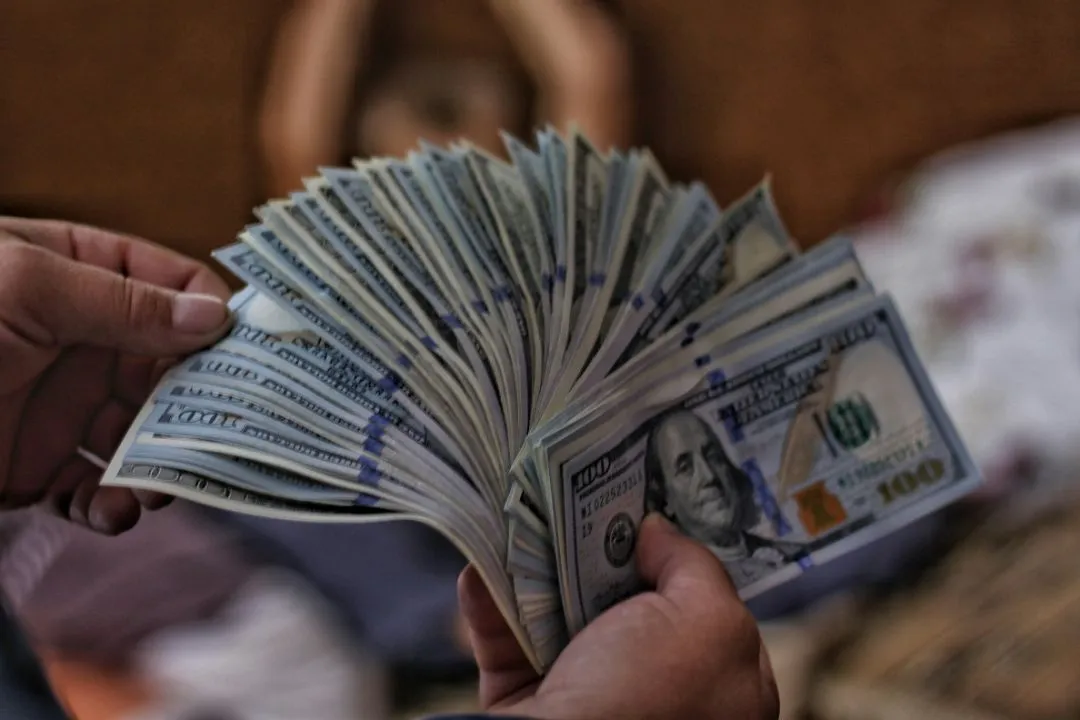
Photo by Christian Wiediger on Unsplash


Night Crows driving revenue growth

The Q2 revenue, marking a noteworthy year-on-year growth of 46%, can be attributed to the success of Wemade’s latest mobile game, Night Crows, according to local news outlet Newsis. This massively multiplayer online role-playing game (MMORPG) gained substantial traction since its launch in April. Drawing from this success, the game publisher has strategic plans to take Night Crows a step further by developing a blockchain version, with intentions to present it to global gamers within the current year.


More games under development

Expanding beyond Night Crows, Wemade is actively working on the development of other captivating gaming titles. These include Legend of Ymir, a game inspired by Norse mythology, and This Means War, a massively multiplayer online first-person shooting (MMOFPS) game.

With a keen focus on blockchain ventures, Wemade is making significant strides in this domain. In May, the company forged a meaningful partnership by signing a memorandum of understanding (MOU) with Hub71, a prominent global tech hub based in the United Arab Emirates (UAE). Hub71 is undertaking initiatives aimed at nurturing Web3 startups and fostering the growth of blockchain technologies. Moreover, Henry Chang, Wemade’s CEO, attended WebX, the annual Japanese Web3 conference held in Tokyo last month, to call for game developers in Japan to participate in the burgeoning blockchain industry.

Chang stated that capitalizing on its technological prowess, Wemade is actively identifying various business opportunities amid the rapid expansion of the global blockchain sector. He emphasized that the company is carefully preparing to make a seamless introduction of the blockchain version of Night Crows this year. According to Chang, Wemade is committed to investing in the creation of new games while strengthening the WEMIX ecosystem. A key element of this ecosystem is the WEMIX token, which supports three pivotal services: blockchain gaming platform WEMIX PLAY, DAO-driven NFT platform NILE, and decentralized finance service WEMIX.Fi.


More to Read
View All
Web3 & Enterprise·

Oct 05, 2023

MARBLEX Token to Be Listed on Japanese Crypto Exchange Zaif Next Week

MARBLEX Token to Be Listed on Japanese Crypto Exchange Zaif Next WeekMARBLEX, the blockchain subsidiary of South Korean game developer Netmarble, has announced the upcoming listing of its governance token, MBX, on the Japanese cryptocurrency exchange Zaif next Wednesday (local time).Photo by Chris Barbalis on UnsplashPenetrating the Japanese marketThe token had previously gained whitelist approval in the Japanese crypto market in July following a thorough assessment by the Japanese Financial Services Agency (FSA), making it the first token from a Korean blockchain gaming project to be whitelisted in Japan. MARBLEX highlighted that it would focus on subsequently expanding the token’s utility in order to establish a sustainable and secure gaming and tokenomics ecosystem.Opening detailsTo celebrate the listing, MARBLEX plans to hold an opening event from tomorrow to next Tuesday, during which it will offer the first 550 Zaif account holders who buy MBX tokens and file applications an additional batch of MBX tokens that amount to 10% of the total number of tokens that they buy. This applies to users who complete their Zaif account registration by tomorrow, and the winners will be announced separately next Tuesday, the company said.The purchase price for MBX coins will be calculated based on the average closing price of MBX on CoinMarketCap from this coming Saturday to Monday. The minimum order quantity per person is 10,000 yen, and the maximum is 500,000 yen.

news
Policy & Regulation·

Sep 30, 2024

Dubai regulator tightens crypto marketing rules

Dubai's regulator, the Virtual Asset Regulatory Authority (VARA), has been ahead of the curve by comparison with its peers internationally in getting a crypto regulatory framework in place, and now it's moving to tweak those regulations further. In a press release published via ZAWYA on Sept. 26, VARA announced an update to its crypto regulations which specifically deals with marketing. Its addition of “Marketing Regulations for Virtual Assets and Related Activities 2024” applies to virtual asset service providers (VASPs) operating within the Emirate of Dubai. In tandem with the updated regulations, VARA has published a marketing guidance document to assist VASPs in abiding by the regulations, providing detailed instructions and outlining best practices in terms of the application of appropriate marketing activities. Photo by ZQ Lee on UnsplashMandatory disclaimerOne of the new requirements demanded by the regulator is that marketing content related to digital assets should incorporate a disclaimer outlining to investors that there are financial risks associated with digital assets. To that end, from October 1 onwards, VASPs are required to add the following disclaimer, prominently displayed, within product marketing material: “Virtual assets may lose their value in full or in part and are subject to extreme volatility.” In its guidance documentation, VARA has stipulated that any content which contains contradictory messaging or information provided to users in “small print” is not deemed to be acceptable. The rules apply to both licensed entities and any unlicensed entities that attempt to offer a service within the Emirate of Dubai.  Consumer protectionThe motivation behind the regulatory update is the protection of consumers through the prevention of the dissemination of misleading information. The regulator wants consumers to be well-informed about crypto products, such that they’re aware of both the risks and opportunities associated with digital assets. VARA has set out a schedule of fines, broken down by category, with fines of up to 10 million United Arab Emirates (UAE) dirhams (AED), around $2.7 million, applying for those who do not comply. Commenting on the updated regulations, VARA CEO Matthew White stated: “Our updated marketing regulations and the newly issued guidance document reflect our commitment to maintaining Dubai’s position as a global leader in digital finance. We believe that by providing clear and actionable guidance, we can help VASPs deliver their services responsibly, while fostering greater trust and transparency in the market." The Dubai regulator isn’t the only one to home in on the marketing approach taken by crypto service providers. Since October 2023, the UK Financial Conduct Authority (FCA) has implemented new rules which specifically deal with the marketing of crypto products and services. Many crypto platforms found the new requirements too arduous to follow. Some withdrew from the market while others did so on a temporary basis while working towards becoming compliant. Within the European Union, the Markets in Crypto Assets (MiCA) regulation came into force in June 2023. Those regulations demand that crypto service providers provide information and conduct marketing activities in a clear, fair and non-misleading manner.

news
Policy & Regulation·

Aug 29, 2023

Indian PM Narendra Modi Calls for Global Crypto Regulatory Framework

Indian PM Narendra Modi Calls for Global Crypto Regulatory FrameworkAmid the rising tide of emerging technologies like cryptocurrency and artificial intelligence, Indian Prime Minister Narendra Modi has emphasized the urgent need for a worldwide regulatory framework to ensure user safety and ethical utilization.His remarks were delivered at the G20 Summit India 2023, where he stressed the importance of cohesive global efforts in shaping the future of technological advancements.Photo by Shubham Dhage on UnsplashG20 PresidencyIndia, currently holding the G20 Presidency for 2023, has taken a strong stance in advocating for the establishment of a comprehensive global regulatory framework for cryptocurrencies. Earlier this month, the country released a presidency note outlining its insights into the proposed framework.These recommendations are closely aligned with the guidelines set forth by authoritative bodies such as the Financial Stability Board (FSB), the Financial Action Task Force (FATF), and the International Monetary Fund (IMF).Notably, India’s presidency note extended its considerations beyond established economies to include provisions for developing nations relative to crypto. At the time, it was revealed that a collaborative “synthesis paper” was in the works, jointly crafted by the IMF and the FSB. This paper, set to be unveiled by the end of August, will delve into the global macro implications stemming from the adoption and growth of cryptocurrency. The timing of this release is particularly significant, coinciding with the upcoming G20 Summit scheduled for September 9.Establishing a global frameworkAddressing the G20 Summit, Prime Minister Modi articulated his vision for a world unified under a comprehensive regulatory framework not only for cryptocurrencies but also for the ethical utilization of emerging technologies like artificial intelligence. In an interview with media platform Business Today, he emphasized the reality of rapid technological progress sweeping across the globe. Instead of dismissing or wishing away these advancements, Modi underscored the need for proactive adoption, democratization, and a unified global approach.Modi’s perspective underscores his support for a harmonized global strategy when it comes to formulating regulatory frameworks for emerging technologies. Drawing a parallel with the aviation industry, he highlighted how air traffic control and air security are governed by common global rules and regulations, illustrating the effectiveness of a consensus-based model.Expanding on the implications of India’s G20 presidency, Modi shed light on the deliberations centered around cryptocurrency’s potential impact within broader macroeconomic contexts, particularly within emerging and developing economies.Regulatory needs at a national levelWithin India, various stakeholders have been struggling with the regulation of cryptocurrencies themselves. In July, the Indian Supreme Court criticized the government for its failure to establish clear crypto-related regulations. The country’s central bank, the Royal Bank of India (RBI), has been less enthusiastic about decentralized cryptocurrency, warning of the risks extended by stablecoins more recently. Instead, it has proven to be far more interested in advancing the use of permissioned blockchain networks and a central bank digital currency (CBDC).The proposition of a globally accepted set of guidelines for cryptocurrency regulation has garnered substantial support from authorities worldwide as they begin to understand the difficulty that decentralized technology presents in terms of controlling it. If Modi’s vision translates into reality, it could mark a significant step toward standardizing the governance of cryptocurrencies on an international scale.

news
Loading