Top

Energy Theft Results in Crypto Mining Operation Shutdown in Borneo

Policy & Regulation·August 01, 2023, 12:47 AM

Authorities in Miri, a city on the island of Borneo in Malaysia, swiftly responded to a tip-off from the public, leading to the successful shutdown of an illegal cryptocurrency mining operation.

According to local news source, The Borneo Post, during a well-executed raid, 34 mining servers were confiscated, all of which were illicitly drawing power through cable tapping.
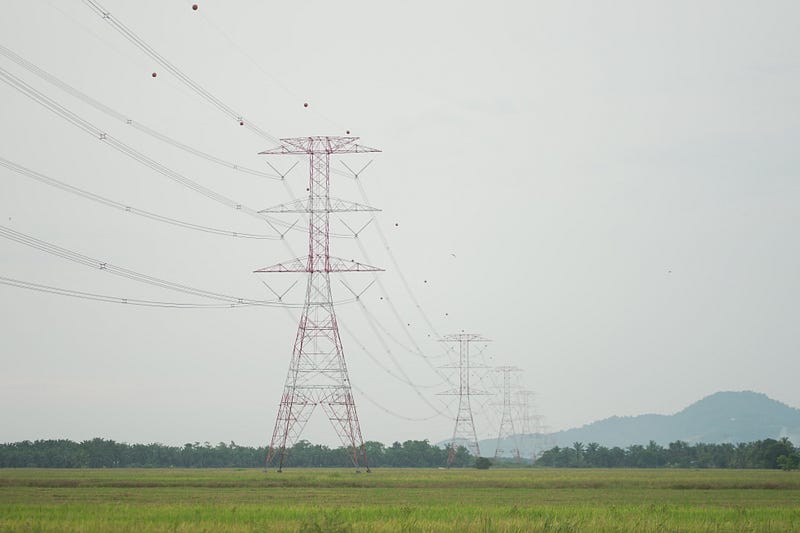
Photo by Muhammad Faiz Zulkeflee on Unsplash


Energy thieves turn to mining

While Borneo offers some of the lowest energy prices in Malaysia, it continues to struggle with the problem of energy theft. That issue has been highlighted via a recent utility announcement. Sarawak Energy, the local energy provider, estimated that the criminal operation caused losses of approximately 6,000 Malaysian ringgits ($1,300) worth of stolen electricity each month.

The rise of the Bitcoin mining industry in 2023 has brought about record-high network hash rates and network difficulty. While the growth of miners generally signifies the robustness of the Bitcoin network, smaller operators without the economies of scale enjoyed by larger corporations face challenges.

One such challenge is energy generation to power their mining servers. In pursuit of higher profit potential with lower electricity rates, illegal mining operators are drawn to stealing electricity from the grid. By eliminating energy expenses, these illicit miners can accumulate profits and offset equipment costs.


Fourth recent instance

The recent incident marks the fourth major operation in Senadin, where Miri is located, where authorities have cracked down on power theft cases related to cryptocurrency mining in 2023. So far, over 137 Bitcoin mining servers have been seized during these operations.

On the other side of the spectrum, legitimate crypto mining companies are actively securing funding to support their mining projects. Riot Platforms, for instance, invested a substantial $162.9 million to acquire 33,280 state-of-the-art equipment from MicroBT, a leading producer of mining machinery.

In another example, Coinbase extended a $50 million credit line to Canadian cryptocurrency firm Hut 8 Mining, facilitating its operations. Furthermore, Volcano Energy, a public-private partnership in El Salvador, secured an initial funding of $250 million for its ambitious Bitcoin mining venture.


Appropriate mining activity

The spate of recent instances of illegal mining in Borneo acts as a reminder of the importance of regulatory compliance and adherence to the law within the cryptocurrency industry. While the allure of lucrative profits may tempt some to engage in illegal activities, the consequences can be severe. Mining can be a positive societal force when applied within appropriate circumstances.

A move by the President of Kyrgyzstan last week to harness crypto mining in order to utilize energy that is otherwise being wasted at the central Asian country’s Kambar-Ata-2 hydropower plant serves as a recent example of a positive use case for the activity.

In Texas in the United States, crypto miners are collaborating with those that manage the local energy grid, turning off miners at times when the state is on the brink of suffering blackouts.

As the crypto mining landscape continues to evolve, it is essential for both authorities and legitimate operators to work together in finding sustainable solutions that ensure the industry’s growth while maintaining the integrity of the energy infrastructure.


More to Read
View All
Policy & Regulation·

Jun 20, 2023

Non-Fiat Crypto Exchanges in Korea Urge Banks for Real-Name Accounts

Non-Fiat Crypto Exchanges in Korea Urge Banks for Real-Name AccountsThe Virtual Asset Exchange Association (VXA) made an announcement today regarding its recent due diligence request sent to 12 South Korean banks, as reported by local news outlet Digital Today. These banks have not yet entered into contracts to provide real-name deposit and withdrawal accounts to cryptocurrency exchanges.VXA is a group comprised of representatives from ten non-fiat crypto trading platforms in the country. Among its members, eight exchanges–Aprobit, Probit, BTX, Foblgate, GDAC, Flata Exchange, Flybit, and High Block (previously known as Huobi Korea)–participated in the request.Photo by Eduardo Soares on UnsplashPartnerships with banksThe objective of the request is to urge the banks to consider establishing partnerships with competent non-fiat exchanges. The requesters argued that such collaborations would promote fair trading in the market and provide customers with more options. They highlighted the growing presence of the virtual asset trading sector in the capital market.Uneven crypto marketAn official from VXA emphasized the key role played by real-name bank account issuers in creating a healthy environment that addresses the existing monopoly in the Korean crypto market. According to a March report published by the Financial Services Commission, non-fiat crypto trading platforms accounted for only 3 percent of the total Korean crypto market capitalization during the second half of 2022. The remaining 97 percent was attributed to fiat-supporting crypto exchanges.The official further explained that allowing more exchanges to support the trading of the Korean won currency would contribute to shaping a free market while bolstering transparency and investor protection.Legal requirementsEarlier this month, VXA also sought fair due diligence from five Korean banks that have already formed partnerships with fiat-supporting crypto exchanges. In Korea, crypto trading platforms are required by law to obtain real-name accounts from banks in order to provide cash deposit and withdrawal services.

news
Web3 & Enterprise·

Nov 17, 2023

FD International joins hands with Lbank to expand global blockchain ecosystem

FD International joins hands with Lbank to expand global blockchain ecosystemFD International, the parent company of blockchain consulting and IT company Blockchain Innovation, announced on Friday (local time) that it has signed a memorandum of understanding (MOU) to collaborate with the global cryptocurrency exchange LBank.Photo by Shubham Dhage on Unsplash“Blockchain-related industries are growing exponentially worldwide, and we hope to create an ecosystem that can have a positive impact on many people through our well-prepped collaboration with LBank,” said FD Group CEOs Jeon Da-seul, Lee Seo-yeon, and Jeon Sol.Lbank’s global presenceEstablished in 2015 in Indonesia, LBank currently boasts a user base of over 10 million people and a daily trading volume of up to $1.5 billion. It currently supports over 50 fiat currencies, several major cryptocurrencies like Bitcoin and Ethereum and a wide variety of payment methods including Apple Pay. It also operates branches in other countries like the U.S. and Canada.Navigating regulatory landscapesFD International has been working on creating Travel Rule solutions for Korean exchanges such as Bithumb, Coinone and Korbit in accordance with relevant regulatory guidelines like the Act on Reporting And Using Specified Financial Transaction Information. The Travel Rule refers to the Financial Action Task Force’s (FATF) Recommendation #16, which outlines that VASPs must share certain personal information about customers — including names and account numbers — when facilitating crypto transactions that exceed a certain amount.The firm has also been leveraging its expertise in the blockchain and IT fields to help accelerate major companies such as Klaytn and Everscale. Notably, the company adapts its solutions and technological capabilities to regulatory trends, such as the Financial Services Commission’s (FSS) regulations on security token offerings (STOs) and the European Union’s Markets in Crypto-Assets Regulation (MiCA) legislation.

news
Markets·

Dec 01, 2023

Coinone’s recent addition of USDT/KRW trading pair expected to reduce Kimchi premium

Coinone’s recent addition of USDT/KRW trading pair expected to reduce Kimchi premiumCoinone, a major South Korean cryptocurrency exchange, listed USDT, a stablecoin pegged to the US dollar on the platform’s Korean won-denominated market on Thursday (local time). Its listing price was KRW 1,289.Tether Limited, the company behind USDT, asserts that their stablecoin is “backed 100% by Tether’s reserves.” These reserves comprise a variety of real-world assets such as U.S. Treasuries, overnight reverse repurchase agreements, corporate bonds and precious metals. According to CoinMarketCap, USDT’s market capitalization stands at $89 billion, ranking it third in the cryptocurrency market, just behind Bitcoin and Ethereum.Photo by DrawKit Illustrations on UnsplashFirst to list USDT/KRW trading pairDespite the significance of USDT in the cryptocurrency market, Korean exchange users have faced the limitation of not being able to purchase the stablecoin using Korean won, although these exchanges did offer markets denominated in USDT. This limitation has prompted Koreans to turn to foreign cryptocurrency services for acquiring USDT. With Coinone’s latest move, the platform has become the first to facilitate USDT/KRW trading among the nation’s five fiat-to-crypto Korean exchanges — Upbit, Bithumb, Coinone, Korbit and Gopax.Regarding this development, Kwon O-hoon, Managing Partner at the law firm Cha and Kwon, told local news outlet Decenter that there seem to be no particular legal concerns with the crypto exchange’s engagement in USDT transactions. This perspective stems from the absence of stablecoin regulations in the country.Reducing the Kimchi premiumAccording to Decenter, crypto experts anticipate that the introduction of USDT/KRW trading will help in reducing the Kimchi premium, a term referring to the discrepancy in cryptocurrency prices on South Korean exchanges compared to those in foreign exchanges.For instance, according to data from CoinNess, the average price of BTC on Korean exchanges is around KRW 51,177,250. This is about 2.34% higher than its average price on foreign exchanges, which stands at KRW 50,005,909. This difference means that users on Korean exchanges need to pay an additional KRW 1,171,340 to buy one BTC, compared to what they would pay on international platforms.However, the newly added trading pair will streamline transactions between exchanges, making it simpler for investors to engage in arbitrage. This ease of transfer is expected to lead to more balanced pricing across different markets, reducing the Kimchi premium.In light of this development, Jo Dong-hyeon, CEO of blockchain company Undefined Labs, said various institutions and blockchain projects will likely find USDT increasingly useful as a store of value, given USDT facilitates easy transfers between different exchanges.

news
Loading