Top

BlackRock Investment Marks its Return to India

Web3 & Enterprise·July 28, 2023, 12:05 AM

BlackRock, the world’s largest money manager with $9.4 trillion in assets under management, has made a significant move by joining forces with the financial services arm of Indian tycoon Mukesh Ambani.

This strategic partnership aims to tap into India’s rapidly growing asset management market and marks BlackRock’s return to the country following a six-year absence.

The collaboration between BlackRock and Jio Financial Services, a company built by Reliance Industries Limited, will establish a 50–50 joint venture called Jio BlackRock. BlackRock announced the collaboration via a statement published to its website on Wednesday.

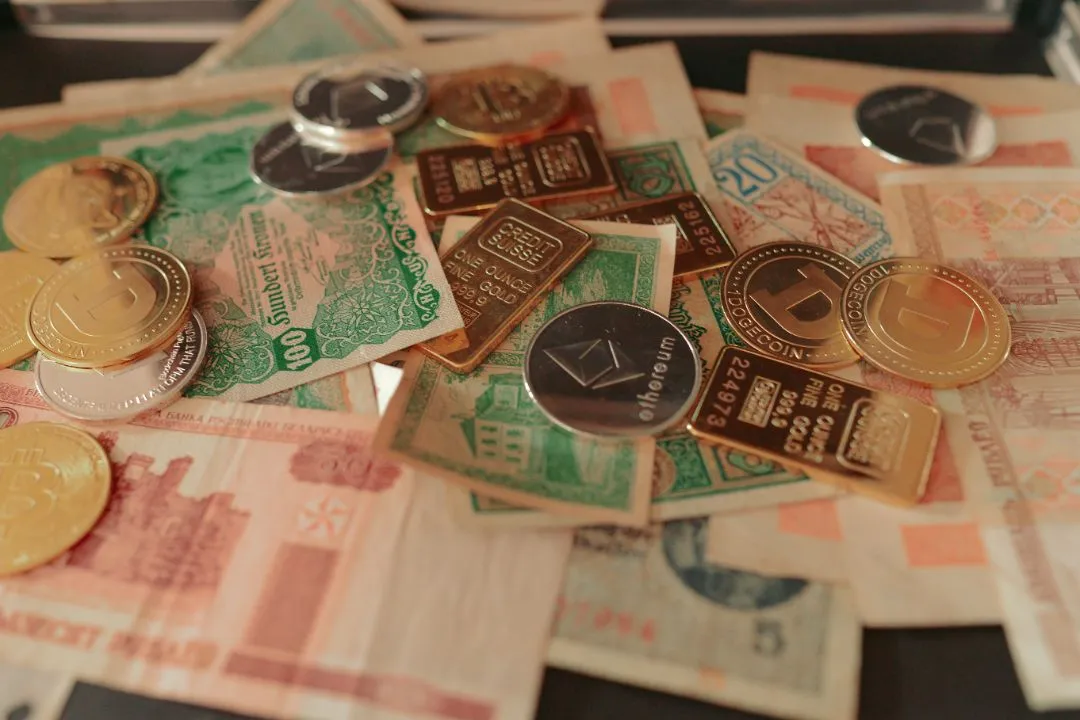
Photo by Naveed Ahmed on Unsplash


$300 million investment

Both companies plan to invest up to $150 million each in this venture. Larry Fink, BlackRock’s Chairman and CEO, articulated his satisfaction regarding the partnership in a LinkedIn post, emphasizing the significance of expanding BlackRock’s presence in India.

Mukesh Ambani, the Founder and Chairman of Reliance Industries, is India’s richest man with a net worth believed to be in the region of $90.6 billion. The conglomerate is the country’s largest listed company by market share. Collaborating with BlackRock will likely strengthen its position in the financial services sector.

The joint venture aims to leverage BlackRock’s expertise in investment and risk management, combined with Jio Financial Services’ technological capabilities and deep market knowledge. The objective will be to provide “tech-enabled access to affordable, innovative investment solutions” for Indian investors. With rising affluence, favorable demographics, and the ongoing digital transformation across industries in India, the market is undergoing a significant shift.


Potential implications for crypto

This move comes shortly after Jio Financial Services was spun off from its parent company, Reliance Industries. The digital-first service is focused on delivering innovative investment solutions to cater to the growing needs of Indian investors.

While there’s absolutely no mention of crypto relative to this announcement, it may still have implications for crypto in India. BlackRock has progressed from taking a dim view of Bitcoin and crypto to now turning towards this new asset class. It recently filed an application to launch a bitcoin exchange-traded fund (ETF) in the United States. That move is considered highly significant by most market commentators.

Given that Jio Financial takes a digital-first approach and that the idea of the partnership is to bring the latest financial products to retail customers in India, there’s potential for this new entity to bring digital asset-related products to that market.


Indian market re-entry

BlackRock’s re-entry into India’s asset management industry is not the first attempt by the US investment management firm. In 2018, BlackRock exited the Indian market by selling its 40% stake in an asset management venture to partner DSP Group, but the company recognizes the enormous potential that India presents.

Over the past five years, assets under management of Indian mutual funds have doubled, reaching 44.39 trillion rupees ($542 billion) by June this year. The exponential growth in this sector highlights the immense opportunities India offers to global asset managers like BlackRock.

While the launch of the joint venture is subject to closing conditions and regulatory approvals, the collaboration between BlackRock and Jio Financial Services appears to be poised to unlock the power of investing for millions of people in India.

More to Read
View All
Policy & Regulation·

Dec 01, 2025

Asia diverges on crypto policy as China clamps down, neighbors embrace

A regulatory divide regarding the digital asset sector is emerging across Asia. While China is moving to strengthen its prohibition on cryptocurrency operations to ensure financial stability, Central Asian states such as Kazakhstan and Turkmenistan are increasingly formalizing frameworks to integrate and regulate the industry.Photo by Road Ahead on UnsplashChina cites renewed crypto speculationAccording to Reuters, the People’s Bank of China (PBOC) has reaffirmed its prohibition on business activities involving digital assets, citing a renewed wave of speculation as a complication in managing financial risks. At a Nov. 28 meeting on crypto regulation, the central bank reiterated that commercial activity involving cryptocurrencies remains illegal. PBOC officials stated that enforcement against unlawful financial operations tied to cryptocurrencies would be intensified to safeguard economic stability. The central bank identified stablecoins as a primary concern, noting that they fail to meet customer identification standards and broader anti-money laundering (AML) requirements. Officials warned that these assets could create vulnerabilities to fraud, money laundering, and unregulated cross-border capital flows. Kazakhstan mulls $300M crypto moveIn contrast to Beijing’s elevated oversight, Kazakhstan is exploring the integration of digital assets into its financial reserves. According to BeInCrypto, National Bank Chairman Timur Suleimenov indicated on Nov. 28 that the monetary authority is considering an allocation of up to $300 million into crypto assets. However, he clarified that deploying the full amount is unlikely. Suleimenov explained that any potential investment would be drawn from the central bank’s gold and foreign-exchange reserves rather than the National Fund. He added that the National Bank of Kazakhstan intends to wait for market conditions to stabilize, citing recent volatility as a factor making the timing of such an investment uncertain. The latest development comes after Bloomberg Law reported last month that the country is preparing to launch a crypto reserve fund valued between $500 million and $1 billion as early as next year. This proposed fund is expected to target exchange-traded products and industry-related companies rather than direct crypto purchases, with capital potentially sourced from repatriated assets and mining proceeds. Simultaneously, the government is advancing physical infrastructure for the sector. In May, President Kassym-Jomart Tokayev unveiled plans for a "CryptoCity" pilot zone in the Alatau development north of Almaty. Under this government-approved sandbox program, authorities are testing blockchain-based tools for taxation, investment, and decentralized identity systems, with the aim of positioning Kazakhstan as a regional hub for innovation. Turkmenistan to launch licensing rulesFurther deepening the regional trend toward adoption, Turkmenistan has moved to establish a formal legal infrastructure for the sector.  Another Reuters report said the country recently passed legislation to legalize and regulate digital assets, which President Serdar Berdymukhamedov has signed into law. Scheduled to take effect on Jan. 1, the legislation creates a licensing regime for crypto exchanges and mining operations. A government spokesperson said the law spells out the legal and economic status of virtual assets, covering their creation, storage, circulation, and other functions, and aims to boost digitalization and draw foreign investment. Despite their differing approaches, the three countries reflect a shared recognition of digital assets’ growing relevance in global finance. China continues to view cryptocurrencies as a source of systemic risk, while Kazakhstan and Turkmenistan are testing whether regulation, licensing, and selective investment can deliver economic gains without compromising stability. Together, these diverging paths underscore a broader debate over whether engagement or exclusion offers a more resilient long-term model. 

news
Policy & Regulation·

Feb 27, 2024

Thai SEC seeks to revoke license of troubled Zipmex exchange

Zipmex, the Asian digital asset exchange, faces another setback as the Securities and Exchange Commission Board of Thailand (SEC Board) moves to recommend the revocation of its digital asset business license. This decision, announced last week, marks the latest in a series of challenges for the exchange, which has struggled to navigate the complexities of the crypto market's downturn.Photo by Oleksandr P on PexelsCapital requirements failureThe SEC's recommendation stems from Zipmex's failure to meet the increased net capital requirement and address deficiencies in its personnel and management structure. These shortcomings were deemed unacceptable by the regulatory body, prompting a 15-day ultimatum issued on Feb. 1. Earlier this month, the Commission ordered a halt to Zipmex operations, enforcing a temporary suspension until such time as the company had improved its financial position and applied needed changes to its management structure.Despite this window for compliance, Zipmex fell short of meeting the specified conditions, leading to the current proposal for license revocation and the imposition of stringent regulatory measures on Thailand's digital asset exchanges. Business suspension extensionDuring a meeting on Feb. 21, the SEC further resolved to extend Zipmex's business suspension, initiated on Feb. 1, and allowed clients to request asset returns on the exchange until March 11. Any unclaimed assets after this date will be required to be placed in a "trusted and secured system," with Zipmex obligated to report this to the SEC. Notably, even after the potential revocation of its license, Zipmex will retain its status as a limited company, subject to associated rights, responsibilities and liabilities, including the possibility of legal action. Zipmex's woes trace back to 2022 when it faced significant challenges due to exposure to failed crypto lender Babel Finance. In July of that year, the exchange suspended withdrawals for weeks due to concerns over its ties to crypto lenders Babel and Celsius, both facing financial distress. Although access to Trade Wallets was restored after three days, Z Wallets remained inaccessible into the following year. Failed Coinbase and V Ventures dealsIn the midst of its troubles, Zipmex attracted interest from Coinbase, albeit without success. While Coinbase made a strategic investment in Zipmex, the acquisition attempt did not materialize as initially intended. Furthermore, Zipmex's financial struggles led it to file for debt relief in Singapore in July 2022, further complicating its position in the market. The exchange's regulatory challenges continued as it faced scrutiny from the SEC regarding compliance with the Digital Assets Act. Despite attempts to secure acquisition deals, such as the proposed acquisition by Thai investor V Ventures, Zipmex has been unable to alleviate regulatory concerns or stabilize its operations effectively. Since obtaining its license from the SEC in January 2020, Zipmex has operated in Thailand, Indonesia, Singapore and Australia. However, its inability to address regulatory requirements and financial challenges has cast doubt on its future viability in these markets.  In November of last year, the company itself announced a temporary cessation of trading in Thailand while it worked towards becoming compliant within that jurisdiction. Earlier this month, Thailand’s SEC took legal action against Akarlap Yimwilai, the former CEO of Zipmex Thailand.

news
Policy & Regulation·

Sep 12, 2025

China funds research on stablecoin risks to financial system

China’s leading science foundation has initiated a research program to examine the effects of stablecoins, reflecting concerns that such digital currencies could pose a risk to the nation’s financial system and its fiat currency. According to the South China Morning Post, the National Natural Science Foundation of China (NSFC) is now offering grants for studies focused on stablecoins and the creation of cross-border monitoring frameworks. The foundation expressed that the unmonitored circulation of private stablecoins, particularly those pegged to the U.S. dollar, could weaken capital controls and present a potential challenge to the yuan. This initiative emerges as governments around the world, from the U.S. to regional financial centers, are actively developing rules for the digital asset sector.Photo by  Christian Lue on UnsplashStrategic research and internal debateThe NSFC will fund the projects with grants valued between 200,000 and 300,000 yuan ($28,042 to $42,063). Researchers are expected to complete their work within a year and deliver policy recommendations on how China can manage the challenges posed by global stablecoins and contribute to digital finance governance. The deadline for applications is Oct. 9. This research program is set against a backdrop of internal discussion in China regarding the possible launch of a yuan-backed stablecoin. While some economists support the idea of boosting the yuan's international profile, Bloomberg noted that former central bank governor Zhou Xiaochuan has advised caution. He recently said the high efficiency of China's current payment systems and warned that financial stability could be threatened by speculation in the stablecoin market. Analysts believe any state-sanctioned yuan stablecoin would likely be confined to offshore markets and tied to the offshore CNH. Global regulatory landscapeChina’s examination of stablecoins is part of a broader global trend of increased regulatory focus on the asset class. In Hong Kong, a new ordinance took effect on Aug. 1, creating a mandatory licensing system for stablecoin issuers under the oversight of the Hong Kong Monetary Authority. Other Asian nations are also taking action. South Korea’s government is reportedly exploring a model for a won-pegged stablecoin involving a consortium of banks and non-bank entities. Separately, Cointelegraph reported that Kyrgyzstan has introduced legislation outlining a regulatory framework for such assets. Developments are also accelerating in the U.S., where the Guiding and Establishing National Innovation for U.S. Stablecoins (GENIUS) Act was signed into law, creating a federal structure for stablecoin oversight. On a commercial level, a Minnesota-based credit union, St. Cloud Financial, intends to introduce its own stablecoin later this year, a move highlighted by Cointelegraph. This token, named Cloud Dollar (CLDUSD), is designed to integrate with the credit union's banking system to facilitate faster and cheaper transactions for its members within a regulated environment.

news
Loading