Top

Korea’s Virtual Asset User Protection Act to Take Effect in July Next Year

Policy & Regulation·July 06, 2023, 3:24 AM

The Virtual Asset User Protection Bill was passed during the South Korean National Assembly’s plenary session last Friday, according to a report by news agency Newsis. The legislation aims to safeguard customer assets, establish regulations against unfair trading practices, and enforce penalties. The act is scheduled to take effect one year after its passage.
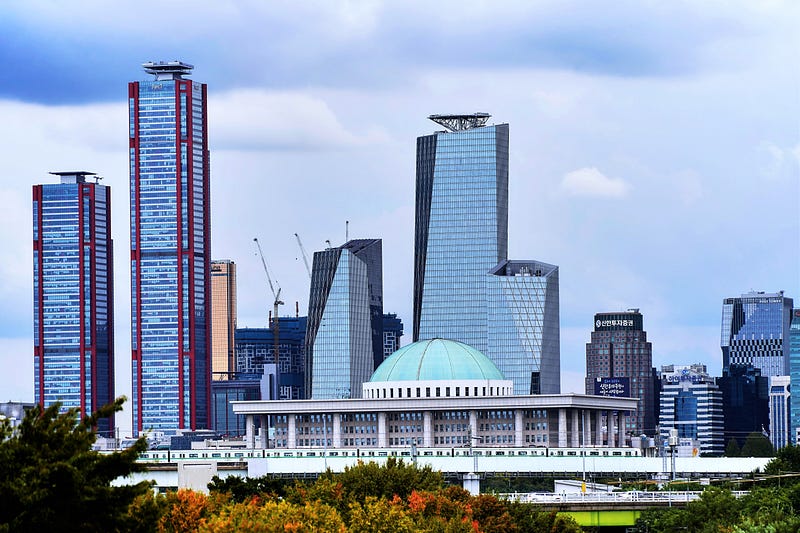
Photo by KS KYUNG on Unsplash


Definition of virtual assets

Under the act, a virtual asset is defined as a digital representation of economic value that can be digitally traded or transferred. It’s important to note that central bank digital currencies (CBDCs) are not considered virtual assets. Virtual assets with characteristics of securities will initially fall under the jurisdiction of the Capital Market Act.


Roles of Korea’s central bank

The act grants the Bank of Korea (BOK) the authority to request data and information from virtual asset service providers (VASPs). This provision is deemed necessary for the Korean central bank to formulate monetary and financial policies, despite virtual assets not being equivalent to traditional currencies.


Responsibilities of VASPs

Moreover, VASPs are obligated to segregate users’ virtual assets from their own holdings. VASPs are also required to reserve the same type and quantity of virtual assets entrusted by users and maintain a certain proportion of these assets in a cold wallet, which is an offline storage solution.

Unfair trading practices will be regulated in a similar manner as outlined in the Capital Market Act. The act specifically prohibits the use of undisclosed information, price manipulation, fraudulent transactions, and trading of self-issued virtual assets. VASPs are barred from suspending deposits and withdrawals without legitimate reasons. They are also mandated to monitor suspicious transactions and take appropriate measures to safeguard users. Any suspected unfair trading practices must be promptly reported to financial authorities. Violators of these rules may face criminal penalties, liability for damages, and potential class action lawsuits.


Powers of financial authorities

The act also clarifies the powers of financial authorities in supervising, inspecting, and taking action against virtual asset operators. Unfair trade practices can result in imprisonment for more than one year (up to 10 years for violations related to self-issued virtual assets) or fines ranging from three to five times the illicit gains. Assets acquired through unfair trade practices will be confiscated, or an equivalent value will be charged if confiscation is not feasible.


Impact on crypto investigations

The absence of legislation directly addressing unfair trading practices in the virtual asset market has posed challenges for prosecutors. They had to rely on existing statutes related to fraud, the capital market, and financial investments. Once the new act takes effect, prosecutors will no longer need to determine whether a virtual asset qualifies as a security or not.

Regarding this development, a prosecutor told local legal news outlet Law Times that the implementation of the new act will escalate prosecutorial investigations into cryptocurrency incidents.

Meanwhile, the individuals behind the crash of Terraform Labs’ stablecoin TerraUSD and its sister coin Luna will not be subject to this act due to the legal principle of nulla poena sine lege, which prevents the retrospective enforcement of criminal laws. Do Kwon, co-founder of Terraform Labs, was recently sentenced to four months in prison by a Montenegrin court for passport forgery after being arrested in March. The other co-founder, Daniel Shin, has been indicted by prosecutors in Korea.


More to Read
View All
Web3 & Enterprise·

Oct 10, 2023

NEOPIN and MEVerse Join Hands to Expand Blockchain Ecosystem

NEOPIN and MEVerse Join Hands to Expand Blockchain EcosystemCentralized decentralized finance (CeDeFi) protocol provider NEOPIN said Tuesday that it has teamed up with MEVerse, the blockchain mainnet operated by gaming company ME2ON Group, to expand the global blockchain ecosystem and optimize the accessibility and functionality of their respective platforms.Photo by Gerd Altmann on PixabayPromoting blockchain worldwideBoth parties have agreed to collaborate on integrating their platforms to build a global user base consisting of those who have completed necessary verification procedures like Know Your Customer (KYC) and Anti-Money Laundering (AML). They will also support each other’s global partner networks, contributing to service enhancement and ecosystem expansion. NEOPIN has also vowed to introduce MEVerse to its global user community.“Initiating the integration of NEOPIN and MEVerse platforms, we are poised to play an active role in fostering the growth and widespread adoption of the blockchain ecosystem. This includes the enduring fusion of blockchain technology with Korean content.” said Ethan Kim, CEO of NEOPIN.Collaborative synergyMEVerse possesses various blockchain infrastructures, including the Web3 P2E casual game portal MEVerse GameZ, non-fungible token (NFT) marketplace MEVerse DEX, blockchain explorer MEVerse Scan, and more. The platform said that it is currently in the process of establishing a borderless Web3 ecosystem by boosting compatibility with its mainnet ecosystem and leveraging cross-chain technology.“MEVerse’s strengths lie in its possession of a wide range of blockchain platforms and content, from its blockchain mainnet to the Web3 gaming ecosystem and Korean content,” Kim commented.Meanwhile, NEOPIN has accumulated knowledge and expertise on blockchain operations during its time as a node validator for various blockchain networks such as Ethereum and Cardano since 2017. Last year, the platform launched its CeDeFi protocol, providing a secure and user-friendly DeFi platform.“We are thrilled to partner with NEOPIN, a pioneer in the DeFi sector. Through tangible integration examples, we look forward to facilitating user engagement and cultivating an expanded Web3 ecosystem,” said Jong-ho Hong, CEO of MEVerse.

news
Policy & Regulation·

Dec 26, 2024

South Korea sanctions North Korean tech workers for cybercrimes and crypto theft

The South Korean Ministry of Foreign Affairs (MOFA) announced on Dec. 26 through an official website press release that it has imposed sanctions on 15 North Korean individuals and one institution for their involvement in illegal cyber activities, including cryptocurrency theft, to fund the country's nuclear and missile programs.Photo by Micha Brändli on UnsplashAccording to the MOFA, the sanctioned individuals have been stationed overseas as part of the 313 General Bureau of the North Korean Munitions Industry Department (MID), which is already subject to UN Security Council sanctions. The bureau is allegedly responsible for deploying North Korean tech personnel abroad and using the foreign currency earned to finance the development of nuclear weapons and missiles. The sanctions, which will come into effect at 15:00 UTC on Dec. 29, will prohibit financial and foreign exchange transactions with the designated entities unless approved in advance by South Korean authorities. Violations of these sanctions may result in legal consequences under South Korean law. North Korea behind 61% of 2024’s stolen cryptoThe MOFA cited a recent report by blockchain analysis firm Chainalysis, which showed that North Korean crypto hackers took roughly $1.34 billion in 47 separate incidents in 2024. These thefts account for 61% of the year's total stolen crypto funds and 20% of all incidents. In 2023, they had stolen approximately $660.5 million over 20 incidents. It's believed these funds help finance North Korea's weapons of mass destruction programs. The ministry further stated that North Korean tech personnel are often dispatched to countries such as China, Russia and nations in Southeast Asia and Africa, where they disguise their identities and secure work from global tech companies. Some of these individuals are also suspected of engaging in information theft and cyber attacks. Emphasizing the threat these activities pose to cybersecurity and international peace, South Korea has vowed to continue its efforts to thwart North Korea's illicit cyber activities in cooperation with the international community.

news
Web3 & Enterprise·

Sep 25, 2023

Korea Investment and Securities Completes the Construction of Security Token Infrastructure

Korea Investment and Securities Completes the Construction of Security Token InfrastructureKorea Investment and Securities (KIS) recently announced that it has become the first securities firm in South Korea to successfully establish an infrastructure for security token offerings.Photo by Joshua Sortino on UnsplashReal-world assetsSecurity tokens are a new class of securities that are based on distributed ledger technology, allowing individuals to invest in real-world assets (RWAs) that can be tokenized. Such assets include real estate, ships, airplanes, and artworks.In March, KIS initiated a security token consortium named “Korea Investment ST Friends,” collaborating with Internet-only banks KakaoBank and Toss Bank, AI company Kakao Enterprise, and blockchain developer Open Asset. Since May, the consortium has been diligently working with the principal objective of constructing an infrastructure leveraging distributed ledgers. Consequently, the group has finalized the development and testing of a system that manages the entire trajectory of security token projects, from issuance to liquidation.Cloud systemSpecifically, KIS has built its infrastructure on a cloud network, bearing in mind that the regulatory framework for security tokens is still in development. This cloud system is capable of adapting to regulatory modifications and implementing improvement updates. Moreover, it utilizes an agile development approach to encourage rapid decision-making and productive collaborations, enhancing time efficiency.Compatibility with the traditional systemThe newly established security token infrastructure is also compatible with the traditional security trading system. Achieving this compatibility posed numerous technical challenges as the new system operates on distributed ledgers, whereas the existing one relies on centralized servers.KIS is preparing to file patents for some of the technologies incorporated into the new system. These technologies encompass the payment of dividends through smart contracts, assurance of immediate settlements using deposits on distributed ledgers, and the management and safeguarding of personal information. By demonstrating the infrastructure’s capability and stability, the securities firm aims to gain a technological edge.Choi Seo-ryong, the head of the platform division at KIS, expects the new infrastructure to mark a significant milestone as distributed ledger technology merges with traditional finance. He further mentioned that the securities company will discover blue-chip assets meeting investor needs while committing to the stable establishment of the regulatory framework and the protection of investors.Moving forward, ST Friends will continue to enhance the stability and functionalities of the infrastructure through a series of field tests related to the entire process of security token products. Aiming to construct a security token ecosystem, the group will also concentrate on developing products by collaborating with various firms, including Korean content investment platform Funderful and real estate trading platform Valuemap.

news
Loading