Top

Oman’s Regulator Invites Feedback on Virtual Asset Framework

Policy & Regulation·August 05, 2023, 1:12 AM

Progressing toward the establishment of its own virtual asset regulations, the Sultanate of Oman is embarking on a significant step by soliciting public feedback on its comprehensive framework.

The framework, which governs digital assets, is being developed by the Capital Market Authority (CMA) of Oman. The move reflects the country’s commitment to creating a robust regulatory environment for the virtual asset sector.

The CMA’s consultation paper, released last week, outlines the agency’s objectives in crafting this regulatory framework. It aims to provide a viable financing and investment avenue for issuers and investors while also addressing the inherent risks associated with the virtual asset class. Central to this initiative is the integration of business requirements and measures to prevent market abuse.
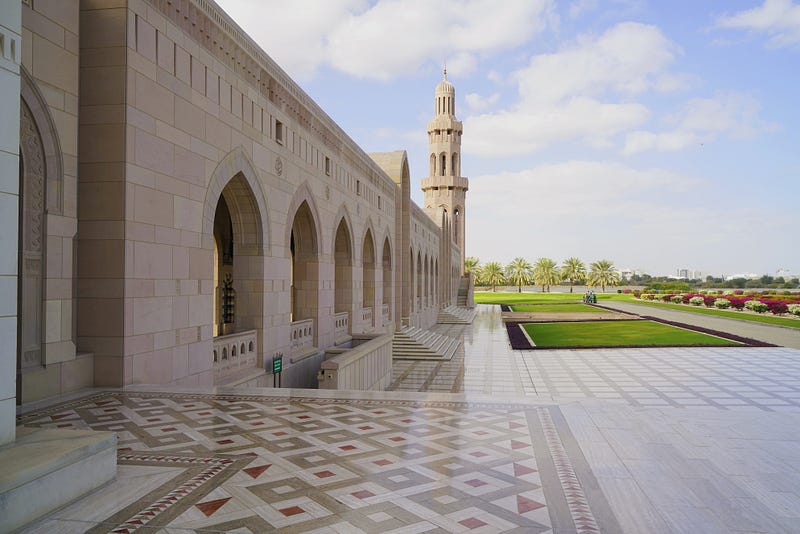
Photo by Niklas Weiss on Unsplash


26 key questions

At the heart of this regulatory endeavor are 26 crucial questions presented to industry stakeholders. Their valuable input will help shape the framework’s core components. These include provisions related to regulatory standards and licensing prerequisites for virtual asset service providers (VASPs), corporate governance, risk management, and the issuance of virtual assets.

The proposed framework, as disclosed in the consultation paper, encompasses a spectrum of digital assets. This spans utility tokens, security tokens, fiat-backed and asset-backed stablecoins, and other currencies adhering to the Financial Action Task Force’s (FATF) definition of virtual assets. However, a noteworthy proposal that has garnered attention is the potential prohibition of privacy coins issuance, a decision pending public feedback.

Aiming to reinforce accountability and stability, the CMA may mandate that VASPs establish a local presence in Oman through legally recognized entities and physical offices. Additionally, minimum capital requirements could be imposed on these entities. The envisaged framework may also stipulate that virtual asset firms maintain a low percentage of assets in hot wallets, conduct audits of safeguarded assets, and provide evidence of reserves.


Shaping regulation through feedback

With the consultation phase set to conclude on August 17, the public’s valuable feedback will shape the direction of Oman’s virtual asset regulations. The most salient viewpoints may find their place on the CMA’s official website. Following this consultation period, the CMA will proceed to finalize the regulatory framework.

Although the public announcement regarding the launch of a regulatory framework was made on February 14, Oman’s journey toward regulating the virtual asset industry began well before. In November 2020, the National Committee for Combating Money Laundering and Terrorist Financing initiated discussions on forming a task force.

Comprising officials from the CMA and the Central Bank of Oman, the task force explored whether to permit or prohibit virtual asset activities. Subsequently, in December 2022, consultants were engaged to facilitate the establishment of this new regulatory landscape.

The United Arab Emirates, and in particular, the individual emirates of Dubai and Abu Dhabi, have led the way in the Middle East in progressing a workable framework for the digital asset industry. Oman’s proactive approach is following the example set by its regional peer.

Shaping its virtual asset framework underlines its desire to foster innovation while ensuring the integrity of its financial landscape. Its latest effort in seeking public feedback is a positive development that should assist it in arriving at a progressive framework.


More to Read
View All
Web3 & Enterprise·

May 03, 2023

Temasek Refutes Claims of Investment in Array

Despite reports emerging on Monday that it had invested in Array, an algorithmic currency system, Singaporean state-owned conglomerate and global investment firm Temasek has denied any such investment.In a very brief statement published to its website on Tuesday, Temasek stated:“We have seen news articles and a tweet from Array about Temasek’s investment in it. This news is incorrect. Temasek has not invested in Array and we have no relationship with them.”CoinTelegraph had taken to reporting the claim on Monday. The article had outlined a $10 million investment by the Singaporean state investor into Array, the developer of an algorithmic currency system that relies upon smart contracts and artificial intelligence. Reputational lossIf it had been true, such an investment would have been seen as a positive for the crypto space as it would be indicative of a renewed appetite for crypto-based projects from the giant Southeast Asian investor.Temasek was a key investor in failed cryptocurrency exchange, FTX. In November 2022, the company had to write down its entire investment of $275 million into the fraudulently managed exchange business. To an onlooker, a $275 million write-down may seem like an extraordinary loss.However, given that the Singaporean investing behemoth has a $403 billion dollar portfolio, the loss represents just 0.09% of that portfolio, hardly making a dent in the health of the company.The greater loss for Temasek relative to the FTX collapse has been reputational. Top tier venture capital investors like Temasek, who had otherwise been assumed to be the most diligent of actors in the professional investing world, were all sharply criticized for failing to identify the extent of the mismanagement and fraud that had occurred at the now bankrupt cryptocurrency exchange. Bogus ClaimsIn fairness to those who had reported the fake news, they were acting on information that Array had put out into the ether and as of yet, has not corrected. At the time of publication, the project’s website features a list of renowned investors including Temasek. Alongside Temasek, Array claims to have obtained investment from Standard Chartered, Coinbase Ventures, Spark Capital, Khosla Ventures, The Blackstone Group, Binance Labs, Sequoia Capital and a16z.In the case of Binance Labs, a spokesperson for the venture arm of the global exchange told The Block that it is not an investor in the project. To further dispel the claim, Temasek took to Twitter, stating:”Fake news about Temasek’s investment in @Array_Protocol. We have seen news articles and a tweet from Array about Temasek’s investment in it. This news is incorrect. Temasek has not invested in Array and we have no relationship with them.” Further instances of misinformationThe misinformation follows a similar scenario that played out with OPNX, a newly launched platform that offers spot and futures trading, alongside the ability for investors to trade bankruptcy claims.A couple of weeks ago, the platform, which had been founded by Kyle Davies and Su Zhu, the key executives behind failed crypto hedge fund, Three Arrows Capital, asserted that it had the backing of some notable investors. Almost immediately, venture capital and market maker DRW and venture capital firm Nascent denied that they were investors in OPNX.

news
Web3 & Enterprise·

Aug 23, 2023

Coinone Boosts Crypto Account Security with Naver Two-Factor Authentication

Coinone Boosts Crypto Account Security with Naver Two-Factor AuthenticationCoinone, one of South Korea’s leading crypto exchanges, announced on Wednesday that it has added Naver as another channel for two-factor authentication (2FA) when signing up for an account. This move aims to enhance security and convenience for users by introducing another option for the second step of authentication in addition to KakaoTalk and one-time password (OTP) authentication.Photo by Franck on UnsplashCombatting social engineering attacks“As the popularity of investing in virtual assets is on the rise, attempts to gain unauthorized access to accounts through smishing and phishing have also increased. We hope that users can use Coinone services in a safer, more convenient manner by using Naver as an easy authentication channel,” said Cha Myunghun, CEO of Coinone.All users are required to go through 2FA when signing up for a Coinone account in order to simultaneously protect their credentials and conduct deposits, withdrawals, and transactions. Users must verify themselves with their phone number first, then once more through an additional channel like KakaoTalk, Naver, or OTP authentication.Using KakaoTalk or Naver is easy and convenient since most Koreans already have both of these apps on their phones, and it takes a relatively short amount of time to complete.Extra benefitsUsers can register for Naver authentication on both the Coinone website and the app. Once they do, they can verify themselves through the Naver app without a separate login. These users can be granted more benefits such as increased withdrawal limits, the exchange said. Those who have verified their bank accounts for storing Korean won can have a withdrawal limit of up to 500 million won (approximately $373,000).

news
Policy & Regulation·

Dec 23, 2023

3AC liquidators estimate 46% recovery while BVI court freezes $1B

3AC liquidators estimate 46% recovery while BVI court freezes $1BThe joint liquidators of the now-defunct Singaporean crypto hedge fund Three Arrows Capital (3AC) have provided creditors with an estimated 45.74% recovery rate for their claims in the bankrupt estate. Meanwhile, in parallel proceedings in the British Virgin Islands (BVI), a court has frozen $1 billion of founders’ assets.According to The Block, the details were disclosed in a December report to creditors by joint liquidators Russell Crumpler and Christopher Farmer of Teneo, the firm appointed to oversee the liquidation of the failed business.$1.16B in assetsAs of Dec. 18, the estimated value of 3AC’s assets was reported to be $1.16 billion, while claims totaling $2.7 billion are expected to be recognized for distribution. The liquidators highlighted that settlements in litigation against various parties, including DCG, Genesis and BlockFi, increased reported assets by an estimated $292 million. It’s important to note that the BlockFi settlement is still pending approval.A total of 154 claims, valued at $3.4 billion, were filed against the 3AC estate. The report indicates that $200 million of claims were not admitted for distribution, and $322 million in claims have either been rejected or are expected to be rejected. Additionally, $76 million in claims are currently under dispute. The report reveals that initial distributions to creditors are being planned for the first quarter of the upcoming year.Illiquid tokensThe breakdown of assets reveals that a large majority are illiquid tokens, subject to vesting periods, comprising 82% of the total. Only 6% of the portfolio is liquid, while equity and investments account for 6.9% and 4.8% is in cash. These illiquid tokens, totaling $563 million at current prices, consist of 13 different tokens with vesting schedules unlocking assets over the next three years, reaching $200 million by the end of 2024.To date, the liquidators have staked some of these tokens, resulting in $5.4 million in staking rewards. Liquidation efforts, including the sale of $34.5 million worth of liquid tokens and $15 million in NFTs, along with other asset sales, have generated a total of $66 million.Photo by Kemp Fuller on UnsplashFrozen assetsIn a related development, Bloomberg reported on Thursday that a British Virgin Islands court has frozen assets totaling $1.1 billion belonging to 3AC co-founders Su Zhu and Kyle Davies, along with Davies’ wife Kelly Chen. The liquidators filed a claim for insolvent trading against the founders for $1.078 billion, with additional claims against Davies for $66 million and Chen for $4.6 million.Teneo outlined the rationale behind the move in the following statement it made to Decrypt:“The worldwide freezing order has been sought in connection with claims that are being pursued by the liquidators that allege, amongst other things, that the Founders should be held responsible for causing 3AC’s position to deteriorate by an amount that is equivalent to the value of the freezing orders sought.”Su Zhu, who was under house arrest for the last few weeks, became free on Dec. 20. Zhu had been arrested in Singapore on Sept. 29 and sentenced to four months imprisonment, serving two-thirds of his sentence under house arrest.Throughout the bankruptcy proceedings, legal fees have accumulated to $49.7 million while the report suggests ongoing efforts to maximize creditor recovery.

news
Loading