Top

Singapore Looks to Prohibit Crypto Lending and Staking

Policy & Regulation·July 04, 2023, 12:30 AM

In a move to bolster investor protection and maintain financial stability, the Monetary Authority of Singapore (MAS) is introducing new guidelines for cryptocurrency platforms operating in the country.

Details of the measures were published by MAS on Monday. According to its statement, the measures “will mitigate the risk of loss or misuse of customers’ assets, and facilitate the recovery of customers’ assets in the event of a DPT [Digital Payment Token] service provider’s insolvency.”

The proposed guidelines outline several key measures. One such measure is the daily reconciliation of customer assets, which will help prevent discrepancies and safeguard against potential losses.
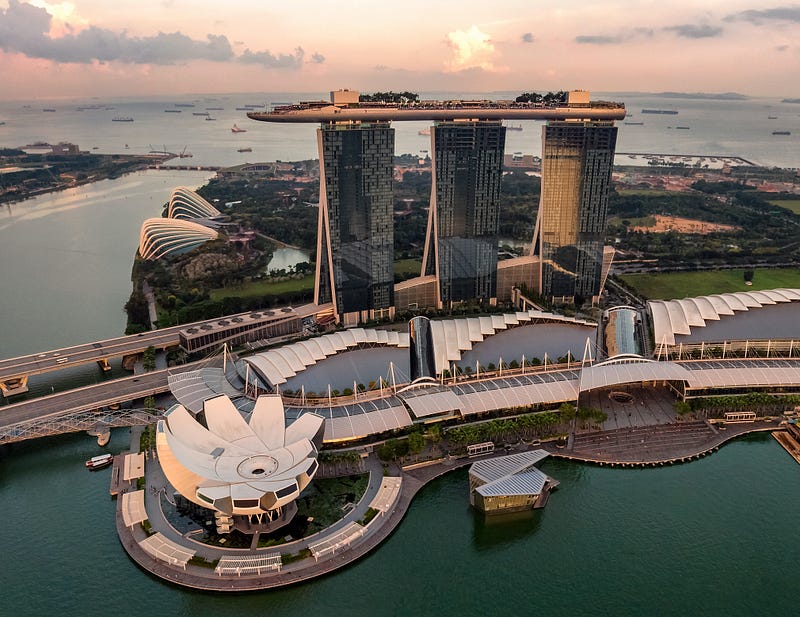
Photo by Hu Chen on Unsplash


Holding assets in trust

Additionally, the custody function, responsible for holding and safeguarding client assets, will be operationally separated from other business divisions to minimize the risk of mismanagement or unauthorized use. By the end of this year, it’s understood that crypto platforms will be required to store client assets in trust accounts, ensuring enhanced security and accountability.


Disclosures

Furthermore, licensed cryptocurrency service providers will be mandated to provide explicit disclosures to customers, clearly outlining the risks associated with holding and trading digital payment tokens (DPTs). Recognizing the speculative nature of digital token trading, the MAS acknowledges that regulations alone cannot fully protect consumers from potential losses.

To further protect retail investors, the MAS intends to prohibit cryptocurrency service providers from facilitating lending or staking activities. Lending and staking, where digital tokens are loaned or pledged to earn profits, are considered unsuitable for the general public due to their complex and high-risk nature.

These measures come as part of Singapore’s efforts to strengthen its regulatory environment for digital assets. The consultation process began last year, following the collapse of FTX, a cryptocurrency exchange.

Singaporeans suffered disproportionately with the collapse of FTX as previously, MAS had banned global crypto exchange Binance from operating within the city-state. That led to Singapore having more FTX customers than many other world regions. To compound matters, state-owned global investment firm Temasek, was an investor in the fraudulent crypto exchange.

MAS had called for feedback and proposals, with a focus on enhancing investor safeguards and promoting responsible trading practices. While the regulations aim to provide a safer environment for investors, the MAS also emphasizes the importance of individuals exercising caution when engaging in digital token trading.


Contrasting approaches

While Singapore is taking steps to tighten regulations, other cities like Hong Kong are adopting a more inclusive approach to the crypto industry. Hong Kong Legislative Council member Johnny Ng has voiced support for the local crypto business and has encouraged prominent exchanges like Coinbase to establish operations in the territory, aiming to foster greater engagement and growth within the sector.

As the crypto industry continues to evolve, regulatory frameworks play a crucial role in ensuring investor protection and maintaining market integrity. Singapore’s proactive approach to strengthening its regulatory environment reflects its commitment to striking a balance between fostering innovation and safeguarding the interests of investors.


More to Read
View All
Web3 & Enterprise·

Jun 26, 2023

HSBC Expands Offering to Include Crypto ETFs in Hong Kong

HSBC Expands Offering to Include Crypto ETFs in Hong KongThe Hong Kong and Shanghai Banking Corporation (HSBC), the largest bank in Hong Kong, has reportedly introduced its first cryptocurrency services for local customers.According to journalist Colin Wu’s tweet on Monday, HSBC now allows its customers to buy and sell Bitcoin-based exchange-traded funds (ETFs).Photo by Cheung Yin on UnsplashOffering three crypto ETFsHSBC’s cryptocurrency services specifically focus on the cryptocurrency ETFs listed on the Stock Exchange of Hong Kong. Currently, the exchange offers three crypto ETFs, including CSOP Bitcoin Futures ETF, CSOP Ethereum Futures ETF, and Samsung Bitcoin Futures Active ETF.The introduction of these services will provide Hong Kong users with more exposure to cryptocurrencies. As of March 2022, HSBC Hong Kong had approximately 1.7 million active mobile customers, with about 95% of all retail transactions processed online. Plenty of the customers that currently access TradFi financial services don’t touch crypto-native products. Bridging this gap and bringing crypto to a more traditional financial services client base is a major step towards mass market adoption of crypto.Educating the marketIn addition to the roll-out of cryptocurrency services, HSBC reportedly launched the Virtual Asset Investor Education Center. The initiative is designed to protect investors from cryptocurrency-related risks by requiring them to read and confirm educational materials and risk disclosures before investing.The Virtual Asset Investor Education Center is accessible through HSBC’s virtual asset-related products, such as the HSBC HK Easy Invest app, HSBC HK Mobile Banking app, and online banking.This is also a significant step forward. It’s entirely valid that while there are good actors in the crypto space, the sector has also had a lot of sharp practice that reflects badly on it. This alone may be reason enough for many conventional investors not to touch digital assets. Their trust in a platform like HSBC will allow them to include crypto within their portfolios.The second aspect to that reluctance is rooted in a misunderstanding of digital assets, the risks involved, and how risk can be minimized. HSBC has clearly identified this by taking the initiative and launching its Virtual Asset Investor Education Center.Crypto ETF growth potentialThis development follows reports in mid-June that the Hong Kong Monetary Authority (HKMA) had exerted pressure on major banks to accept crypto exchanges as clients. The central bank and regulator specifically questioned HSBC and Standard Chartered about their reluctance to onboard crypto exchanges as clients.HSBC’s move to offer cryptocurrency services in Hong Kong reflects the growing acceptance and recognition of cryptocurrencies in the financial industry. By providing access to crypto ETFs, HSBC aims to cater to the increasing demand for digital assets among its customers in the region.The crypto ETF products that are currently on offer in Hong Kong are very recent. As an example, Samsung’s Bitcoin futures ETF was launched in January. The product has already seen a lot of interest due to growing uncertainty relative to the traditional global financial system.A report produced by the Hong Kong stock exchange in April found that crypto ETFs have the potential to play a significant part in unlocking the next phase of digital asset expansion in Asia. Clearly, HSBC have taken notice with this move to further enable that potential.

news
Web3 & Enterprise·

Jan 16, 2024

Blockchain security firm Verichains joins as newest Node Council Partner on WEMIX3.0

Blockchain security audit firm Verichains has joined as one of WEMIX’s 40 WONDERS, or Node Council Partners (NCP), on the WEMIX3.0 blockchain, according to an official announcement on Tuesday (KST).Photo by Shubham Dhage on UnsplashEmpowering community governanceThe 40 WONDERS make up a governance council that represents the interests of the WEMIX community by participating in on-chain voting processes for improving or changing WEMIX3.0’s protocol. They are also responsible for validating transactions and operating nodes on the mainnet to boost and maintain its integrity and security. Each member gets to choose their own WONDER number, and Verichains has joined as WONDER 12. Securing the Web3 frontierVerichains is a leading provider of blockchain security services, specializing in crypto analytics, security audits and application protection. Recognized for its participation in investigating and mitigating some of the most notorious hacks to date in Web3 history, such as the Ronin Bridge and BNB Chain Bridge hacks, the company merges groundbreaking research with practical security solutions to deliver comprehensive protection solutions catered to the blockchain industry. Verichains’ world-class security and cryptography research team has successfully identified critical vulnerabilities across the industry capable of causing disruptions worth billions of dollars through key actions like uncovering flaws within Multi-Party Computation (MPC) and Zero-Knowledge Proofs (ZKP) mechanisms developed by major vendors. As a trusted security partner to leading Web3 companies and cryptocurrency exchanges like BNB Chain, Polygon Labs, Aptos, Klaytn, Bullish, DWF Labs and now WEMIX, Verichains leverages its background and expertise in traditional cybersecurity to be translated into the upcoming Web3 era, delivering cutting-edge solutions for a safer, more secure Web3 ecosystem. The firm’s participation as an NCP is poised to boost the security and stability of the WEMIX platform, laying the necessary groundwork for fostering the expansion of the WEMIX ecosystem. Ubisoft’s recent joiningAside from Verichains, global gaming company Ubisoft also joined the council as WONDER 26. Ubisoft is known for world-renowned games like Assassins’ Creed, Just Dance, Far Cry and Watch Dogs, and has been developing a new game called Champions Tactics, built on the Oasys blockchain. 

news
Web3 & Enterprise·

May 10, 2023

Zero Two Enters Into JV to Develop First Middle East Mining Op

Zero Two Enters Into JV to Develop First Middle East Mining OpZero Two, a digital assets development company based in Abu Dhabi in the United Arab Emirates (UAE), has partnered with leading North American crypto miner Marathon Digital in a joint venture that will result in the development and operation of the Middle East’s first large-scale crypto mining facility.Photo by Manuel Geissinger on PexelsInitial capacity of 250 MWIn a press release issued on Tuesday, Marathon Digital outlined that the venture is focused on accelerating the global digital economy while also supporting Abu Dhabi’s power grid.To progress the project, the two companies have formed the Abu Dhabi Global Markets JV Entity (AGDM Entity). Initially, two digital asset mining facilities, with a combined capacity of 250 MW, will be developed.One site, at Masdar City, Abu Dhabi, will account for 200 MW of that capacity. The remaining 50 MW capacity will be developed at a site located in the port area of Mina Zayed. The strategy of the firms is to exploit excess network energy in Abu Dhabi. The firms see this as a win/win as increasing the base load of the Abu Dhabi power grid will result in a more sustainable grid. The companies intend to supplement any use of non-sustainably produced energy with carbon offset certificates.80/20 equity splitThe two firms have agreed upon an 80%/20% equity split, with Zero Two being the lead investor. In the initial development period for the venture during 2023, both entities will contribute resources to the joint venture in proportion to the equity division, in the form of capital, equipment and infrastructure.Zero Two and Marathon had previously collaborated on a pilot project with the objective of determining the feasibility of building a large-scale facility. Air-cooled miners have not proven to be a success in hot arid climates like that of the Rub Al Khali Middle Eastern desert.The upshot of the pilot program was a determination that a custom-built immersion-cooled system would be feasible. Mining equipment for the facilities is already on order while construction at the two sites is underway. Both sites are expected to go online before the end of the year with a combined hashrate of 7 EH/s.Ahmed Al Hameli commented on the joint venture: “This alliance leverages Zero Two’s regional expertise, expansive relationships, and growing blockchain infrastructure development and operational capabilities, with Marathon’s technical prowess in developing digital asset sites and innovative mining technologies.These synergies create a powerful combination and lay the groundwork for the success of this pioneering project in the Middle East. Marathon shares our commitment to actively supporting Abu Dhabi’s power grid and developing global digital assets infrastructure. We look forward to working with them on this venture.”Jurisdictional arbitrageMarathon’s CEO Fred Thiel said that Zero Two’s regional relationships were an optimal compliment. It may be both a timely and shrewd move by Marathon to develop this project in the Middle East region. In recent weeks the Biden administration floated the idea of a 30% crypto mining tax. Crypto mining is a global endeavor.That type of additional overhead would make it very difficult for North American miners to remain viable. By opening up new working relationships in other regions, the company may be in a better position to pivot should North America and the firm’s Montana-based mining facility become unsustainable.

news
Loading
