Top

Chinese Nationals Detained in Crypto Mining Clampdown in Libya

Policy & Regulation·June 24, 2023, 12:11 AM

Authorities in Libya have detained 50 Chinese nationals suspected of involvement in an illicit crypto mining operation in Zliten, a city located 160 kilometers east of the Libyan capital of Tripoli.

The attorney general’s office in Libya made the announcement on Friday, revealing that the individuals were caught operating a cryptocurrency mining farm within an abandoned iron factory.
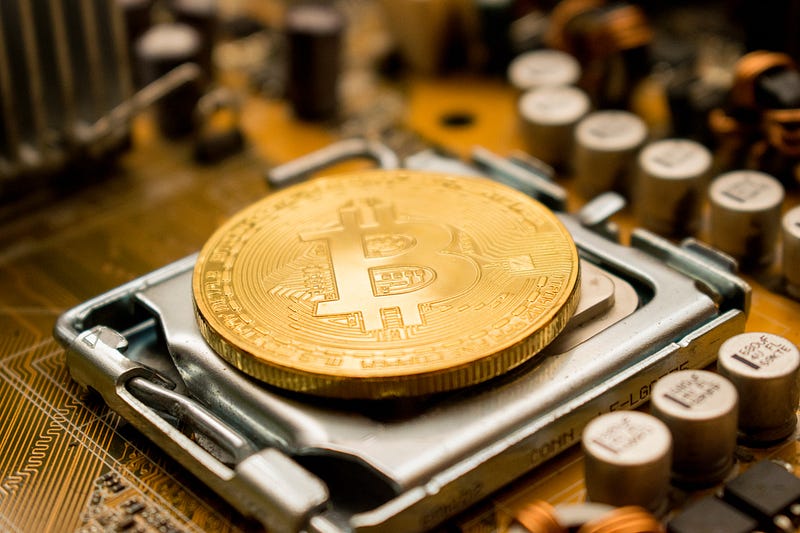
Photo by Dmitry Demidko on Unsplash


Mining operation dismantled

Photos and videos released by the office of Attorney General Siddiq Al-Sour showcased the dismantling process of the extensive mining systems discovered in Zliten.

This is not the first instance of Chinese miners being detained for crypto mining activities in the North African country. The development follows the recent arrest of ten other Chinese nationals in the city of Misrata on the Mediterranean coast, as well as at two sites within the capital, Tripoli. The individuals were apprehended on Wednesday while being caught “red-handed” with numerous powerful equipment used for intricate proof of work (PoW) mining calculations. The mining rigs were subsequently confiscated by the attorney general’s office.


Mining ban

Despite the official ban on cryptocurrency mining in the country, Libya has witnessed a high prevalence of such activities, with the nation recording the highest percentage of cryptocurrency mining across the African continent in 2021. It is estimated that Libya accounted for approximately 0.6 percent of global Bitcoin production during that year.

Libya’s appeal as a destination for cryptocurrency mining stems from its low electricity costs, which stand at a remarkably low rate of $0.004 per kilowatt hour. This cost is approximately 40 times cheaper than in the United States, making Libya an attractive location for miners.

While energy may be cheap, the increased demand for electricity that crypto mining brings puts a strain on what was an already vulnerable power grid in the country. That has resulted in frequent and lengthy power blackouts, particularly during the summer months.

A lack of oversight has also encouraged an influx of Chinese miners, albeit with these recent arrests, it appears that the Libyan authorities are stepping up the level of oversight and enforcement. The vast majority of Bitcoin miners were based in China up until a mining ban was enforced in 2021.


Global issue

That event led to an exodus of miners internationally. Some established themselves legally in the United States and elsewhere. The first casualty of illegal mining was Kazakhstan. The sudden arrival of miners led to its power grid coming under pressure. As a consequence, the Central Asian country clamped down on the activity, and later regulated it.

In response to these illegal activities, Libyan authorities have intensified their efforts to combat cryptocurrency mining operations. They are conducting investigations into alleged mining sites in Tripoli and Misrata, aiming to curtail these activities and mitigate the strain on the country’s electricity infrastructure.

The recent arrests highlight the ongoing challenges associated with illegal mining activities in jurisdictions globally where cheap energy can be exploited, giving rise to the need for enhanced regulatory measures to address these issues.


More to Read
View All
Web3 & Enterprise·

Dec 22, 2023

Buysell Standards and AGST collaborate to expand security token projects in Southeast Asia

Buysell Standards and AGST collaborate to expand security token projects in Southeast AsiaBuysell Standards, a South Korean company operating fractional investment platform Piece, is accelerating its expansion into the Southeast Asian market through a recent business collaboration.A report from Korean news outlet Financial News indicates that the company has signed a memorandum of understanding (MOU) with AGST, a subsidiary of blockchain-focused investor Fundiant Holdings. This collaboration aims to launch security token projects within the Association of Southeast Asian Nations (ASEAN) region.Photo by Kelvin Zyteng on UnsplashSingapore in Q1 2024As an asset manager in Singapore and Japan, AGST is set to play a pivotal role in the issuance and distribution of security tokens in these markets. Their strategy includes launching security token products in Singapore in the first quarter of next year. These products will be backed by assets from Buysell Standards.The partnership between Buysell Standards and AGST is set to be multifaceted, encompassing several key areas of collaboration. Together, they will focus on developing new investment products and building the necessary infrastructure to support them. They will also focus on marketing and promotional efforts in the ASEAN region.Anticipating regulatory exemptionBuysell Standards is among the seven companies that received approval from the South Korean Financial Services Commission to issue security tokens. The company is anticipating a regulatory exemption from the government, which would allow them to introduce fractional investment products linked to ship finance.Buysell Standards expects that its partnership with AGST will facilitate quicker access to funding from international sources for high-quality investment products in South Korea. Meanwhile, AGST seeks to introduce a range of Korean assets to the global security token market.Emphasizing the quick adoption of fintech by ASEAN investors and their fondness for South Korea, Shin Beom-jun, CEO of Buysell Standard, stated that the company is committed to actively promoting Korean security token products on the global investment stage.Kim Chang-soo, Chairman of Fundiant Holdings, expressed his ambition to strengthen the Korean security token market. He observed that the market is currently in an early stage of development, leading to the undervaluation of underlying assets. He believes that introducing Korean security tokens to international markets will reciprocally aid in the expansion and maturation of the domestic market.

news
Web3 & Enterprise·

Jul 30, 2025

JD.com registers ‘JCOIN’ & ‘JOYCOIN’ ahead of Hong Kong’s Stablecoin Ordinance

JD.com, one of China’s largest business-to-consumer (B2C) online retailers, is understood to have registered “JCOIN” and “JOYCOIN” ahead of Hong Kong’s Stablecoins Ordinance going live on Aug. 1. According to a report published by the Hong Kong Economic Times, in its trademark registration application, JD.com described the services associated with the two brand names as implicating the provision of electronic fund transfers and cryptocurrency-related financial transactions achieved via blockchain technology.Photo by tommao wang on UnsplashHKD-pegged stablecoinThe trademark registrations were filed by JD.com's subsidiary company, JD Coinlink Technology. The company was announced as a participant in the Hong Kong Monetary Authority’s (HKMA) stablecoin issuer sandbox last year. Around that timeframe, it also unveiled plans to launch a stablecoin pegged to the Hong Kong dollar (HKD).  That move was followed by British multinational bank Standard Chartered in February, with it announcing the launch of a HKD-pegged stablecoin in Hong Kong alongside local partners. Standard Chartered and its partners have also been participants in Hong Kong’s stablecoin issuer sandbox. Liu Peng, CEO of JD Coinlink Technology, provided an update in May, outlining that its stablecoin was entering phase two of sandbox testing. He stated that he hopes the project “contributes to payment efficiency not only within JD’s ecosystem but also for businesses and individuals worldwide.” On its website, JD Coinlink Technology describes its “JINGDONG Stablecoin” as a stablecoin backed 1:1 by the Hong Kong dollar, with the goal of meeting regulatory compliance and becoming “one of the leading digital currencies for businesses and individuals seeking for efficient, cost-effective, and secure payment solutions.” In a press briefing in Beijing in June, Peng outlined that the company was making preparations to apply for stablecoin issuer licensing in several markets. The JD Coinlink Technology CEO asserted that stablecoins “can reduce payment costs by 90% and complete transactions within 10 seconds.”  Ant Group, a subsidiary of another Chinese e-commerce giant, Alibaba, has also been following a similar track, preparing to apply for stablecoin licensing in both Hong Kong and Singapore. Push for yuan-pegged stablecoinsBoth Ant Group and JD.com have been lobbying the authorities in China for permission to issue a yuan-pegged stablecoin. Mainland China continues to impose a prohibition on crypto trading and mining, although more recently there have been signs that it may be considering accommodating stablecoins. Behind closed doors, it is understood that JD.com has urged officials at the People’s Bank of China to permit the issuance of offshore yuan-pegged stablecoins as a means to promote use of the yuan internationally and to enable more efficient cross-border trade. Hong Kong is perceived by many commentators as a testing ground for the digital assets sector in China. However, regulators in the Chinese autonomous territory have expressed caution around approving fiat-backed stablecoins tied to foreign currencies, noting that such issuances would require prior “discussions with the relevant authorities.” With Hong Kong’s Stablecoins Ordinance going live on Aug. 1, the HKMA published further guidelines for licensed stablecoin issuers on July 29. The regulator disclosed that it intends to publish a public registry of licensed stablecoin issuers for the benefit of the general public.

news
Policy & Regulation·

Oct 26, 2023

Korean Financial Authorities to Provide Support for Security Token Market

Korean Financial Authorities to Provide Support for Security Token MarketAmid growing calls for accelerating the growth of the emerging security token (ST) market, the South Korean government is preparing to introduce supportive measures. The security token market is powered by blockchain technology which allows fractional investment in real world assets (RWAs) such as real estate and artwork.Security tokens are digital assets that represent securities generated through a process called security token offering (STO). These tokens, backed by RWAs, can be traded similarly to traditional securities. Investors can use these tokens to obtain shares, voting rights, interest, or profits.Photo by Philip Jang on UnsplashSupport measures for security token IndustryNext month, the Financial Services Commission (FSC) will draw up support measures and policy improvement plans to bolster the nascent security token industry. An FSC representative mentioned that the agency intends to work with the National Assembly to finalize the legislation of security token-related bills by November. Furthermore, the government official said the FSC will actively seek input from industry stakeholders to formulate strategies for enhancing policies designed to promote the growth of the security token market.To align with the national objective titled “The Establishment of Digital Asset Infrastructure and Regulatory Framework,” the FSC revealed regulatory guidelines for security token issuance and distribution in February. These new guidelines are centered around the establishment of institutions responsible for account management and entities engaged in over-the-counter (OTC) trading. Subsequently, in July, lawmaker Yun Chang-hyun, a member of the National Assembly’s National Policy Committee, proposed a bill to amend the Electronic Securities Act and the Capital Markets Act with the aim of ensuring that these Acts are consistent with the new regulatory guidelines.Security token market’s growth potentialWith growing anticipation that the security token market could rival the size of the exchange-traded fund (ETF) stock market, securities firms, banks, and blockchain companies have been eager to carve out a niche for themselves since the start of the year. However, their progress has been hindered by a potentially extended period of higher interest rates in the US and the slow advancement of security token-related legislation. While these organizations tried to explore opportunities through the financial regulatory sandbox, their endeavors proved more or less fruitless. An official from a securities firm voiced concerns over the escalating costs of setting up security token infrastructure, especially with legislative delays.On this matter, the Korea Financial Investment Association (KOFIA) has emphasized the urgent need to pass security token legislation to clear up regulatory ambiguities. They’ve also called for measures to stimulate market growth, such as relaxing regulations related to token issuance and distribution and increasing investment caps.At a seminar hosted by the Korea Capital Market Institute, Ahn Hyuk, Head of the Platform Division at Korea Investment and Securities, highlighted that the rigorous review of security registration applications by the Financial Supervisory Service (FSS) might impede the security token market’s growth. Responding to this, Jang Young-shim, Head of the Corporate Disclosure Department at FSS, said that both the FSC and FSS will carefully listen to industry feedback, addressing a range of topics from regulatory relaxation to investor protection.

news
Loading