Top

Safeheron launches world’s first open-sourced Intel SGX TEE for Web3

Web3 & Enterprise·May 08, 2025, 6:32 AM

Safeheron, a Singapore-based provider of digital asset self-custody solutions for institutions, has released the world’s first open-sourced trusted execution environment (TEE) related to Intel Software Guard Extensions (SGX). 


The Intel SGX is a hardware-based security technology integrated within some Intel processors. It enables application developers to run application code within a secure isolated environment, while preventing access to that code or modification of it by other applications or by the operating system running on that hardware.

https://asset.coinness.com/en/news/a396ee7e508e1fdfa4797e286ce97cfd.webp
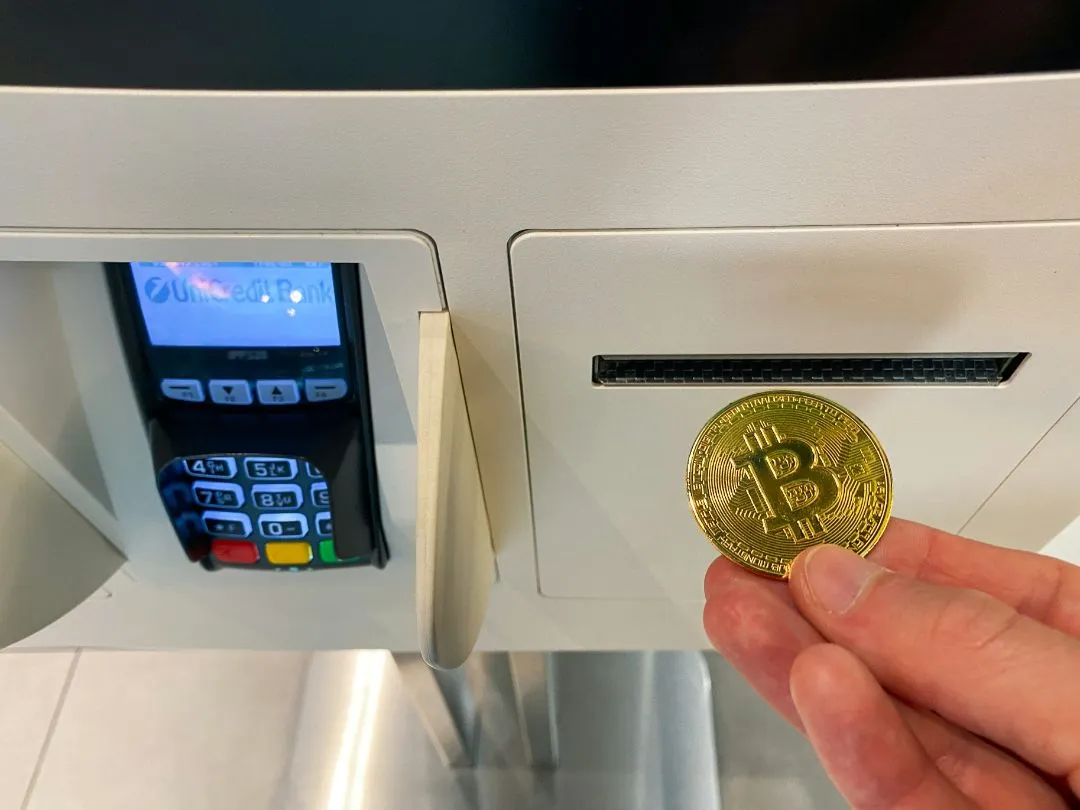
Photo by Shubham Dhage on Unsplash

Addressing Web3 security & scalability challenges

The Intel SGX enables a TEE, creating a black box for computation. In a blog post published by Safeheron on May 6, the company claimed that its open-source framework “addresses fundamental security and scalability challenges within blockchain and Web3 ecosystems, offering broad potential for deployment across critical scenarios.”


The company asserted that the enabling of off-chain TEEs as achieved by its framework, provides for robust blockchain layer-2 scaling, together with privacy-preserving computation. In this way, layer-1 blockchain load can be minimized while enhancing network throughput and verifiability. Safeheron further claimed that this all paves the way for the evolution of a trusted “second execution layer” for decentralized applications.


Overcoming Intel SGX complexity

Safeheron developed the TEE framework using C++, a high-level object-oriented programming language. The firm open-sourced the SGX framework due to the significant challenges that developing with Intel SGX poses, arising from its complexity and its engineering overhead.


On X, the company claimed that the new framework reduces SGX TEE development complexity, enabling developers to build applications securely for blockchain, cloud security and privacy computing. The framework optimizes advanced cryptographic support, enhanced testing capabilities, high-level API design and secure and encrypted file input and output.


Moving beyond closed and opaque systems

Safeheron added that it open-sourced the framework as it had seen concern expressed within the Web3 sector regarding the development of closed and opaque systems, with that concern elevated in relation to ongoing security failures related to Web3 platforms.


Safeheron CEO Wade Wang told Cointelegraph that in open-sourcing the framework, the firm is “not threatened by competitors,” but that it is concerned about “slow innovation due to closed systems.”


The Singaporean firm was established in 2021. It counts HashKey Capital, Bixin Ventures, Antalpha Ventures, M77 Ventures and Kryptos among its investors. Back in 2022, it raised $7 million in a pre-Series A funding round. At the time, the project’s mission was to make private keys, which individuals use to control and self-custody their digital assets, safer.


In terms of products offered, the company markets its MPC Node Suite, a white-label solution that allows clients to build out multi-party computation (MPC) wallet-based applications. It also offers Keyless Wallets that facilitate the development of wallets that don’t require traditional keys. 


In February crypto exchange platform BYDFi partnered with Safeheron, leveraging its MPC technology and TEE to build out a key management system.


More to Read
View All
Policy & Regulation·

Dec 21, 2023

Crypto fund manager secures capital markets license in Singapore

Crypto fund manager secures capital markets license in SingaporeDigital asset fund manager HashKey Capital Singapore celebrated a significant milestone on Tuesday as it secured a regulatory license from the local regulator and central bank, the Monetary Authority of Singapore (MAS).Photo by Mike Enerio on Unsplash‘Pivotal development’HashKey announced its regulatory success by way of a press release published to its website. This achievement, described by the company as a “pivotal development,” positions the firm to offer regulated fund management services primarily in connection with capital markets products from its Singapore base.Deng Chao, Chief Executive of HashKey Capital Singapore and Head of HashKey Singapore, expressed the company’s commitment to the local blockchain community, stating:“As a licensed fund management company, we are committed to contributing to the local blockchain community and playing our part in shaping its future.”Enabling product launchHaving initiated the licensing process in late 2021, HashKey Capital Singapore now plans to leverage its new status to launch a regulated fund and provide capital market products to local customers. The company envisions connecting blockchain experts and global capital to the local market, contributing to the advancement of the blockchain community in the region.Chao emphasized the company’s excitement about propelling blockchain-related capital markets products and investments further into the mainstream. This move is expected to open new possibilities for institutional and accredited investors in Singapore.Hong Kong presenceHashKey Capital falls under the overarching umbrella of Hong Kong-headquartered parent company HashKey Group. Company colleagues in Hong Kong have been busy in 2023, with a number of milestones having been achieved during the year.HashKey and OSL became the first digital asset exchange platforms to be licensed by the Hong Kong Securities and Futures Commission (SFC) as part of a new regulatory approach that allowed such platforms to offer their services to retail investors from June 1 onwards.A few months on from that and the company has been working towards increasing platform liquidity and trading volumes through a token rewards program and partnerships with market makers.At the end of October, the firm launched an exchange app, having received approval for the product from the local regulator. The firm has also bolstered customer deposit protection by way of a deal struck with fintech firm OneDegree to provide insurance cover for digital assets held on the platform.In April, a separate entity, HashKey Wealth, was formed, offering a wealth management service to both institutional and individual investors looking for exposure to digital assets.HashKey Singapore, inclusive of HashKey Capital Singapore, boasts a team of approximately 40 professionals covering various areas such as venture capital investment, fund management and over-the-counter trading of digital assets. The development follows HashKey Capital’s successful conclusion of a $500 million funding round, reinforcing its position as one of the largest crypto asset managers.Founded in 2015, HashKey Capital has played a pioneering role as an institutional investor in Ethereum, managing over $1 billion in client assets and making investments in more than 500 projects across infrastructure, tools and applications.During a funding round which the HashKey Group pursued earlier this year, it emerged that the company was being valued at $1 billion.

news
Web3 & Enterprise·

Dec 12, 2023

Wame and Pacific Meta join forces to build Asian Web3 industry

Wame and Pacific Meta join forces to build Asian Web3 industryWame, a California-based company specializing in the development of privacy protection and asset monetization technologies using blockchain and artificial intelligence (AI), has signed a memorandum of understanding (MOU) with Japanese Web3 consulting firm Pacific Meta, according to South Korean news outlet Money Today on Monday (local time).Through this MOU, the two firms plan to focus on promoting Play-to-Earn (P2E) games and various Web3 projects, particularly in the Asian market — including Japan, China and the Philippines.Photo by CHUTTERSNAP on UnsplashEmpowering data sovereigntyFormerly known as Altverse, the company has its roots in Korean internet juggernaut Kakao’s startup incubation arm Krust and is dedicated to developing decentralized identity (DID) solutions. DID technology involves digital identity verification utilizing blockchain instead of centralized servers. This enhances personal data ownership and privacy protection and allows for asset monetization, safeguarding against hacking and other potential security threats.Securing partnerships and investmentsWame is also a participant in the Governance Council of Klaytn, Kakao’s blockchain project, and has secured seed investments from Krust, Lotte Ventures and Alphanonce. Together with Pacific Meta’s Asia-based Web3 consulting services, the firm expects to solidify its foothold in the Asian market by nurturing innovative Web3 projects, as highlighted by CEO Lee Eun-ho.Shota Iwasaki, CEO of Pacific Meta and one of Forbes’s 2020 “30 Under 30 Asia”, emphasized the importance of collaboration for opening a new chapter in the development of the Web3 industry in Japan and throughout Asia.

news
Markets·

Dec 19, 2023

Analysts expect crypto market cap to triple or more next year

Analysts expect crypto market cap to triple or more next yearThe Korbit Research Center, affiliated with South Korean cryptocurrency exchange Korbit, published a report last Friday that provides projections for the crypto market in 2024.The paper includes contributions from its team, notably head of research Peter Chung, as well as research analysts Choy Yoon-young, Kang Dong-hyun and Kim Min-seung.Peter Chung predicts that the total market capitalization of cryptocurrencies could soar to $5 trillion, more than three times greater than its current level of $1.6 trillion. He attributes this potential growth to three key factors: the possibility of the U.S. Federal Reserve easing its monetary policy, the potential approval of spot bitcoin and ether exchange-traded funds (ETFs), and the anticipated Bitcoin halving event expected in April 2024.Photo by Pierre Borthiry — Peiobty on UnsplashFactors driving crypto market growth in 2024Peter Chung suggests that the growth of the crypto market will be driven by the expanding utility of virtual assets. He believes that once ETFs for bitcoin and ether are approved, these cryptocurrencies will become more versatile as investment options. This, in turn, is expected to enhance their reputation and foster wider adoption, having a significant influence on the broader crypto ecosystem beyond the two most dominant cryptocurrencies.Real-world assets and financial firmsChoy anticipates that the U.S. Securities and Exchange Commission (SEC) will approve spot bitcoin and ether ETFs by the first half of next year. On a different note, Kang focuses on the importance of blockchain technology, particularly emphasizing real-world assets (RWAs) and roll-up solutions. Kang highlights that since RWAs are closely linked with traditional financial institutions, an influx of capital from these entities is likely to boost the RWA market. This interaction between traditional finance and blockchain technology could be a key driver of growth in the sector.Regulatory changes and landscape shiftKim Min-seung, another analyst from the team, forecasts that upcoming regulatory developments could alter the dynamics of the cryptocurrency market. A notable development in this regard is the forthcoming implementation of the Virtual Asset User Protection Act in South Korea, set for July next year. According to Kim, these changes might result in a scenario where only competitive cryptocurrencies survive.Kim elaborates that the perception of virtual assets is poised for a shift. Currently, crypto investors tend to base their decisions on expectations of arbitrary cryptocurrency inflation. However, once new regulations are implemented, investors are likely to start assessing the actual value of virtual assets more critically. This shift in approach could lead to a more value-driven and stable cryptocurrency market, as speculative tendencies might decrease and a focus on intrinsic value increases.According to local news outlet website The Asia Business Daily, Peter Chung anticipates further growth in the cryptocurrency market next year, following its rebound this year. He suggests that this growth trajectory will not only continue but also attract increased attention from the public.

news
Loading